Dr. Gymbro
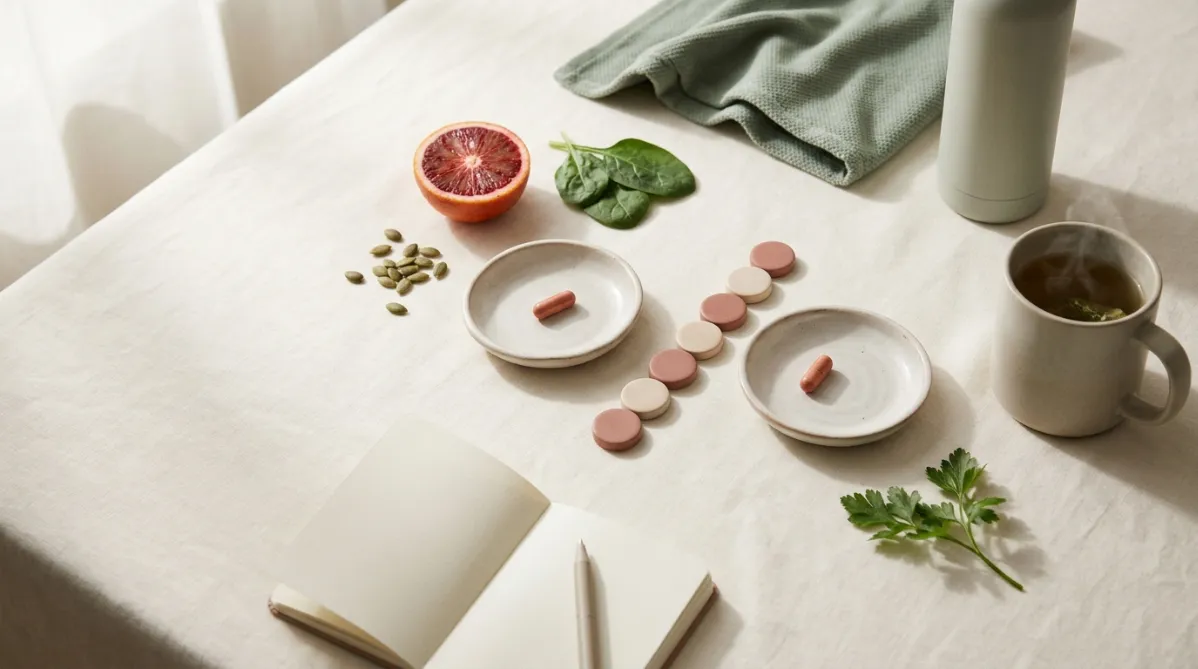
A bright, airy editorial flat-lay shot from slightly above, on a soft warm-white linen surface with gentle natural window light and long, soft shadows. Two small ceramic dishes sit side by side at the center. The left dish holds a single small capsule in muted terracotta. The right dish holds one small capsule in the same color, with a noticeable empty space beside it to suggest rhythm and spacing. Between them lies a minimalist wooden calendar block or a row of seven small round ceramic discs in alternating tones, dusty rose and cream, evoking an every-other-day pattern. Around the dishes are fresh, iron-rich foods arranged with restraint: a halved blood orange, a few deep green spinach leaves, a small scattering of pumpkin seeds, and a sprig of parsley. A folded sage-green athletic towel and a slim, modern water bottle sit at the upper edge, hinting at women who train. A matte ceramic mug of herbal tea sits at the right with a faint curl of steam. A small notebook with a pen lies open at the lower left, its pages blank, suggesting lab results and tracking without any legible text. The palette is soft and cohesive: warm cream, dusty rose, terracotta, sage green, with small accents of deep coral. The mood is calm, clean, and wellness-oriented, like a contemporary health and science journal feature. Shallow depth of field keeps the capsules sharp and softly blurs the edges of the frame. The composition leaves generous negative space on the left third for title overlay. The look is a high-end lifestyle photograph with subtle film grain, natural textures, and refined minimalism, with no people, no text, and no futuristic or laboratory elements.
Nutrition

Meno ferro, a giorni alterni: gli stessi guadagni di ferritina nelle donne

Dr. Gymbro · · 4 min read

La curiosità: perché dovrebbe funzionare meno ferro?

Se la tua ferritina è bassa, il consiglio tradizionale è semplice: assumere ferro tutti i giorni finché i valori non tornano nella norma. Uno studio randomizzato pubblicato nel European Journal of Nutrition nel 2026 (Valerii et al.) ha proposto un approccio diverso: somministrare una dose più piccola, ma solo a giorni alterni, per verificare se le riserve di ferro si ricostituiscono comunque.

Su 66 donne con carenza di ferro, la risposta è stata positiva. La ferritina sierica è aumentata in modo significativo in entrambi i gruppi durante i 42 giorni, e la differenza tra i due regimi non è risultata statisticamente significativa. Il gruppo a giorni alterni ha raggiunto lo stesso risultato con un apporto totale di ferro molto più basso.

Il ruolo dell'epcidina

Il ragionamento parte dall'epcidina, l'ormone che regola quanta quantità di ferro l’intestino lascia passare nel sangue. Gli autori dello studio indicano la regolazione mediata dall’epcidina come una delle ragioni per cui il ferro orale spesso delude. L’idea alla base del dosaggio a giorni alterni è che una dose di ferro può innescare una risposta di epcidina che riduce l’assorbimento della dose successiva. Allontanare le dosi nel tempo darebbe a quella risposta il tempo di attenuarsi.

Nota che l’abstract non elenca l’epcidina tra gli endpoint misurati. Lo studio dimostra che la strategia ha funzionato sui marker dello stato del ferro, ma, come riportato, non dimostra che l’epcidina sia realmente la spiegazione.

Cosa ha fatto realmente il trial

Lo studio è stato randomizzato, a gruppi paralleli e a controllo attivo. Le partecipanti erano donne tra i 18 e i 50 anni con ferritina sierica inferiore a 30 ng/mL. Per 42 giorni hanno ricevuto uno dei due regimi:

  • Braccio a dose ridotta: pirrofosfato ferroso micronizzato e dispersibile, che fornisce 21 mg di ferro elementare ogni 48 ore, più un modulatore della microbiota intestinale.
  • Braccio comparatore: pirrofosfato ferroso sucrosomiale, che fornisce 30 mg di ferro elementare al giorno.

L’endpoint primario era la ferritina sierica. Gli endpoint secondari includevano ferro sierico, transferrina, saturazione della transferrina (TSAT), capacità totale di legare il ferro (TIBC), emoglobina e conta dei globuli rossi.

I risultati

La ferritina è aumentata significativamente nel tempo in entrambi i gruppi (p < 0,001) senza differenze significative tra i gruppi. Anche ferro sierico, transferrina, TSAT e TIBC sono migliorati in modo comparabile. L’emoglobina è rimasta stabile per tutta la durata dello studio. Questo è coerente con una popolazione selezionata per bassa ferritina, più che per anemia, e con un periodo di osservazione relativamente breve.

La tollerabilità è sembrata buona in entrambi i bracci: gli autori hanno riportato solo eventi gastrointestinali lievi e transitori e nessun cambiamento clinicamente rilevante nei marker infiammatori.

L’esposizione cumulativa di ferro è molto diversa. In 42 giorni, 21 mg ogni due giorni corrispondono a circa 21 dosi, ovvero circa 441 mg di ferro elementare (presumendo aderenza perfetta). 30 mg al giorno arrivano a circa 1 260 mg. Si tratta di circa un terzo dell’apporto totale, non di metà, sebbene la conclusione dell’articolo riporti semplicemente “minore esposizione cumulativa di ferro”.

Una lettura onesta

È incoraggiante, ma ha dei limiti reali.

  • Comparabile, non superiore. Lo studio mostra guadagni di ferritina simili. Non dimostra che il regime a giorni alterni sia migliore.
  • Nessun placebo. Entrambi i bracci hanno ricevuto ferro attivo, perciò il disegno non permette di valutare l’effetto rispetto all’assenza di integrazione.
  • Due variabili cambiate contemporaneamente. Le forme di ferro erano diverse (micronizzata dispersibile vs. sucrosomiale) e il braccio di prova includeva anche un modulatore della microbiota. Non si può attribuire l’esito solo al ritmo di somministrazione.
  • Campione piccolo e periodo breve. Sessantasei donne per sei settimane non possono risolvere questioni su ricarica a lungo termine, ricadute o effetti collaterali rari.
  • Popolazione specifica. I risultati si applicano a donne in età fertile carenti di ferro, non a tutti.

Consigli pratici per le donne che si allenano

La carenza di ferro è comune tra le donne che sollevano pesi, corrono o praticano sport di endurance; una ferritina bassa può manifestarsi come stanchezza e scarso recupero. Questo studio aggiunge un elemento al caso crescente che più ferro non è sempre migliore. Una dose più piccola e distribuita nel tempo può essere sufficiente a ricostituire le riserve senza penalizzare lo stomaco.

  1. Fatti analizzare prima. Lo studio ha arruolato donne con ferritina sotto i 30 ng/mL. Richiedi un esame della ferritina e un pannello completo del ferro prima di iniziare a integrare. La sola stanchezza non conferma una carenza di ferro.
  2. Non auto‑diagnosticare l’anemia. L’emoglobina stabile qui indica che la ferritina può migliorare prima di vedere cambiamenti emoglobinici. L’interpretazione di questi parametri e la ricerca della causa della carenza è compito del medico.
  3. Valuta il dosaggio a giorni alterni. Se il ferro quotidiano ti irrita lo stomaco o l’hai già interrotto, discuti con il tuo medico o nutrizionista la possibilità di distribuire le dosi. Non dare per scontato che i prodotti specifici dello studio possano essere sostituiti da qualsiasi compressa di ferro.
  4. Non copiare il protocollo alla cieca. Le formulazioni e il modulatore della microbiota facevano parte del pacchetto testato. I risultati non provano che una compressa da 21 mg presa ogni altro giorno abbia lo stesso effetto.
  5. Rivaluta periodicamente. Ripeti il test della ferritina dopo un intervallo ragionevole per confermare che l’approccio funzioni, invece di basarti su supposizioni.

In sintesi

Lo studio suggerisce che strategie di ferro a dosi più basse, basate su meccanismi fisiologici, meritano seria considerazione. Nelle donne carenti di ferro, 21 mg ogni 48 ore hanno prodotto gli stessi aumenti di ferritina dei 30 mg giornalieri in sei settimane, con effetti gastrointestinali lievi. Sono necessari trial più ampi e più lunghi, che separino il ritmo di somministrazione dalla formulazione e, idealmente, misurino direttamente l’epcidina, per dimostrare che sia davvero il timing a fare la differenza.
Original study

Read the original research on pubmed.ncbi.nlm.nih.gov →

This article summarizes published research for general information. It is not medical advice.

DG

Written by

Dr. Gymbro

Dr. Gymbro writes for Dr. Gymbro: science-backed fitness, nutrition & performance.

Related Articles

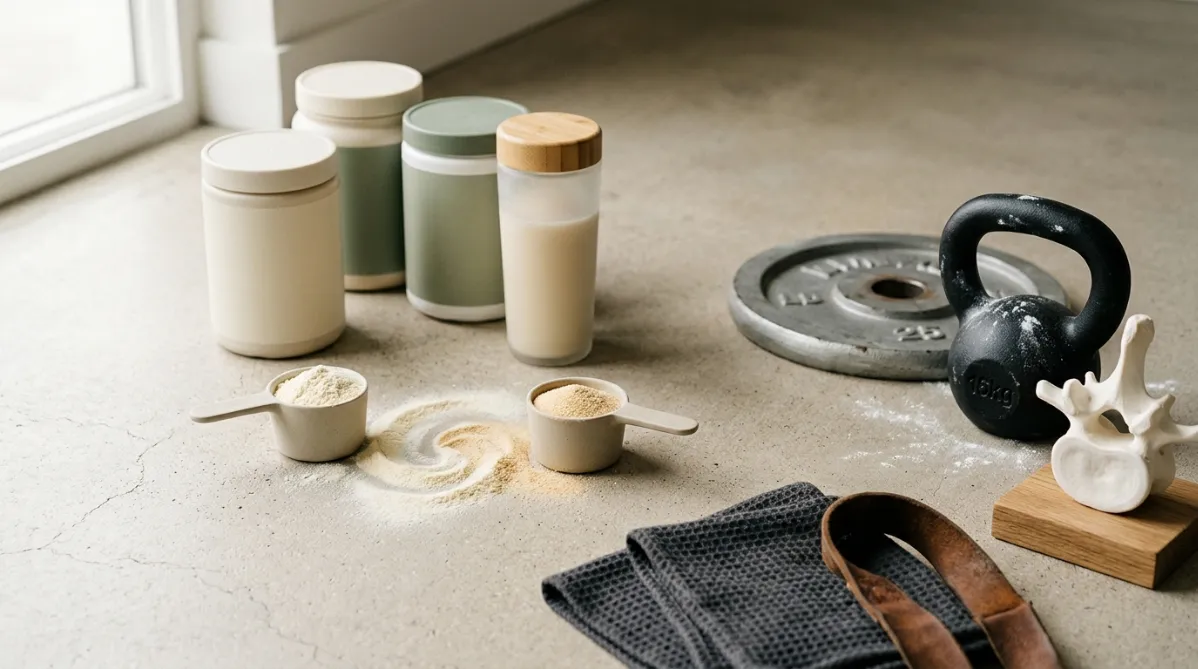
A wide, softly lit editorial still life on a pale warm-gray concrete surface, shot from a slightly elevated three-quarter angle. In the center-left, two matte ceramic scoops sit side by side. One holds fine ivory whey powder, the other holds slightly coarser, pale golden collagen peptide powder. A small, elegant dusting of both powders spills between them and blends into a soft swirl. Behind them, three minimalist cream and sage-green supplement tubs with no legible text stand in a staggered row, with a frosted glass shaker bottle of creamy liquid beside them.

On the right, a brushed-steel barbell plate and a compact chalk-dusted kettlebell rest slightly out of focus, suggesting resistance training. Pale wisps of chalk hang in the air. A folded charcoal gym towel and a pair of worn leather lifting straps lie in the foreground. A single cross-section of a clean white bone model, a stylized vertebra, rests on a small oak block at the far right. It subtly signals the bone-density theme without looking clinical.

Natural window light enters from the left, casting long, gentle shadows and a warm highlight on the powders. The palette is muted and modern: oatmeal, bone white, sage green, soft charcoal, and touches of warm amber. Shallow depth of field keeps the scoops tack-sharp and melts the background into creamy blur. Leave generous negative space in the upper right for headline overlay. The overall feel is a premium health and science journal cover: clean, tactile, minimalist, with fine film-like grain and a calm, editorial mood.
nutrition

Whey + Collagene batte sia il whey che il collagene da soli nei sollevatori — ma con dei rischi

BY DR. GYMBRO ·

Mescolare 30 g di whey con 10 g di collagene ha superato whey da solo, collagene da solo e placebo in tutti i parametri in una nuova prova otto‑settimane su uomini allenati alla resistenza. Lo stack ha aggiunto 2,66 kg di massa muscolare (misurata con BIA), ha aumentato la densità minerale ossea della colonna lombare e ha migliorato squat, panca e i marcatori di turnover osseo. Il collagene da solo ha influenzato l'osso, mentre il whey ha spinto il muscolo. Con solo 40 partecipanti, apporto proteico non equilibrato e un inaspettato balzo della BMD, c'è però un margine di incertezza. Ecco cosa ha vinto lo stack, a chi può interessare e a chi conviene evitarlo.

A wide landscape editorial photograph of a bright, airy sunlit living room with pale oak floors and a large window with sheer linen curtains. In the center, a woman in her late 50s with silver-streaked hair, wearing soft sage-green athletic wear, rises from a simple wooden chair, caught mid-motion with a calm, determined expression. Her hands are lightly extended forward for balance. Beside her on a small round oak side table sits a ceramic mug of tea, a glass of water, and a small matte white jar with a wooden scoop resting beside it, a few fine white crystalline grains scattered on the tabletop. In the soft-focus foreground, a pair of light-gray dumbbells and a rolled terracotta-colored yoga mat rest on the floor. A trailing green pothos plant spills from a shelf in the background, with a stack of books and a small analog kitchen timer nearby.

The color palette is warm and muted: cream, sage green, soft terracotta, natural wood, and gentle morning-gold light. Light streams diagonally across the scene, creating long soft shadows and a subtle glow on the woman's shoulders. Shallow depth of field blurs the background gently, while the woman and the table remain crisp. The composition follows the rule of thirds, with the woman on the right and generous negative space on the left, suited for headline overlay. The mood is hopeful, grounded, and modern, like a high-end wellness magazine or a trendy health journal. Natural film-like grain, soft contrast, and a slight matte finish give it a contemporary lifestyle photography feel. There are no futuristic elements, no digital overlays, and no text.
science research

La creatina ha aiutato le donne con ginocchia problematiche a rialzarsi meglio, ma non per i motivi che pensi

BY DR. GYMBRO ·

La creatina è solita essere proposta ai giovani sollevatori, ma una sperimentazione randomizzata, in doppio cieco, l'ha testata su donne in postmenopausa con osteoartrosi del ginocchio. Dopo 12 settimane di allenamento delle gambe, il punteggio del test di alzata dalla sedia è passato da 15,7 a 18,1 nel gruppo creatina, mentre quello del placebo è rimasto quasi invariato (15,0‑15,2). La creatina ha inoltre migliorato la rigidità, la massa magra e la qualità della vita, ma non ha ridotto il dolore né aumentato la forza massima alla pressa rispetto al placebo. Ecco cosa dicono i numeri e a chi potrebbe davvero giovare.

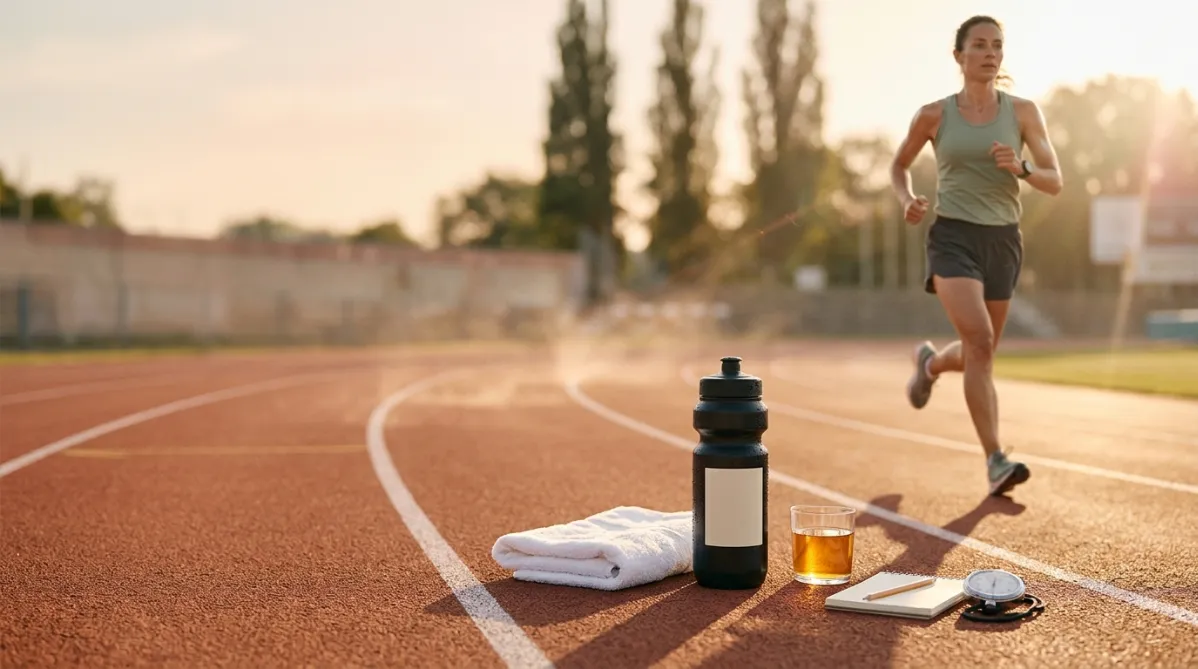
A sunlit outdoor running track in late afternoon, shot from a low angle with shallow depth of field. In the foreground, a matte black bottle with a minimal off-white label sits on the edge of a warm terracotta-colored track lane, beside a folded white towel and a small glass of amber liquid catching golden light. Condensation beads on the bottle. A faint heat shimmer rises from the track surface and softens the background.

In the midground, slightly out of focus, a lean athlete in a sage-green tank top and charcoal shorts runs on a treadmill-like stretch of track, a thin sheen of sweat on their shoulders, their expression focused and calm. Their motion is gently blurred, suggesting endurance and rhythm. Long soft shadows stretch across the lane lines.

The background fades into hazy peach, apricot, and pale yellow tones, with the suggestion of tall trees and a distant stadium wall. Warm sun flare enters from the upper right, creating a subtle glow and a few soft light streaks across the frame.

Subtle editorial touches: a small notebook with a pencil and a stopwatch rest beside the bottle, hinting at data and timing without any text legible. The color palette is warm and muted, with terracotta, cream, sage, and charcoal accents, and a fine film-like grain. The composition leaves open negative space on the left third for a headline overlay. The overall mood is clean, modern, and health-journal inspired, natural and aspirational, with a calm scientific curiosity rather than hype.
nutrition

Bevande chetone al caldo: più resistenza e memoria più acuta?

BY DR. GYMBRO ·

Le bevande a base di chetoni sono spesso associate a biohacker che vogliono bruciare grassi, ma uno studio sullo stress termico suggerisce che potrebbero anche migliorare la capacità di sostenere uno sforzo intenso. In 17 uomini allenati, il mono‑ester di chetone combinato con caffeina ha prolungato il tempo fino all’esaurimento di 8,9 minuti contro 7,0 con carboidrati più caffeina, dopo 90 minuti di corsa su tapis‑roulant a 34 °C. Inoltre, l’accuratezza al test 1‑back è aumentata, mentre frequenza cardiaca e temperatura corporea non hanno mostrato differenze significative. I risultati, però, sono limitati da un campione piccolo, maschile e da una singola sessione. Ecco cosa dicono i dati e cosa resta incerto.

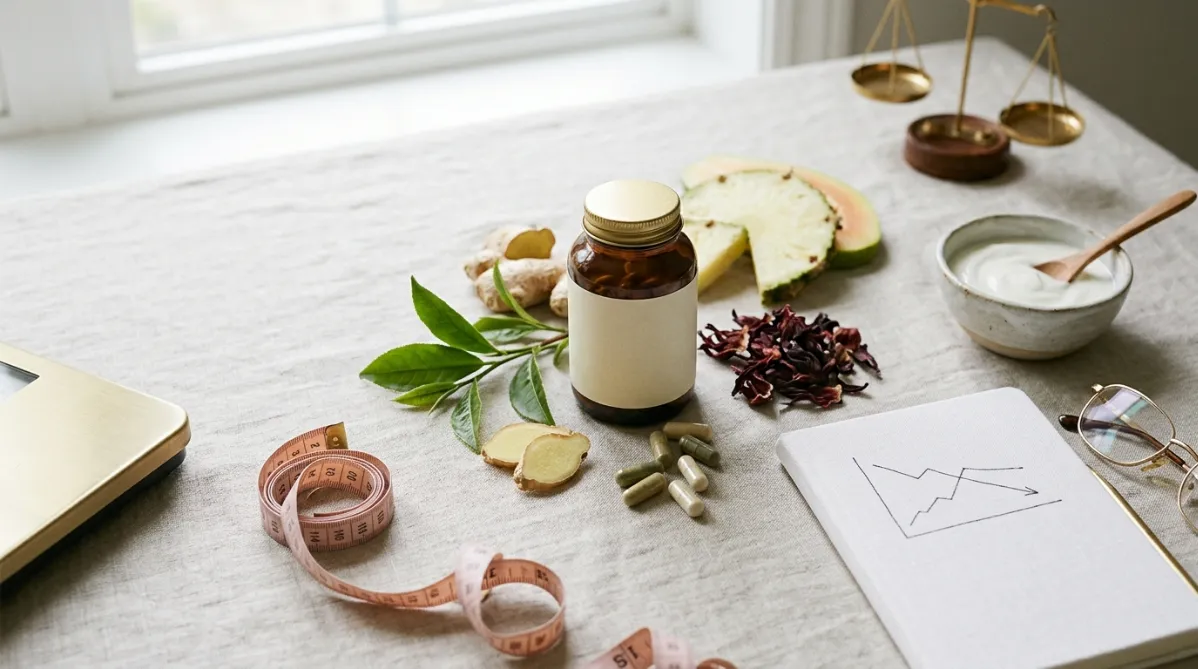
A clean, modern editorial flat-lay on a pale oat-colored linen surface, shot from slightly above in soft diffused natural window light. At the center sits an amber glass supplement bottle with a minimalist cream label, unbranded, with a few capsules spilling onto the fabric in soft greens and ivory tones. Around it are fresh botanical elements: a sprig of green tea leaves, sliced ginger root, a small bundle of dried hibiscus petals, and a few pale green pineapple and papaya slices hinting at digestive enzymes. A small ceramic bowl of creamy plain yogurt with a wooden spoon suggests probiotics. To the left, a flexible tailor's measuring tape in soft blush pink loosely curls across the linen, with a slim brushed-brass scale partly visible at the frame edge. On the right, a minimalist white notebook lies open with a hand-drawn simple line chart showing two diverging lines, one trending downward and one flat, with no readable text. A pair of reading glasses with thin gold frames rests beside it, and a tiny pair of balanced brass scales sits in the background, subtly suggesting weighing evidence and caution.

The palette is muted sage green, warm cream, soft terracotta, and touches of blush and brass. Shadows are gentle and long, the depth of field is shallow with a creamy blurred background, and the negative space on the left third of the frame leaves room for a headline overlay. The overall feel is a contemporary health and science journal, calm, trustworthy, and slightly skeptical, in the style of a premium wellness magazine photographed with a 50mm lens, with crisp texture on linen, glass, and botanicals.
nutrition

Il blend probiotico‑enzimatico SlimSEB supera il placebo—ma c’è un inconveniente

BY DR. GYMBRO ·

Un blend di probiotici, enzimi e ingredienti botanici chiamato SlimSEB ha superato il placebo in uno studio randomizzato di 12 settimane su 87 adulti a rischio di diabete di tipo 2. Gli obesi hanno perso in media 4,5 kg in più rispetto al placebo e hanno ridotto la circonferenza vita di 11 cm, mentre i livelli di colesterolo e la resistenza all’insulina sono migliorati. Tuttavia il prodotto è stato fornito dal suo produttore, lo studio era di piccole dimensioni e di breve durata, e la formula multicomponente non permette di attribuire l’effetto a un singolo ingrediente. Ecco cosa mostrano i dati, come si confrontano con i farmaci GLP‑1 e a chi conviene prestare maggiore attenzione.

This page is available in