Dr. Gymbro
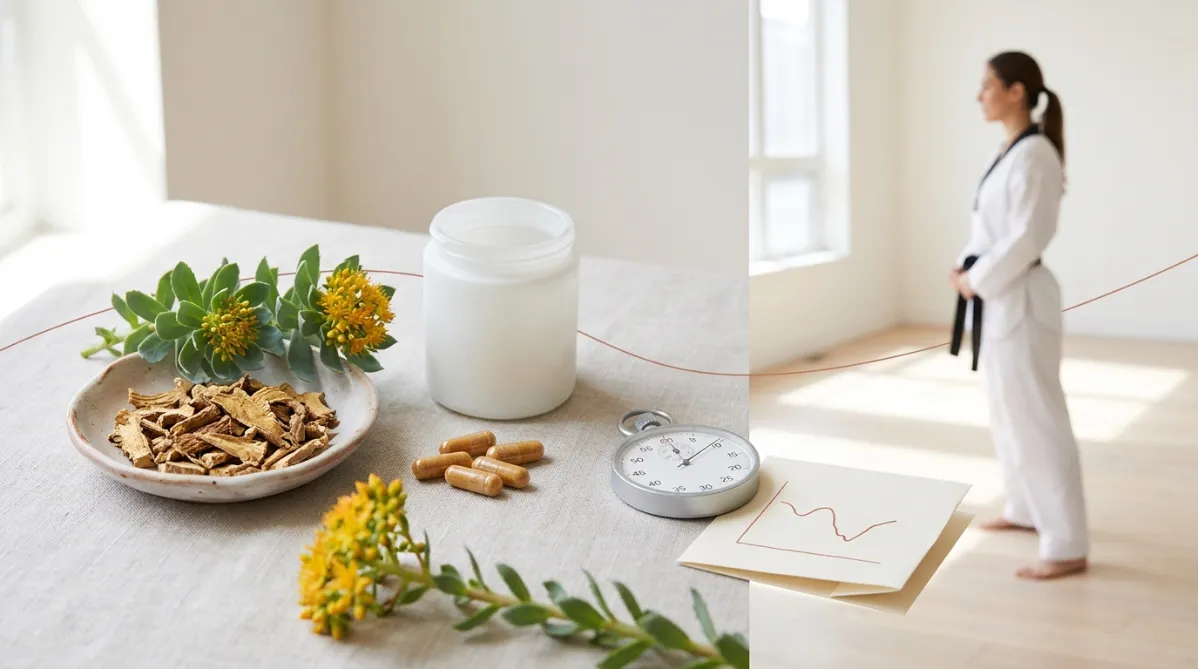
A wide, softly lit editorial still life on a pale warm-gray linen surface. On the left, a small ceramic dish holds dried golden-brown Rhodiola rosea root pieces, with a few fresh sprigs of the plant beside it. The sprigs have thick succulent blue-green leaves and tight clusters of small yellow-orange flowers. Next to the dish sit a handful of amber capsules and a matte white glass jar with no label. A sprig of the yellow blooms lies diagonally across the foreground, slightly out of focus.

On the right, in the middle distance, a woman in athletic wear is seen from the side and slightly blurred. She wears a crisp white taekwondo dobok with a black belt and stands in a calm ready stance in a bright, minimalist studio with pale wood floors and large windows. Soft morning light spills across the floor. Her form is a secondary element, and the shallow depth of field keeps the botanical objects sharp.

A thin, elegant detail ties the two halves together: a modern minimalist stopwatch with a clean white face rests on the linen near the capsules, its hand frozen mid-sweep. Beside it lies a small folded sheet of cream paper with a delicate hand-drawn line chart in muted terracotta ink, showing a small dip. A single fine terracotta line curves across the composition, loosely connecting the root, the stopwatch, and the athlete.

The palette is sophisticated and earthy: warm cream, sage green, dusty blush pink, terracotta, and a touch of marigold yellow from the flowers. The mood is calm, trustworthy, and wellness-forward, like a contemporary health and science journal. Light comes from the left, with soft shadows and gentle highlights on the ceramic and glass. There is generous negative space in the upper portion of the frame for title overlay. The image has a fine-grain, high-end editorial photography look, shot on a medium-format camera with a 50mm lens, shallow depth of field, and natural color grading.
Nutrition

Rhodiola riduce di 60 ms il tempo di reazione negli atleti con sindrome premestruale – ma c'è un inconveniente

Dr. Gymbro · · 4 min read

I sintomi premestruali possono rovinare una settimana di allenamento. Irritabilità, scarsa concentrazione, sonno disturbato, voglie e crampi non tengono conto del fatto che hai una gara in vista. Un nuovo studio randomizzato suggerisce che un’erba economica e ampiamente venduta potrebbe attenuare parte di questi effetti. Il risultato che ha catturato la nostra attenzione è un miglioramento di 60 millisecondi nel tempo di reazione visiva. Prima di aggiungerla al carrello, è importante sapere quanto fosse piccolo lo studio e cosa l’erba non ha fatto.

Lo studio: chi, cosa e dimensione

Ricercatori dell’Allameh Tabataba'i University di Teheran e della German Sport University Cologne hanno pubblicato il trial sul Journal of the International Society of Sports Nutrition. Si tratta di uno studio randomizzato, in doppio cieco e controllato con placebo, il disegno più robusto per indagare un integratore.

Il campione era limitato. Ventiquattro atlete di taekwondo con sindrome premestruale da moderata a severa sono state divise in due gruppi da 12. Un gruppo ha assunto 500 mg al giorno di estratto standardizzato di Rhodiola rosea per 10 giorni durante la fase premestruale ritenuta sintomatica. L’altro gruppo ha assunto un placebo. I ricercatori hanno valutato i sintomi con il Premenstrual Symptoms Screening Tool (PSST) e hanno misurato tempo di reazione, marcatori ematici, percezione dello sforzo e prestazione aerobica.

Il risultato principale: un cervello più veloce

Correggendo i valori di base, il gruppo Rhodiola ha mostrato un tempo di reazione visiva 60 ms più rapido rispetto al placebo (p < 0,001). In uno sport da combattimento, dove leggere il movimento dell’avversario è fondamentale, questo è il dato che attira l’attenzione. Lo studio ha valutato un compito di reazione visiva, non un confronto in sparring o in gara. Quanto di questi 60 ms si traduca in miglioramenti sul tappeto resta ancora da verificare.

Sintomi: una lunga lista di miglioramenti

Rispetto al placebo, la Rhodiola ha ridotto in maniera significativa diversi sintomi della sindrome premestruale (p < 0,05):

  • Irritabilità
  • Depressione
  • Ansia
  • Isolamento sociale
  • Diminuzione della concentrazione
  • Ipersonnia (eccessivo sonno)
  • Voglie alimentari
  • Pianto
  • Problemi cutanei
  • Dolore addominale

La lista copre umore, cognizione, appetito e fastidi fisici, il che è sorprendente per una singola pianta. Tuttavia, i sintomi sono stati autogestiti; anche con il controllo placebo, le scale soggettive in un gruppo così piccolo possono risultare rumorose.

Serotonina, GABA e sforzo

Nel siero periferico serotonina e GABA erano entrambe significativamente più alte nel gruppo Rhodiola rispetto al placebo (p < 0,001). Questi neurotrasmettitori sono legati a umore, calma e arousal, quindi il risultato è coerente con i miglioramenti dei sintomi. Va però sottolineato che sono stati misurati nel sangue: i livelli ematici non riflettono in modo affidabile l’attività cerebrale, perciò è più un indizio di meccanismo che una prova conclusiva.

Le atlete hanno anche riferito che l’esercizio sembrava più facile. Il rating di sforzo percepito post‑allenamento è diminuito di 1,40 unità Borg rispetto al placebo (p = 0,006). Lo stesso lavoro è stato percepito come meno gravoso.

Cosa NON ha fatto la Rhodiola

Questa è la parte che le pubblicità degli integratori tendono a omettere. Il tempo all’esaurimento e il VO₂max stimato non hanno mostrato differenze tra i gruppi (p > 0,05). La Rhodiola ha migliorato la percezione e la reattività, ma non ha influito sulle misure aerobiche testate. Se speravi in un nuovo record di resistenza, questo studio non lo sostiene.

Indicazioni pratiche

  • Dosaggio: lo studio ha utilizzato 500 mg al giorno di estratto standardizzato di Rhodiola rosea. La sintesi non specifica le percentuali di standardizzazione, perciò verifica che il prodotto riporti chiaramente a cosa è standardizzato.
  • Tempistica: le partecipanti hanno assunto l’integratore per 10 giorni durante la fase premestruale ritenuta sintomatica. Si tratta di un ciclo breve e mirato, non di un utilizzo continuativo durante tutto l’anno. Non è noto se gli effetti si mantengano con un’assunzione più prolungata.
  • Chi può beneficiarne: atlete femminili con sindrome premestruale da moderata a severa che avvertono cali di umore, concentrazione e percezione di sforzo nei giorni precedenti il ciclo. L’evidenza è diretta per giovani atlete di taekwondo; l’estensione ad altri sport o popolazioni è puramente ipotetica.
  • Chi dovrebbe evitarla o consultare un professionista:
    • Chi assume antidepressivi o altri farmaci che influenzano la serotonina; lo studio ha mostrato un aumento dei livelli di serotonina, quindi è consigliato il parere medico.
    • Persone con disturbo bipolare o altre condizioni dell’umore in trattamento.
    • Donne incinte o in allattamento, poiché la sicurezza non è stata valutata.
    • Atlete soggette a controlli antidoping: è opportuno scegliere prodotti certificati da terze parti e verificare le norme della propria federazione.
    • Chi soffre di SPM grave o PMDD; sintomi persistenti e invalidanti richiedono una valutazione clinica, non solo un integratore.

Limiti da non trascurare

Gli autori stessi lo ammettono: con solo 12 soggetti per gruppo i risultati sono fragili e possono essere influenzati da variazioni individuali. La fase premestruale è stata stimata, non confermata tramite analisi ormonali, quindi alcune partecipanti potrebbero trovarsi in una fase diversa da quella ipotizzata. Dieci giorni costituiscono un periodo breve e lo studio non può parlare di effetti a lungo termine. I test di prestazione non erano specifici per lo sport, e non sono state raccolte misurazioni fisiologiche oltre ai marcatori ematici e al VO₂max stimato. Gli autori invitano a condurre studi più ampi, con conferma ormonale, interventi più lunghi e test sport‑specifici. Lo studio non ha riportato conflitti di interesse.

Conclusioni

Questo piccolo, ma ben progettato, trial suggerisce che un ciclo breve di Rhodiola rosea durante la finestra premestruale può migliorare i sintomi della sindrome premestruale, velocizzare il tempo di reazione visiva e rendere l’esercizio percepito come meno faticoso per le atlete femminili. Non ha invece influito sul tempo all’esaurimento né sul VO₂max. Si tratta di evidenze preliminari promettenti, non di una sentenza definitiva. Se decidi di provarla, considerala un esperimento cautelativo: tieni un diario dei sintomi, rispetta le dosi consigliate e consulta un professionista se assumi farmaci o hai condizioni dell’umore.
Original study

Read the original research on pubmed.ncbi.nlm.nih.gov →

This article summarizes published research for general information. It is not medical advice.

DG

Written by

Dr. Gymbro

Dr. Gymbro writes for Dr. Gymbro: science-backed fitness, nutrition & performance.

Related Articles

A wide, editorial still life photographed in soft natural window light on a pale oatmeal-colored linen surface. At the center sits a small, rustic ceramic dish holding a handful of dried golden-orange Rhodiola rosea root pieces and a few fresh, fleshy green-gray succulent rosettes with rosy-pink tips. Beside it, a single matte amber glass capsule bottle lies on its side, with two cream-colored capsules spilling out. On the left, a minimalist analog stopwatch with a brushed brass case rests slightly out of focus, its hands suggesting a duration just past the quarter-hour mark. On the right, a worn, chalk-dusted steel kettlebell handle and a folded charcoal gym towel fill the negative space, hinting at lifting without showing a full gym scene.

In the foreground, a neat row of seven tiny ceramic pill cups arranged in a gentle diagonal line, the first cup holding one capsule and the rest sitting empty, as a quiet visual metaphor for a single dose versus daily dosing. A sprig of dried alpine moss and a few small speckled pebbles add organic texture. The background is a softly blurred warm-gray plaster wall with a gentle gradient shadow cast by a window frame, creating diagonal light stripes across the scene.

The palette is muted and earthy: sage green, terracotta, warm cream, brushed brass, and soft charcoal, with one subtle pop of coral from the Rhodiola tips. Shallow depth of field, crisp focus on the root and capsules, and fine film-like grain. The composition leaves generous clean negative space in the upper left for a headline overlay. The overall feel is a modern wellness and science journal: calm, tactile, minimal, and sophisticated, with a slightly moody, high-end magazine look. There is no text, no people, and no futuristic elements.
nutrition

200 mg di Rhodiola aumentano la resistenza di 24 secondi; quattro settimane di utilizzo quotidiano non aggiungono nulla

BY DR. GYMBRO ·

Una singola dose di 200 mg di Rhodiola rosea assunta un'ora prima dell'allenamento ha prolungato il tempo alla fatica da 16,8 a 17,2 minuti e ha aumentato il VO₂peak in uno studio crossover in doppio cieco. La sorpresa è che quattro settimane di assunzione quotidiana non hanno amplificato quell'effetto né hanno modificato alcuna altra variabile misurata. Il guadagno è di appena 24 secondi, mentre forza, tempi di reazione e attenzione sono rimasti invariati. Scopri cosa ha rivelato realmente lo studio, chi può sperimentare una dose acuta e perché non dovresti puntare sul “caricamento” della rhodiola.

A softly lit, minimalist editorial still life on a pale oat-colored linen surface, shot from a slightly elevated three-quarter angle. In the center-left, a small handmade ceramic dish in matte sage green holds a modest pile of dried ashwagandha root pieces and a scattering of fine tan powder. A few fresh ashwagandha sprigs, with delicate green leaves and small orange-red berries in papery husks, rest beside it. In front, a single tiny capsule sits alone on the linen, with a slim glass dropper bottle in amber tint just behind it, suggesting a very small dose. To the right, a neat row of three small glass vials stands slightly out of focus, their contents a muted gold, hinting at comparison without any labels or text. A delicate brass measuring spoon lies at the edge of the frame, catching a thin highlight.

Soft morning window light falls from the upper left, casting long, gentle shadows and a warm glow across the textures: rough linen weave, matte ceramic, glossy glass, and the powdery root. The color palette is calming and earthy, with sage green, warm cream, soft terracotta, amber, and touches of muted coral from the berries. In the background, a blurred, airy room with a pale plaster wall and a hint of a wooden shelf holding a notebook and a small glass of water, adding a quiet wellness-journal atmosphere. Shallow depth of field, crisp focus on the dish and capsule, and generous negative space on the right third of the frame for headline overlay. The overall mood is calm, thoughtful, and slightly skeptical, like a contemporary health and science magazine feature, with natural, realistic photography, fine grain, and subtle film-like color grading.
science research

Solo 30 mg di Ashwagandha riduce lo stress in 4 settimane — Ecco il trucco

BY DR. GYMBRO ·

La maggior parte degli studi sull’ashwagandha utilizza dosi di 250‑600 mg al giorno, ma questo ha testato solo 30 mg per 28 giorni su 60 adulti stressati. Il gruppo che ha assunto l’ashwagandha ha riportato un livello di stress più basso e il cortisolo salivare è rimasto stabile durante un test di stress in laboratorio, mentre quello del gruppo placebo è aumentato. Il punto critico è che i p‑value si aggirano tra 0,04 e 0,047, l’analisi per‑protocollo non è risultata significativa e la maggior parte degli altri esiti non ha mostrato differenze. Inoltre, lo studio è stato finanziato dal produttore dell’estratto. Ecco cosa supportano i dati, a chi potrebbero essere utili e cosa non dimostrano.

A landscape editorial still life on a softly lit desk, shot from a slightly elevated three-quarter angle with shallow depth of field. In the center sits a ceramic cup of black coffee with a thin curl of steam, on a matte sage-green desk mat. Beside it, a sleek white wireless gaming mouse and a minimal, low-profile keyboard are partly in focus. Scattered in the foreground are a few whole roasted coffee beans and a small glass jar of loose green tea leaves, as a quiet nod to caffeine sources. To the left, a few unlabeled supplement capsules in muted peach and cream spill from a small amber glass bottle onto the mat. Their blurred, ordinary look hints that they are less important than the coffee. In the background, a monitor glows with a soft, abstract, out-of-focus gradient of dusty rose and teal, with no readable game interface. A small analog alarm clock sits at the edge of the frame, its hands near late evening, suggesting sleep concerns. A sheet of paper with simple hand-drawn bar charts and a pencil rests near the cup, hinting at research and data without any legible text.

The palette is warm and modern: cream, sage, terracotta, charcoal, with a single accent of coral. Soft window light comes from the left, casting gentle long shadows and a subtle film-like grain. The composition is clean and uncluttered, with generous negative space on the right third for a title overlay. The look is contemporary and trendy, like a lifestyle-science magazine cover, calm, tactile, and sophisticated, with no sci-fi or neon cyberpunk elements.
supplements

Il supplemento per il gaming con prove reali non è quello che pubblicizzano

BY DR. GYMBRO ·

Le pubblicità dei supplementi per il gaming promettono concentrazione laser e riflessi fulminei, ma una nuova revisione sistematica di 13 studi randomizzati (466 giocatori) mostra che le evidenze riguardano quasi esclusivamente un solo ingrediente: la caffeina. Essa compare in 14 dei 18 protocolli testati ed è associata a una migliore attenzione, funzioni esecutive, umore, precisione di tiro e tempi di reazione. Sono stati valutati anche arginina‑silicato potenziata con inositolo, GABA e microalghe, ma con molto meno supporto. Gli autori avvertono che i campioni ridotti, i giocatori amatoriali e il rischio di bias rendono i risultati preliminari. Ecco cosa dimostra la ricerca, quali effetti collaterali tenere d'occhio e come usare la caffeina in modo sensato senza sacrificare il sonno.

A softly lit editorial flat-lay on a pale oat-colored linen surface, shot from slightly above in a wide landscape frame. On the left, a small matte white ceramic dish holds a modest heap of golden-orange Cordyceps militaris, slender clustered fruiting bodies with a delicate, fibrous texture, a few strands scattered across the linen. Next to the dish sits a tiny clear glass vial with a pinch of fine amber powder, and a minimalist wooden spoon rests beside it. In the center of the frame, a sleek stainless steel stopwatch lies beside a simple analog reaction-timing ruler in light birch wood, its thin black measurement ticks sharply in focus. On the right, partially cropped, the handlebar and gloved hand of a road bicycle are visible. A matte black bottle and a folded gray cotton towel add a subtle athletic note. A sprig of dried grass and a single smooth river stone provide organic balance. Soft diffused morning window light enters from the upper left and casts long, gentle shadows. The palette is warm and restrained: cream, burnt orange, soft sage green, charcoal, and touches of brushed steel. The depth of field is shallow, with the mushrooms and stopwatch crisp and the background gently blurred into creamy neutral tones. The mood is calm, clean, and contemporary, like a high-end wellness and science journal cover, with generous negative space in the upper right for headline text. No people, no text, no logos, and no futuristic elements.
supplements

Cordyceps assunti prima del massimo sforzo in bicicletta accelerano i tempi di reazione: evidenze da un piccolo studio

BY DR. GYMBRO ·

Una singola dose di 1 g di Cordyceps militaris, assunta 30 minuti prima di un test di massima intensità su cyclette, è stata collegata a tempi di reazione più rapidi dopo l'esercizio in giovani uomini. Anche il consumo di ossigeno a riposo è aumentato, ma il VO₂max è rimasto invariato. L'effetto principale dell’interazione non è risultato significativo e lo studio ha coinvolto solo 12 soggetti attivi per hobby. Ecco cosa è realmente migliorato, cosa no, e come interpretare questi risultati senza esagerare.

This page is available in