Dr. Gymbro
A wide, editorial-style flat lay photographed from above on a pale warm-gray linen surface in soft natural window light. At the center, a small open amber glass jar tips gently onto its side, spilling a few cream-colored capsules across the fabric. Next to the jar sits a loose arrangement of fresh mushrooms: a cluster of golden-tan reishi with glossy, lacquered caps, a few slender white enoki stems, a halved shiitake showing its pale gills, and a curl of turkey tail with concentric bands of rust, cream, and charcoal. A small wooden scoop holds a pile of fine beige mushroom powder.

On the left third of the frame, a matte black sports watch with a minimal face lies beside a folded sage-green running shirt and a pair of lightweight off-white running shoes, hinting at athletic training without showing a person. A slim white notebook with a single pencil rests nearby, open to a blank page with a faint hand-drawn line graph trending upward, in thin graphite strokes.

On the right side, a pair of clear glass beakers and a single small petri dish with a soft amber-tinted liquid add a subtle laboratory note, kept calm and organic. A single sprig of dried herbs and a few scattered oat-colored grains add texture.

The palette is earthy and refined: oatmeal, soft sage, terracotta, warm amber, and charcoal accents against the muted neutral background. Shadows are soft and diffused, with a gentle highlight on the glass and the glossy reishi cap. The composition leaves generous negative space in the upper right for a headline overlay. Shallow depth of field blurs the edges slightly, while the central mushrooms and capsules stay crisp. The overall feel is modern, clean, and trendy, like a wellness and science magazine cover, with tactile natural textures, minimal styling, and a quiet sense of curiosity and skepticism.
Science & Research

Una capsula di funghi ha aumentato il VO2max del 14,8 % — ma c'è un grosso limite

Dr. Gymbro · · 4 min read

Una capsula di funghi ha aumentato il VO2max del 14,8 % — ma c'è un grosso limite

Un balzo del 14,8 % nel VO2max sarebbe un risultato notevole. Gli allenatori d’élite trascorrono anni a rincorrere miglioramenti del genere, e qui pare che sia stato raggiunto dopo soli 40 giorni di assunzione di una capsula di funghi. È il dato principale di un nuovo articolo su Antioxidants, ma occorre prenderlo con cautela perché lo studio non prevedeva alcun gruppo placebo.

Il dato sorprendente

Lo studio (Kumar, Gill, Verma e Singh, Antioxidants 2026; 15(11):1386) riporta che 50 atleti maschi sani, di età compresa tra 18 e 22 anni, hanno assunto 320 mg al giorno di un estratto multi‑funghi ricco di beta‑glucani per 40 giorni. Il loro VO2max relativo è passato da 46,26 a 53,12 mL/kg/min, un aumento del 14,8 % (p < 0,001). Il VO2max assoluto è cresciuto dell'11,6 %. Anche la copertura riportata da NutraIngredients segnala un incremento del tempo fino all'esaurimento.

Il prodotto era una capsula di "7‑in‑1 Mushroom Complex Extract". Il materiale a disposizione non specifica le specie di funghi contenute, quindi non faremo ipotesi al riguardo.

Il grosso limite: nessun placebo, nessun controllo

Si trattava di uno studio pilota non controllato, a braccio unico, pre‑post. Non c'era gruppo placebo, né randomizzazione, né cieco. Gli autori stessi descrivono i risultati come hypothesis‑generating.

Questo è importante per tre motivi:

  • L'allenamento è continuato. Gli atleti hanno mantenuto il loro regime di allenamento durante i 40 giorni. Un giovane atleta che si allena per sei settimane può migliorare il VO2max senza alcun integratore, e questo disegno non permette di separare i due effetti.
  • Effetto aspettativa. Tutti sapevano di stare assumendo un integratore. La motivazione è fondamentale in un test di esercizio massimale, e qui non è stata controllata.
  • Popolazione ristretta. Tutti i partecipanti erano uomini giovani e sani, perciò i risultati non si estendono a donne, adulti più anziani o a soggetti non atleti.

Il disegno prevedeva comunque alcune misure strutturate: prima dell’intervento i partecipanti hanno avuto un wash‑out del supplemento di 14‑17 giorni e hanno seguito una dieta isocalorica standardizzata. Questi accorgimenti sono utili, ma non sostituiscono un gruppo di controllo.

Altri cambiamenti nel sangue e nella respirazione

I risultati secondari sono eterogenei e più difficili da interpretare:

  • Quoziente respiratorio massimo (RQ) è aumentato da 1,096 a 1,308. Si tratta di un valore insolitamente alto, perciò occorre interpretarlo con cautela.
  • Ematocrito è sceso da 44,5 % a 42,1 %, andando contro la classica idea "più globuli rossi, più ossigeno".
  • Volume corpuscolare medio (MCV) è aumentato.
  • Conta dei leucociti è diminuita da 7,53 a 6,80 ×10⁹/L, con neutrofili in calo e linfociti in aumento.

Un ematocrito più basso associato a un VO2max più alto è una combinazione interessante, ma lo studio non è in grado di spiegarla. Potrebbe trattarsi di un vero effetto fisiologico, di un cambiamento del volume plasmatico, o semplicemente di rumore statistico. Senza un gruppo di controllo nessuno può affermare quale sia la spiegazione corretta.

Gli esperimenti cellulari: interessanti, ma una domanda diversa

Lo studio include anche una parte di laboratorio. I ricercatori hanno usato le cellule H9c2, cardiomioblasti di ratto, e hanno indotto ipossia chimica con cloruro di cobalto (CoCl₂). Hanno testato tre composti singolarmente:

  • Beta‑glucano a 20 µg/mL
  • Taurina a 40 µM
  • L‑arginina a 50 µM

Tutti e tre hanno incrementato l’attività metabolica (da 83,65 % a 97,40 % contro 67,29 % nelle cellule ipossiche sole) e hanno ridotto l’espressione di Hif1a, un marker della risposta cellulare all’ipossia. Le misurazioni Seahorse della funzione mitocondriale non hanno mostrato differenze statisticamente significative.

C’è un divario sostanziale tra questo lavoro e la sperimentazione umana. In vitro sono stati testati composti isolati su cellule di ratto in un modello chimico di bassa ossigenazione, mentre in vivo si è valutato un estratto di funghi in atleti. I dati cellulari possono suggerire un meccanismo plausibile, ma non dimostrano che la capsula agisca tramite quel medesimo meccanismo negli esseri umani.

Cosa la evidenza può e non può sostenere

Può sostenere: l'esistenza di un segnale che vale la pena approfondire. Un grande cambiamento pre‑post con p‑value molto basso in 50 persone, accompagnato da dati cellulari che puntano a vie legate all’ipossia, giustifica la realizzazione di un vero trial.

Non può sostenere: l’affermazione che l’estratto di funghi aumenti il VO2max di circa il 15 %. L’adattamento all’allenamento, l’effetto aspettativa, la familiarità con il test e la variabilità di misura potrebbero spiegare in tutto o in parte il cambiamento osservato. Un trial ben condotto, controllato con placebo, probabilmente mostrerà un effetto molto più piccolo, se presente.

Consigli pratici

  • Dose studiata: 320 mg al giorno di un estratto multi‑funghi ricco di beta‑glucani.
  • Durata: 40 giorni. Il materiale di riferimento non specifica l’orario di assunzione, quindi non esistono indicazioni basate su evidenza per il timing.
  • Chi potrebbe essere interessato: uomini giovani, sani e allenati che vogliono fare un esperimento personale accurato. Anche così, consideratelo un esperimento, non un integratore di performance provato. Tenete traccia dei vostri dati in condizioni costanti.
  • Chi dovrebbe evitarlo o consultare un professionista prima: persone allergiche ai funghi, donne in gravidanza o in allattamento, chi ha patologie o assume farmaci, soprattutto immunomodulatori. Gli atleti dovrebbero verificare le etichette del prodotto e la certificazione di terze parti. Si tratta di una cautela generale, non di una conclusione dello studio.
  • Cosa non fare: non sostituire le basi comprovate della performance (allenamento strutturato, sonno, alimentazione) con una capsula.

Conclusione

Un aumento del VO2max del 14,8 % è il tipo di cifra che si diffonde rapidamente, ma l'assenza di gruppo placebo è il motivo per rallentare. Questo pilota fornisce un’ipotesi ai ricercatori, non un risultato definitivo per gli atleti. Il vero test sarà un trial randomizzato, controllato con placebo, con composizione fungina definita, una popolazione più ampia e test ciechi. Fino ad allora, la risposta alla domanda “la capsula di funghi aggiunge davvero il 15 % al VO2max?” è: non lo sappiamo ancora.
Original study

Read the original research on doi.org →

This article summarizes published research for general information. It is not medical advice.

DG

Written by

Dr. Gymbro

Dr. Gymbro writes for Dr. Gymbro: science-backed fitness, nutrition & performance.

Related Articles

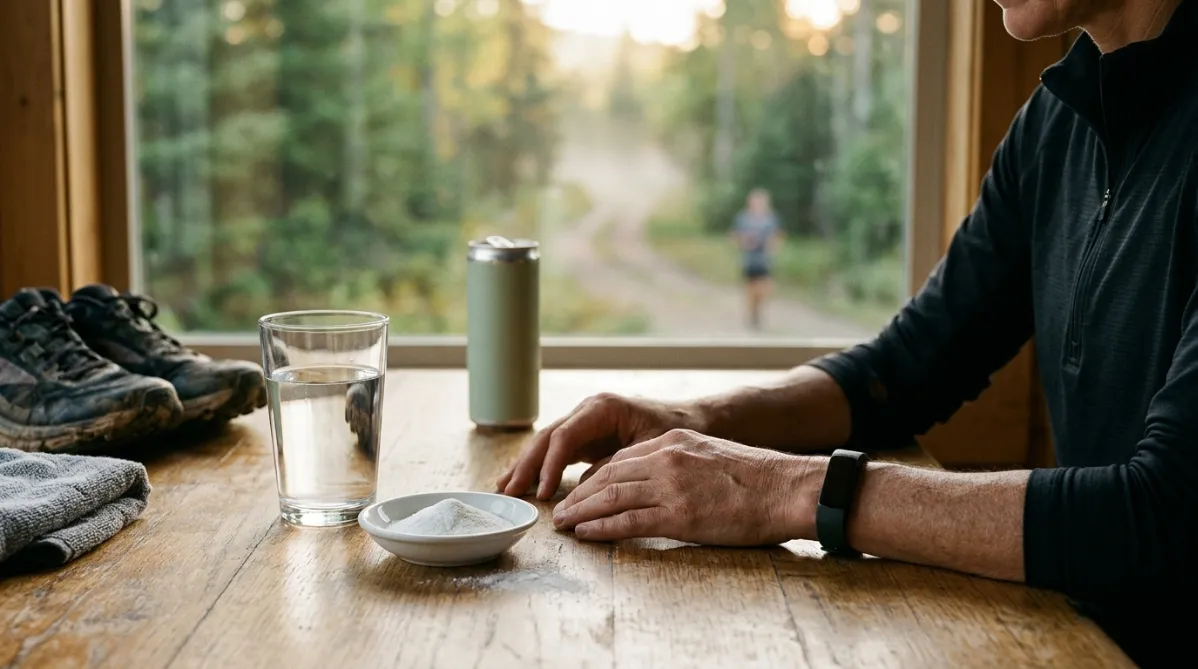
A landscape editorial photograph of a lone runner's hands resting on a weathered wooden table beside a small white ceramic dish of fine white powder and a clear glass of water, shot in soft morning light. A slim matte aluminum energy drink can, unbranded with a minimalist pale sage-green label, stands slightly out of focus in the background, with a single scoop of powder dusted lightly on the tabletop. A pair of worn running shoes and a folded gray towel sit at the edge of the frame. Through a large window behind them, a blurred misty trail winds through green trees at sunrise, with warm golden light spilling across the scene.

The color palette is calm and modern: creamy off-white, sage green, warm honey gold, and soft charcoal. The composition follows the rule of thirds, with the dish and glass in the lower left third and generous negative space on the right for a title overlay. The depth of field is shallow, with a crisp focus on the powder's delicate texture and tiny glints of light on the glass rim. The mood is clean, thoughtful, and quietly energetic, like a contemporary health and science magazine feature. Natural grain, subtle film-like softness, and gentle shadows give it an authentic lifestyle-editorial look. There are no text, logos, or futuristic elements, only tactile, real-world materials like wood, ceramic, glass, cotton, and metal.
nutrition

L'ingrediente delle bevande energetiche che da solo aumenta la resistenza

BY DR. GYMBRO ·

Mentre tutti citano la caffeina, c’è un altro componente della lattina energetica che potrebbe operare in silenzio: la taurina. Una meta‑analisi del 2018 su 10 studi ha evidenziato che la taurina pura migliora le prestazioni di resistenza (Hedges' g = 0,40) e che basta una singola dose. Né la quantità (1‑6 g) né la durata dell’assunzione hanno modificato l’effetto in maniera significativa. L’evidenza è però limitata e gli intervalli di confidenza ampi, perciò si tratta di un indizio promettente, non di una certezza. Scopri cosa ha rivelato lo studio e come sperimentare la taurina in modo ragionevole.

A wide, landscape editorial photograph with soft natural morning light. In the foreground, a rustic matte ceramic bowl rests on a pale oak wooden table, filled with vivid deep-green spirulina powder heaped in a gentle mound. A small wooden spoon dusted with the powder lies beside it, and a few scattered green flecks dust the surface. Next to the bowl sits a clear glass of water with a swirl of emerald green just blending in, catching sunlight and casting soft green-tinted shadows.

In the middle ground, slightly out of focus, a pair of worn running shoes in muted sage and cream tones sits on the edge of the table, laces loosely undone. A simple analog stopwatch with a clean white face lies beside them, its hands frozen at a moment suggesting a close finish. A folded linen towel in warm oatmeal tone drapes casually nearby.

The background is a softly blurred outdoor setting seen through a large window: a quiet tree-lined running path at dawn, with golden-hazy light, dewy greenery, and a faint mist. The color palette is calm and modern: deep emerald, sage, cream, warm wood, and touches of soft gold. The composition leaves generous negative space on the right side for headline text, with a shallow depth of field, crisp detail on the powder texture, and a clean, minimalist, lifestyle-magazine aesthetic. Subtle film-like grain, natural shadows, and a fresh, healthy, energetic mood. No people, no text, no logos.
nutrition

La spirulina ha aiutato i runner a durare il 32 % in più — ecco il problema

BY DR. GYMBRO ·

I runner che hanno assunto spirulina per quattro settimane sono riusciti a proseguire circa il 32 % in più durante uno sforzo al massimo, al termine di una corsa estenuante di due ore. Lo stesso studio ha mostrato un aumento del 10,9 % dell'ossidazione dei grassi e livelli più alti di glutatione, il principale antiossidante. Però c’è un rovescio della medaglia: al campione hanno partecipato solo nove uomini e il miglioramento reale si è tradotto in circa 39 secondi. Ecco cosa dicono i dati, perché la spirulina potrebbe funzionare e come assumerla in sicurezza.

A wide, editorial still life photographed in soft natural window light on a pale oatmeal-colored linen surface. At the center sits a small, rustic ceramic dish holding a handful of dried golden-orange Rhodiola rosea root pieces and a few fresh, fleshy green-gray succulent rosettes with rosy-pink tips. Beside it, a single matte amber glass capsule bottle lies on its side, with two cream-colored capsules spilling out. On the left, a minimalist analog stopwatch with a brushed brass case rests slightly out of focus, its hands suggesting a duration just past the quarter-hour mark. On the right, a worn, chalk-dusted steel kettlebell handle and a folded charcoal gym towel fill the negative space, hinting at lifting without showing a full gym scene.

In the foreground, a neat row of seven tiny ceramic pill cups arranged in a gentle diagonal line, the first cup holding one capsule and the rest sitting empty, as a quiet visual metaphor for a single dose versus daily dosing. A sprig of dried alpine moss and a few small speckled pebbles add organic texture. The background is a softly blurred warm-gray plaster wall with a gentle gradient shadow cast by a window frame, creating diagonal light stripes across the scene.

The palette is muted and earthy: sage green, terracotta, warm cream, brushed brass, and soft charcoal, with one subtle pop of coral from the Rhodiola tips. Shallow depth of field, crisp focus on the root and capsules, and fine film-like grain. The composition leaves generous clean negative space in the upper left for a headline overlay. The overall feel is a modern wellness and science journal: calm, tactile, minimal, and sophisticated, with a slightly moody, high-end magazine look. There is no text, no people, and no futuristic elements.
nutrition

200 mg di Rhodiola aumentano la resistenza di 24 secondi; quattro settimane di utilizzo quotidiano non aggiungono nulla

BY DR. GYMBRO ·

Una singola dose di 200 mg di Rhodiola rosea assunta un'ora prima dell'allenamento ha prolungato il tempo alla fatica da 16,8 a 17,2 minuti e ha aumentato il VO₂peak in uno studio crossover in doppio cieco. La sorpresa è che quattro settimane di assunzione quotidiana non hanno amplificato quell'effetto né hanno modificato alcuna altra variabile misurata. Il guadagno è di appena 24 secondi, mentre forza, tempi di reazione e attenzione sono rimasti invariati. Scopri cosa ha rivelato realmente lo studio, chi può sperimentare una dose acuta e perché non dovresti puntare sul “caricamento” della rhodiola.

A sunlit outdoor running track in late afternoon, shot from a low angle with shallow depth of field. In the foreground, a matte black bottle with a minimal off-white label sits on the edge of a warm terracotta-colored track lane, beside a folded white towel and a small glass of amber liquid catching golden light. Condensation beads on the bottle. A faint heat shimmer rises from the track surface and softens the background.

In the midground, slightly out of focus, a lean athlete in a sage-green tank top and charcoal shorts runs on a treadmill-like stretch of track, a thin sheen of sweat on their shoulders, their expression focused and calm. Their motion is gently blurred, suggesting endurance and rhythm. Long soft shadows stretch across the lane lines.

The background fades into hazy peach, apricot, and pale yellow tones, with the suggestion of tall trees and a distant stadium wall. Warm sun flare enters from the upper right, creating a subtle glow and a few soft light streaks across the frame.

Subtle editorial touches: a small notebook with a pencil and a stopwatch rest beside the bottle, hinting at data and timing without any text legible. The color palette is warm and muted, with terracotta, cream, sage, and charcoal accents, and a fine film-like grain. The composition leaves open negative space on the left third for a headline overlay. The overall mood is clean, modern, and health-journal inspired, natural and aspirational, with a calm scientific curiosity rather than hype.
nutrition

Bevande chetone al caldo: più resistenza e memoria più acuta?

BY DR. GYMBRO ·

Le bevande a base di chetoni sono spesso associate a biohacker che vogliono bruciare grassi, ma uno studio sullo stress termico suggerisce che potrebbero anche migliorare la capacità di sostenere uno sforzo intenso. In 17 uomini allenati, il mono‑ester di chetone combinato con caffeina ha prolungato il tempo fino all’esaurimento di 8,9 minuti contro 7,0 con carboidrati più caffeina, dopo 90 minuti di corsa su tapis‑roulant a 34 °C. Inoltre, l’accuratezza al test 1‑back è aumentata, mentre frequenza cardiaca e temperatura corporea non hanno mostrato differenze significative. I risultati, però, sono limitati da un campione piccolo, maschile e da una singola sessione. Ecco cosa dicono i dati e cosa resta incerto.

This page is available in