Dr. Gymbro
←

#fucoxanthin

1 article
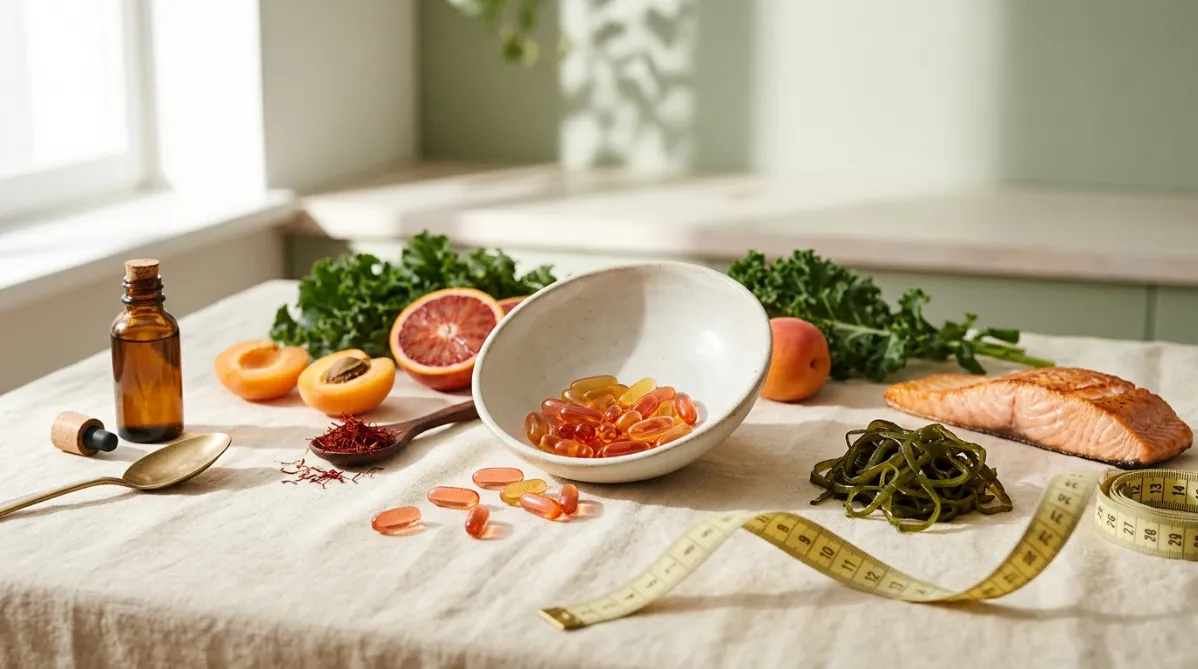
A landscape editorial still life on a soft, warm cream linen surface in natural morning window light. In the center, a shallow ceramic bowl of matte white glaze holds a handful of translucent amber and coral-orange softgel capsules, a few spilling onto the surface in a gentle arc. Around the bowl, carotenoid-rich foods are arranged in an organic, balanced composition: halved ripe apricots, a sliced blood orange, a small pile of saffron threads with a few crimson stigmas on a wooden spoon, a bundle of fresh kale leaves, a cooked pink salmon fillet slice, and a few strands of wakame seaweed in deep olive green. A tape measure in soft pale yellow curls loosely through the foreground, crossing the frame diagonally, and its numbers are crisp but unobtrusive. On the left, a small glass dropper bottle and a brushed-brass spoon catch highlights. In the background, softly blurred, a sunlit kitchen counter with a pale sage-green wall and the shadow of a leafy plant falling across the scene.

The palette is warm and cohesive: saffron, terracotta, peach, coral, and sage green against creamy neutrals. The lighting is soft and directional, with gentle long shadows, shallow depth of field, and a subtle film-like grain. The styling feels like a modern wellness magazine or a trendy science-journal website, with a minimalist, airy, uncluttered look and generous negative space in the upper right for headline overlay. Photographic realism, high-end editorial food and product photography, 50mm lens, slightly elevated three-quarter angle, crisp focus on the capsules and tape measure, with the rest falling off softly.
science research

Le pillole di carotenoidi riducono la circonferenza vita e aggiungono 2,3 kg di massa magra – più o meno

BY DR. GYMBRO ·

Una meta‑analisi su 27 studi randomizzati ha mostrato che gli integratori di carotenoidi (astaxantina, crocina, luteina e fucoxantina) sono associati a una riduzione di 1,8 cm della circonferenza vita e a un guadagno di 2,3 kg di massa magra. Tuttavia, la percentuale di grasso corporeo non è cambiata in modo significativo, la perdita di peso è stata in media di solo 1 kg, e il risultato sulla massa magra si basa su appena quattro studi. Gli effetti sembrano più marcati in sperimentazioni più lunghe di 8 settimane e in soggetti sotto i 50 anni. Ecco cosa mostrano realmente i dati, quali dosi sono state usate (da 2 a 100 mg/giorno) e chi potrebbe trarne beneficio.

This page is available in