Dr. Gymbro
←

#plyometrics

2 articles
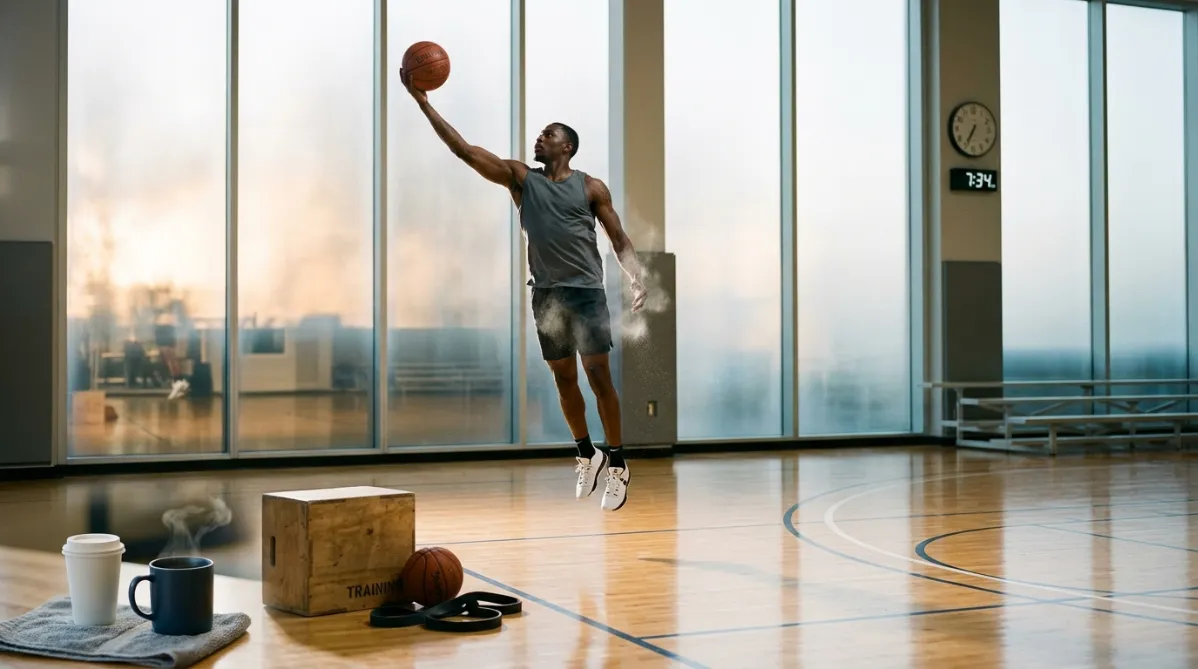
A wide, editorial-style photograph of a basketball player mid-air at the top of a vertical jump inside a sunlit indoor court, shot from a low angle so the athlete's silhouette rises against tall frosted windows glowing with soft morning light. The player wears a plain charcoal tank and white sneakers, with chalk dust drifting off their hands and catching the light. The polished honey-toned hardwood floor reflects the figure faintly, with crisp painted court lines leading the eye across the frame.

In the foreground at the lower left, slightly out of focus, a small wooden plyometric box sits on the floor beside a matte ceramic cup of black coffee and a plain white paper cup, placed neatly on a folded gray towel. Thin steam curls from the ceramic cup. They stand for the question of caffeine versus warm-up without any text or labels.

The color palette is calm and modern: warm amber wood, soft cream, muted slate blue shadows, and a touch of burnt orange from a basketball resting near the box. Light is natural and diffused, with gentle rim lighting on the athlete's shoulders and a shallow depth of field that blurs the background bleachers into creamy shapes. The composition has generous negative space on the right third, suited to a headline overlay, in a clean, contemporary magazine style with fine film grain, subtle contrast, and a quiet, focused mood. No text, no logos, no futuristic elements.
science research

La caffeina prima dei salti non ha aggiunto nulla: il riscaldamento ha fatto il lavoro

BY DR. GYMBRO ·

La combinazione di caffeina e un riscaldamento a drop‑jump sembrava la ricetta per saltare più in alto, ma uno studio su giocatori di basket d’élite ha dimostrato che il caffè non ha fornito benefici aggiuntivi. Il protocollo di drop‑jump personalizzato ha prodotto da solo un aumento temporaneo della performance di salto, mentre una dose di 3 mg/kg di caffeina non ha modificato altezza massima, tempi né PAPE rispetto al placebo. Le risposte individuali sono state molto variabili, perciò alcuni atleti potrebbero reagire diversamente. Scopri cosa dimostra lo studio, cosa non dimostra e come impostare il tuo priming per il salto.
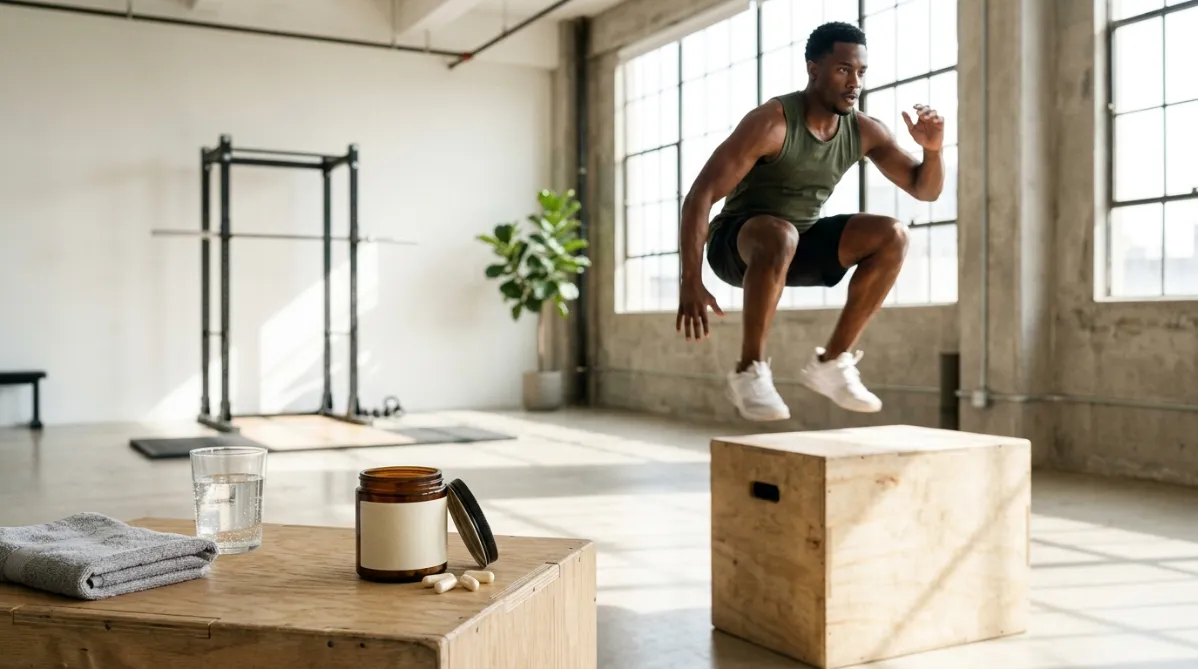
A wide, bright editorial photograph of a male athlete captured mid-jump in a minimalist, sunlit indoor training studio with pale concrete floors and tall windows. He is suspended at the peak of a plyometric box jump, knees tucked, with soft natural light and gentle motion blur at his feet. In the foreground, slightly out of focus, sits a small matte amber glass jar with a plain cream label, its lid resting beside it. Next to it are a few creamy white capsules spilled on a light oak wooden plyo box. A clear glass of water and a folded gray towel sit nearby.

The color palette is fresh and modern: warm off-white, sage green, soft sand, and touches of muted terracotta. A few green leaves of a potted fiddle-leaf plant in the corner add an organic feel. Shadows are long and soft, and the atmosphere is calm, clean, and health-focused, like a high-end wellness magazine spread.

The composition follows the rule of thirds. The jumping figure sits on the right third, and the supplement jar and capsules anchor the lower left. Negative space in the upper left leaves room for a headline overlay. The depth of field is shallow with a creamy bokeh background, shot on a 50mm lens with a subtle film-like grain. The overall look is crisp, airy, and contemporary, a lifestyle science journal cover aesthetic with no text, no logos, and no futuristic elements.
recovery

Questo ceppo probiotico riduce il danno muscolare dopo 100 salti massimali

BY DR. GYMBRO ·

Un nuovo studio randomizzato suggerisce che il probiotico *Lactiplantibacillus plantarum* GKK1 possa attenuare l’impatto di una sessione pliometrica estrema. Dopo quattro settimane di integrazione (1,0 × 10¹¹ CFU al giorno), 48 uomini non allenati hanno eseguito 100 salti massimali; il gruppo trattato ha mostrato minori cali in salto, forza e test di Wingate rispetto al placebo, oltre a valori più bassi di CK, mioglobina, hs‑CRP, TBARS e 3‑metilistidina urinaria. Lo studio è piccolo, limitato a uomini non allenati e coinvolge autori legati al produttore del ceppo. Ecco cosa dicono i dati e a chi potrebbero interessare.

This page is available in