Dr. Gymbro
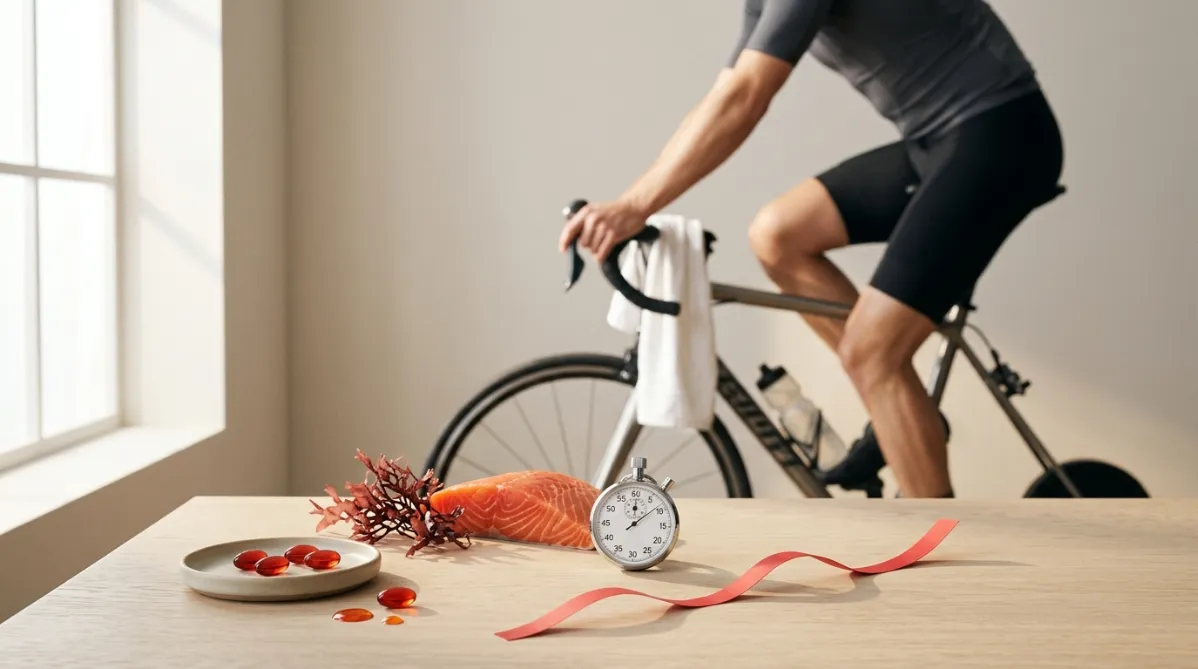
A cyclist's legs mid-pedal on a stationary road bike, shot in a bright, airy, minimalist studio with a soft warm-grey backdrop. In the foreground on a pale oak table sits a small ceramic dish holding four deep coral-red softgel capsules, with a few translucent droplets of red-orange oil glistening beside them. Beside the dish is a sprig of dried red microalgae-toned seaweed and a halved wild salmon fillet, its coral flesh echoing the capsule color. Behind the table, slightly out of focus, a cyclist in a fitted charcoal jersey and matte black shorts rides a bike on an indoor trainer. Only the torso and legs are visible, with no face. A white towel hangs over the handlebars and a clear water bottle catches the light.

Soft diffused morning light streams from a large window on the left, creating long gentle shadows and a subtle golden-hour glow on the skin and the glossy capsules. The palette is restrained and editorial: warm cream, sand, soft grey and charcoal, with vivid coral-red as the single accent color. A minimalist analog stopwatch with a clean white face sits on the table, its hands near the 85-minute mark. A thin, elegant line-graph shape is subtly suggested by a curved strip of red ribbon lying on the table, rising from left to right to hint at the performance gain without any text.

The composition follows the rule of thirds, with the capsules and stopwatch in the lower left and the cyclist's motion-blurred legs sweeping across the right. Shallow depth of field, crisp macro detail on the capsules, and a fine film-like grain. The overall feel is a modern health and science magazine cover: clean, calm, sophisticated, and natural, with negative space in the upper area for a headline. There are no futuristic elements, no glowing effects, no laboratory equipment, and no text or logos. Landscape 16:9 format.
Nutrition

4日間のアスタキサンチン投与でサイクリングの疲労限界時間が72分から85分に伸長―小規模試験の結果

Dr. Gymbro · · 1 min read

4日間のアスタキサンチン投与で、若年男性はハードな一定負荷で約13分走行時間が伸長

BMC Sports Science, Medicine & Rehabilitation(2025年)に掲載されたランダム化比較試験の見出しです。サーモンやオキアミに赤い色を与えるカロテノイド、アスタキサンチンの効果を検証しました。結果は興味深いものですが、サンプルサイズが小さいため慎重に読み解く必要があります。

フック:72分 vs 85分

試験では、疲労限界時間(TTE)が 85.41 ± 4.42分(アスタキサンチン摂取後)と 72.11 ± 2.24分(プラセボ)で、平均差は約13分、すなわち 約18%の延長 となりました。規模は小さいものの、統計的有意性は高く(P < 0.001、partial η² = 0.71)で、効果量は大きいことが示されています。

運動は決して楽ではありませんでした。参加者は VO2maxの75% で自転車を漕ぎ続け、ペースが保てなくなるまで走行しました。このような持続的かつ高強度の負荷下では、ほんの数分の優位性でも結果に表れやすくなります。

投与量とプロトコル:短期・高用量

研究責任者は Tsao Jung‑Piao 氏と Cheng I‑Shiung 氏ら。対象は 10名の身体活動的な若年男性(平均22.5歳) です。デザインはランダム化、プラセボ対照、クロスオーバー方式で、各参加者は自分自身と比較できるようにしています。参加者は 1日28 mgのアスタキサンチンまたはプラセボ を4日間摂取し、4日目に限界走行テストを実施しました。

血液・呼気サンプルは運動前、運動中、そして直後に採取し、筋損傷、炎症、酸化ストレス、エネルギー利用を測定しました。

投与量は重要です。 市販のアスタキサンチン・ソフトジェルは1回分でこの量に比べてはるかに少ないものが多く、28 mg未満の製品が一般的です。標準的なボトルで同様のプロトコルを真似る場合は、必ずラベルを確認し、適切な用量であるかどうか判断してください。複数カプセルを同時に摂取すれば本試験と同等になるわけではなく、安全性や試験条件とは異なる可能性があります。また、4日間のローディングは、通常は数週間~数ヶ月の継続使用が推奨されるアスタキサンチンにとっては例外的です。

筋損傷と酸化ストレス:バイオマーカーの変化

パフォーマンスだけでなく、研究者は運動誘発性ストレスの指標も測定しました。

  • クレアチンキナーゼ(CK)と乳酸脱水素酵素(LDH):激しい運動後に筋細胞から漏れ出すため上昇しますが、アスタキサンチンはその増加を有意に抑制しました(P < 0.05)。CK に対する時間×処置の相互作用は有意(P = 0.039、η²p = 0.217)で、筋損傷軽減が示唆されます。
  • マロンジアルデヒド(MDA):脂質過酸化の指標で、運動中・直後に上昇しますが、アスタキサンチンは上昇幅を大幅に抑えました(P < 0.05)。
  • 炎症マーカー:腫瘍壊死因子α(TNF‑α)と C反応性タンパク(CRP)は、サプリメント摂取・運動のいずれでも変化が見られませんでした。効果は酸化ストレスと筋漏れマーカーに限定され、広範な抗炎症作用は示されませんでした。
  • エネルギー基質利用:運動中・運動後のエネルギー利用は両条件で同様でした。したがって、走行時間の延長は脂肪・炭水化物の燃焼シフトで説明できず、メカニズムは未解明です。
  • 気分:Profile of Mood States(POMS)スコアは、アスタキサンチン摂取でも悪化せず、むしろ安定していました。

持久系アスリートへの示唆

著者らはアスタキサンチンを「栄養的エルゴジェニック補助」と位置付けています。論理は、高強度の持続的努力が活性酸素種(ROS)を生成し、筋膜を損傷・疲労へ導く、というものです。脂溶性の抗酸化剤が細胞膜に蓄積すれば、理論上は保護できるはずです。MDA、CK、LDH の低下はそのストーリーと合致します。

しかし、データだけでは因果関係は証明できません。炎症マーカーが変化しなかったことやエネルギー利用が同一であることから、抗酸化作用が直接的に13分の余剰につながったとは言い切れません。トレーニングにおいては、一定程度の ROS が適応反応を促すという側面もあり、抗酸化剤は「二刃の剣」になる可能性があります。今回の試験は単一の急性運動のみを測定しており、数週間にわたるトレーニング適応については言及できません。

実務的なまとめ

  • シグナルは有望だが決定的ではない:短期プロトコルで大きな TTE 改善とバイオマーカー変化が見られた点は期待できるが、確固たる証拠とは言えません。
  • 投与量に注意:本試験は28 mg/日という比較的高用量を使用しています。市販品のラベルと照らし合わせ、同等の摂取量かどうか必ず確認しましょう。
  • ローディング期間は短い:4日間というローディングはレース前の準備としては興味深いですが、長期使用での効果は不明です。
  • 適用範囲は限定的:ハードな持久サイクリングに限った結果であり、筋力増強や体組成改善を示すエビデンスはありません。

無視できない限界点

最大の注意点はサンプルサイズ 10名 です。小規模試験は効果サイズが不安定になりやすく、TTE の標準偏差が極めて小さい点も再現性に注意が必要です。対象は若い身体活動的男性のみで、女性や高齢者、エリート持久アスリートへの外挿は不確かです。テストしたのは 75% VO2max での単一限界走行だけで、摂取期間も 4 日間に限定されました。

さらに、TTE テスト自体はモチベーションやペース配分に敏感で、実際のレースやタイムトライアルの結果と必ずしも一致しません。女性やトレーニングされた選手を含む大規模・事前登録された再現研究が必要です。

結論

本試験は、短期的な持久補助としてのアスタキサンチンの初期的な有望性を示しています。疲労限界時間が約18%伸び、筋損傷・脂質過酸化のバイオマーカーが低下しました。ただし、サンプルが10名と小規模であり、用量も市販品より高い点を踏まえると、追試や長期安全性の検証が不可欠です。現時点では、実績あるパフォーマンス向上手法というよりも、さらなる研究の出発点として捉えるべきでしょう。
Original study

Read the original research on pubmed.ncbi.nlm.nih.gov →

This article summarizes published research for general information. It is not medical advice.

DG

Written by

Dr. Gymbro

Dr. Gymbro writes for Dr. Gymbro: science-backed fitness, nutrition & performance.

Related Articles

A wide editorial still life shot from a slightly elevated angle on a pale ash-wood bench in a bright, airy training hall. In the center sits a small matte ceramic dish holding a few translucent coral-red softgel capsules, their glossy surfaces catching soft window light. Beside the dish rests a folded white taekwondo dobok with a black belt loosely coiled on top. A sprig of fresh red microalgae-toned seaweed and a halved blood orange add natural color accents. A clean glass of water with subtle condensation stands to one side.

In the softly blurred background, the silhouette of a martial artist in a white uniform stretches near tall windows, with diffused morning light streaming across a sprung wooden floor. A pair of red and blue sparring gloves hangs on a minimal wall hook. Thin, elegant shadows stretch across the bench.

The palette is restrained and modern: warm off-white, soft sand, muted charcoal, with a vivid coral-red accent pulled from the capsules. Shallow depth of field, crisp focus on the capsules and dish, creamy bokeh behind. Natural, gentle lighting with a subtle film-like grain, reminiscent of a contemporary wellness and science magazine cover. Generous negative space on the left third of the frame for headline text. Calm, precise, and quietly athletic in mood, with no text, logos, or futuristic elements.
science research

12 mgアスタキサンチンを28日間摂取:格闘家における筋肉損傷とバーンアウト

BY DR. GYMBRO ·

若手男性テコンドー選手を対象に、1日12 mgのアスタキサンチンを28日間投与した新しいランダム化比較試験が実施されました。28日後、サプリメント群はプラセボ群に比べクレアチンキナーゼ(CK)の変化が有意に異なり、SOD活性も高く、MDAは低めの傾向でした。また、感情的・身体的疲労感がやや軽減されたという探索的なシグナルも見られました。しかし、バーンアウト全般に関する結果は探索的で、いずれのサブスケールでも群×時間相互作用は認められませんでした。サンプル数が少なく、測定はバイオマーカーに限られている点に留意が必要です。本稿では、データが示唆すること・示さないこと、そして注目すべき対象者について解説します。

Wide landscape editorial photograph of a mountain biker mid-ride on a dusty red-orange singletrack trail in the South African Western Cape, golden hour light raking across the scene. The rider is in sharp focus on the right third of the frame, wearing a weathered cycling kit with a race number plate on the handlebars, dust kicking up from the rear tire. Behind them, rolling hills covered in fynbos shrubland and silhouetted protea plants fade into soft, hazy blue mountains. Warm amber sunlight creates long shadows and a soft rim light around the rider and bike.

In the lower left foreground, slightly out of focus, a small minimalist glass vial and a clear water bottle sit on a flat sun-bleached rock, with a few drops of liquid catching the light. Next to them, a simple matte paper notecard and a pencil suggest data collection, with no legible text. The vial and bottle are clean, understated, and modern, with no branding.

The color palette is earthy and refined: terracotta, ochre, sage green, dusty teal sky, and cream highlights. The composition uses shallow depth of field, a generous negative space in the upper left sky for headline overlay, and subtle film grain. The mood is contemplative, skeptical, and quietly sophisticated, like a feature photograph from a high-end outdoor sports and science magazine. Natural, candid, cinematic, shot on a 50mm lens with soft contrast and muted saturation. No futuristic elements, no glowing effects, no molecular graphics, no text.
science research

ケトンIQはケープエピックで血中ケトン体を上げたが、その他に効果はなかった

BY DR. GYMBRO ·

8日間にわたる南アフリカの過酷なシングルトラックを走り、選手は1日2回プレミアムケトン飲料を摂取したが、血中ケトン体は約1 mMに上がったものの、疲労感や心拍数、反応速度、回復状況はプラセボ群と同じだった。研究はR‑1,3‑ブタンジオール(BDO)を実際のレース環境でテストし、血中ケトン体の上昇が効果につながらないことを示した。著者らは、BDOはケトンエステルとは別物であり、両者を混同すべきでないと指摘している。参加者がわずか18名という小規模な調査である点は留意が必要だが、高価なケトンドリンクを回復目的で検討している人にとっては重要なデータとなるだろう。

A cyclist in mid-ride, photographed from a low three-quarter side angle on a quiet country road at golden hour, wearing a matte navy jersey and a white helmet, with soft warm light catching the sweat on his forearms. His expression is calm and focused. The road bends gently through rolling green fields, and the background is softly blurred with creamy bokeh.

In the foreground on the left, a styled flat-lay-inspired still life sits on a weathered wooden surface and blends into the scene. It includes two clear water bottles with pale citrus-tinted liquid, a few torn energy gel packets in muted coral and sage, and a small pile of dried apricots and sliced banana. A handful of glossy orange slices adds a bright accent. The shallow depth of field keeps the cyclist sharp in the middle distance while the foreground items are gently softened.

The color palette is warm and editorial: soft peach, muted terracotta, sage green, cream, and deep navy. The light is natural and golden, with long, gentle shadows and a slight film-grain texture, like a high-end lifestyle or sports-science magazine spread. The composition follows the rule of thirds, with the cyclist on the right third and open negative space in the upper left, suitable for headline overlay.

The mood is energetic yet thoughtful, clean and modern, and the photograph feels authentic rather than staged. There are no logos, no readable text, and no futuristic or sci-fi elements. The overall look is crisp, airy, and refined, in the style of a contemporary health and performance journal cover.
nutrition

1時間あたり100 gの炭水化物でサイクリストは速くなった――グリコーゲンは関与しなかった

BY COACH RYAN ·

ハードなライドから4時間経過後、1時間あたり100 gの炭水化物を補給したサイクリストは、60 gだけ摂取した人に比べてパワーダウンが小さく抑えられた。驚くべきは、両群の筋肉グリコーゲン量がほぼ同等だったことだ。15名の訓練された男性選手を対象にした無作為・二重盲検クロスオーバー試験は、グリコーゲン以外の要因がパフォーマンス向上に寄与した可能性を示唆している。本稿では実験結果と1 : 0.8のブドウ糖‑果糖プロトコル、実践への応用方法を解説し、対象外となるケースやサンプルが男性のみで小規模だったことの意味合いも検討する。

A bright, airy editorial photograph shot from above at a slight angle, showing a tall clear glass of deep violet blueberry smoothie on a pale oak wooden table. The smoothie has a creamy, velvety texture with a few lighter swirls, and a small cluster of fresh blueberries with dusty blue skins rests on the rim of the glass. A matte white ceramic bowl of whole blueberries sits to the left, with a few berries scattered naturally across the tabletop. A folded linen napkin in soft oatmeal tones and a stainless steel straw add subtle texture.

In the softly blurred background, a rolled-up sage green yoga mat leans against a light wall next to a pair of clean white running shoes and a small pair of brushed-metal dumbbells. A sliver of warm morning sunlight enters from the left window, casting gentle diagonal shadows and a golden glow across the table, with soft highlights on the glass and the berries' surface bloom.

The color palette is fresh and modern: deep indigo and violet from the smoothie, balanced by cream, warm beige, soft sage green, and touches of white. The composition follows the rule of thirds, with the glass placed on the right third and generous negative space on the left, suitable for headline overlay. Shallow depth of field, crisp focus on the glass and berries, creamy bokeh in the background. The mood is calm, healthy, and aspirational, like a contemporary wellness magazine or a trendy health journal website. Natural, realistic, high-end food and lifestyle photography style, 16:9 landscape format, clean and uncluttered.
nutrition

ブルーベリースムージーが脚の回復力を高めた

BY DR. GYMBRO ·

女性10名を対象に、300回の偏心性大腿四頭筋収縮とブルーベリースムージーの併用を検証したランダム化クロスオーバー試験を実施しました。抗酸化能が等しいプラセボと比較して、等尺性ピークトルクの回復が60時間以内に有意に早まった(p=0.047)ことが示されました。ただし、統計的に有意だったアウトカムは1つだけで、サンプルサイズも極めて小さいため「有望だが決定的ではない」段階です。以下で研究の概要と実生活への応用方法を解説します。

This page is available in