Dr. Gymbro
A sleek, modern gym interior with warm natural lighting streaming through large windows, featuring a minimalist weight training area with polished concrete floors and exposed brick walls. In the foreground, a single chrome barbell rests on a clean wooden bench, with perfectly organized dumbbells arranged on a contemporary rack in soft focus behind it. The scene captures a peaceful, contemplative moment with subtle shadows creating depth and visual interest. The color palette consists of warm grays, natural wood tones, and soft whites, with subtle amber lighting that creates an inviting, professional atmosphere perfect for serious training.
Dr. Gymbro ·

スロー repsで筋肉は増えるのか? 革新的メタ分析がテンポトレーニングの真実を明かす

テンポ論争の行方:科学がついに答えを出した

何十年もの間、フィットネス界は重要な疑問で割れ続けています。「スローでコントロールされたレップは、速いレップよりも筋肉を増やすのか」という問題です。この問いはリフター全員のプログラム設計に大きな影響を及ぼすにも関わらず、従来は断片的で矛盾したエビデンスしかありませんでした。International Journal of Environmental Research and Public Health に掲載された画期的なシステマティックレビューとメタ分析が、待ち望んでいた包括的な答えを提供しました。

本研究は、マドリッド工科大学とUCAMカトリック大学サンアントニオの研究者らが主導し、抵抗トレーニング変数と筋肥大への影響を網羅的に調べた史上最大規模の解析です。健康な成人男性を対象とした多数の臨床試験データを統合し、テンポ、ボリューム、強度など筋肥大に関わる主要ファクターの重要な洞察を明らかにしました。

筋肥大のメカニズムを理解する

テンポトレーニングに入る前に、筋肥大の仕組みを押さえておきましょう。筋肉は 機械的張力、代謝的ストレス、筋繊維損傷 の三要素が組み合わさって成長します。レジスタンストレーニングにより筋繊維に微細な裂傷が生じ、修復過程で筋肉は大きく、強くなります。

レップのテンポはこの三つのメカニズムすべてに影響します。スローなレップは TUT(Time Under Tension、テンション維持時間)、すなわちセット中に筋肉が負荷下にある総時間を伸ばす傾向があります。長時間の張力は機械的刺激を高め、同時に代謝的ストレスも増大させると考えられています。

異なるテンポが引き起こす生理的反応

スローなレップを行うと、いくつかの生理的適応が起こります。まず、張力が長くなることで 大型のII型繊維 の動員が増え、成長ポテンシャルが高まります。次に、スローな動きは慣性を抑え、重さを動かす仕事を筋肉自身に任せる形になります。

代謝的ストレスも重要です。スローなレップは筋肉への連続的な張力を保ち、血流を抑えて酸素欠乏状態(低酸素)を作り出します。この状態が成長因子やホルモンの分泌を促し、筋タンパク質合成を高めます。

メタ分析:方法と対象範囲

本システマティックレビューは、健康な成人男性 に限定した多数の臨床試験を対象にしました。性別差による筋肥大反応の変動を排除するためです。研究者は、ランダム化比較試験で DEXA、MRI、超音波など信頼できる手法により全身筋肥大を測定したものだけを抽出しました。

解析した主な変数

  • トレーニングボリューム(筋群ごとの週当たりセット数)
  • トレーニング強度(1RM の何パーセントか)
  • トレーニング頻度(週何回セッションを行うか)
  • セット間の休息時間
  • エクササイズ選択(コンパウンド vs. アイソレーション)
  • トレーニング期間(介入の長さ)

この包括的アプローチにより、テンポ単独の効果を他の変数と切り離して評価できました。

テンポトレーニングの結果

レップテンポに関する結果は、従来の認識に挑む興味深いものです。スローが常に優位であるという一般的な考え方とは異なり、メタ分析はより細分化された図式を示しました。

最適テンポ範囲

分析結果は、中程度のレップテンポ(約 2〜4 秒/レップ) が、非常に遅い(6 秒以上)や極端に速い(1 秒未満)テンポに比べて筋肥大に最も効果的であることを明らかにしました。TUT には「最適スポット」が存在し、過度に遅い動作は収穫逓減を招くことが示唆されています。

具体的には、コンセントリック+エキセントリックを合わせて 2〜6 秒 のレップが最大の筋肥大ポテンシャルを示しました。この時間は充分な機械的張力を提供しつつ、適切なトレーニングボリュームも確保できます。

ボリュームとテンポの相関

最大の発見の一つは、テンポとトレーニングボリュームの相互作用です。スローなレップは TUT を伸ばす一方で疲労が蓄積しやすく、総ボリュームが減少しがちです。メタ分析では、トレーニングボリュームが筋肥大予測因子として最も重要であることが示されました。

非常に遅いレップ(6 秒以上)を行うと総セット数・レップ数が減り、週単位の刺激が限定的になります。対照的に中程度テンポはボリュームを保ちつつ十分な TUT を提供できるため、筋肥大に有利です。

筋肥大におけるボリュームの役割

メタ分析で最も重視されたのは トレーニングボリューム の絶対的な重要性です。週当たりのボリュームと筋肥大は明確なドーズ‑レスポンス関係を示し、ボリュームが高いほど効果が大きくなります。

最適ボリュームの定義

分析では、筋群ごとに週 12〜20 セット が多くの被験者にとって最大の筋肥大をもたらすと報告されています。これは、近年の研究が示す「従来考えられていた以上のボリュームが有効」になる傾向と一致します。

ただし、ボリュームは無限に増やせばよいわけではなく、20 セットを超えると収穫逓減が顕在化し、オーバートレーニングリスクも上昇します。

週内のボリューム配分

同じ総ボリュームでも、1 週間に 3〜6 回に分散 させた方が、数回に絞って集中させるより効果的でした。これは筋タンパク質合成を頻繁に刺激するための頻度最適化の概念を裏付けます。

強度の考察:最適範囲を見つける

1RM の 65〜85 % の強度が、機械的張力とボリュームの両方を確保できる最適ゾーンであることが判明しました。この範囲は、85 % 以上を推奨する高強度派と、65 % 以下を推奨する高ボリューム/低強度派の両方の主張を覆すものです。

逐次負荷増加の重要性

強度がどのレベルであっても、プログレッシブ・オーバーロード が欠かせません。研究で体系的に負荷を増やしたプログラムは、負荷を一定に保ったものに比べて筋肥大が顕著に上回りました。

休息時間:見過ごされがちな変数

セット間の休息時間も筋肥大に大きく影響します。2〜5 分 の休息が、短すぎる(2 分未満)あるいは長すぎる(5 分以上)場合に比べて最も効果的でした。適切な休息はクレアチンリン酸の再合成を促しつつ、トレーニング効率とタンパク質合成シグナルを維持します。

テンポとの相互作用

スローなレップで代謝ストレスが高まる場合は 3〜4 分 のやや長めの休息が有利です。一方、2〜4 秒の中程度テンポでは 2〜3 分 の短めの休息でも十分にパフォーマンスを維持できます。

エクササイズ選択:コンパウンド vs. アイソレーション

メタ分析は、コンパウンド(多関節)エクササイズ が全身筋肥大において一貫して優位であることを示しました。スクワット、デッドリフト、ベンチプレス、ローイングなどは同時に多数の筋群を刺激でき、より大きな負荷と機械的張力が得られます。

アイソレーションエクササイズにも役割はありますが、最も効果的なプログラムはコンパウンド中心に組み立て、必要に応じて特定部位をターゲットにしたアイソレーションを追加する形です。

トレーニング頻度:週何回が最適か

筋群を 週 2〜3 回 トレーニングするプログラムは、週 1 回のみのトレーニングに比べて明らかに優れた結果を示しました。頻度が高いほどタンパク質合成が頻繁に刺激され、回復時間も十分に取れるためです。

フルボディ vs. スプリット

週 3 回のフルボディプログラム、あるいは週 4〜6 回の上半身/下半身スプリットは、従来の「1 部位=週 1 回」型ボディビルディングスプリットに比べ圧倒的に成果が上がります。

実践への落とし込み:研究成果の活用法

以下は、メタ分析の知見を日常のトレーニングに落とし込むための具体的なガイドラインです。

トレーニングプログラム例

  • 頻度:週 3〜4 回
  • ボリューム:筋群あたり週 12〜16 セット
  • 強度:ほとんどのエクササイズで 1RM の 70〜80 %
  • テンポ:1 レップあたり 2〜4 秒
  • 休息:セット間 2〜4 分
  • 負荷進行:1〜2 週間ごとに体系的に重量を増やす

エクササイズ選択の戦略

  1. 基礎:スクワット、デッドリフト、プレス系、ロー系といったコンパウンドを中心に組む
  2. 補完:特定筋群を狙うアイソレーションを適宜追加
  3. バリエーション:4〜6 週間ごとに種目をローテーションし、適応停滞を防止

個人差と考慮すべきポイント

メタ分析は一般的な指針を示すものの、個人差は依然として大きいです。主な影響因子は次の通りです。

遺伝的要因

筋線維タイプ分布、ホルモン感受性、回復能力に関わる遺伝子多型が、最適なトレーニングアプローチに差を生じさせます。

経験レベル

初心者は比較的低いボリュームと頻度でも十分な効果が得られますが、上級者は刺激を増やすために高ボリューム・高頻度が必要です。

年齢要因

高齢者は休息時間をやや長めにし、負荷増加のペースを緩やかにする方が安全です。一方、若年層は高ボリューム・高頻度に耐えやすい傾向があります。

限界と今後の研究課題

研究期間の短さ

多数の対象研究は 8〜12 週間と比較的短期間であり、長期的適応や周期的トレーニング効果は十分に評価できませんでした。

対象者の限定性

本メタ分析は健康な成人男性に絞っているため、女性や高齢者、疾患を抱える人への一般化は慎重に行う必要があります。

計測方法のばらつき

DEXA、MRI、超音波といった測定手法が混在しているため、筋肥大評価にばらつきが生じる可能性があります。

結論:エビデンスに基づくトレーニング

中程度のレップテンポ(2〜4 秒)に加えて、週 12〜20 セット のボリューム、65〜85 % 1RM の強度、2〜5 分 の休息が、健康な成人男性における最適な筋肥大を導くことが本メタ分析で示されました。特に トレーニングボリューム が最も重要な変数であり、テンポは二次的な要素に過ぎません。したがって、レップの速さにこだわるよりも、まずは十分な週単位ボリュームを確保することが優先すべきです。

最後に:エビデンス主導の新時代へ

この画期的なメタ分析は、筋肥大に最適なレジスタンストレーニングの理解に転換点をもたらしました。多数の高品質研究を統合した結果、実践的で明確な指針が得られました。

要点は、ボリューム、強度、頻度 をテンポに先んじて重視し、スローでコントロールされたレップは補助的に位置付けることです。最大の筋肥大を目指すなら、コンパウンド中心のプログラムで適度なテンポを保ちつつ総ボリュームを積み上げ、セッション間の回復も忘れずに。科学的根拠に裏付けされたこのアプローチが、あなたの筋肉増強目標に最も効果的に届くでしょう。
Related Articles

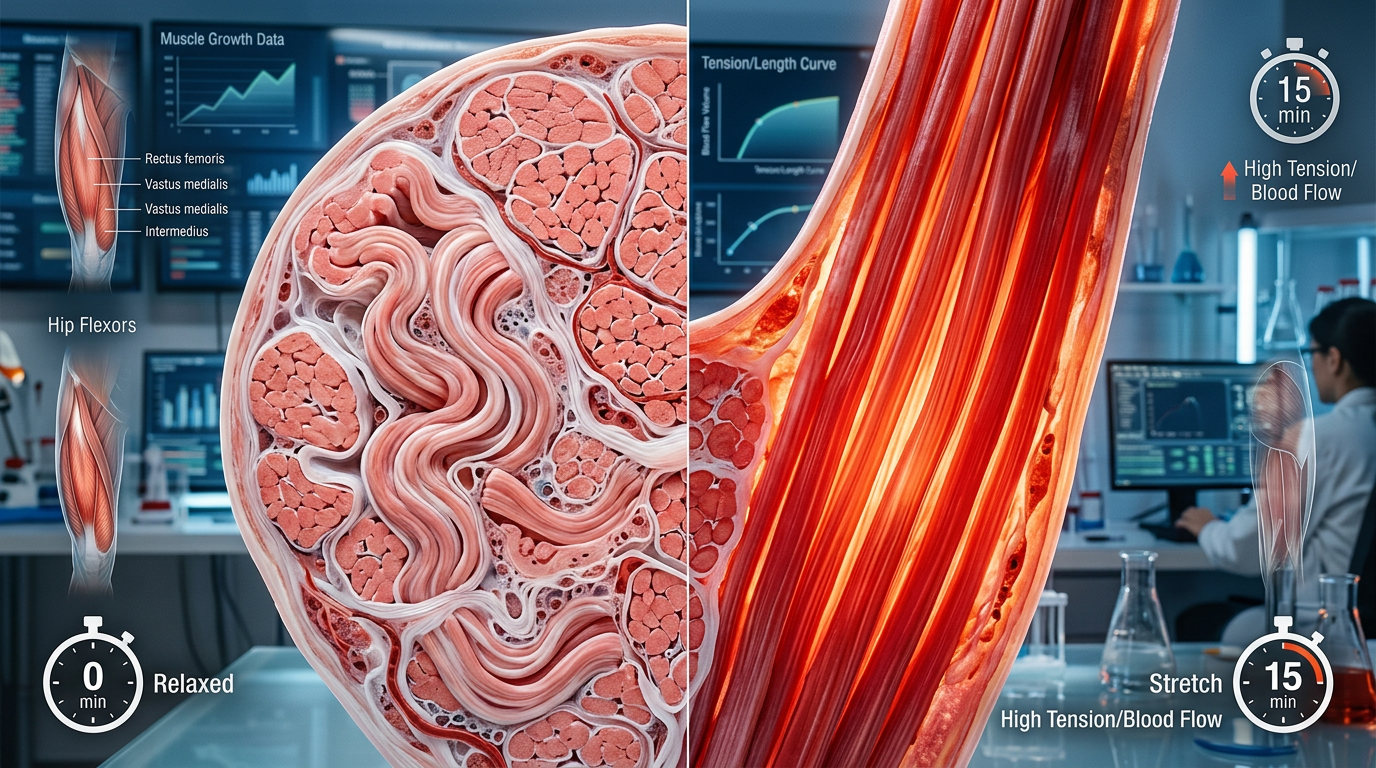
A split-screen composition showing the transformation of muscle fibers during stretching. On the left, a detailed cross-section view of relaxed muscle tissue with loose, wavy fibers in soft pink and white tones. On the right, the same muscle tissue during an intense stretch, with fibers elongated and aligned, glowing with increased blood flow in vibrant reds and oranges. The background features a modern research laboratory setting with charts and graphs displaying muscle growth data. Overlaying the image are subtle anatomical illustrations of the quadriceps muscle group and hip flexors. The lighting is clinical yet warm, with blue-white laboratory lighting contrasting against the organic warm tones of the muscle tissue. Small visual elements like stopwatch icons showing "15 min" and strength measurement indicators add scientific context to the transformative muscle-building process.
general

Stretching Your Way to Muscle Growth: New Study Reveals How 15-Minute Sessions Build Strength

BY DR. GYMBRO ·

A revolutionary study from the University of Graz has demonstrated that just 15 minutes of high-intensity stretching, performed three times per week, can produce significant muscle growth and strength gains in the quadriceps. The research challenges traditional training paradigms by showing that supervised hip flexor stretching not only increased muscle thickness but also improved isometric strength and dynamic balance performance. This breakthrough offers new hope for individuals who cannot participate in conventional resistance training due to injury or equipment limitations.

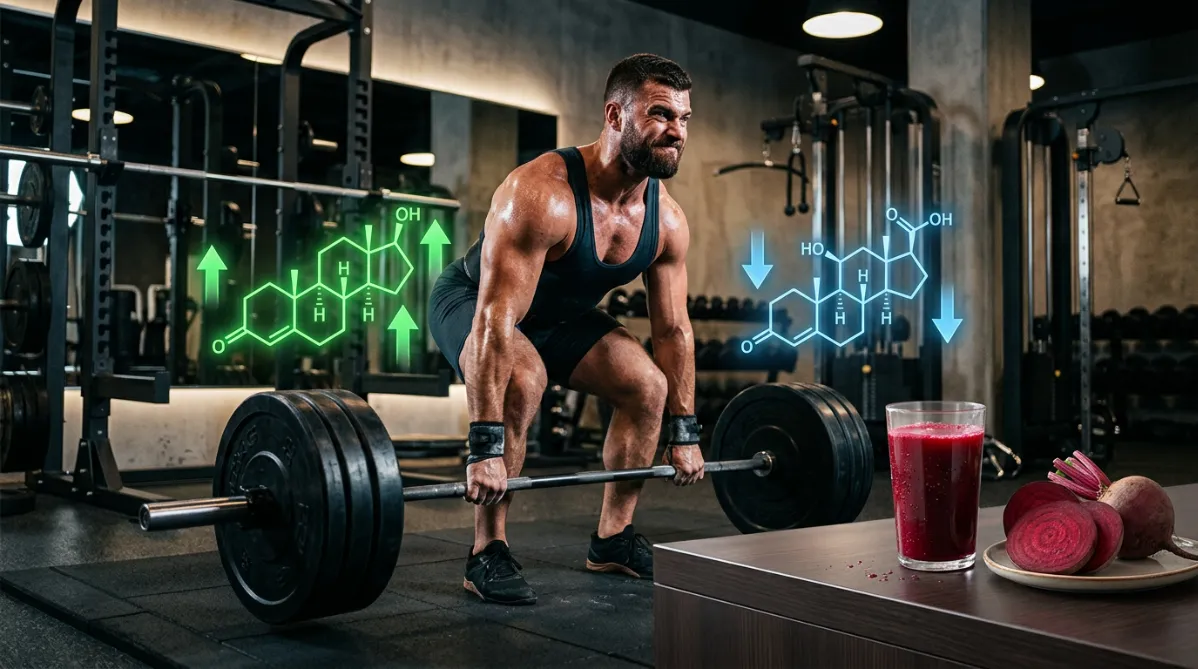
A muscular athlete in a modern gym performing a powerful deadlift, with intense focus and determination on their face. Sweat glistens on their skin as they grip a loaded barbell. In the foreground, a glass of deep red beet juice sits on a sleek counter, with fresh beetroot slices arranged nearby. The background features state-of-the-art gym equipment with soft lighting creating dramatic shadows. Overlaid translucent graphics show testosterone and cortisol molecular structures floating in the air, with upward arrows for testosterone (in vibrant green) and downward arrows for cortisol (in calming blue). The overall color palette combines deep reds from the beets, metallic grays from the gym equipment, and energetic greens and blues from the hormone visualizations, creating a scientific yet powerful atmosphere that represents the intersection of nutrition science and athletic performance.
general

The Science-Backed Secret to Maximizing Testosterone and Crushing Cortisol: How Betaine Transforms Your Training Hormones

BY DR. GYMBRO ·

Recent research reveals that betaine supplementation can significantly boost testosterone levels while reducing cortisol response in strength athletes, creating an optimal hormonal environment for muscle growth and recovery. This naturally occurring compound, found in beets and other foods, works through multiple pathways to enhance the anabolic hormone profile that drives training adaptations. With just 2.5 grams daily, athletes are experiencing measurable improvements in strength, body composition, and recovery that stem from betaine's unique ability to simultaneously elevate testosterone and moderate cortisol elevation following intense training sessions.

A close-up, golden honey drop suspended mid-air, crystalline and luminous, falling toward a background of defined human muscle fibers rendered in anatomical detail. The muscle tissue glows with a subtle protective golden aura where the honey makes contact. In the background, abstract representations of antioxidant molecules and anti-inflammatory compounds float like microscopic shields around the muscle strands. The scene has a scientific yet warm aesthetic, with honeycomb hexagonal patterns subtly integrated into the composition. Soft, amber lighting bathes the entire image, creating depth and highlighting the honey's natural transparency and the muscle's healthy pink-red tones. Small particles of pollen and natural honey crystals drift through the frame, emphasizing the organic nature of this protective relationship between honey and muscle tissue.
general

Revolutionary Study Reveals How Honey Protects Muscles During Overtraining

BY DR. GYMBRO ·

A groundbreaking Iranian study reveals that honey supplementation can protect muscles from breakdown during overtraining, offering athletes a natural solution to one of sports' most persistent problems. This research demonstrates how honey's unique blend of antioxidants, anti-inflammatory compounds, and specialized carbohydrates creates a protective barrier against exercise-induced muscle damage. The findings suggest that this simple, accessible intervention could revolutionize recovery protocols for everyone from elite athletes to weekend warriors. As overtraining syndrome affects up to 60% of athletes at some point in their careers, honey emerges as an unexpected ally in the pursuit of optimal performance and muscle preservation.

This page is available in