Dr. Gymbro
A sleek, modern gym interior with warm natural lighting streaming through large windows, featuring a minimalist weight training area with polished concrete floors and exposed brick walls. In the foreground, a single chrome barbell rests on a clean wooden bench, with perfectly organized dumbbells arranged on a contemporary rack in soft focus behind it. The scene captures a peaceful, contemplative moment with subtle shadows creating depth and visual interest. The color palette consists of warm grays, natural wood tones, and soft whites, with subtle amber lighting that creates an inviting, professional atmosphere perfect for serious training.
Dr. Gymbro ·

慢速重复真的能让肌肉增长更多吗?元分析揭示节奏训练真相

速度之争:科学终于给出答案

数十年来,健身圈围绕“慢而受控的重复是否比快速动作更有利于增肌”争论不休。答案直接影响每位训练者的方案设计,但直到最近,相关证据仍零散且相互矛盾。近期发表在《International Journal of Environmental Research and Public Health》上的一篇开创性系统综述与元分析,终于给出了我们期待已久的完整答案。

该研究由马德里理工大学与 UCAM(圣安东尼奥)团队主导,是迄今为止对阻力训练变量及其对肌肉增长影响的最全面审视。研究者整合了多项针对健康成年男性的临床试验数据,系统剖析了节奏、训练量、强度等关键因素对肌肥大成功的影响。

揭开肌肉增长背后的科学原理

在讨论节奏训练之前,需要先了解肌肥大的基本机制。肌肉增长是一套涉及机械张力、代谢压力和肌肉损伤的复杂过程。阻力练习会在肌纤维上产生微小撕裂,随后这些纤维修复并变得更大更强。

重复的速度会影响上述三大机制。较慢的重复往往延长张力时间(TUT),即肌肉在一组动作中持续受负荷的总时长。延长的张力被认为能够增强机械刺激,同时提升肌肉内部的代谢压力。

不同节奏的生理响应

执行慢速重复时,会出现多种生理适应。首先,延长的张力时间会招募更多肌纤维,尤其是生长潜力最大的 II 型纤维。其次,慢速运动降低了惯性,使得重量更多由肌肉本身推动,而非惯性助力。

代谢压力同样关键。慢速重复往往保持持续张力,限制血流,形成低氧环境。缺氧状态会触发生长因子和激素的释放,促进蛋白质合成。

元分析:方法与范围

系统综述检索了数十篇已发表的临床试验,均以健康成年男性为研究对象,以排除性别差异对肌肉响应的干扰。研究仅纳入使用 DEXA、MRI 或超声等验证方法测量全身肌肉增长的随机对照试验。

关键变量

元分析除了关注重复节奏外,还考察了多项训练变量:

  • 训练量(每周每个肌群的总组数)
  • 训练强度(相对于 1RM 的百分比)
  • 训练频率(每周训练次数)
  • 组间休息
  • 动作选择(复合 vs. 孤立)
  • 训练周期(干预时长)

这种全方位的视角让研究者能够在控制其他因素的前提下,精准捕捉节奏的独立效应。

节奏训练的发现

关于重复节奏的结果出人意料,挑战了长期流传的“慢速必然更好”观念。元分析显示,节奏的作用并非线性,而是呈现出一个最佳区间。

最佳节奏区间

研究发现,中等速度的重复(约 2‑4 秒/次) 能带来最优的肌肉增长,胜过极慢(≥6 秒)和极快(<1 秒)的节奏。这意味着在张力时间与训练量之间存在一个“甜点”。

更具体地说,每次动作总时长 2‑6 秒(包括向心与离心相位)表现出最高的增肌潜力。该时间既能提供足够的机械张力,又不致因耗时过长而削减总体训练量。

体积‑节奏关系

最重要的发现之一是节奏与训练体积的交互作用。虽然慢速重复有助于提升张力时间,却因疲劳累积导致整体训练体积下降。训练体积是本次分析中最强的增肌预测因子。

每次动作耗时超过 6 秒时,训练者往往完成的总组数和次数显著减少,导致每周刺激不足。相反,中等节奏既能保持足够的张力,又允许更高的训练体积,从而实现更佳适应。

训练体积在肌肥大中的核心作用

元分析最突出的结论是:训练体积是决定肌肥大的关键变量。研究显示,周训练体积与肌肉增长呈明显的剂量‑反应关系——体积越大,增长越显著。

最佳体积范围

数据表明,每周每个肌群 12‑20 组 是大多数人能够获得最大增长的区间。这与近年来的研究相呼应,说明肌肉可以适应并受益于比传统认知更高的训练量。

但体积并非无限递增。超过 20 组/周 时,边际效益递减,且出现过度训练的风险。

体积分配

将训练体积分散到 3‑6 次训练 中,比集中在少数几次更有利于增肌。这支持了“频率优化促进蛋白质合成”的观点。

强度考量:寻找最佳区间

强度通常以 1RM 百分比 表示,同样是关键变量。分析指出 65‑85% 1RM 的区间最能促进肌肉增长——既能提供足够的机械张力,又不妨碍高体积训练。该发现同时驳斥了只倡导 >85% 1RM 的高强度派和只推 <65% 1RM 的高体积派。

递进负荷

无论强度如何,渐进超负荷 都是实现更大肌肥大的必然路径。实验中系统增加负荷的方案显著优于保持负荷不变的组。

组间休息:常被忽视的变量

组间休息时长也对增肌有显著影响。

最佳休息时长

2‑5 分钟 的休息间隔能带来最佳效果,既能恢复磷酸肌酸,又能保持训练效率和蛋白质合成信号。

与节奏的交互

当采用慢速高代谢压力的动作时,3‑4 分钟 的稍长休息更为合适;而在中等节奏下,2‑3 分钟 已足以维持表现。

动作选择:复合 vs. 孤立

元分析再次确认 复合动作(深蹲、硬拉、卧推、划船等)在全身增肌方面的优势。它们能够同时刺激多个肌群、使用更大负荷并产生更高机械张力。

孤立动作虽非增肌主轴,却在针对特定肌肉或姿势时发挥重要作用。最佳方案是将复合动作与适量的孤立练习相结合。

训练频率:多久训练一次?

频率同样是决定增肌的重要因素。

最佳频率

每个肌群 每周训练 2‑3 次 的效果优于每周一次,这支持了频繁刺激肌肉蛋白合成的理念,同时兼顾恢复。

全身 vs. 分部训练

每周 3 次全身训练4‑6 次上/下肢分割训练 均表现出色;传统的每个肌群每周一次的分割方案则明显落后。

实际应用:落地实施方案

以下为基于元分析的实用训练框架示例:

示例训练结构

  • 训练频率:每周 3‑4 次
  • 总体体积:每肌群 12‑16 组/周
  • 强度:多数动作 70‑80% 1RM
  • 节奏:每次 2‑4 秒(包括向心+离心)
  • 组间休息:2‑4 分钟
  • 递进:每 1‑2 周系统增重量

动作选择策略

  1. 基础:以深蹲、硬拉、推举、划船等复合动作为核心;
  2. 补足:加入针对性孤立练习,以完善特定肌群;
  3. 变换:每 4‑6 周轮换动作,防止平台期。

个体差异与注意事项

尽管元分析提供了通用指南,个人差异仍不可忽视。影响个体响应的因素包括:

  • 基因:纤维类型、激素敏感性、恢复能力等差异;
  • 训练经验:新手可先从低体积、低频率起步,进阶者需要更大刺激;
  • 年龄:老年人可能需要更长的休息和更保守的递进,年轻人则可承受更高体积与频率。

局限性与未来方向

  • 研究时长:多数研究仅为 8‑12 周,未覆盖长期适应或周期化训练的效果;
  • 样本局限:仅限健康成年男性,缺乏对女性、老年人或有特殊健康状况人群的外推性;
  • 测量方法:不同研究使用的 DEXA、MRI、超声等手段可能带来一定误差。

结论:基于证据的训练指南

综合来看,中等节奏(2‑4 秒)配合充足的训练体积(每肌群 12‑20 组/周)、适当强度(65‑85% 1RM)以及 2‑5 分钟的休息,是健康成年男性实现最佳肌肥大的配方。最关键的仍是 训练体积,节奏仅是次要因素。

结语:迈入证据驱动的新时代

这项里程碑式的元分析为我们提供了清晰、可操作的指南,帮助重新塑造阻力训练的设计思路。要想最大化肌肉增长,首要任务是保证足够的周训练体积,辅以适中的节奏、合理的强度与频率,并确保良好的恢复。

对追求极致增肌的练者而言,答案很明确:

  • 以复合动作为核心,逐步累积训练体积;
  • 保持 2‑4 秒的节奏,以兼顾张力与体积;
  • 确保 2‑5 分钟的组间休息,促进恢复与蛋白合成;

遵循这些基于科学的原则,将为实现你的增肌目标提供最可靠的路径。
Related Articles

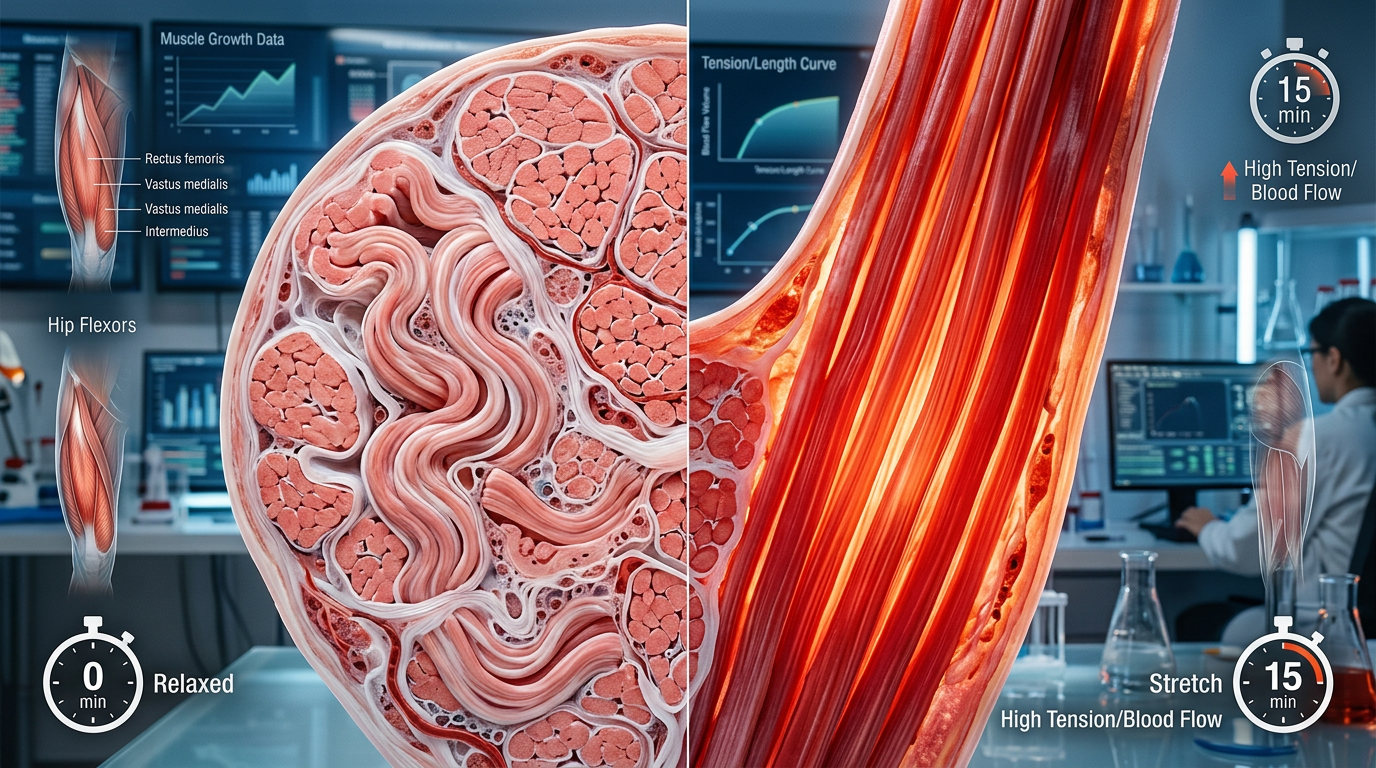
A split-screen composition showing the transformation of muscle fibers during stretching. On the left, a detailed cross-section view of relaxed muscle tissue with loose, wavy fibers in soft pink and white tones. On the right, the same muscle tissue during an intense stretch, with fibers elongated and aligned, glowing with increased blood flow in vibrant reds and oranges. The background features a modern research laboratory setting with charts and graphs displaying muscle growth data. Overlaying the image are subtle anatomical illustrations of the quadriceps muscle group and hip flexors. The lighting is clinical yet warm, with blue-white laboratory lighting contrasting against the organic warm tones of the muscle tissue. Small visual elements like stopwatch icons showing "15 min" and strength measurement indicators add scientific context to the transformative muscle-building process.
general

Stretching Your Way to Muscle Growth: New Study Reveals How 15-Minute Sessions Build Strength

BY DR. GYMBRO ·

A revolutionary study from the University of Graz has demonstrated that just 15 minutes of high-intensity stretching, performed three times per week, can produce significant muscle growth and strength gains in the quadriceps. The research challenges traditional training paradigms by showing that supervised hip flexor stretching not only increased muscle thickness but also improved isometric strength and dynamic balance performance. This breakthrough offers new hope for individuals who cannot participate in conventional resistance training due to injury or equipment limitations.

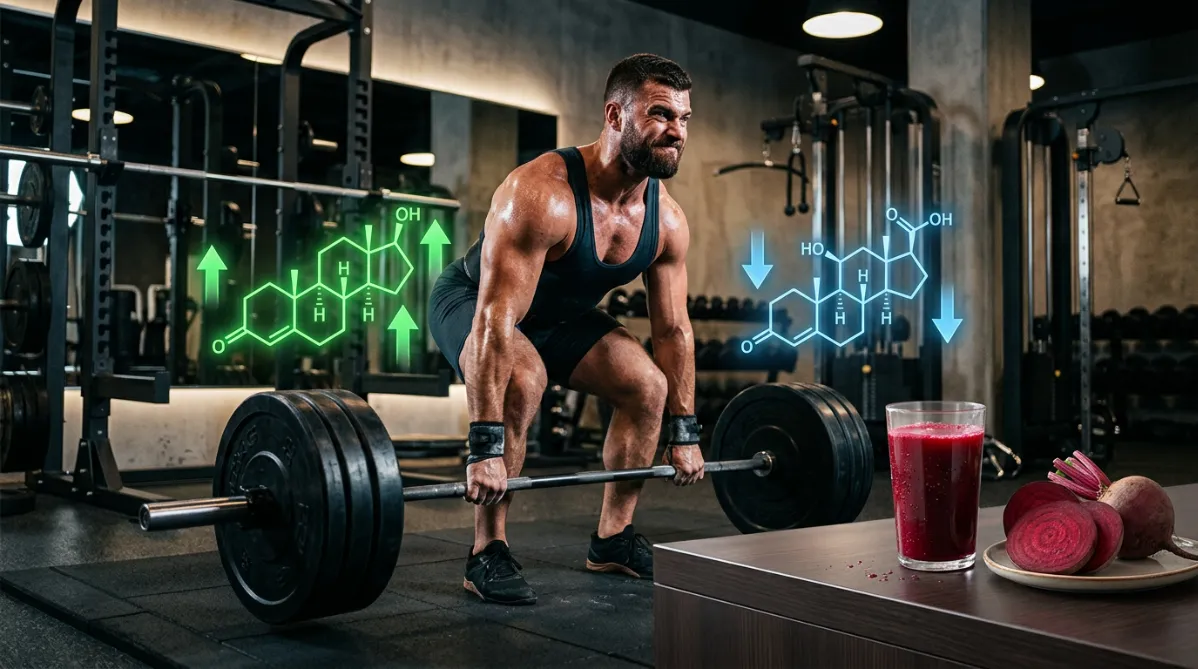
A muscular athlete in a modern gym performing a powerful deadlift, with intense focus and determination on their face. Sweat glistens on their skin as they grip a loaded barbell. In the foreground, a glass of deep red beet juice sits on a sleek counter, with fresh beetroot slices arranged nearby. The background features state-of-the-art gym equipment with soft lighting creating dramatic shadows. Overlaid translucent graphics show testosterone and cortisol molecular structures floating in the air, with upward arrows for testosterone (in vibrant green) and downward arrows for cortisol (in calming blue). The overall color palette combines deep reds from the beets, metallic grays from the gym equipment, and energetic greens and blues from the hormone visualizations, creating a scientific yet powerful atmosphere that represents the intersection of nutrition science and athletic performance.
general

The Science-Backed Secret to Maximizing Testosterone and Crushing Cortisol: How Betaine Transforms Your Training Hormones

BY DR. GYMBRO ·

Recent research reveals that betaine supplementation can significantly boost testosterone levels while reducing cortisol response in strength athletes, creating an optimal hormonal environment for muscle growth and recovery. This naturally occurring compound, found in beets and other foods, works through multiple pathways to enhance the anabolic hormone profile that drives training adaptations. With just 2.5 grams daily, athletes are experiencing measurable improvements in strength, body composition, and recovery that stem from betaine's unique ability to simultaneously elevate testosterone and moderate cortisol elevation following intense training sessions.

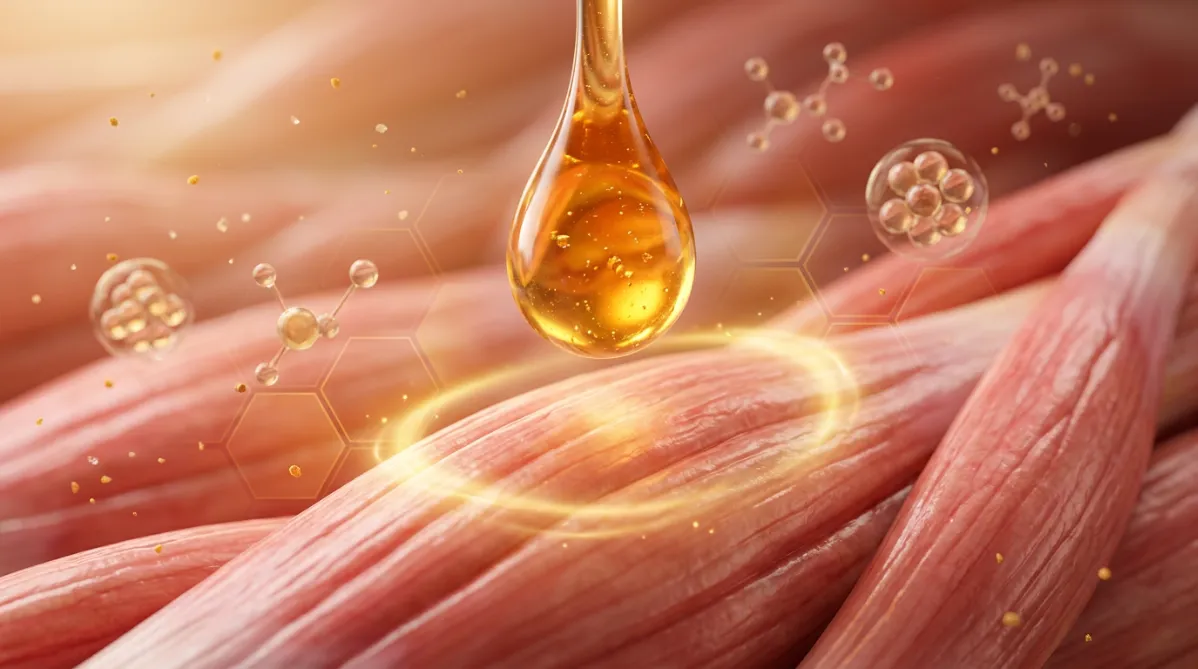
A close-up, golden honey drop suspended mid-air, crystalline and luminous, falling toward a background of defined human muscle fibers rendered in anatomical detail. The muscle tissue glows with a subtle protective golden aura where the honey makes contact. In the background, abstract representations of antioxidant molecules and anti-inflammatory compounds float like microscopic shields around the muscle strands. The scene has a scientific yet warm aesthetic, with honeycomb hexagonal patterns subtly integrated into the composition. Soft, amber lighting bathes the entire image, creating depth and highlighting the honey's natural transparency and the muscle's healthy pink-red tones. Small particles of pollen and natural honey crystals drift through the frame, emphasizing the organic nature of this protective relationship between honey and muscle tissue.
general

Revolutionary Study Reveals How Honey Protects Muscles During Overtraining

BY DR. GYMBRO ·

A groundbreaking Iranian study reveals that honey supplementation can protect muscles from breakdown during overtraining, offering athletes a natural solution to one of sports' most persistent problems. This research demonstrates how honey's unique blend of antioxidants, anti-inflammatory compounds, and specialized carbohydrates creates a protective barrier against exercise-induced muscle damage. The findings suggest that this simple, accessible intervention could revolutionize recovery protocols for everyone from elite athletes to weekend warriors. As overtraining syndrome affects up to 60% of athletes at some point in their careers, honey emerges as an unexpected ally in the pursuit of optimal performance and muscle preservation.

This page is available in