Dr. Gymbro
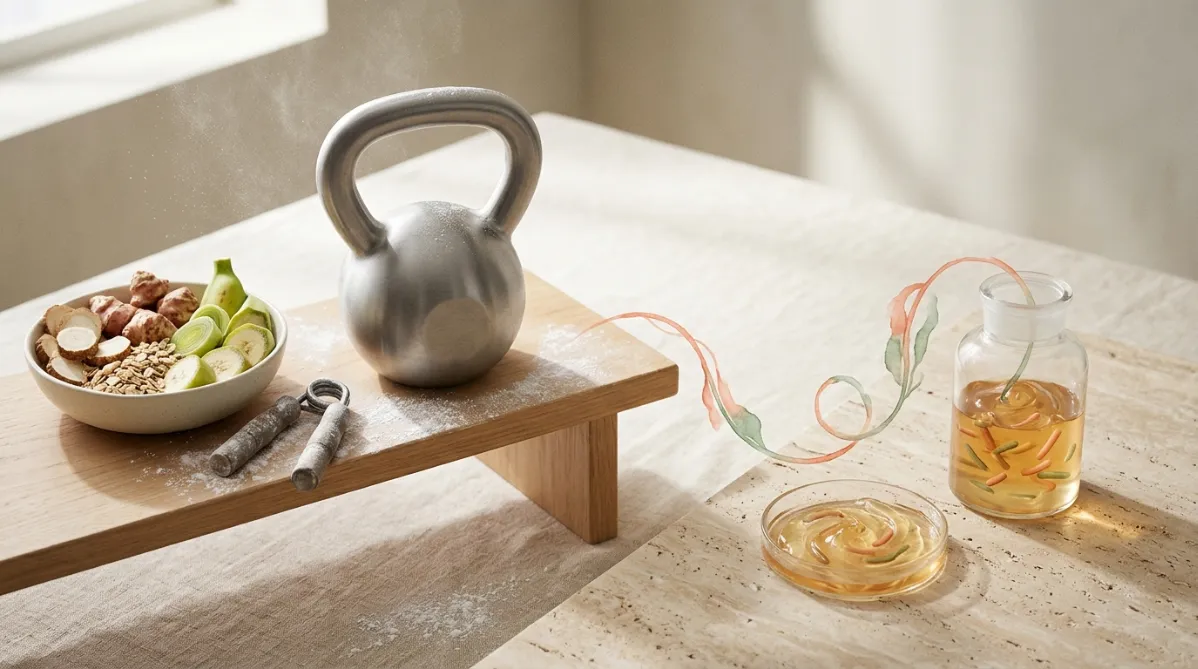
A landscape editorial still life on a soft, warm-neutral background of pale oat linen and light travertine stone. In the center-left, a matte brushed-steel kettlebell and a pair of worn chalk-dusted hand grippers rest on a low pale wooden bench. Beside them sits a shallow ceramic bowl of fermented and fiber-rich foods: sliced chicory root, Jerusalem artichokes, oats, leeks, and a few green banana slices. Soft powdery chalk drifts in the air like fine dust in a sunbeam.

On the right, a minimalist glass apothecary jar and a delicate petri-style glass dish hold a swirl of translucent amber-gold gel with tiny, organic rod-shaped forms. They are rendered as abstract, elegant botanical-looking filaments in soft coral and sage green, like watercolor ink bleeding through water. A single fine thread of this ink-like color curls out of the jar and gently loops across the surface toward the kettlebell, suggesting a quiet connection between gut and muscle without literal anatomy.

Late-morning window light enters from the upper left and casts long, soft shadows with gentle highlights on the metal and glass. Sage green, terracotta, cream, and muted gold make up the palette, with a subtle film-grain finish. The composition is airy, with generous negative space on the far right and top for headline overlay. The shallow depth of field, crisp focus on the foreground objects, and creamy blur behind them give it the polished, modern feel of a wellness and science magazine cover.
Science & Research

筋力アップに関係する腸内細菌:Roseburia inulinivorans

Dr. Gymbro · · 1 min read

研究者が実際に見つけたこと

研究チームは、若年層と高齢層の成人を対象に、筋力テスト(握力、レッグプレス、ベンチプレス)を徹底的に実施したうえで、腸内細菌のメタゲノム解析(腸内細菌の遺伝子配列を調べる手法)を行いました。そこで、どの細菌が筋力と相関しているかを調べました。

その結果は驚くほど限定的でした。Roseburia inulinivorans(R. inulinivorans)の相対的な存在量が、握力、レッグプレス、ベンチプレスといった複数の筋力指標と正の相関を示したのです。他の Roseburia 属の種では同様のパターンは見られませんでした。属レベルでなく、たった一種だけが際立っていたわけです。

また、R. inulinivorans の量は高齢者で若年者に比べて低いことが分かりました。腸内環境の変化と加齢による筋力低下が何らかの形で結びついている可能性は示唆されますが、どちらが因果関係の先かはこのデータだけでは判断できません。

マウス実験:因果関係を検証

ヒトでの相関だけでは、細菌が筋力を高めたのか、あるいは筋力のある人がその細菌を多く保有しているだけなのかは分かりません。因果関係を探るため、研究者は抗生物質で腸内細菌をほぼ除去したマウスに候補細菌を経口投与しました。

R. inulinivorans を投与されたマウスは、前肢の握力が有意に向上しました。一方、他の Roseburia 種を投与しても同様の効果は見られませんでした。種レベルでの特異性が示されたことは、「どんな腸内細菌でも筋力を上げる」という安易な説明を排除する重要なポイントです。

重要な注意点:この筋力向上効果はマウスで確認されたものであり、ヒトでの因果関係はまだ証明されていません。

腸内細菌は筋肉にどう影響するのか?

研究者は代謝物解析(メタボロミクス)と筋肉の形態評価を行い、メカニズムの手がかりを探しました。マウスで R. inulinivorans を投与した結果、以下の変化が認められました。

  • 回腸と血漿中のアミノ酸濃度が低下した。
  • 筋肉でプリン代謝系とペントースリン酸経路が活性化した。
  • 筋繊維のサイズが増大した。
  • 筋繊維のタイプがⅠ型(遅筋)からⅡ型(速筋)へシフトした。

Ⅱ型筋繊維は速く大きな力を発揮しやすいので、握力向上と整合性があります。代謝的変化は、細菌が体内のエネルギーや構成要素の取り扱いを変えることで筋肉代謝に影響を与える可能性を示唆しています。アミノ酸が減少した理由や行き先については、現段階では仮説にすぎません。

まだサプリメントとしては存在しない

著者らは R. inulinivorals を「加齢に伴う筋肉減少症(サルコペニア)への栄養補助的アプローチの候補プロバイオティクス」と位置付けていますが、ここでのキーワードは「候補」です。商業化されたプロバイオティクスはなく、ヒトでの有効投与量や投与スケジュール、臨床試験での効果はまだ確立されていません。論文を根拠に「筋力向上プロバイオティクス」を販売する企業は、エビデンスに先行していると言えるでしょう。

リスクが低い実践的な腸内環境の整え方

種名の inulinivorans は「イヌリンを食べる」という意味です。イヌリンは難消化性フラクトオリゴ糖の代表的な発酵性食物繊維で、腸内で特定の菌の増殖を促します。今回の研究では、イヌリン摂取が R. inulinivorans を増やすか、筋力向上につながるかは検証されていませんが、食物繊維を多く含む食事は健康全般に有益であり、リスクはほぼありません。

イヌリンや類似の発酵性食物繊維を多く含む食品例:

  • チコリ根
  • エルサレムアーティチョーク(ヤマイモ)
  • ニンニク・タマネギ
  • ネギ類(長ねぎ、リーキ)
  • アスパラガス
  • 未熟バナナ
  • オート麦や全粒穀物

これらを取り入れる際は、ガスや膨満感を防ぐために 徐々に摂取量を増やす ことがポイントです。また、筋力向上のためのたんぱく質摂取とレジスタンストレーニングは依然として最重要であることを忘れないでください。腸内細菌はあくまで「プラスアルファ」程度の可能性です。

誰にとって関心がある情報か

  • 筋トレやスポーツに関心がある人:現時点では観察的なシグナルであり、具体的なプロトコルは存在しませんが、今後の研究動向はチェックしておく価値があります。
  • 加齢による筋力低下が気になるシニア層:高齢者での菌量低下が示唆されているため、研究対象として期待は大きいです。現時点で実践すべきは、抵抗運動と適切なたんぱく質摂取です。
  • 研究者・臨床医:種レベルでの効果が示された点は、人を対象とした介入試験の明確なターゲットとなります。

ハイプに乗らないべき人

  • 即効性の「魔法のサプリ」 を期待している人。
  • 市販の R. inulinivorans 製品は未だ存在しません。
  • 消化器系に疾患がある人や免疫が低下している人は、食事やサプリを大幅に変える前に必ず医師と相談しましょう。高繊維食が胃腸に負担を与える場合は、無理に続ける必要はありません。

結論

本研究は、腸内細菌と筋力というテーマにおいて、種レベルでの関連性 とマウスでの因果実証 を同時に示した稀少な例です。ただし、繊維を摂取したりプロバイオティクスを摂ったりすればすぐにベンチプレスが上がるという証拠はありません。次のステップはヒトを対象とした介入試験であり、それが実現するまでは「興味深いリード」程度にとどめ、基本的なトレーニングと栄養管理を優先すべきです。
Original study

Read the original research on pubmed.ncbi.nlm.nih.gov →

This article summarizes published research for general information. It is not medical advice.

DG

Written by

Dr. Gymbro

Dr. Gymbro writes for Dr. Gymbro: science-backed fitness, nutrition & performance.

Related Articles

A wide editorial still life on a pale warm-gray stone countertop, lit by soft natural window light from the left. In the center, two small matte ceramic bowls sit side by side. One holds fine white creatine powder, and the other holds a slightly coarser, creamy off-white crystalline powder. Between them, a delicate brass measuring spoon rests at a slight angle, dusted with a few grains. Behind the bowls, a shallow glass dish holds a handful of whole food ingredients that suggest gut health: fermented sauerkraut, a few sprigs of fresh thyme, sliced radishes, and a small cluster of green olives. Their colors are soft and natural. To the right, a minimalist wooden mouse running wheel stands out of focus as a quiet visual nod to the exercise study. Beside it, a small, slim dumbbell in muted sage green rests on the counter. A folded linen napkin in oatmeal tone and a single glass beaker with clear water add a subtle lab-meets-kitchen feel without looking clinical. The palette is calm and modern: sage green, terracotta, cream, soft sand, and touches of warm brass. Shadows are gentle and elongated, with a shallow depth of field that keeps the powders crisp and the background creamy. The composition leaves generous negative space on the right third for title text. The overall mood is clean, thoughtful, and trendy, like a contemporary wellness and science magazine, with fine film-like grain, natural textures, and a refined editorial look.
science research

腸内細菌由来化合物PAS、マウスでクレアチンを上回る―ただし注意点あり

BY DR. GYMBRO ·

新しいマウス実験では、腸内細菌が産生するピペコリック酸とコハク酸(PAS)の組み合わせが、7週間の負荷付きホイール走行後の握力と筋力でクレアチン単水和物を上回ったと報告されています。驚くべきは、どちらの化合物も筋肉量や筋繊維のサイズは増やさなかった点で、効果はサイズではなく機能に現れました。両サプリは対照群に比べて走行性能を改善しましたが、これはマウスのみでの探索的研究であり、人への用量や安全性データはありません。この記事では研究結果と、そこから導き出すべきこと・すべきでないことを解説します。

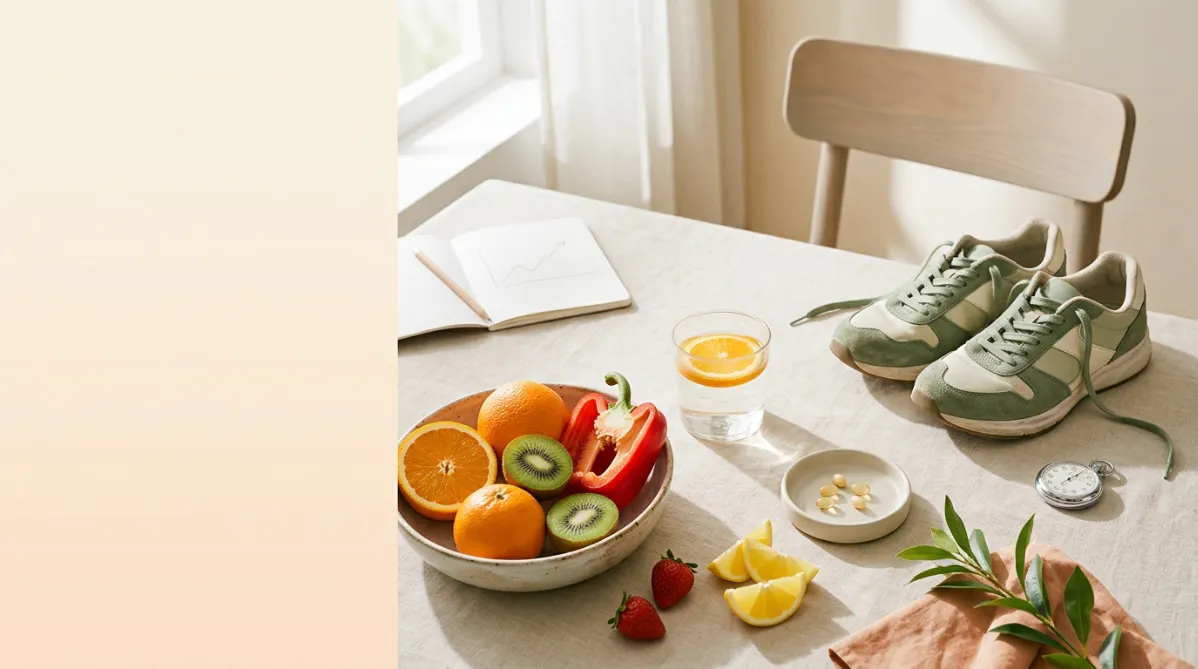
A bright, airy editorial still life photographed from slightly above on a pale oat-colored linen surface, in soft natural window light with gentle long shadows. In the foreground, a rustic ceramic bowl holds halved and whole oranges, glossy red bell pepper slices, and a few kiwi halves with emerald flesh. Beside it sit loose strawberries and a small pile of bright yellow lemon wedges. Their colors pop against the muted neutral palette. A single clear glass of water with a slice of orange rests nearby, catching the light.

On the right side of the frame, a pair of well-worn but clean walking sneakers in sage green and cream sits casually on the surface, with one lace loosely trailing. Behind them, a simple wooden chair with a light ash finish is partly visible and slightly out of focus, a quiet nod to the sit-to-stand test. A small stainless-steel stopwatch lies next to the shoes, with a subtle reflective glint.

A minimalist ceramic dish holds a few small, round, pale-yellow vitamin capsules, kept understated. A sprig of green leaves and a folded cotton napkin in soft terracotta add a warm accent. A small open notebook with a pencil rests in the upper left, its page blank except for faint, abstract pencil lines suggesting a simple rising graph, with no legible text.

The composition leaves generous negative space on the left third for title overlay, with a soft cream-to-peach gradient background. The mood is fresh, healthy, and contemplative, like a modern wellness magazine or a trendy online journal. The color palette is warm citrus orange, sunny yellow, sage green, and soft cream, with gentle terracotta accents. The depth of field is shallow, with crisp focus on the fruit and shoes and a creamy blur in the background. The overall look is clean, natural, and editorial, with fine film-like grain, true-to-life color, and a calm, optimistic tone. Landscape 16:9 framing.
nutrition

年齢とともに脚が強くなる、手頃なビタミン

BY DR. GYMBRO ·

48歳~92歳の5,000人超の英国大型調査で、血中ビタミンCが最適レベル(50 µmol/L以上)の人は、低レベルの人に比べて歩行速度が速く、椅子から立ち上がるまでの時間が短いことが分かりました。女性は身長で調整した握力もやや強くなる傾向が見られましたが、男性では握力との関係は認められませんでした。食事からのビタミンC摂取は女性でのみ弱い関連が見られ、はっきりしたパターンは示されませんでした。本研究は横断的デザインで、ビタミンCが機能改善を直接もたらすことを証明するものではありませんが、血中ビタミンCを測定してみる価値はあるかもしれません。

A softly lit editorial still life on a pale oatmeal-colored linen surface, shot from a slightly elevated three-quarter angle with a shallow depth of field. In the left foreground, a small ceramic dish holds several translucent golden-amber fish oil softgel capsules, glowing as if lit from within by warm morning window light. A few capsules are scattered casually beside it, catching crisp highlights. Just behind them, a sliced fresh salmon fillet with vivid coral-orange flesh rests on a matte slate board next to a sprig of dill, a halved lemon, and a small glass dropper bottle of golden oil.

In the soft-focus midground, a pair of weathered, capable older adult hands rests on the edge of the table, gently holding a pale sage-green resistance band, a hint of an active lifestyle. Beside them sits a modest set of brushed-steel dumbbells and a folded heather-gray towel. Subtle natural details add warmth: a glass of water, a small ceramic mug, and a sprig of eucalyptus in a bud vase.

On the right side, a tidy stack of printed research papers with a few pastel sticky tabs and a pair of thin tortoiseshell reading glasses sits on top, suggesting scholarly review. A fountain pen lies across the pages, with a few abstract handwritten notes and a simple hand-drawn bar chart visible but unreadable.

The palette is warm and calming: cream, soft sage, terracotta, honey gold, and coral accents against muted neutral tones. Window light enters from the left, producing long gentle shadows and a faint dappled leaf-shadow pattern across the linen. The background fades into a creamy blur of pale wall and a hint of a wooden shelf.

The composition leaves clean negative space across the upper right third for headline text overlay. The mood is trustworthy, health-forward, and modern, reminiscent of a contemporary wellness and science journal's photography. Fine film-like grain, natural color grading, high-resolution editorial photography, 16:9 landscape format.
nutrition

加齢に伴う筋肉衰えに対する魚油の効果:14件の研究が示す実際のところ

BY DR. GYMBRO ·

魚油は加齢による筋肉の衰えを防ぐ“防具”として宣伝されていますが、実際のエビデンスはどうでしょうか。2026 年のアンブレラレビューでは、55 歳以上の成人を対象としたランダム化比較試験 7 件とメタアナリシス 7 件を総合しています。その結果、下肢の筋力と身体機能においてわずかながら測定可能な改善が見られましたが、握力や歩行速度、上肢筋力については不確実性が高いと指摘されています。重複した研究が多く含まれるため、エビデンスは見かけほど堅牢ではありません。

A landscape editorial photograph of a sunlit kitchen table in soft morning light. An older adult's hands, with silver hair and a cream knit sleeve just visible, rest around a ceramic mug. Beside the mug are two small matte white ceramic dishes. One holds a mound of fine white powder, and the other holds a slightly different crystalline white powder. Two wooden spoons lie next to them. A handheld hand-grip dynamometer in muted sage green sits on a linen placemat in the foreground, slightly out of focus. A small open notebook with a pencil and a pair of round tortoiseshell reading glasses sit nearby, with no legible text.

The tabletop is pale oak with a visible grain. Behind it, a window with sheer curtains lets in warm golden light, and the blurred shapes of a trailing green pothos plant and a pale terracotta vase show in the background. The color palette is warm cream, sage green, soft terracotta, and pale wood, with a touch of muted navy from a folded napkin. The mood is calm, thoughtful, and quietly scientific without any laboratory feel.

The composition follows the rule of thirds. The hands and dishes sit in the left-center, and generous negative space on the right is suitable for a title overlay. Shallow depth of field, 50mm lens look, gentle film grain, and soft shadows. Modern lifestyle-magazine and health-journal aesthetic, natural and unstaged, high-end editorial photography.
nutrition

クレアチン前駆体が65歳以上の握力向上でクレアチンを上回る

BY DR. GYMBRO ·

65歳以上の成人を対象とした小規模な試験で、クレアチンの直接的な前駆体であるグアニジノ酢酸(GAA)が、クレアチン一水和物よりも握力を有意に改善したことが分かりました。ただし、参加者はわずか21名、8週間という短期間のパイロット研究であり、運動プログラムは実施されていませんでした。結果の信頼区間はほぼ零に近く、効果の大きさは不確実です。安全性の観点では、GAAがメチル基を消費するため、ホモシステイン上昇への注意が必要です。

This page is available in