Dr. Gymbro
←

#inulin

1 article
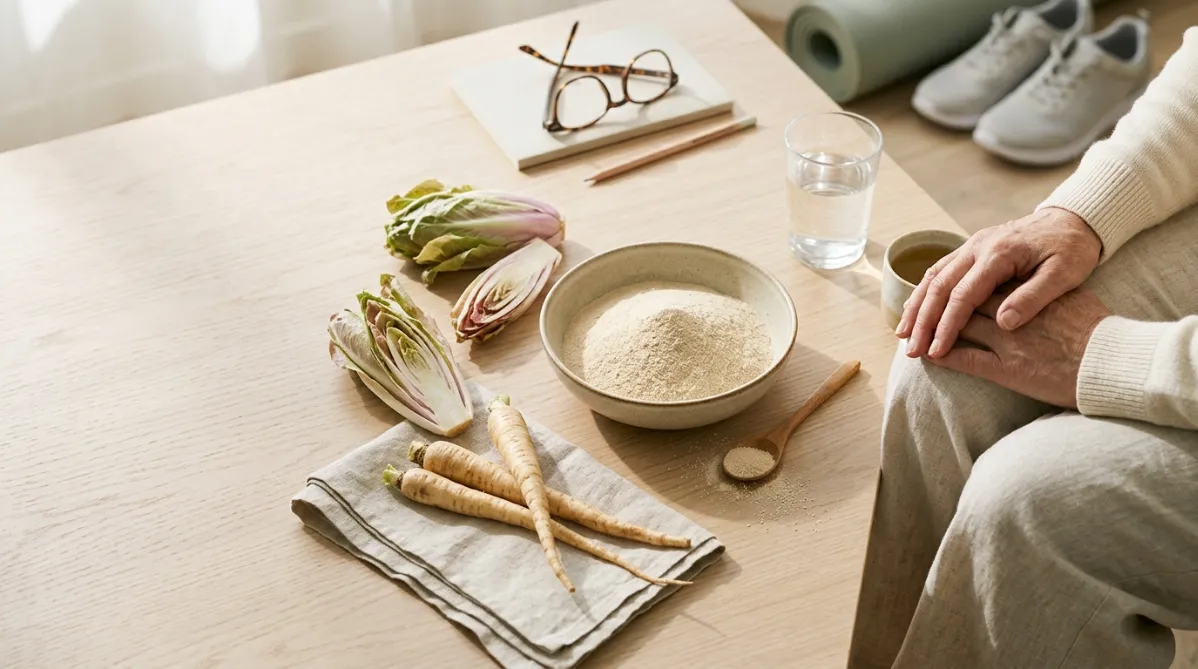
A bright, airy editorial still life photographed from slightly above on a pale oak table in soft morning window light. At the center sits a shallow ceramic bowl in matte oatmeal glaze filled with fine, creamy-beige inulin powder. A wooden spoon rests beside it, with a few fine grains scattered across the wood. Around the bowl, several fresh chicory roots with pale tan skin and delicate taper lie on a folded linen napkin. Next to them are a few crisp, leafy chicory heads in muted green and soft magenta tones, and a halved root that shows its pale, fibrous interior.

On the right side of the frame, a pair of older adult hands in a soft cream knit sleeve rest gently on a knee covered by relaxed linen trousers. A glass of water stands nearby, along with a small ceramic cup of herbal tea. A folded pair of simple tortoiseshell reading glasses and a minimalist notebook with a thin pencil sit in the background, hinting at a considered, research-minded atmosphere. A slim yoga mat edge and a pair of light-gray walking shoes appear softly out of focus in the far corner, suggesting gentle exercise and mobility without overwhelming the scene.

The color palette is calm and modern: warm creams, sage green, soft terracotta, and touches of dusty rose from the chicory leaves. Shadows are gentle and long, with natural light raking across the table and highlighting the textures of powder, linen, wood, and root. The depth of field is shallow, with the bowl and roots in crisp focus and the background melting into a creamy blur. The composition leaves generous negative space on the left third of the frame, suitable for headline overlay, and the overall feel is clean, wholesome, and contemporary, like a lifestyle-meets-science feature in a trendy online health journal. Fine film-like grain, true-to-life color, and a quiet, optimistic mood.
recovery

安価な腸内繊維が膝痛をプラセボより1.11ポイント軽減

BY DR. GYMBRO ·

チコリ根由来の安価なイヌリン繊維を1日20 g摂取したところ、ランダム化比較試験で膝の痛みがプラセボに比べて平均1.11ポイント減少しました。臨床的に意味のある1ポイントを超える改善で、握力も向上しています。イヌリン群だけで酪酸とGLP‑1が上昇し、腸―筋肉の結びつきが示唆されましたが、対象は平均67歳の膝変形性関節症患者で、理学療法による運動は痛みをさらに1.55ポイント減らしました。本稿では結果の解釈ポイントと実践的な活用法をまとめます。

This page is available in