Dr. Gymbro
←

#high-protein diet

2 articles
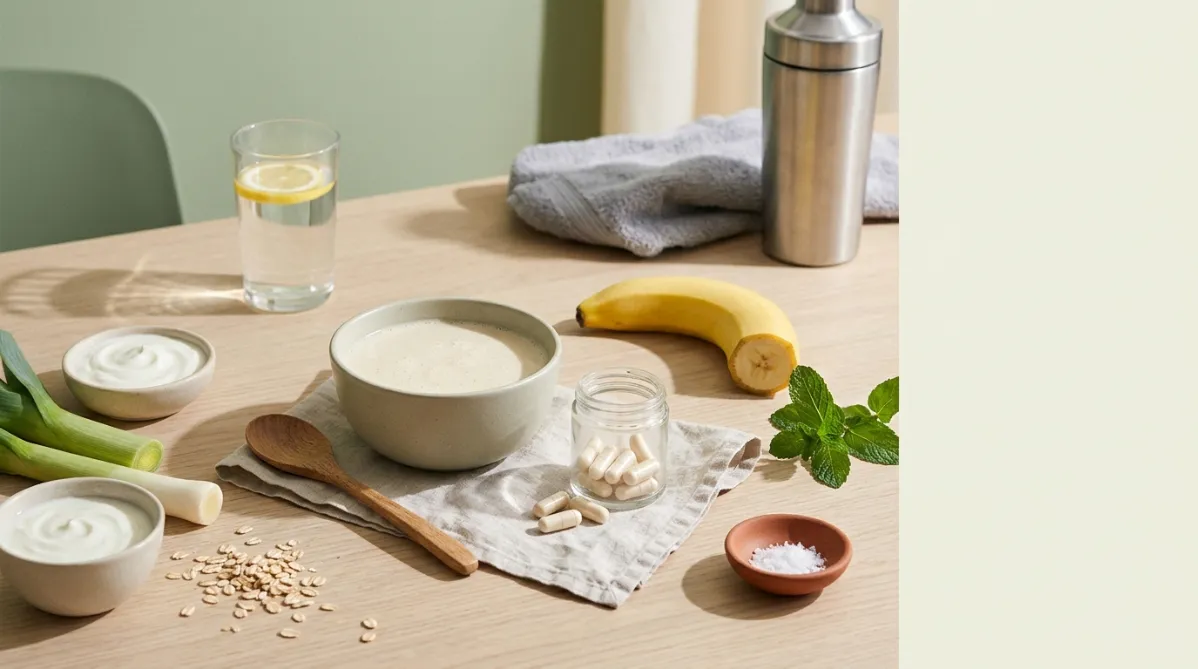
A bright, minimalist still life on a soft sage-green and warm cream backdrop, shot from a slightly elevated angle in natural morning window light. In the center sits a matte ceramic bowl of creamy vanilla protein shake with a wooden spoon resting beside it. Next to it, a small glass jar with a few off-white probiotic capsules spilling onto a pale linen napkin. Around them are fresh, gut-friendly foods arranged with editorial restraint: a halved ripe banana, a small bowl of plain yogurt with a swirl on top, a few stalks of leeks, a handful of oats scattered on the surface, and a sprig of fresh mint. A tall glass of water with a lemon slice catches the light and casts a delicate caustic shadow across the table.

In the background, slightly out of focus, a folded gray gym towel and a sleek stainless steel shaker bottle hint at an athletic lifestyle without dominating the scene. The surface is a pale oak tabletop with subtle grain. A soft diffused shadow falls to the left, giving gentle depth.

The palette is calm and modern: sage green, oatmeal, warm white, soft butter yellow, and touches of terracotta from a small clay dish holding a pinch of sea salt. The composition leaves generous negative space on the right third for headline overlay. The mood is clean, wellness-focused, and quietly editorial, like a feature in a contemporary health and science journal. Shallow depth of field, crisp focus on the capsules and bowl, subtle film grain, and natural color grading. No people, no text, no logos, no futuristic elements.
nutrition

プロテインおなら? プロバイオティックBB536が臭いを抑える、ただし一部の腸だけ

BY DR. GYMBRO ·

大量にホエイシェイクを飲むと腸内ガスが増えてにおいが強くなることがあります。小規模な臨床試験で、プロバイオティクス*Bifidobacterium longum* BB536 を摂取した高タンパク食のアスリートで、メチルメルカプタンやアンモニアといった悪臭成分が減少したと報告されましたが、全体ではプラセボとの差は有意ではなく、効果は特定の腸内タイプに限られると結論付けられました。製薬会社の協賛研究で、対象は若年男性に限られています。まずは食事の工夫で対策を試し、プロバイオティクスは実験的に取り入れる程度にしましょう。
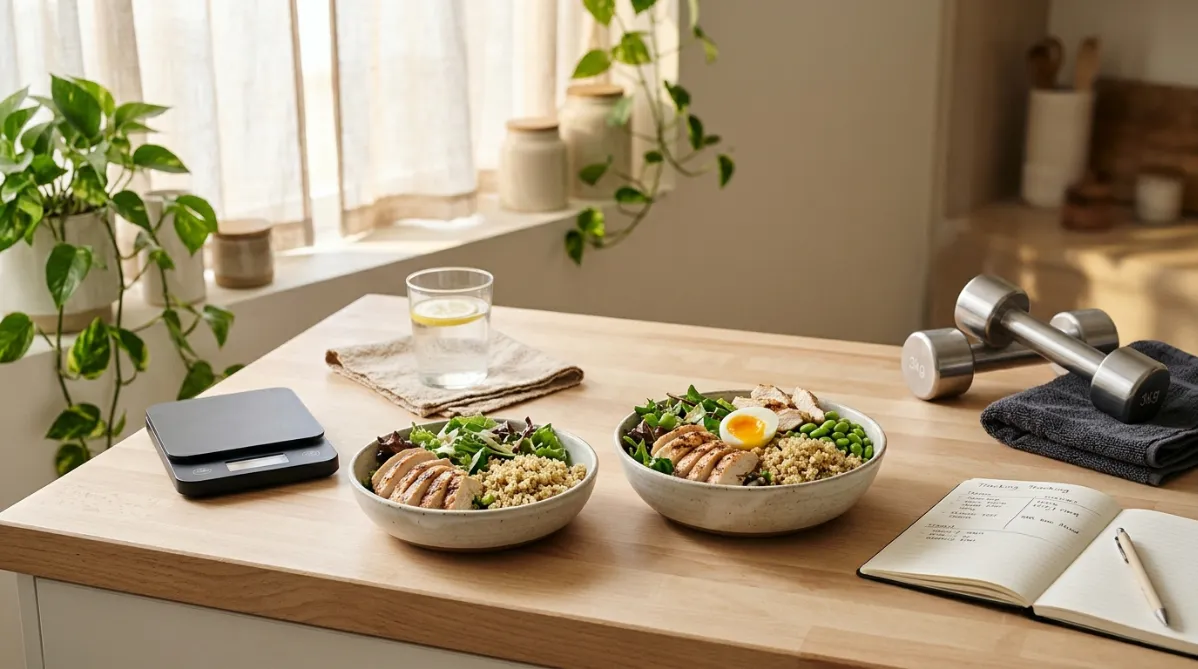
A wide landscape editorial photograph of a clean, sunlit kitchen counter in soft natural morning light, styled like a modern wellness journal cover. In the foreground, two matching ceramic bowls sit side by side on a pale oak butcher block. The left bowl holds a modest portion of sliced grilled chicken breast, quinoa, and greens. The right bowl holds a noticeably larger, double-sized portion of the same ingredients, with extra chicken, a soft-boiled egg, and edamame. The contrast in portion size is clear but elegant. Beside the bowls are a matte black digital kitchen scale, a tall glass of water with a lemon slice, and a small linen napkin in warm oatmeal tone. A pair of sleek brushed-steel dumbbells rests slightly out of focus on the counter's edge, and a folded charcoal gym towel sits next to them. In the soft-focus background, a large window with sheer curtains lets in diffused golden light, and a trailing green pothos plant adds an organic touch. A small, minimal notebook with a pen lies open to the side, suggesting careful tracking. The color palette is muted and cohesive: warm creams, sage green, soft terracotta, charcoal, and natural wood. Shallow depth of field, crisp focus on the bowls, gentle shadows, and subtle film-like grain. Composition follows the rule of thirds with generous negative space on the upper right for headline text. The mood is calm, thoughtful, and trustworthy, like a contemporary health and science magazine feature. There are no people, no text, and no futuristic elements.
nutrition

3.2 g/kg のたんぱく質を16週間: リフターの腎臓に害はあるのか?

BY DR. GYMBRO ·

ジムでよく耳にする「たんぱく質を食べすぎると腎臓が痛む」という警告は本当なのでしょうか? 44名のレジスタンストレーニング経験者を対象に、1.6 g/kg と 3.2 g/kg のたんぱく質摂取を 16 週間比較したランダム化試験では、腎機能指標に統計的有意差は見られませんでした。しかし、高たんぱく質群では BUN とシスタチン C がやや上昇し、eGFR がわずかに低下しています。これらは「記述的」な変化とされ、実際に腎障害につながるかは不明です。結果を踏まえて、どのような人がどの程度のたんぱく質摂取を控えるべきか整理しました。

This page is available in