Dr. Gymbro
←

#high-protein diet

2 articles
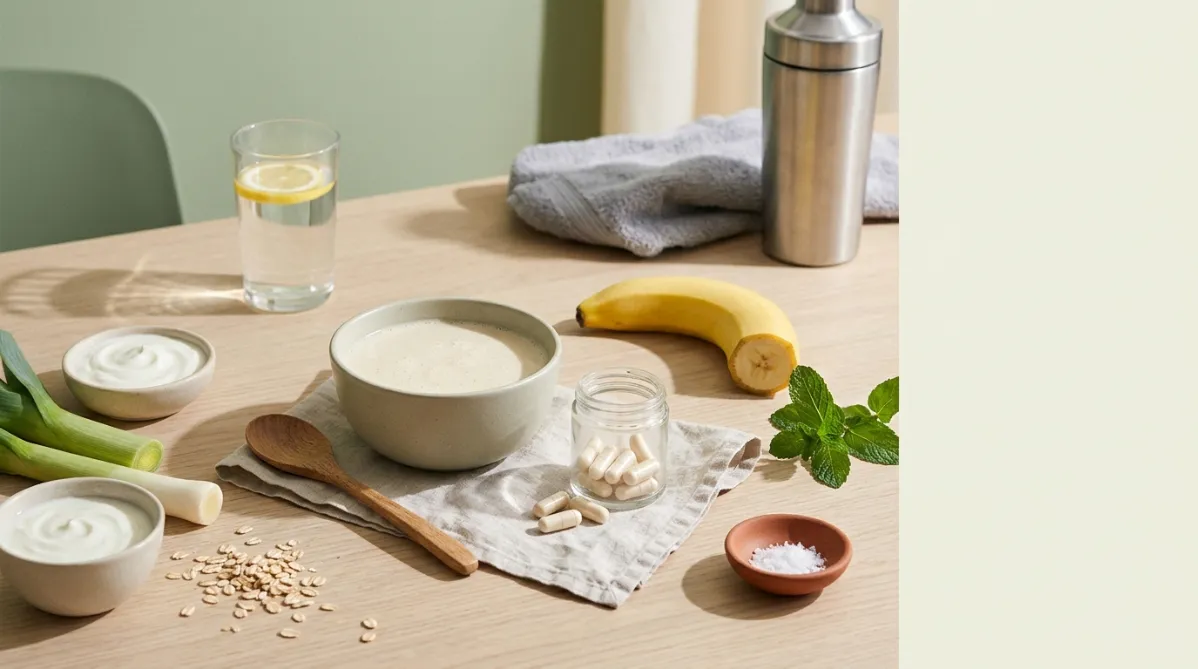
A bright, minimalist still life on a soft sage-green and warm cream backdrop, shot from a slightly elevated angle in natural morning window light. In the center sits a matte ceramic bowl of creamy vanilla protein shake with a wooden spoon resting beside it. Next to it, a small glass jar with a few off-white probiotic capsules spilling onto a pale linen napkin. Around them are fresh, gut-friendly foods arranged with editorial restraint: a halved ripe banana, a small bowl of plain yogurt with a swirl on top, a few stalks of leeks, a handful of oats scattered on the surface, and a sprig of fresh mint. A tall glass of water with a lemon slice catches the light and casts a delicate caustic shadow across the table.

In the background, slightly out of focus, a folded gray gym towel and a sleek stainless steel shaker bottle hint at an athletic lifestyle without dominating the scene. The surface is a pale oak tabletop with subtle grain. A soft diffused shadow falls to the left, giving gentle depth.

The palette is calm and modern: sage green, oatmeal, warm white, soft butter yellow, and touches of terracotta from a small clay dish holding a pinch of sea salt. The composition leaves generous negative space on the right third for headline overlay. The mood is clean, wellness-focused, and quietly editorial, like a feature in a contemporary health and science journal. Shallow depth of field, crisp focus on the capsules and bowl, subtle film grain, and natural color grading. No people, no text, no logos, no futuristic elements.
nutrition

Protein Farts? Probiotic BB536 Cut Odor, But Only in Some Guts

BY DR. GYMBRO ·

Gassy, smelly gut trouble from all that whey? A new trial tested the probiotic Bifidobacterium longum BB536 in athletes on high-protein diets and spotted drops in odor compounds like methyl mercaptan and ammonia. The catch: the overall group showed no significant difference from placebo, and the promising results came from post hoc subgroups. The study was small, exploratory, and tied to the probiotic's maker. Here's what BB536 is, why your baseline microbiome may decide who benefits, and the cheaper fixes to try first.
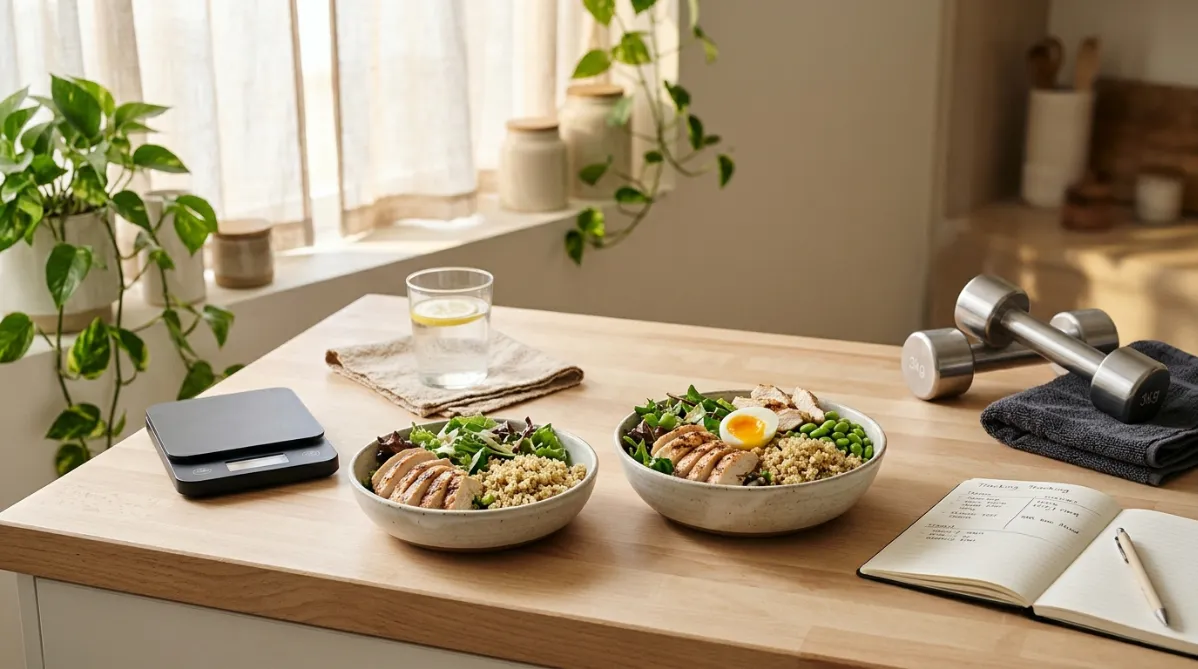
A wide landscape editorial photograph of a clean, sunlit kitchen counter in soft natural morning light, styled like a modern wellness journal cover. In the foreground, two matching ceramic bowls sit side by side on a pale oak butcher block. The left bowl holds a modest portion of sliced grilled chicken breast, quinoa, and greens. The right bowl holds a noticeably larger, double-sized portion of the same ingredients, with extra chicken, a soft-boiled egg, and edamame. The contrast in portion size is clear but elegant. Beside the bowls are a matte black digital kitchen scale, a tall glass of water with a lemon slice, and a small linen napkin in warm oatmeal tone. A pair of sleek brushed-steel dumbbells rests slightly out of focus on the counter's edge, and a folded charcoal gym towel sits next to them. In the soft-focus background, a large window with sheer curtains lets in diffused golden light, and a trailing green pothos plant adds an organic touch. A small, minimal notebook with a pen lies open to the side, suggesting careful tracking. The color palette is muted and cohesive: warm creams, sage green, soft terracotta, charcoal, and natural wood. Shallow depth of field, crisp focus on the bowls, gentle shadows, and subtle film-like grain. Composition follows the rule of thirds with generous negative space on the upper right for headline text. The mood is calm, thoughtful, and trustworthy, like a contemporary health and science magazine feature. There are no people, no text, and no futuristic elements.
nutrition

3.2 g/kg Protein for 16 Weeks: Did It Hurt Lifters' Kidneys?

BY DR. GYMBRO ·

Is eating double the usual lifter's protein secretly wrecking your kidneys? A 16-week randomized trial of 44 resistance-trained men tested 3.2 g/kg protein against 1.6 g/kg. The statistical comparison found no significant difference in kidney markers, whether men lifted alone or combined lifting with cardio. But the high-protein groups did show small rises in BUN and cystatin C and dips in eGFR, which the authors call descriptive only. Here is what that means, what the study can't tell you, and who should be careful.

This page is available in