Dr. Gymbro
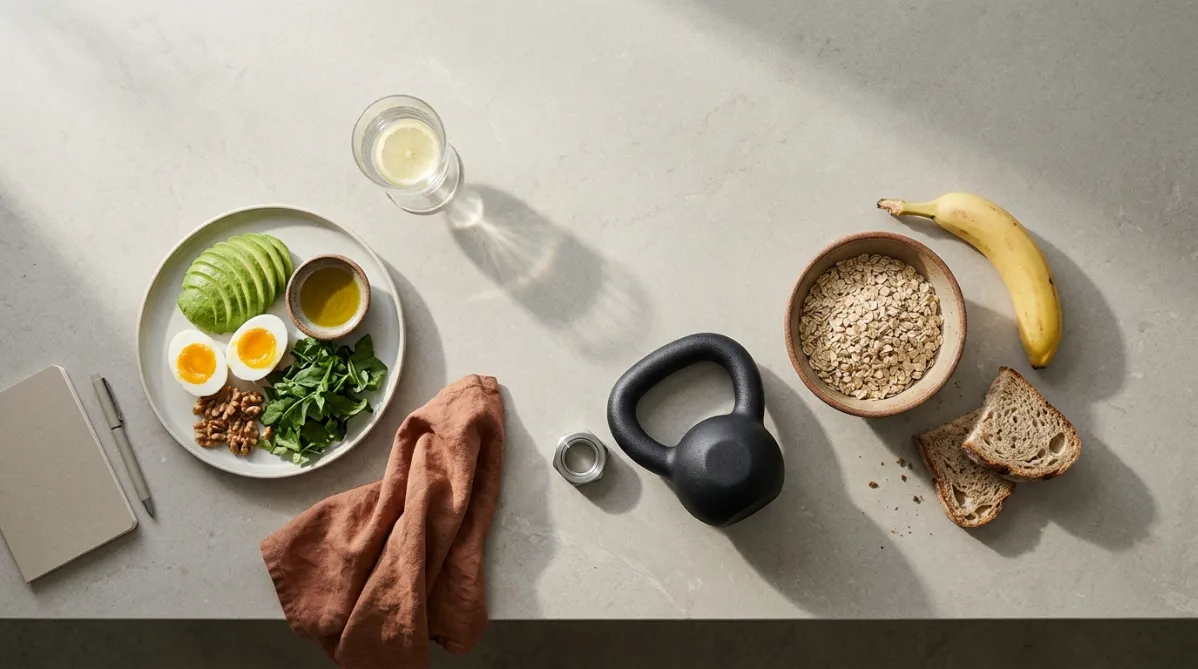
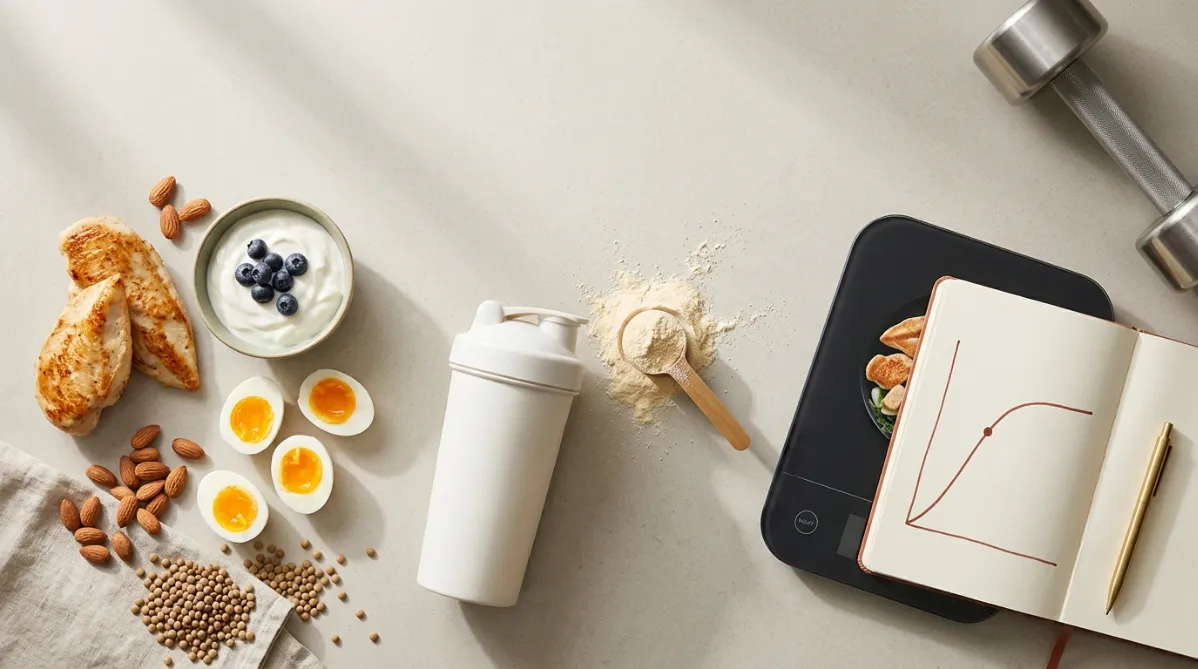
A wide, editorial flat-lay photograph shot from directly above on a pale warm-gray stone countertop, lit by soft natural morning window light with gentle diagonal shadows. On the left, a neatly arranged cluster of whole-food protein sources: two seared chicken breast slices with a golden crust, a small ceramic bowl of creamy Greek yogurt topped with blueberries, three halved soft-boiled eggs with jammy orange yolks, a handful of raw almonds, and a small pile of dried lentils scattered on a linen napkin. At the center, a matte white shaker bottle and a wooden scoop resting in a pile of fine vanilla-colored protein powder, a few grains dusted artfully across the surface. On the right, a minimalist kitchen scale in matte black displaying a portion of food, next to an open notebook with a hand-drawn curve that rises steeply and then flattens into a plateau, drawn in a deep terracotta ink pen, with a small dot marking the bend. A brass pen lies beside the notebook. A single dumbbell with a brushed steel finish sits partially in frame at the upper right corner, grounding the fitness theme without feeling gym-like. Color palette: warm cream, sage green, terracotta, soft charcoal, and butter yellow accents, with generous negative space along the top edge for title overlay. Shallow depth of field, crisp textures, subtle film grain, modern lifestyle magazine aesthetic, clean and calm composition, 16:9 landscape.
Nutrition

근육을 최대로 키우려면 단백질은 얼마나 필요할까? 1.6 g/kg 플래토 해설

Dr. Gymbro · · 2 min read

한 마디로: 하루에 체중 1 kg당 약 1.6 g

근육을 늘리기 위해 중량 훈련을 하는 경우, 대규모 메타‑분석 결과가 헬스장에 퍼진 흔한 신화보다 낮은 일일 단백질 섭취 목표를 제시합니다. British Journal of Sports Medicine에 발표된 이 리뷰는 49개의 무작위 대조군 연구와 1,863명의 건강한 성인을 포함했습니다. 분석 결과, 체중 1 kg당 약 1.6 g의 단백질이 플래토(정점) 지점으로 나타났으며, 이 수치를 초과해도 저항 훈련에 의한 무지방 체중(FFM) 증가에 큰 효과는 없었습니다.

95 % 신뢰구간의 상한은 대략 2.2 g/kg·일이었습니다. 즉, 평균적으로는 1.6 g/kg에서 효과가 평탄해지며, 2.2 g/kg 정도가 안전 마진을 포함한 실용적인 상한선으로 볼 수 있습니다.

실제 식단에 적용하면

계산은 간단합니다:

  • 70 kg (154 lb): 1.6 g/kg 기준 약 112 g/일, 2.2 g/kg 기준 약 154 g/일
  • 80 kg (176 lb): 1.6 g/kg 기준 약 128 g/일, 2.2 g/kg 기준 약 176 g/일
  • 90 kg (198 lb): 1.6 g/kg 기준 약 144 g/일, 2.2 g/kg 기준 약 198 g/일

이 수치는 음식과 보충제를 합친 총 일일 단백질 섭취량을 의미합니다. 현재 식단에 이미 충분히 포함돼 있을 가능성이 높으며, 별도로 추가한다는 뜻은 아닙니다.

연구 결과 요약

연구진은 최소 6주 이상 지속된 저항 운동 프로그램을 진행했고, 단백질 보충제를 사용한 무작위 대조군 연구만을 선정했습니다. 훈련만 수행한 그룹에 비해 보충제를 섭취한 그룹은 평균적으로 다음과 같은 개선을 보였습니다:

  • 힘(1RM): +2.49 kg
  • 무지방 체중: +0.30 kg
  • 근섬유 단면적: +310 µm²
  • 중대퇴 단면적: +7.2 mm²

모두 통계적으로 유의미했으며, 실제 효과가 있긴 하지만 그 규모는 크지 않습니다. 단백질 보충은 진행적 과부하, 충분한 열량 섭취, 꾸준한 훈련을 대체하는 것이 아니라 보조적인 역할을 합니다.

누가 가장 큰 혜택을 받을까?

두 가지 조절 변수가 두드러졌습니다.

훈련 경험이 많은 사람 – 저항 훈련에 익숙한 사람들은 무지방 체중이 약 0.75 kg 더 증가했으며, 이는 ‘신입생 효과’가 감소한 경험 많은 리프터에게 영양 섭취가 더 중요한 요인으로 작용할 수 있음을 시사합니다. 다만 이는 해석에 불과하며, 데이터가 직접 입증한 내용은 아닙니다.

젊은 성인 – 보충 효과는 연령이 높아질수록 연간 약 0.01 kg씩 감소했습니다. 노년층도 충분한 단백질이 필요하지만, 나이가 들수록 같은 훈련에 대한 근육 반응이 둔해지는 경향이 있음을 보여줍니다. 따라서 플래토를 ‘상한’으로 오해해서는 안 됩니다.

유청, 쉐이크 그리고 실제 식품

대부분의 보충제 연구에서는 유청 단백질 파우더나 레디‑투‑드링크 쉐이크와 같은 고농축 제품을 사용했습니다. 쉐이크는 부족한 단백질을 손쉽게 메울 수 있는 실용적인 방법이며, 보통 한 스쿱에 20~25 g 정도의 단백질이 들어 있습니다. 이 리뷰가 강조하는 것은 특정 제품이 아니라 총 단백질 섭취량이라는 점을 기억하세요. 닭 가슴살, 달걀, 유제품, 콩류, 두부 등으로도 체중 1 kg당 1.6 g을 섭취할 수 있다면 플래토 논리는 동일하게 적용됩니다.

간단한 실행법

  1. 목표량을 계산한다 (체중 kg × 1.6).
  2. 3~5끼 혹은 간식에 골고루 나눠 섭취한다.
  3. 목표량과 실제 섭취량 차이를 보충 쉐이크로 메운다.
  4. 1.6~2.2 g/kg 구간에 들어섰다면 더 많은 그램을 추구하지 않는다.

알아두면 좋은 주의사항

1.6 g/kg은 평균적인 정점일 뿐, 절대적인 생물학적 한계는 아닙니다. 신뢰구간이 넓어 개인별 차이가 존재합니다. 또한 이 연구는 무지방 체중(FFM)을 근육량의 대리 지표로 사용했으며, 물, 장기 등 비지방 조직도 포함됩니다.

저자 중 한 명인 스튜어트 필립스는 미국 전유 협의회(National Dairy Council)로부터 연구비 및 강연료를 받은 바 있습니다. 이는 결과의 타당성을 무효화하지는 않지만, 독자가 평가할 때 참고할 만한 맥락이 됩니다.

또한 이 리뷰는 건강한 성인만을 대상으로 했으며, 신장 질환 등 특정 질환을 가진 사람은 의료 전문가와 상의해야 합니다.

결론

대다수의 근육 증가 목표를 가진 사람에게 하루 1.6 g/kg이 최적점이고, 2.2 g/kg이 실용적인 상한선입니다. 그 이상을 섭취해도 근육 성장 속도가 눈에 띄게 빨라지지는 않습니다. 훈련 질, 수면, 전체 열량, 일관성을 우선시하고, 필요할 때 단백질 쉐이크를 활용해 목표량을 달성하는 것이 현명합니다.

Original study

Read the original research on pubmed.ncbi.nlm.nih.gov →

This article summarizes published research for general information. It is not medical advice.

DG

Written by

Dr. Gymbro

Dr. Gymbro writes for Dr. Gymbro: science-backed fitness, nutrition & performance.

Related Articles

A wide, editorial-style flat lay photographed from slightly above on a pale oak gym bench with a soft matte finish. On the left, a small white ceramic cup of black coffee sits on a matching saucer, with a thin curl of steam rising and catching warm window light. Beside it is a second, slightly larger handleless stoneware mug in muted sage green, also filled with coffee, so the pair suggests one to two cups. In the center-right foreground rests a sleek matte-black steel barbell plate, partly overlapping a brushed-steel dumbbell with fine knurling. A folded charcoal gym towel and a clean white chalk-dusted wrist strap lie casually to one side. A small scatter of whole roasted coffee beans spills across the bench in front of the cups, glossy and deep brown. Near the bottom edge, a minimalist analog kitchen scale in soft cream with a thin black needle hints at precise dosing, without any readable numbers or text.

Soft morning sunlight streams in from the upper left, creating long, gentle shadows and a warm golden glow against cool neutral tones. The background is a softly blurred, airy home gym or boutique training studio with out-of-focus squat rack uprights, pale concrete walls, and a leafy green plant in a terracotta pot adding a touch of organic color. The palette is restrained and modern: warm cream, espresso brown, charcoal, sage green, and hints of brushed silver. Shallow depth of field keeps the cups and beans tack sharp while the background melts into creamy bokeh. The composition leaves generous negative space on the right third for a title overlay, with a balanced, calm, premium magazine feel, like a contemporary wellness and sports science journal. High-resolution, natural color grading, subtle film grain, realistic textures on ceramic, steel, and coffee crema.
nutrition

운동 전 카페인 섭취량은 얼마나? 메타분석이 말하는 최적 용량은 1–2 mg/kg

BY DR. GYMBRO ·

운동 전 카페인 섭취에 대한 일반적인 권장량은 체중 1 kg당 3–6 mg이며, 이는 커피 몇 잔 혹은 프리‑워크아웃 한 스쿱에 해당한다. 2022년에 12개의 연구를 분석한 메타‑분석에서는 0.9–2 mg/kg만으로도 근력(d ≈ 0.17), 근지구력(d ≈ 0.21), 평균 바 속도(d ≈ 0.56)에서 유의한 향상이 나타났다고 보고했다. 이는 대부분의 사람에게 커피 한두 잔 정도에 해당한다. 효과 크기는 작지만, 급성 단일 세션 연구 결과이므로 과도한 카페인 없이도 비슷한 이점을 얻을 수 있음을 시사한다.

A wide, editorial-style still life photographed in soft natural window light on a pale oak gym bench. In the foreground, a small rustic ceramic bowl in warm sand tones holds a mound of fine golden-beige ashwagandha root powder, with a few dried gnarled ashwagandha roots and a sprig of green leaves with tiny orange-red berries resting beside it. A wooden scoop dusted with powder lies at an angle. Just behind, a matte black barbell with a single chalk-dusted steel plate sits slightly out of focus, a light haze of white chalk hanging in the air and catching the sunlight.

On the left side, a neat stack of printed research papers with a sharp black pen and a few muted sage-green sticky tabs. One page shows a simple, abstract forest-plot-style line graph with small squares and horizontal lines, subtly out of focus, hinting at statistics without legible text. A pair of minimal round reading glasses rests on the pages. A small linen gym towel is folded near the edge of the bench.

The palette is restrained and modern: warm cream, soft sage green, muted terracotta, charcoal black, and brushed steel highlights. The background is a softly blurred minimalist studio space with a pale plaster wall and a long soft shadow cast by a window frame, giving a calm, contemplative mood. Shallow depth of field, crisp detail on the powder and roots, gentle film-like grain, and generous negative space on the right third of the frame for a headline overlay. The overall look is a clean, trendy health-and-science journal cover, thoughtful and skeptical rather than promotional, balancing the natural herbal element against the discipline of strength training.
nutrition

리프터를 위한 아슈와간다: 근력 상승인가 통계적 환상인가?

BY DR. GYMBRO ·

아슈와간다는 리프터들에게 근력과 근육량을 늘려준다고 광고됩니다. 최근 *Nutrients*에 실린 메타분석은 벤치프레스와 스쿼트 1RM이 눈에 띄게 증가했다고 보고했지만, 실제로는 161명의 참가자를 포함한 3개의 시험만을 합산한 결과였습니다. 더 엄격한 HKSJ 검정에서는 두 강도 결과 모두 유의미성을 잃었고, 각각 하나의 영향력 있는 시험에 크게 의존하고 있었습니다. GRADE 평가에서는 증거 수준이 낮거나 매우 낮게 판정됐으며, 체지방 감소에 대한 확실한 효과는 없었습니다.

A wide, editorial-style flat lay photographed from above on a pale warm-gray stone countertop, bathed in soft natural window light with gentle long shadows. On the left half, a minimalist keto plate: sliced avocado fanned out in creamy green, two soft-boiled eggs halved to reveal golden yolks, a small pile of dark leafy greens, a few walnuts, and a glossy drizzle of olive oil in a small ceramic dish. On the right half, a contrasting arrangement of carbohydrates: a rustic bowl of oats, a ripe banana, and a few slices of sourdough, arranged with equal visual weight. Between the two sides, a matte black kettlebell sits at the center, and a slim brushed-steel barbell collar rests nearby, suggesting resistance training without a gym setting. A simple, elegant glass of water with a lemon slice catches the light and casts a delicate refracted glow, hinting at water weight and glycogen. A linen napkin and a small, neutral-toned notebook with a pen add a journal-like touch. The palette is muted and modern: sage green, cream, terracotta, charcoal, and soft butter yellow. The composition is clean and balanced with generous negative space across the top and bottom edges, suitable for headline overlay. The mood is calm, thoughtful, and science-informed, like a contemporary health and wellness magazine cover. Shallow depth of field, crisp textures on the food, subtle film-like grain, and high-end, trendy food photography styling.
nutrition

케토와 역도 선수: 지방은 줄지만 제지방은 평균 1.4kg 감소

BY DR. GYMBRO ·

케토식이요법은 지방을 효과적으로 줄이지만, 저항 훈련을 하는 성인에서는 제지방이 비케토 식단에 비해 평균 1.37kg 정도 적게 늘었습니다. 연구진은 이를 확신도가 낮은 결과로 평가하며, 근육 손실이라기보다 글리코겐 및 수분 감소가 원인일 가능성이 크다고 지적했습니다. 고강도 운동에서는 성능이 유지되지 않거나 약간 저하될 수 있으니, 케토를 체중 감량에 활용할 때는 근력 유지와 충분한 단백질 섭취, 일관된 측정 방식을 따르는 것이 중요합니다.

A bright, minimalist editorial still life on a pale oat-colored linen surface, shot from a slightly elevated three-quarter angle in soft natural window light. On the left, a matte ceramic bowl of fine white collagen powder with a wooden scoop resting beside it, a light dusting of powder spilling across the linen. On the right, a matching bowl of creamy off-white whey powder with a brushed-steel scoop. Between them sits a small, neatly balanced stack of simple geometric wooden blocks and a single smooth gray stone, hinting at a scale or comparison without showing a literal scale. Behind them, a lightly blurred row of three clean amber glass supplement jars with plain cream labels, unbranded. A single rolled yoga towel and a pair of small chrome dumbbells sit softly out of focus in the background on a pale plaster shelf. Accents of muted sage green and warm terracotta appear in a ceramic cup and a folded napkin, giving the palette a calm, contemporary wellness-magazine feel. A thin, elegant sprig of dried eucalyptus lies at the edge of the frame. Shadows are long, gentle, and slightly cool, with a creamy shallow depth of field and fine grain. The composition leaves generous negative space across the upper third for title overlay, with a subtle gradient from warm ivory to pale gray-blue in the background wall. The styling is clean and modern like a trendy health journal website, with a refined, tactile, editorial photography look, balanced symmetry, and no text, no people, no futuristic or laboratory elements.
nutrition

78건 메타분석, 콜라겐이 유청을 앞섰다?

BY DR. GYMBRO ·

2026년 네트워크 메타분석에 포함된 78개의 무작위 대조군 시험(총 4,755명) 결과, 콜라겐이 근력 및 무지방 체중 증가 측면에서 유청 단백질보다 더 높은 순위를 차지했다. 하지만 콜라겐은 필수 아미노산이 부족하고 류신 함량이 낮은 불완전 단백질이며, 신뢰구간이 넓어 효과가 불확실하다. 다른 단백질 보충제는 플라시보와 차이가 없었다. 직접적인 비교 연구가 부족하므로 결과를 신중히 해석해야 하며, 현재로서는 유청이 여전히 검증된 선택이고 콜라겐은 보조적인 역할로 고려하는 것이 바람직하다.

This page is available in