Dr. Gymbro
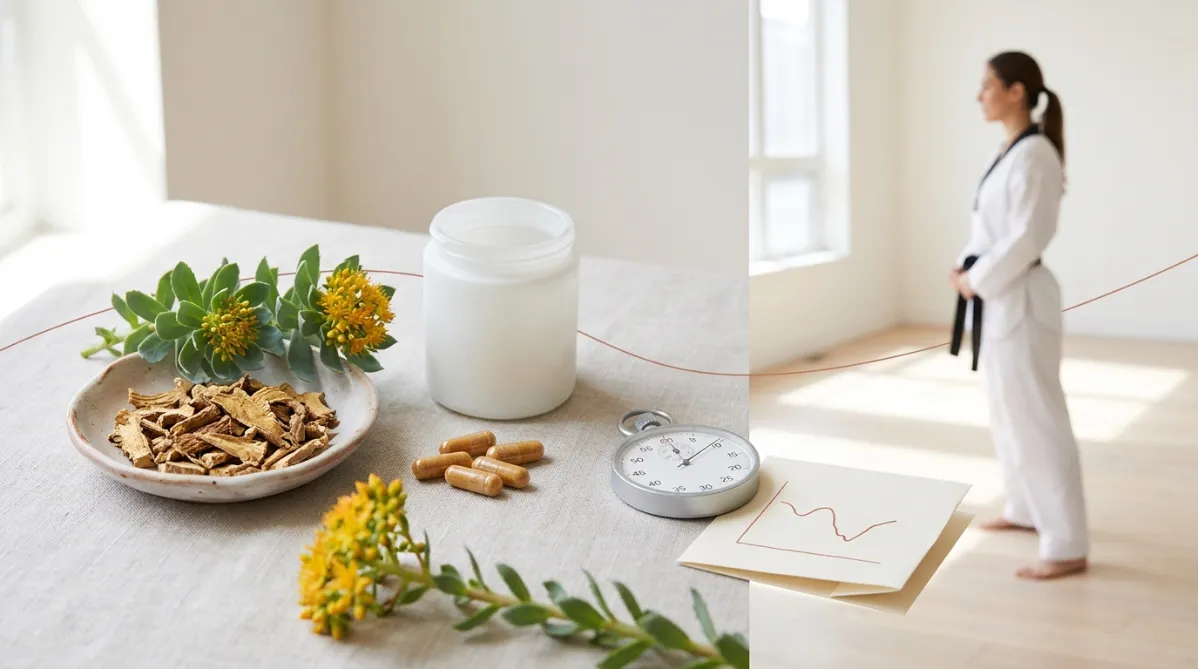
A wide, softly lit editorial still life on a pale warm-gray linen surface. On the left, a small ceramic dish holds dried golden-brown Rhodiola rosea root pieces, with a few fresh sprigs of the plant beside it. The sprigs have thick succulent blue-green leaves and tight clusters of small yellow-orange flowers. Next to the dish sit a handful of amber capsules and a matte white glass jar with no label. A sprig of the yellow blooms lies diagonally across the foreground, slightly out of focus.

On the right, in the middle distance, a woman in athletic wear is seen from the side and slightly blurred. She wears a crisp white taekwondo dobok with a black belt and stands in a calm ready stance in a bright, minimalist studio with pale wood floors and large windows. Soft morning light spills across the floor. Her form is a secondary element, and the shallow depth of field keeps the botanical objects sharp.

A thin, elegant detail ties the two halves together: a modern minimalist stopwatch with a clean white face rests on the linen near the capsules, its hand frozen mid-sweep. Beside it lies a small folded sheet of cream paper with a delicate hand-drawn line chart in muted terracotta ink, showing a small dip. A single fine terracotta line curves across the composition, loosely connecting the root, the stopwatch, and the athlete.

The palette is sophisticated and earthy: warm cream, sage green, dusty blush pink, terracotta, and a touch of marigold yellow from the flowers. The mood is calm, trustworthy, and wellness-forward, like a contemporary health and science journal. Light comes from the left, with soft shadows and gentle highlights on the ceramic and glass. There is generous negative space in the upper portion of the frame for title overlay. The image has a fine-grain, high-end editorial photography look, shot on a medium-format camera with a 50mm lens, shallow depth of field, and natural color grading.
Nutrition

Rhodiola skraca czas reakcji o 60 ms u sportistek z PMS — ale jest haczyk

Dr. Gymbro · · 4 min read

Premenstrual symptoms can wreck a training week. Irritability, poor focus, bad sleep, cravings and cramps don't care that you have a competition coming up. A new randomised trial suggests a cheap, widely sold herb might blunt some of that. The result that got our attention is a 60-millisecond improvement in visual reaction time. Before you add it to your cart, you need to know how small the study was and what the herb did not do.

The study: who, what and how big

Researchers from Allameh Tabataba'i University in Tehran and the German Sport University Cologne published the trial in the Journal of the International Society of Sports Nutrition. It was a randomised, double-blind, placebo-controlled trial, the strongest design for a supplement question like this.

The sample was small. Twenty-four female taekwondo athletes with moderate-to-severe premenstrual syndrome (PMS) were split into two groups of 12. One group took 500 mg per day of standardised Rhodiola rosea extract for 10 days during their estimated symptomatic premenstrual phase. The other group took a placebo. Researchers measured symptoms before and after with the Premenstrual Symptoms Screening Tool (PSST), along with reaction time, blood markers, perceived exertion and aerobic performance.

The headline finding: a faster brain

After adjusting for baseline values, the Rhodiola group had a visual reaction time 60 ms faster than placebo (p < 0.001). In a combat sport, where reading an opponent's movement is half the job, that is the number that grabs attention. The paper tested a visual reaction task, though, not actual sparring or competition. How much of that 60 ms carries over to the mat is still an open question.

Symptoms: a long list of improvements

Compared with placebo, Rhodiola significantly reduced several PMS symptoms (p < 0.05):

  • Irritability
  • Depression
  • Anxiety
  • Social withdrawal
  • Decreased concentration
  • Hypersomnia (oversleeping)
  • Food cravings
  • Crying
  • Skin problems
  • Abdominal pain

That covers mood, cognition, appetite and physical discomfort, which is a wide spread for a single herb. The symptoms were self-reported, though. Even with a placebo control, subjective scales in a small group can be noisy.

Serotonin, GABA and effort

Peripheral serum serotonin and GABA were both significantly higher in the Rhodiola group than in the placebo group (p < 0.001). These are neurotransmitters tied to mood, calm and arousal, so the finding fits the symptom improvements. The authors measured them in blood, however. Blood levels don't reliably show what is happening in the brain, so treat this as a hint about a mechanism, not proof of one.

The athletes also reported that exercise felt easier. Post-exercise rating of perceived exertion fell by 1.40 Borg units compared with placebo (p = 0.006). The same work felt less taxing.

What Rhodiola did NOT do

This is the part the supplement ads leave out. Time to exhaustion and estimated VO₂max did not differ between groups (p > 0.05). Rhodiola made the athletes feel better and react faster, but it did not improve the aerobic measures tested. If you hoped for a new endurance record, this study doesn't support that.

Practical takeaways

Dose: The trial used 500 mg per day of standardised Rhodiola rosea extract. The paper summary doesn't give the standardisation percentages, so check that your product states what it is standardised to.

Timing: Participants took it for 10 days during the estimated symptomatic premenstrual phase. It was a short, targeted window, not year-round use. Whether the effects hold up with longer or continuous use is unknown.

Who it may be for: Female athletes with moderate-to-severe PMS who notice that mood, focus and perceived effort drop in the days before their period. The evidence applies directly to young female taekwondo athletes. Other sports and populations are extrapolation.

Who should skip it or ask a professional first:

  • Anyone on antidepressants or other serotonin-affecting medication. The study showed higher serotonin levels, so get medical advice first.
  • Anyone with bipolar disorder or other mood conditions under treatment.
  • Pregnant or breastfeeding women. This study doesn't address safety there.
  • Tested athletes should choose third-party-certified products and check their governing body's rules.
  • Anyone with severe PMS or PMDD. Persistent, disabling symptoms deserve a medical evaluation, not just a supplement.

Limitations you shouldn't ignore

The authors say so themselves. With only 12 people per group, the results are fragile, and chance or individual variation can have an outsized effect. The premenstrual phase was estimated, not confirmed with hormone testing, so some participants may have been in a different phase than assumed. Ten days is short, and the study can't speak to long-term effects. The performance tests were also not sport-specific, and no direct physiological measurements were taken beyond blood markers and estimated VO₂max. The authors call for larger trials with hormonal confirmation, longer interventions and sport-specific performance tests. The study reported no conflicts of interest.

Bottom line

This small but well-designed trial suggests a short course of Rhodiola rosea during the premenstrual window may improve PMS symptoms, sharpen visual reaction time and make exercise feel easier for female athletes. It did not improve time to exhaustion or estimated VO₂max. It is promising early evidence, not a verdict. If you try it, treat it as a cautious experiment, keep a symptom log, and talk to a clinician if you take medication or have a mood condition.
Original study

Read the original research on pubmed.ncbi.nlm.nih.gov →

This article summarizes published research for general information. It is not medical advice.

DG

Written by

Dr. Gymbro

Dr. Gymbro writes for Dr. Gymbro: science-backed fitness, nutrition & performance.

Related Articles

A wide, editorial still life photographed in soft natural window light on a pale oatmeal-colored linen surface. At the center sits a small, rustic ceramic dish holding a handful of dried golden-orange Rhodiola rosea root pieces and a few fresh, fleshy green-gray succulent rosettes with rosy-pink tips. Beside it, a single matte amber glass capsule bottle lies on its side, with two cream-colored capsules spilling out. On the left, a minimalist analog stopwatch with a brushed brass case rests slightly out of focus, its hands suggesting a duration just past the quarter-hour mark. On the right, a worn, chalk-dusted steel kettlebell handle and a folded charcoal gym towel fill the negative space, hinting at lifting without showing a full gym scene.

In the foreground, a neat row of seven tiny ceramic pill cups arranged in a gentle diagonal line, the first cup holding one capsule and the rest sitting empty, as a quiet visual metaphor for a single dose versus daily dosing. A sprig of dried alpine moss and a few small speckled pebbles add organic texture. The background is a softly blurred warm-gray plaster wall with a gentle gradient shadow cast by a window frame, creating diagonal light stripes across the scene.

The palette is muted and earthy: sage green, terracotta, warm cream, brushed brass, and soft charcoal, with one subtle pop of coral from the Rhodiola tips. Shallow depth of field, crisp focus on the root and capsules, and fine film-like grain. The composition leaves generous clean negative space in the upper left for a headline overlay. The overall feel is a modern wellness and science journal: calm, tactile, minimal, and sophisticated, with a slightly moody, high-end magazine look. There is no text, no people, and no futuristic elements.
nutrition

200 mg rhodioli zwiększyło wydolność o 24 sekundy – cztery tygodnie codziennego stosowania nie przyniosły żadnych korzyści

BY DR. GYMBRO ·

Jednorazowa dawka 200 mg Rhodiola rosea przyjęta na godzinę przed treningiem nieznacznie wydłużyła czas wyczerpania z 16,8 do 17,2 minuty i podniosła VO2‑peak w podwójnie ślepym badaniu krzyżowym. Cztery tygodnie codziennego przyjmowania nie zwiększyły tego efektu ani nie wpłynęły na żadne inne mierzone parametry. Wzrost wyniósł jedynie około 24 sekundy, a siła, szybkość reakcji i uwaga nie uległy zmianie. Oto, co naprawdę wykazało badanie, kto może rozważyć jednorazową dawkę i dlaczego nie należy liczyć na „ładowanie” rhodioli.

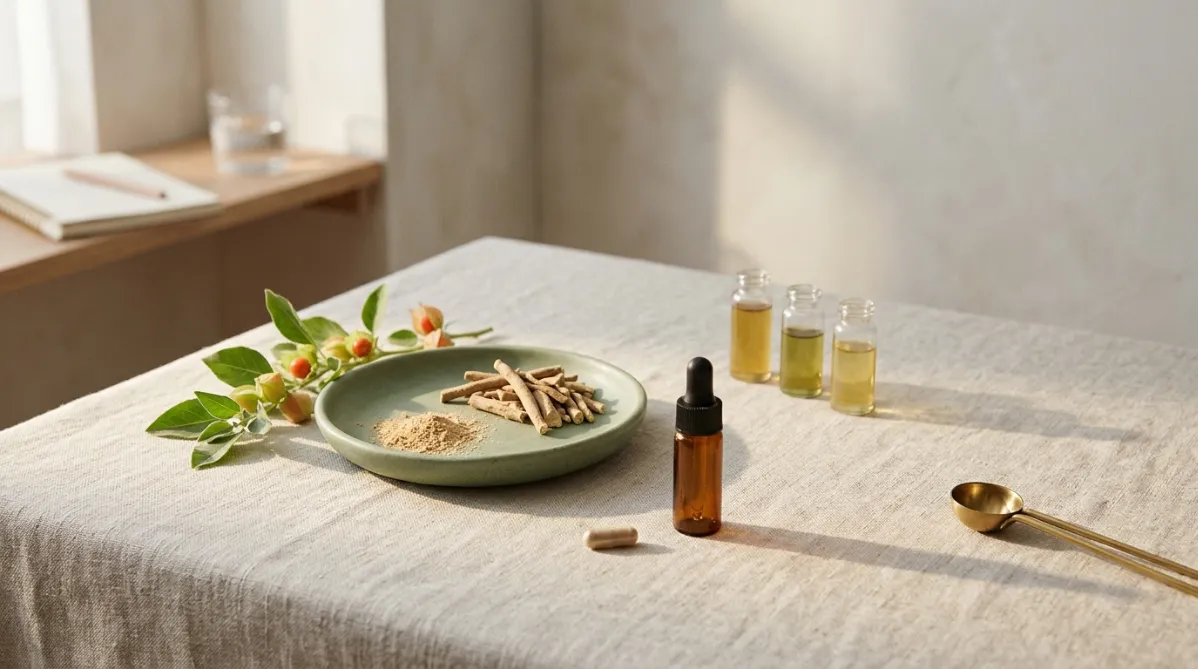
A softly lit, minimalist editorial still life on a pale oat-colored linen surface, shot from a slightly elevated three-quarter angle. In the center-left, a small handmade ceramic dish in matte sage green holds a modest pile of dried ashwagandha root pieces and a scattering of fine tan powder. A few fresh ashwagandha sprigs, with delicate green leaves and small orange-red berries in papery husks, rest beside it. In front, a single tiny capsule sits alone on the linen, with a slim glass dropper bottle in amber tint just behind it, suggesting a very small dose. To the right, a neat row of three small glass vials stands slightly out of focus, their contents a muted gold, hinting at comparison without any labels or text. A delicate brass measuring spoon lies at the edge of the frame, catching a thin highlight.

Soft morning window light falls from the upper left, casting long, gentle shadows and a warm glow across the textures: rough linen weave, matte ceramic, glossy glass, and the powdery root. The color palette is calming and earthy, with sage green, warm cream, soft terracotta, amber, and touches of muted coral from the berries. In the background, a blurred, airy room with a pale plaster wall and a hint of a wooden shelf holding a notebook and a small glass of water, adding a quiet wellness-journal atmosphere. Shallow depth of field, crisp focus on the dish and capsule, and generous negative space on the right third of the frame for headline overlay. The overall mood is calm, thoughtful, and slightly skeptical, like a contemporary health and science magazine feature, with natural, realistic photography, fine grain, and subtle film-like color grading.
science research

Zaledwie 30 mg ashwagandhy obniża stres w 4 tygodnie — ale uwaga

BY DR. GYMBRO ·

Większość badań nad ashwagandhą stosuje 250‑600 mg dziennie, ale to badanie użyło jedynie 30 mg przez 28 dni u 60 osób zestresowanych. Grupa przyjmująca ashwagandhę odnotowała niższy poziom stresu, a poziom kortyzolu w ślinie pozostawał stabilny podczas testu laboratoryjnego, podczas gdy w grupie placebo wzrósł. Problemem są wartości p oscylujące wokół 0,04‑0,047, analiza per‑protocol nie wykazała istotności, a większość innych wyników nie wykazała różnic. Producent ekstraktu sfinansował badanie. Oto co rzeczywiście potwierdzają dane, komu może pomóc i czego nie udowadniają.

A landscape editorial still life on a softly lit desk, shot from a slightly elevated three-quarter angle with shallow depth of field. In the center sits a ceramic cup of black coffee with a thin curl of steam, on a matte sage-green desk mat. Beside it, a sleek white wireless gaming mouse and a minimal, low-profile keyboard are partly in focus. Scattered in the foreground are a few whole roasted coffee beans and a small glass jar of loose green tea leaves, as a quiet nod to caffeine sources. To the left, a few unlabeled supplement capsules in muted peach and cream spill from a small amber glass bottle onto the mat. Their blurred, ordinary look hints that they are less important than the coffee. In the background, a monitor glows with a soft, abstract, out-of-focus gradient of dusty rose and teal, with no readable game interface. A small analog alarm clock sits at the edge of the frame, its hands near late evening, suggesting sleep concerns. A sheet of paper with simple hand-drawn bar charts and a pencil rests near the cup, hinting at research and data without any legible text.

The palette is warm and modern: cream, sage, terracotta, charcoal, with a single accent of coral. Soft window light comes from the left, casting gentle long shadows and a subtle film-like grain. The composition is clean and uncluttered, with generous negative space on the right third for a title overlay. The look is contemporary and trendy, like a lifestyle-science magazine cover, calm, tactile, and sophisticated, with no sci-fi or neon cyberpunk elements.
supplements

Suplementy dla graczy poparte prawdziwymi dowodami nie są tym, co obiecują reklamy

BY DR. GYMBRO ·

Reklamy suplementów dla graczy obiecują laserowy focus i błyskawiczne refleksy, ale przegląd systematyczny 13 randomizowanych badań (466 graczy) wykazał, że dowody koncentrują się prawie wyłącznie na jednej substancji: kofeinie. Kofeina pojawiła się w 14 z 18 testowanych protokołów i była powiązana z lepszą uwagą, funkcjami wykonawczymi, nastrojem oraz precyzją strzelania i czasem reakcji. Testowano także argininę‑silicat z dodatkiem inozytolu, GABA oraz ekstrakty z mikroalg, ale dowody na ich skuteczność są znacznie skromniejsze. Autorzy ostrzegają, że małe próbki, amatorscy gracze i ryzyko uprzedzeń sprawiają, że wyniki są wstępne. Oto, co pokazują badania, jakie skutki uboczne warto monitorować i jak rozsądnie stosować kofeinę, nie rezygnując ze snu.

A softly lit editorial flat-lay on a pale oat-colored linen surface, shot from slightly above in a wide landscape frame. On the left, a small matte white ceramic dish holds a modest heap of golden-orange Cordyceps militaris, slender clustered fruiting bodies with a delicate, fibrous texture, a few strands scattered across the linen. Next to the dish sits a tiny clear glass vial with a pinch of fine amber powder, and a minimalist wooden spoon rests beside it. In the center of the frame, a sleek stainless steel stopwatch lies beside a simple analog reaction-timing ruler in light birch wood, its thin black measurement ticks sharply in focus. On the right, partially cropped, the handlebar and gloved hand of a road bicycle are visible. A matte black bottle and a folded gray cotton towel add a subtle athletic note. A sprig of dried grass and a single smooth river stone provide organic balance. Soft diffused morning window light enters from the upper left and casts long, gentle shadows. The palette is warm and restrained: cream, burnt orange, soft sage green, charcoal, and touches of brushed steel. The depth of field is shallow, with the mushrooms and stopwatch crisp and the background gently blurred into creamy neutral tones. The mood is calm, clean, and contemporary, like a high-end wellness and science journal cover, with generous negative space in the upper right for headline text. No people, no text, no logos, and no futuristic elements.
supplements

Cordyceps przed maksymalnym testem na rowerze przyspieszył czas reakcji w małym badaniu

BY DR. GYMBRO ·

Jedna dawka 1 g *Cordyceps militaris*, podana 30 minut przed maksymalnym testem na rowerze, została powiązana z szybszymi czasami reakcji po wysiłku u młodych mężczyzn. Spoczynkowy pobór tlenu również wzrósł, choć szczytowy VO₂ nie uległ zmianie. Kluczowy efekt interakcji nie był istotny, a badanie objęło jedynie 12 rekreacyjnie aktywnych mężczyzn. Oto, co naprawdę się poprawiło, czego nie zauważono i jak odczytać wyniki bez przerysowywania ich znaczenia.

This page is available in