Dr. Gymbro
←

#altitude

1 article
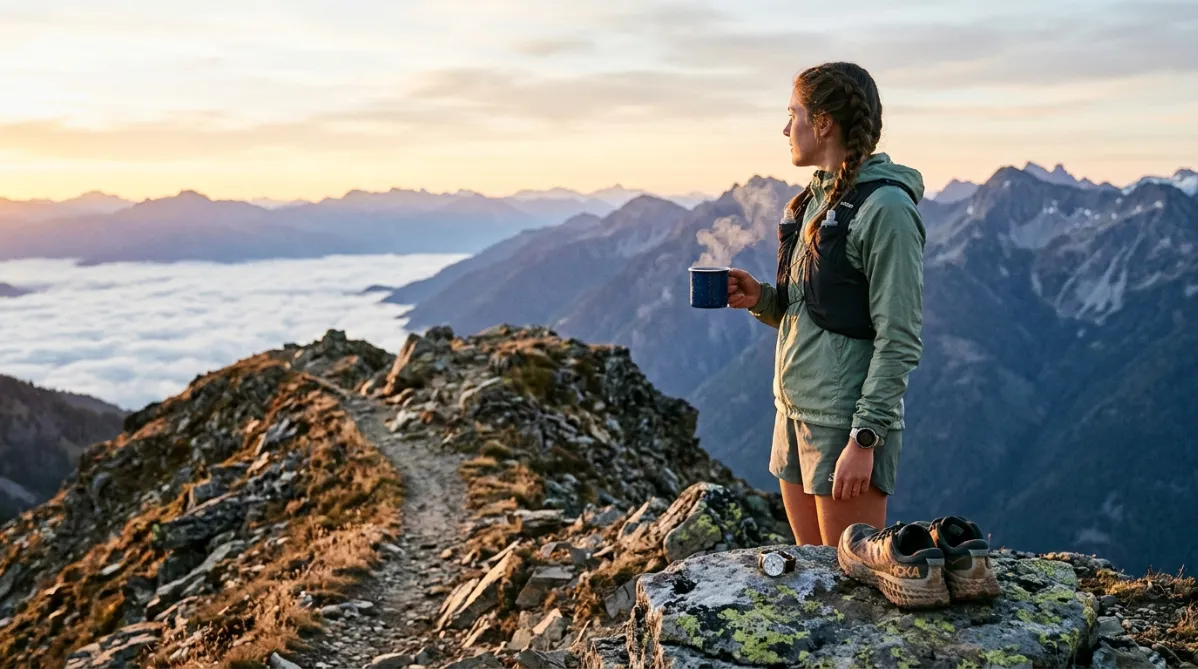
A lone trail runner pauses on a high alpine ridge at dawn, holding a small enamel camp mug of steaming coffee, with thin ribbons of steam curling into crisp, cold air. She wears a fitted charcoal running vest and a muted sage windbreaker, and her breath is faintly visible. Behind her, layered mountain ranges fade into soft blue and lavender haze, and a sea of low clouds fills the valley below. Warm golden sunlight skims the ridgeline and rim-lights her profile, shoulders, and the rising steam. In the foreground, a scattering of dried alpine grasses and lichen-covered stones is in sharp focus, with a worn trail snaking toward the summit. Near the mug sits a small pair of trail running shoes with dusty soles and a simple analog wristwatch resting on a flat rock.

The composition follows a wide 16:9 editorial layout. The subject sits slightly right of center on the rule of thirds, leaving generous negative space in the pale peach-and-powder-blue sky on the left, where headline text could sit. The palette is restrained and modern: warm amber, soft cream, dusty sage, slate blue, and a touch of terracotta. The look is cinematic but natural, with shallow depth of field on the foreground details, gentle film grain, and a slightly matte finish. It evokes a high-end outdoor lifestyle magazine or a contemporary wellness journal. The mood is calm, focused, and quietly determined, capturing the contrast between thin, cold altitude air and the warmth of a coffee ritual. The image has no text, logos, or futuristic elements, and no gym equipment, only natural light, texture, and atmosphere.
nutrition

Kofeina w cienkim powietrzu: Wzrost wydolności, którego hipoksja nie zniweczy

BY DR. GYMBRO ·

Cienka wysokość drastycznie obniża wydolność, ale nowa metaanaliza sugeruje, że kawa może nieco to zredukować. Analiza obejmuje dziewięć randomizowanych badań z placebo i łącznie 117 uczestników, wśród których jedynie 19 to kobiety. Badacze wykazali umiarkowanie‑do‑silny wzrost wydajności w warunkach hipoksji (g = 0.76). Niespodziewanie nasycenie tlenem i odczuwany wysiłek nie uległy zmianie, natomiast tętno, mleczan i wentylacja wzrosły. Dowody mają niską pewność, więc wyniki są obiecujące, ale nie dowodzone.

This page is available in