Dr. Gymbro
←

#amino acids

1 article
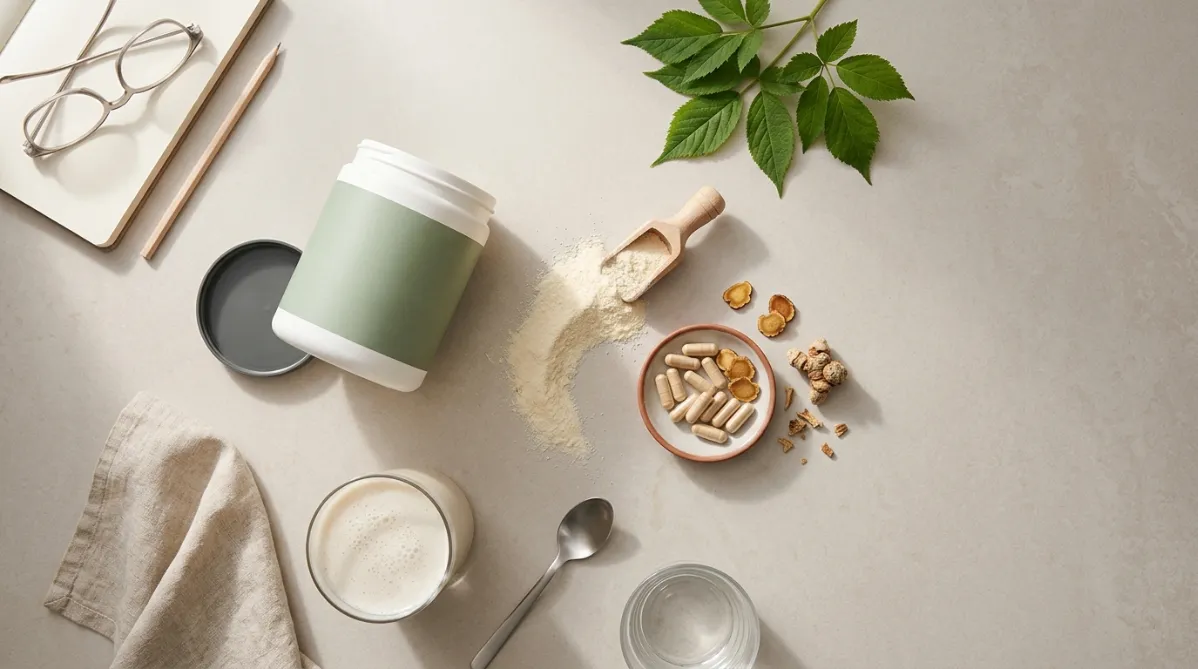
A clean, editorial flat-lay photograph shot from above on a pale warm-grey stone countertop, bathed in soft diffused morning light from the left. At the center sits a matte white supplement tub with a minimal sage-green label, its lid resting beside it. A small wooden scoop spills fine cream-colored whey powder in a gentle arc across the surface, creating delicate natural texture and soft shadows. Next to the powder, a small ceramic dish holds a handful of pale tan capsules and a few tiny golden-brown ginseng root slices and fragments of dried Panax notoginseng root, hinting at the botanical origin of the ingredient. A sprig of fresh green leaves with serrated edges adds a touch of organic color on the upper right.

In the foreground, a tall glass of milky shake with a subtle frothy surface, condensation beads on its sides, sits beside a folded linen napkin in oatmeal tone. A slim brushed-steel spoon and a minimal glass of water complete the arrangement. A pair of simple, elegant reading glasses and a closed notebook with a thin pencil rest at the upper left, suggesting a researcher's desk and a thoughtful review of data, with no legible text visible.

The palette is soft and modern: warm cream, sage green, muted terracotta, pale wood, and gentle off-white, with one small accent of deep amber from the ginseng slices. Composition follows the rule of thirds with generous negative space on the right side for title overlay. Shallow depth of field, crisp focus on the powder and capsules, with the edges gently softened. The mood is calm, trustworthy, and wellness-focused, evoking a contemporary health and science magazine aesthetic. High-resolution, natural color grading, subtle film grain, minimal and airy, 16:9 landscape.
nutrition

AstraGin – ukryty składnik w etykiecie, który zwiększa wchłanianie białka serwatkowego

BY DR. GYMBRO ·

Na etykiecie twojego suplementu przedtreningowego znajduje się maleńki składnik, którego prawdopodobnie nie zauważyłeś – AstraGin. Pilotażowe badanie na ludziach wykazało, że podnosi wchłanianie waliny o 14 %, leucyny o 8 % oraz łącznej liczby niezbędnych aminokwasów o prawie 13 % u osób w wieku 60‑80 lat. Stężenie zonuliny we krwi, będące wskaźnikiem przepuszczalności jelit, spało również o 13 %. Różnice w sile i masie mięśniowej nie były statystycznie istotne, a w badaniu wzięło udział zaledwie 30 osób. Oto, co naprawdę mówią dane na temat skuteczności AstraGin.

This page is available in