Dr. Gymbro
←

#ketone monoester

1 article
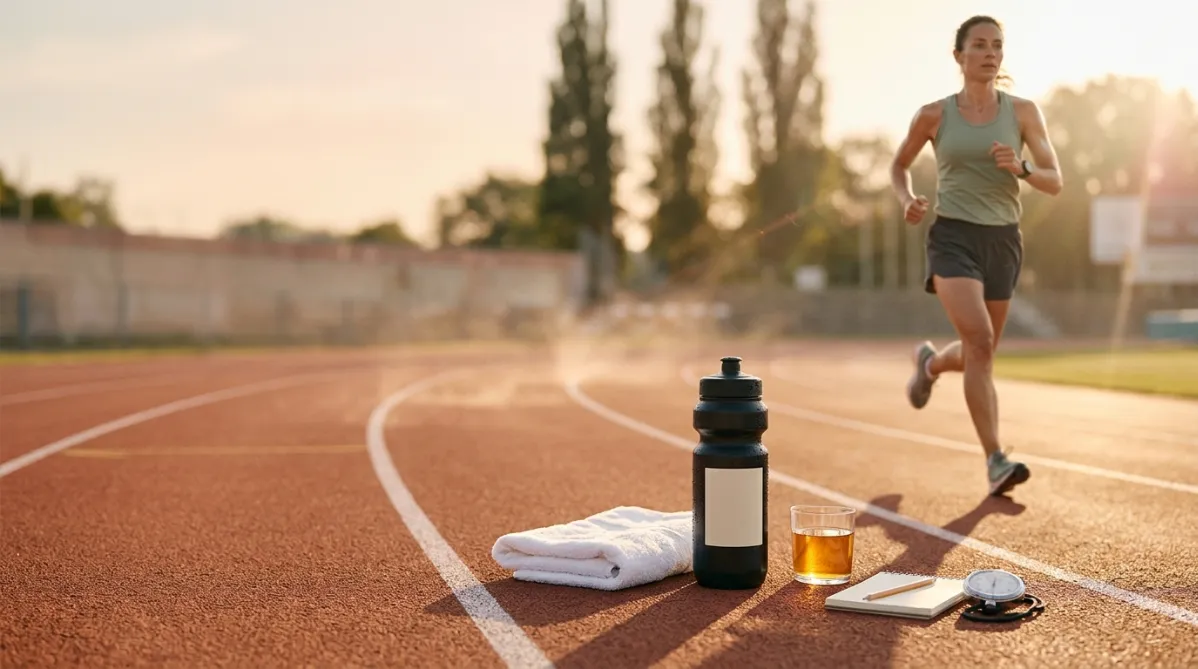
A sunlit outdoor running track in late afternoon, shot from a low angle with shallow depth of field. In the foreground, a matte black bottle with a minimal off-white label sits on the edge of a warm terracotta-colored track lane, beside a folded white towel and a small glass of amber liquid catching golden light. Condensation beads on the bottle. A faint heat shimmer rises from the track surface and softens the background.

In the midground, slightly out of focus, a lean athlete in a sage-green tank top and charcoal shorts runs on a treadmill-like stretch of track, a thin sheen of sweat on their shoulders, their expression focused and calm. Their motion is gently blurred, suggesting endurance and rhythm. Long soft shadows stretch across the lane lines.

The background fades into hazy peach, apricot, and pale yellow tones, with the suggestion of tall trees and a distant stadium wall. Warm sun flare enters from the upper right, creating a subtle glow and a few soft light streaks across the frame.

Subtle editorial touches: a small notebook with a pencil and a stopwatch rest beside the bottle, hinting at data and timing without any text legible. The color palette is warm and muted, with terracotta, cream, sage, and charcoal accents, and a fine film-like grain. The composition leaves open negative space on the left third for a headline overlay. The overall mood is clean, modern, and health-journal inspired, natural and aspirational, with a calm scientific curiosity rather than hype.
nutrition

Napoje ketonowe w upale: dłuższa wytrzymałość i lepsza pamięć?

BY DR. GYMBRO ·

Napoje ketonowe kojarzone są z biohackerami spalającymi tłuszcz, lecz nowy test w warunkach upału sugeruje, że mogą także pomóc wykonać trening mocniej. W badaniu z 17 wytrenowanymi mężczyznami połączenie ketonowego monoesteru i kofeiny wydłużyło czas do wyczerpania do 8,9 minuty (vs 7,0 minuty przy węglowodanach i kofeinie) po 90 minutach intensywnego biegu w 34 °C. Dokładność w zadaniu 1‑back poprawiła się, podczas gdy tętno i temperatura centralna nie wykazały istotnych różnic. Korzyści nie pojawiły się w zadaniu 2‑back, czasie reakcji ani w teście „hit‑and‑avoid”. Badanie było małe, obejmowało wyłącznie mężczyzn i jedną sesję. Oto, co wynika z wyników i czego nie można z nich wyciągnąć.

This page is available in