Dr. Gymbro
←

#proteomics

1 article
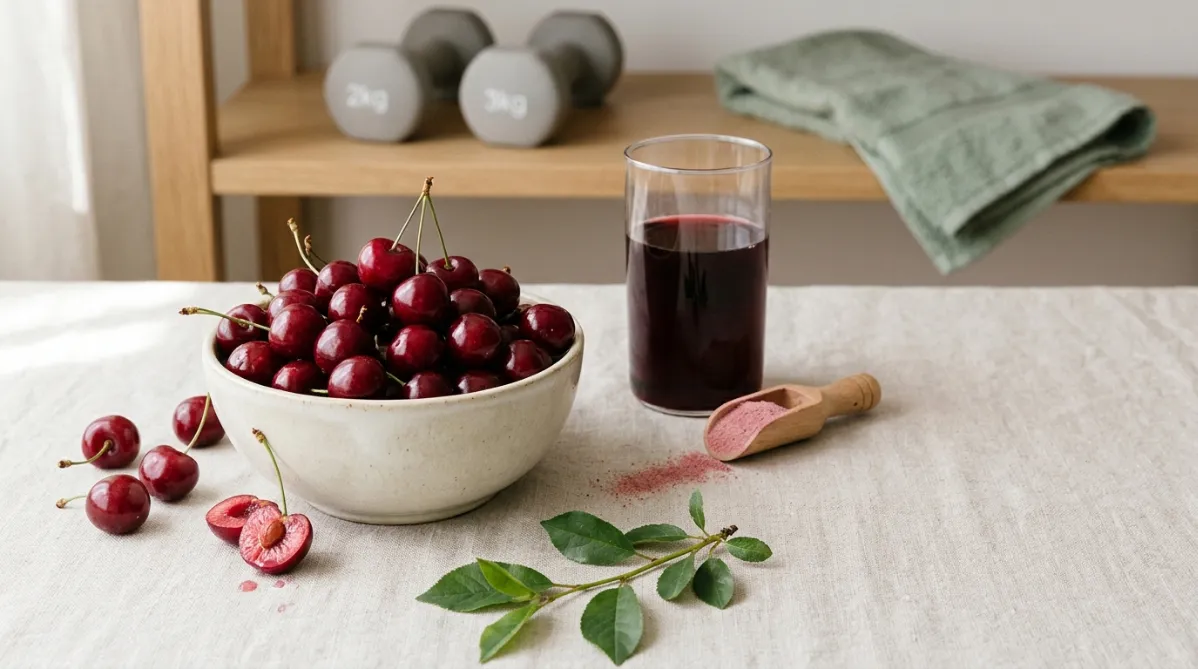
A wide, softly lit editorial still life on a pale oatmeal linen surface. In the center-left, a rustic ceramic bowl in matte cream glaze holds a generous heap of glossy deep-crimson tart cherries, some with stems still attached, a few spilling onto the table. Beside the bowl, a halved cherry reveals its pit and bright ruby flesh, with tiny droplets of juice catching the light. To the right, a tall clear glass of dark burgundy cherry juice sits beside a small wooden scoop holding fine rose-colored cherry powder, a light dusting of which trails across the linen in a gentle arc.

In the soft-focus background, a pair of neutral gray dumbbells and a folded sage-green towel sit on a light oak shelf, hinting at exercise without dominating the scene. A single sprig of green cherry leaves lies diagonally across the foreground, adding a fresh contrast.

Natural morning window light enters from the upper left, casting long, gentle shadows and warm highlights on the cherry skins. The palette is restrained and modern: deep crimson, blush pink, cream, sage green, and warm oak, with plenty of negative space on the right third for title overlay. Shallow depth of field, crisp focus on the cherries, creamy bokeh behind. A subtle film-like grain and slightly muted tones give it a contemporary wellness-magazine feel, clean, tactile, and calm. Shot from a slightly elevated three-quarter angle, composed with an off-center balance and an airy, minimalist layout.
supplements

Wiśnia kwaśna przestawiła białka mięśniowe — ale nie przyspieszyła regeneracji

BY DR. GYMBRO ·

Wiśnia kwaśna uważana jest za szybki środek na regenerację, ale najnowsze badanie opublikowane w *Frontiers in Nutrition* przyniosło zaskakujące wyniki. Siedmiodniowa suplementacja przed intensywnym, ekscentrycznym treningiem podniosła stężenie fenolowych kwasów we krwi i znacząco zmieniła równowagę białek strukturalnych i kurczliwych w mięśniach. Zmienił się także napływ makrofagów, jednak nie przyspieszyło to odzyskiwania funkcji mięśniowej. Stężenie kwasu hipurowego we krwi korelowało z wydajnością mięśni u młodych, aktywnych mężczyzn.

This page is available in