Dr. Gymbro
←

#randomized-trial

1 article
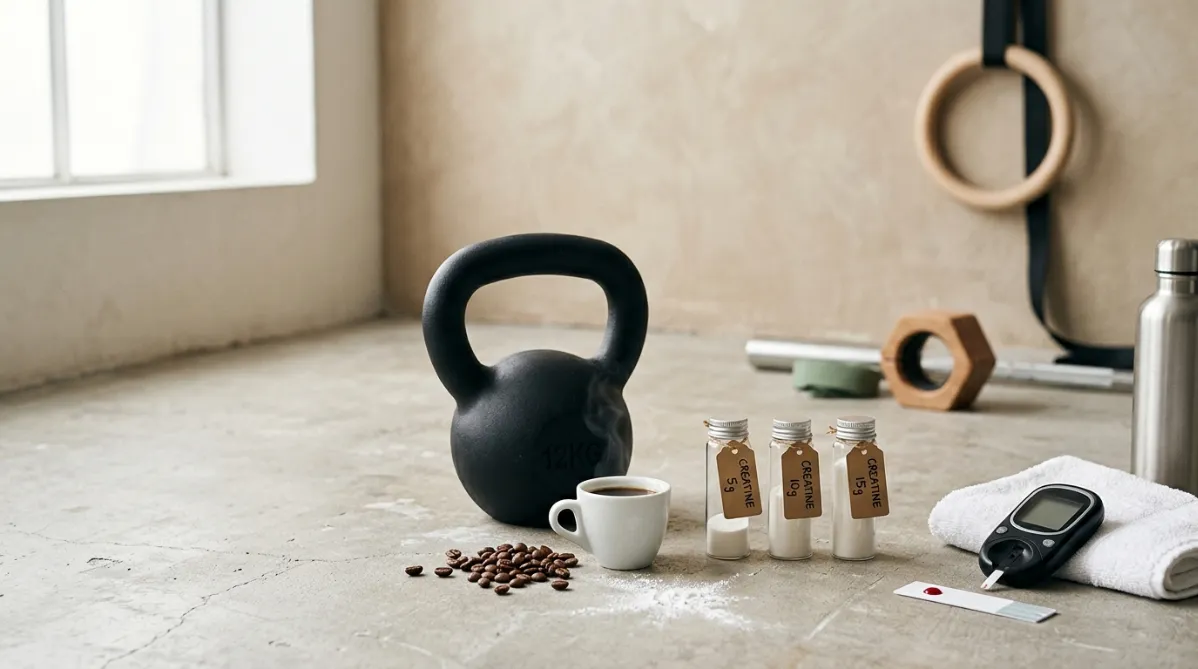
A wide, editorial-style still life photographed in soft natural window light, set on a pale concrete gym floor with a warm oatmeal-toned wall behind it. In the center foreground, a matte black kettlebell sits beside a white ceramic espresso cup filled with dark coffee, a thin wisp of steam rising. Next to the cup, three small glass vials of increasing fill levels stand in a neat row, containing fine white powder, each tied with a small kraft paper tag. Scattered nearby are a few roasted coffee beans and a pinch of chalk dust that catches the light.

On the right side, a minimalist glucose meter with a small blank screen rests next to a folded white towel and a stainless steel water bottle. A single drop of bright crimson blood on a clean test strip adds a subtle focal accent. A wooden barbell collar and a loop of gymnastic rings hang softly out of focus in the background, suggesting a CrossFit box without showing any people.

The palette is warm and restrained: cream, charcoal, terracotta, and muted sage green, with one pop of coral red from the droplet. The composition uses generous negative space on the left third for headline overlay, a shallow depth of field, and gentle long shadows falling across the floor. The mood is calm, clean, and modern, like a premium health and science magazine cover: crisp textures, subtle film grain, natural color grading, and a slightly elevated three-quarter camera angle in landscape 16:9 format.
nutrition

6 czy 9 mg/kg kofeiny przed CrossFit? Co mówi twój poziom cukru we krwi

BY DR. GYMBRO ·

Wszyscy zakładają, że duża dawka kofeiny przed intensywną sesją CrossFit wywróci twoje ciało do góry nogami. Randomizowane, podwójnie zaślepione badanie sprawdziło dawki 3, 6 i 9 mg/kg u 26 zawodników CrossFit i znalazło jedną wyraźną reakcję – wzrost glukozy we krwi. Po treningu poziom cukru podniósł się bardziej przy dawkach 6 i 9 mg/kg niż po placebo, a wskaźniki krwinek nie wykazały zmian specyficznych dla kofeiny. Wapń, magnez i fosforany zmieniały się głównie pod wpływem samego wysiłku, nie kofeiny. Oto, co to oznacza dla twojej dawki, momentu przyjęcia i kogo warto potraktować z ostrożnością.

This page is available in