Dr. Gymbro
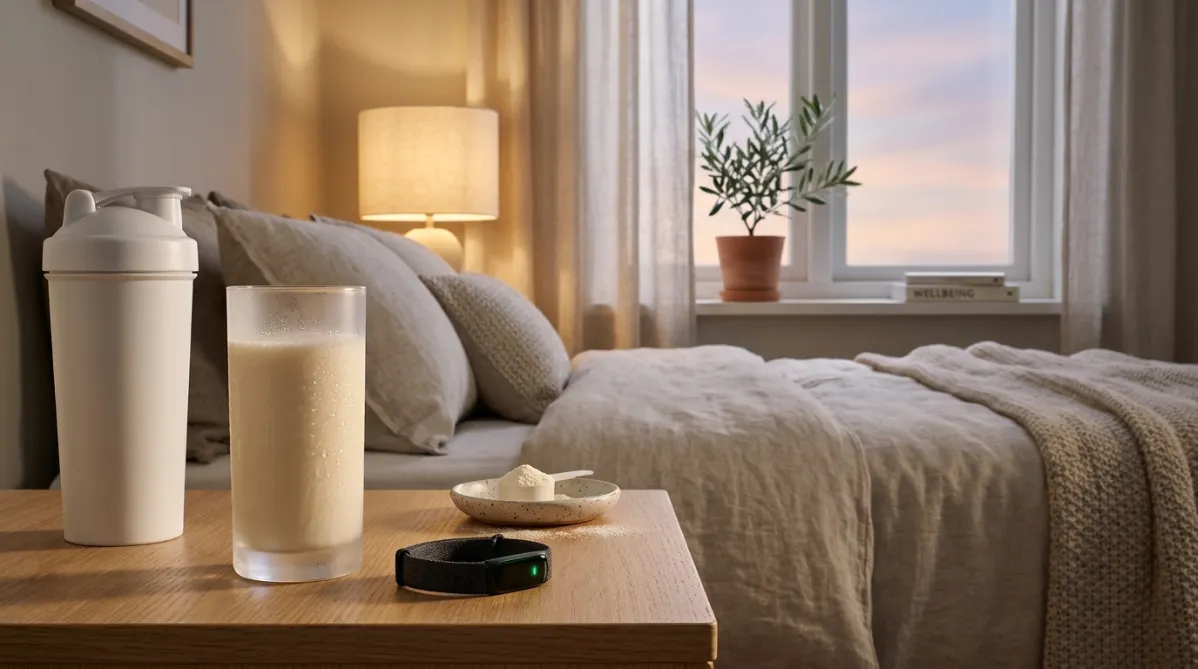
A softly lit bedside table in a calm, modern bedroom at dusk, photographed in wide landscape format with shallow depth of field. In the foreground, a matte white shaker bottle sits beside a tall frosted glass of creamy, pale vanilla-colored protein shake, with a few condensation droplets catching warm light. Next to the glass rests a slim fitness band on a dark charcoal fabric strap, its small LED glowing a gentle green, lying casually on a light oak wooden surface. A small scoop of fine white protein powder rests on a ceramic dish nearby, with a light dusting of powder on the wood.

In the soft-focus background, a neatly made bed with oatmeal-colored linen bedding and a textured knit throw blanket. A sheer curtain filters the last peach and lavender light of evening from a large window. A small potted olive branch in a terracotta vase and a closed paperback book add a quiet editorial touch. A bedside lamp with a warm, cream-colored shade casts a golden glow across the scene and creates gentle highlights on the glass.

The palette is muted and harmonious: warm cream, soft sand, oatmeal beige, faint sage green accents, and touches of dusty lavender in the window light. The mood is peaceful, reassuring, and clean, like a contemporary wellness magazine or a trendy health journal feature. Lighting is natural and cinematic, with soft shadows and a subtle film-like grain. The composition follows the rule of thirds, with the shake and band on the left third and open negative space on the right for headline overlay. Minimalist, Scandinavian-inspired styling, high-end lifestyle photography, crisp details, and a tranquil, premium editorial feel.
Recovery

Caseína antes de dormir não prejudica o sono, dados da WHOOP mostram

Dr. Gymbro · · 4 min read

Caseína antes de dormir não prejudica o sono, dados da WHOOP mostram

Você provavelmente já ouviu dizer que um shake de proteína pesado antes de dormir vai deixá‑lo girando na cama e atrapalhar a recuperação. Um novo ensaio randomizado com atletas femininas de elite testou essa ideia usando os wearables WHOOP. O resultado é mais interessante que um simples "sim" ou "não": o shake não prejudicou o sono, mas também não o melhorou.

O mito sob a lupa

A alimentação pré‑sono tornou‑se uma tática popular de recuperação. As proteínas de digestão lenta, como a caseína, são as mais indicadas porque supostamente fornecem aminoácidos ao longo da noite. A preocupação é que calorias consumidas à noite possam atrapalhar o sono, elevar a frequência cardíaca ou reduzir a recuperação noturna.

Pesquisadores da Florida State University, em colaboração com a South Dakota State University, decidiram investigar. O artigo, publicado no Journal of the International Society of Sports Nutrition (Paterson et al., 2026), destaca que ensaios randomizados, duplo‑cego e cruzados comparando macronutrientes antes de dormir em atletas femininas de elite são raros.

Como o estudo foi conduzido

Vinte‑e‑cinco atletas universitárias da NCAA Division I, entre 18 e 25 anos, foram recrutadas; 21 completaram o ensaio. Cada atleta passou por quatro condições, em desenho cruzado, randomizado, duplo‑cego e controlado por placebo:

  • 40 g de caseína (160 kcal)
  • 40 g de alfa‑lactalbumina (proteína do leite derivada do soro, 160 kcal)
  • 40 g de carboidrato (160 kcal)
  • 40 g de placebo (cerca de 5 kcal)

Cada condição durou três noites consecutivas, com um período de washout de, pelo menos, três dias entre elas. O protocolo completo se estendeu de 4 a 8 semanas. As atletas ingeriram o suplemento cerca de 2 h após a última refeição e aproximadamente 30 minutos antes de deitar, sendo a última ingestão calórica do dia.

O que foi medido

Os dados objetivos foram coletados por uma pulseira WHOOP 4.0: tempo total de sono, latência para iniciar o sono, eficiência do sono, frequência cardíaca de repouso e variabilidade da frequência cardíaca (HRV). Todas as manhãs as atletas responderam a questionários sobre qualidade subjetiva do sono, tempo para adormecer e sensação de recuperação. Em um sub‑grupo de seis atletas foi realizado monitoramento contínuo de glicose (CGM), em modelo cego, para registrar a glicemia noturna.

Os números: basicamente nada

Nenhum efeito significativo de tratamento apareceu para qualquer métrica objetiva de sono ou recuperação (todos p > 0,05). Entre as quatro condições:

  • Tempo total de sono: 7,47 – 7,62 h
  • Eficiência do sono: 91,5 % – 92,0 %
  • Frequência cardíaca de repouso: 53,5 – 54,1 bpm
  • HRV: 98,2 – 103,9 ms

Os parâmetros subjetivos contaram a mesma história. As pontuações de qualidade do sono variaram de 69 % a 75 %, o tempo auto‑relatado para adormecer ficou entre 16 e 20 minutos, e a percepção de recuperação ficou entre 61 % e 66 %. Nenhum desses indicadores diferiu significativamente entre os tratamentos.

Na sub‑análise de glicose, a glicemia noturna mudou ao longo do tempo (p = 0,008), como esperado. Porém, não houve diferença entre os tratamentos (p = 0,187) nem interação tratamento‑tempo (p = 0,550).

Os autores concluíram que três noites de caseína, alfa‑lactalbumina ou carboidrato antes de dormir não prejudicaram o sono nem a recuperação, tanto objetiva quanto subjetiva, quando comparados ao placebo.

O plot twist: não ajudou o sono também

Não se trata de uma história "proteína antes de dormir melhora o sono". Nenhuma das condições ativas superou o placebo em nenhuma medida de sono. Se o seu objetivo é usar caseína para síntese proteica muscular, aderência ao plano ou atingir metas diárias de proteína, este estudo sugere que você pode fazê‑lo sem se preocupar com o sono. Se, ao contrário, esperava que o suplemento fosse um auxílio para dormir, a evidência não sustenta essa ideia.

Vale notar que o estudo não mediu resultados musculares, desempenho ou composição corporal. Portanto, não é possível afirmar se a proteína pré‑sono contribui para a recuperação muscular em termos de ganho de massa.

Limitações que você deve saber

  • Exposição curta: Cada condição durou apenas três noites; efeitos a longo prazo ainda são desconhecidos.
  • Dados de sono baseados em wearables: WHOOP é prático, mas não substitui a polissonografia, padrão‑ouro de laboratório para estágios do sono.
  • População restrita: Todas as participantes eram jovens atletas universitárias de elite que já dormiam bem, cerca de 7,5 h com eficiência acima de 91 %. Os resultados podem não se aplicar a quem tem sono ruim, adultos mais velhos, homens ou não‑atletas.
  • Subconjunto pequeno de CGM: Apenas seis atletas tiveram monitoramento de glicose, portanto os achados são preliminares.
  • Tamanho da amostra: 21 completadoras é modesto para detectar efeitos pequenos.
  • Conflito de interesse: Um dos autores é membro não remunerado do International Protein Board.

Lições práticas

Dose: O estudo utilizou 40 g de proteína ou carboidrato (aproximadamente 160 kcal). Essa é a quantidade com suporte de dados aqui.

Timing: As atletas consumiram o suplemento cerca de 30 minutos antes de deitar, aproximadamente 2 h após a última refeição, como as últimas calorias do dia.

Para quem: Atletas e pessoas ativas que desejam usar a alimentação pré‑sono para alcançar metas de proteína ou energia. Neste grupo de jovens atletas femininas bem‑dormidoras, não houve prejuízo ao sono, HRV ou frequência cardíaca de repouso.

Quem deve pular ou ter cautela:

  • Pessoas com alergia ao leite ou que não toleram proteínas lácteas, já que ambas as proteínas testadas são derivadas do leite.
  • Quem percebe, individualmente, que comer tarde atrapalha o sono. São médias de grupo; indivíduos podem reagir de forma diferente.
  • Quem não precisa das calorias ou proteína extras. O estudo não mostrou benefício para o sono, então não há razão para acrescentar o suplemento apenas por esse motivo.

Conclusão: A alegação de que "shake de proteína antes de dormir estraga o sono" não se sustenta neste ensaio. Considere um shake pré‑dormir como ferramenta nutricional, não como truque de sono, e verifique seus próprios dados de WHOOP ou de sono caso queira observar como seu corpo reage.
Original study

Read the original research on pubmed.ncbi.nlm.nih.gov →

This article summarizes published research for general information. It is not medical advice.

DG

Written by

Dr. Gymbro

Dr. Gymbro writes for Dr. Gymbro: science-backed fitness, nutrition & performance.

Related Articles

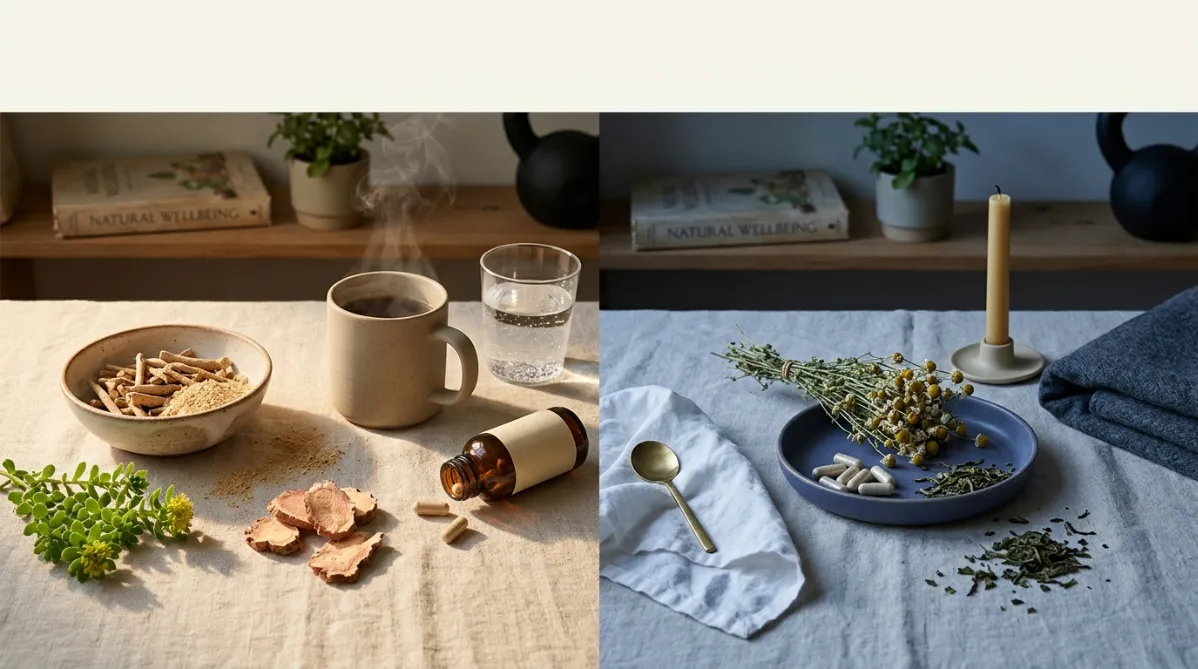
A landscape editorial still life shot from slightly above on a pale oat-colored linen surface, lit by soft morning window light with gentle long shadows. On the left, in warm golden sunlight, sits a small ceramic bowl of dried ashwagandha root pieces and a scatter of fine tan powder. Beside it are a few rough, rosy-gold slices of Rhodiola rosea root and a sprig of tiny succulent-like green leaves with yellow blossoms. A matte sand-colored stoneware mug of steaming tea and a simple glass of water stand nearby. A small amber glass bottle with a minimal unbranded label tips out two capsules.

The right side of the frame is cooler and bluer, as if dusk is arriving. It holds a muted indigo ceramic dish with a few pale capsules, a small bundle of dried chamomile flowers (the source of apigenin), and a few green tea leaves. A slim, unlit beeswax candle and a folded charcoal wool blanket suggest evening. The warm and cool halves meet softly in the center, where a rumpled white cotton napkin sits beneath a small brass spoon.

In the background, out of focus, a wooden shelf holds a worn paperback, a small potted plant, and the edge of a kettlebell in matte black, hinting at an active lifestyle. Subtle film grain, shallow depth of field, and a muted palette of cream, terracotta, sage green, and deep indigo give it a clean, modern wellness-magazine feel. Leave generous negative space in the upper third for a headline overlay. No text, no logos, no people.
recovery

Ashwagandha + Rhodiola funcionou. O combo noturno de sono não.

BY DR. GYMBRO ·

Um novo ensaio de quatro braços surpreendeu a comunidade de combinações de suplementos. Em 103 adultos saudáveis e ativos, a combinação matinal de 600 mg de ashwagandha e 300 mg de Rhodiola rosea esteve associada a menor estresse percebido, melhor qualidade do sono e humor mais positivo. O popular combo noturno de magnésio L‑trionato, L‑teanina e apigenina não trouxe nenhum ganho adicional, e usar ambos pareceu piorar um parâmetro de afeto positivo. O estudo durou apenas duas semanas e teve grupos pequenos, então os resultados devem ser interpretados com cautela.

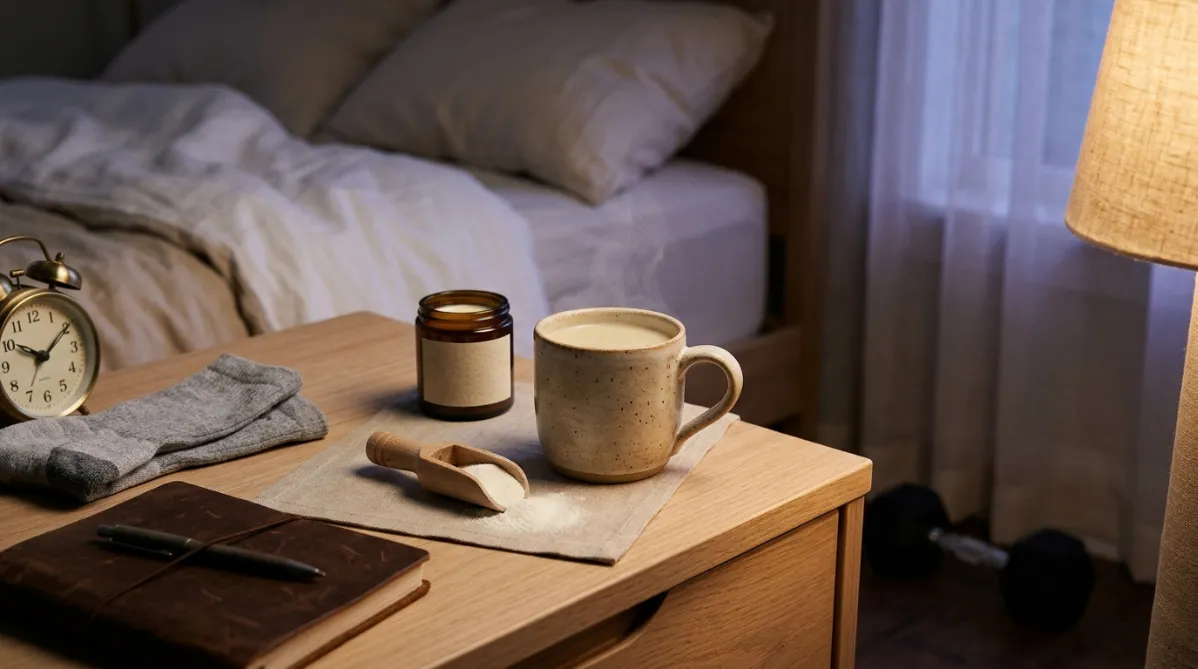
A softly lit bedroom nightstand scene in landscape format, photographed in a modern editorial lifestyle style. In the center of the frame sits a handmade ceramic mug in warm oatmeal tones, filled with a pale creamy drink. A thin wisp of steam rises from it. Beside the mug, a small wooden scoop rests on a matte linen-textured surface with a fine dusting of white collagen powder. A minimal amber glass jar with a cream label stands just behind, with no readable text. The nightstand is pale oak with subtle grain.

To the left, a neatly folded pair of gray cotton athletic socks and a worn leather-bound training journal with a pen on top hint at a lifter's routine. A small brass alarm clock reads about 9:30 and is slightly out of focus. On the right side, a sheer curtain filters the last blue-violet twilight from a window, while a warm bedside lamp with a linen shade casts a honey-colored glow across the scene. The glow contrasts gently with the cool dusk tones.

Behind the nightstand, the edge of a rumpled bed with soft white and sand-colored bedding is visible, with a dumbbell resting quietly on the floor in the soft-focus background to suggest recovery after training. The depth of field is shallow, with the mug and scoop in crisp focus and the background dissolving into creamy bokeh.

The palette is calm and earthy: warm beige, soft cream, muted terracotta, and dusk blue accents. The lighting is cinematic and low-key, with gentle highlights on the ceramic rim and a subtle rim light on the steam. The composition follows the rule of thirds, with the mug placed on the left third and generous negative space on the right for title overlay. The mood is serene, restorative, and quietly scientific without any clinical elements. The finish is clean, high-end, and magazine-worthy, with fine film grain and natural color grading, like a wellness feature in a contemporary online journal.
recovery

O truque do colágeno de 15 g antes de dormir que reduziu os despertares noturnos em 27 %

BY DR. GYMBRO ·

Acordar repetidamente durante a noite pode sabotar silenciosamente sua recuperação, mesmo quando treino e nutrição estão alinhados. Um pequeno ensaio revelou que 15 g de peptídeos de colágeno consumidos uma hora antes de deitar reduziram os despertares registrados por polisomnografia de 29,3 para 21,3, cerca de 27 % a menos. Os participantes também tiveram desempenho melhor no teste Stroop matinal. Contudo, o tempo total de sono, a latência e a eficiência do sono não mudaram, e o estudo contou apenas com 13 homens durante 7 noites, usando um produto fornecido pela indústria. Veja o que os dados realmente mostram e como os praticantes de musculação podem testá‑lo com segurança.

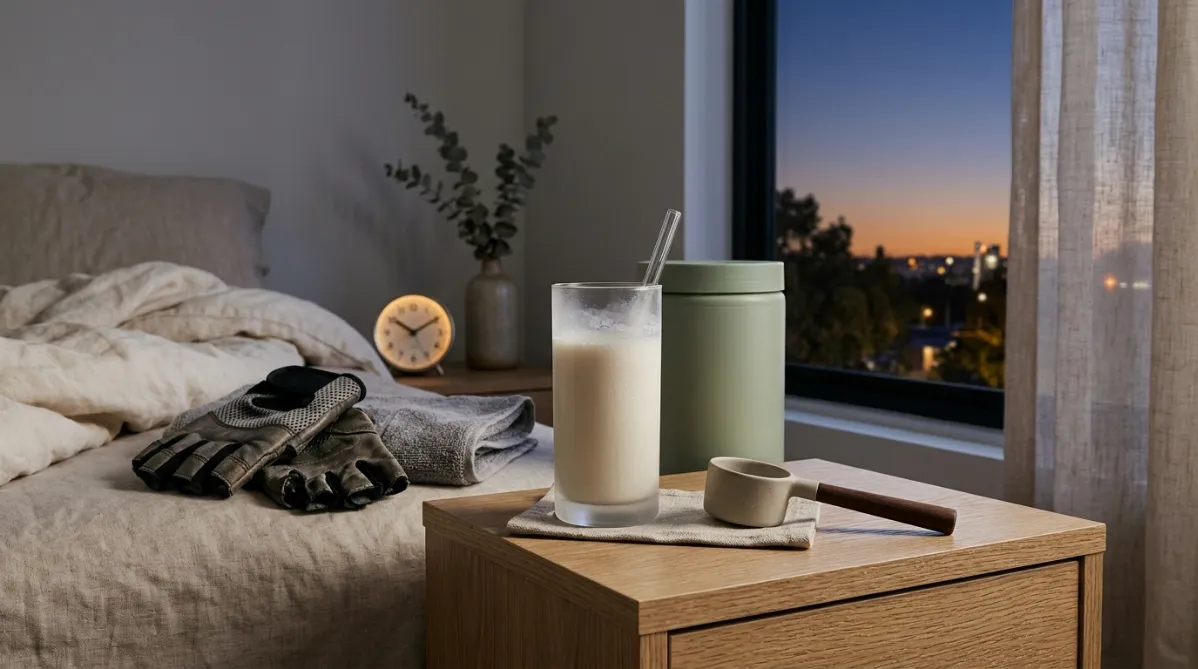
A quiet bedside scene at dusk, shot in soft natural light with a shallow depth of field. A tall frosted glass of creamy, pale-white shake sits on a light oak nightstand, with a thin film of condensation on the glass and a faint milky residue near the rim. Beside it, a matte ceramic scoop rests on a small linen coaster. A minimalist tub of unbranded protein powder in muted sage green sits slightly out of focus in the background.

To the left, a neatly made bed with oatmeal-colored linen sheets and a rumpled cream duvet. A pair of worn lifting gloves and a folded gray gym towel sit on the edge of the bed, suggesting an evening workout just finished. A small analog alarm clock reads about 10:30 PM, its soft face glowing faintly. A sprig of dried eucalyptus in a small stoneware bud vase adds an organic touch.

Through a large window on the right, deep indigo twilight fades into a warm amber horizon, and the last light spills across the wall in long, gentle gradients. A sheer curtain moves slightly. The palette is warm neutrals (cream, oak, sand, soft terracotta) with a few muted blue-violet accents from the evening sky.

The composition uses the rule of thirds, with the glass at the left-center foreground and generous negative space on the right, where headline text could sit. The mood is calm, restorative, and editorial, like a modern wellness and nutrition journal. The lighting is gentle and diffused, with subtle film grain and slightly lifted shadows. The textures of linen, wood, glass, and ceramic are crisp. The image is clean and uncluttered, with no text, logos, or people, and no futuristic or sci-fi elements.
nutrition

O shake de 40 g antes de dormir: o que a caseína pré‑sono faz durante a noite

BY DR. GYMBRO ·

Treinar à noite e ficar oito horas sem comer atrapalha a recuperação? Um estudo de 2012 administrou 40 g de caseína a 16 homens jovens, 30 minutos antes de dormir, e acompanhou o que aconteceu durante a noite. A proteína foi digerida e absorvida enquanto dormiam, a síntese proteica total aumentou (311 vs 246 µmol/kg) e o balanço proteico passou de negativo para positivo. A síntese de proteína muscular ficou cerca de 22 % maior, embora apenas marginalmente significativa. A seguir, explicamos o que esses resultados realmente significam, o que não significam e como utilizá‑los.

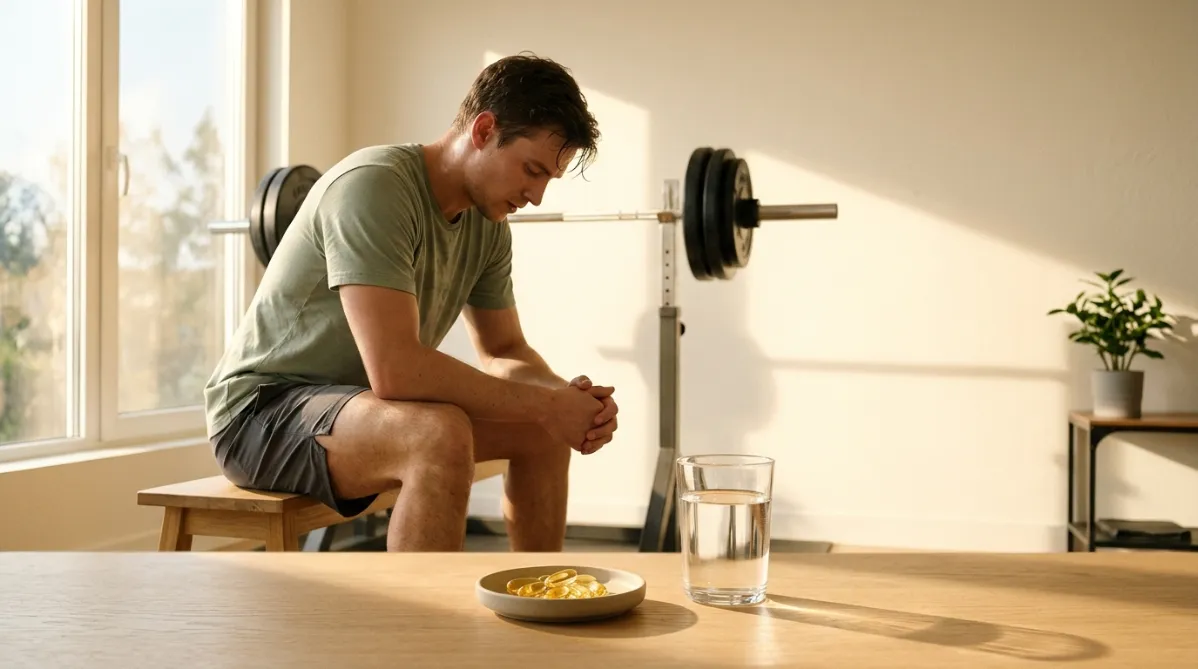
A sunlit, minimalist home gym corner photographed in soft golden morning light, with a young athletic man seated on a wooden bench, leaning forward with his elbows resting on his knees, catching his breath after a hard leg session. He wears a muted sage-green t-shirt and charcoal shorts, his face turned slightly away from the camera, calm and focused. A matte ceramic dish in the foreground holds a few small, translucent golden softgel capsules, with a glass of water beside it catching the light and casting a soft caustic shadow across a pale oak floor. Behind him, a loaded barbell rests on a squat rack, slightly out of focus, and a tall window pours warm sunlight diagonally across the scene, creating long gentle shadows and a hazy glow. A small potted green plant sits on a shelf at the edge of the frame. The color palette is warm and editorial: cream, soft gold, sage green, pale wood, and charcoal accents. Shallow depth of field, with crisp focus on the capsules and glass in the lower third and a creamy bokeh background. The composition leaves generous negative space on the right side for a headline overlay. The mood is clean, modern, and aspirational, like a high-end wellness magazine or a trendy health journal feature. Shot on a 50mm lens, natural light, fine film grain, subtle matte finish, landscape 16:9 framing.
recovery

Vitamina D acelera a recuperação de força em homens que não eram deficientes

BY DR. GYMBRO ·

Homens com níveis perfeitamente normais de vitamina D ainda recuperaram a força mais rapidamente após um treino de pernas intenso ao tomarem 4.000 UI por dia. Em um ensaio randomizado, controlado por placebo, com 28 homens ativos, a força isométrica máxima retornou cerca de 8 % melhor em 24 h. Os marcadores de dano muscular ALT e AST também aumentaram menos. Contudo, a dor muscular não melhorou. Veja o que o estudo encontrou, suas limitações e quem realmente pode se interessar.

This page is available in