Dr. Gymbro
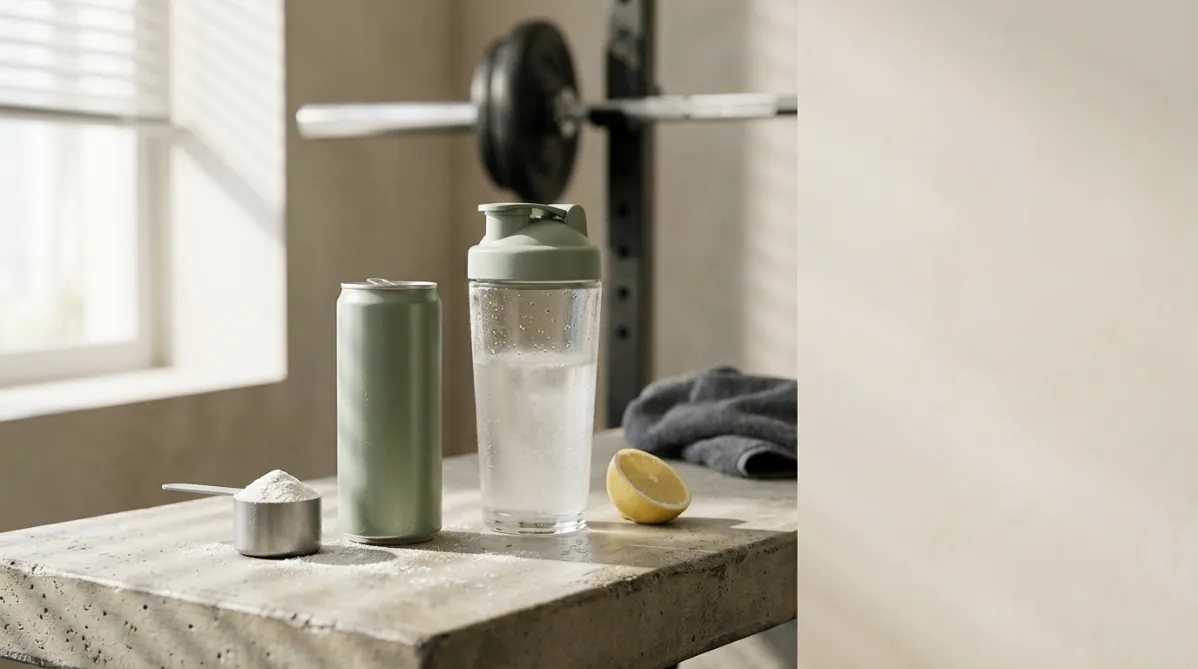
A bright, minimalist flat-lay photograph of two supplement scoops on a pale warm-gray stone surface, shot from directly above in soft natural window light. On the left, a matte ceramic scoop holds fine white creatine monohydrate powder, heaped in a clean mound. On the right, a second scoop of the same shape holds slightly coarser off-white beta-alanine powder, with a small, deliberate gap between the two. Each scoop sits in its own soft shadow, which suggests separation rather than combination. Between them, a thin brushed-brass ruler or a single slim line of fine powder runs across the surface and subtly divides the composition.

Around the scoops, a few restrained props in a muted editorial palette of sage green, cream, terracotta, and soft charcoal: a small glass jar with a minimalist label that has no readable text, a folded linen napkin, a single sprig of eucalyptus, and a stainless-steel shaker bottle softly out of focus in the upper corner. A few loose powder grains are scattered naturally across the stone. A small stack of blank cream index cards with a pencil rests in the lower right, hinting at research and note-taking without any legible writing.

The composition follows a clean rule-of-thirds layout, with generous negative space on the right third for headline overlay. The lighting is gentle and diffused, with long, soft shadows falling to the lower left. The color grading is calm and slightly desaturated, with creamy highlights and a subtle film-like grain. The overall look is a modern wellness and science journal cover, with an airy, trustworthy, contemporary editorial feel, shallow depth of field, and crisp detail on the powders.
Nutrition

Creatina + Beta‑Alanina: O Bônus de Combinação que os Pesquisadores Não Encontraram

Dr. Gymbro · · 4 min read

Creatina + Beta‑Alanina: O Bônus de Combinação que os Pesquisadores Não Encontraram

Você já deve ter encontrado potes, rótulos de pré‑treino e embalagens que prometem a "combinação definitiva de performance". Creatina e beta‑alanina são vendidas juntas, como se uma potencializasse a outra. Uma nova revisão sistemática e meta‑análise de rede, publicada no Journal of the International Society of Sports Nutrition, testou essa hipótese e concluiu que a creatina fez o trabalho pesado, e a combinação não proporcionou nenhum benefício mensurável adicional.

O que os pesquisadores realmente fizeram

Bai e Xu, da Jiangxi University of Science and Technology (China), seguiram as diretrizes PRISMA. Realizaram buscas no PubMed, Scopus e Web of Science até agosto de 2025. Incluíram ensaios controlados randomizados que testaram creatina, beta‑alanina ou a combinação, com duração mínima de duas semanas, em atletas adultos saudáveis.

Cinquenta e dois RCTs, todos com pontuação ≥ 6 na escala de qualidade PEDro, foram incluídos. Uma meta‑análise de rede permite comparar simultaneamente várias intervenções, inclusive aquelas que nunca foram testadas diretamente uma contra a outra. Nesse caso, compararam‑se creatina isolada, beta‑alanina isolada, a combinação e placebo. Os desfechos analisados foram sprint, salto, agilidade, resistência muscular da parte superior e inferior, e capacidade de sprint repetido (RSA).

A manchete: creatina entregou resultados, a combinação não

Em comparação com placebo, a creatina isolada melhorou significativamente:

  • Desempenho em sprint: SMD = -0.64 (p = 0.04). O valor negativo indica tempos mais rápidos.
  • Desempenho em salto: SMD = 0.33 (p = 0.002).
  • Capacidade de sprint repetido: SMD = -0.78 (p = 0.01).
  • Resistência muscular da parte superior: SMD = 0.43 (p = 0.01).

Os P‑scores da creatina, métrica de classificação da meta‑análise de rede, foram ≥ 0.90 nesses domínios, o que a coloca no topo das opções.

A beta‑alanina gerou "efeitos não significativos ou específicos ao contexto". A combinação mostrou nenhum benefício sinérgico. Os autores concluíram que a co‑suplementação não oferece vantagem adicional sobre a creatina isolada.

Por que a lógica dos "dois caminhos" não funcionou

No papel, a combinação faz sentido. A creatina auxilia na ressíntese de fosfocreatina e na rápida renovação de ATP. A beta‑alanina eleva os níveis de carnosina muscular, que ajuda a tamponar o ácido. Mecanismos diferentes sugerem benefícios aditivos.

Os dados agregados não confirmaram essa expectativa. Os autores apontam que a vantagem de tamponamento da beta‑alanina parece ser específica a certas tarefas e insuficiente para potencializar o efeito da creatina. Na visão deles, a consistência da creatina decorre da recuperação mais rápida de fosfocreatina e do aumento da saída neuromuscular, fatores críticos para sprints, saltos e esforços repetidos.

O que não mudou

A creatina não alterou significativamente agilidade nem resistência muscular da parte inferior (ambos p > 0.05). Creatina não é solução mágica, e os dados não sustentam ganhos em todos os testes de performance.

Quão sólida é essa evidência?

O estudo apresenta pontos fortes: inclui apenas ensaios randomizados com pontuação PEDro ≥ 6 e relata ausência de inconsistência global e de viés de publicação relevante.

Entretanto, há limitações a considerar:

  • Heterogeneidade variável. I² variou de 0 % a 73 %, indicando que alguns desfechos vieram de estudos bastante inconsistentes.
  • População. A revisão cobre atletas adultos saudáveis; os achados podem não se aplicar a idosos, populações clínicas ou iniciantes não treinados.
  • Diferenças de sexo e esporte. Os autores pedem mais pesquisas sobre respostas específicas por sexo e modalidade, pois os efeitos médios podem mascarar variações em subgrupos.
  • Duração e desenho. Solicitam RCTs padronizados, de longo prazo e com múltiplos braços para esclarecer possíveis interações. A evidência atual não é o veredicto final sobre sinergia.
  • Beta‑alanina não é "inútil". O que se constatou foi que, nesta análise, seus efeitos foram não‑significativos ou contextuais e não aumentaram o efeito da creatina.
  • Detalhes do abstract. O resumo não informa o número total de participantes nem a distribuição por braço nos estudos; consulte o texto completo antes de tirar conclusões mais finas.

Aplicações práticas

Dose e timing: O abstract não relata dosagens ou protocolos de timing, logo o estudo não indica quanto ou quando tomar. Fora desse contexto, a prática comum na literatura é a creatina monohidratada diária entre 3 g e 5 g, tomada de forma constante. A análise exigiu, no mínimo, duas semanas de suplementação, portanto dê tempo ao suplemento antes de avaliar os resultados.

Para quem é indicado: Baseado nesses resultados, a creatina beneficia atletas cujo desempenho depende de sprint, salto, esforços de alta intensidade repetidos ou resistência muscular da parte superior – por exemplo, jogadores de esportes coletivos, velocistas e levantadores.

Quem pode dispensar a combinação: Se o seu objetivo principal era o "bônus" de combinar os dois suplementos, esta análise oferece pouca razão para pagar a mais pela combinação. Quem já usa beta‑alanina e gosta dela não está prejudicado; apenas não houve aumento adicional do efeito da creatina nos dados analisados.

Quem deve ter cautela: A revisão abrange atletas adultos saudáveis. Pessoas com condições médicas (especialmente problemas renais), gestantes, lactantes ou que façam uso de medicação devem conversar com um profissional de saúde antes de iniciar qualquer suplementação. Essa recomendação é geral, não um achado específico do paper.

Conclusão

Se você está decidindo onde investir seu orçamento de suplementos, esta meta‑análise de rede com 52 RCTs reforça a creatina como a opção mais consistente para trabalhos de alta intensidade e anaeróbicos. A beta‑alanina pode ser útil em contextos específicos, mas não transformou a creatina em uma versão aprimorada de si mesma. Estudos futuros, mais longos e com desenho multi‑braço, podem refinar o panorama, mas, por enquanto, a combinação ainda não justifica seu preço premium.
Original study

Read the original research on pubmed.ncbi.nlm.nih.gov →

This article summarizes published research for general information. It is not medical advice.

DG

Written by

Dr. Gymbro

Dr. Gymbro writes for Dr. Gymbro: science-backed fitness, nutrition & performance.

Related Articles

A wide, minimalist editorial scene of an athlete's hands and forearms gripping the handles of a rowing ergometer, shot in soft natural light from a large window in a clean, airy training studio. The athlete is mid-pull, forearm muscles subtly defined, a light sheen of sweat on the skin, chalk dust floating in the air. In the foreground on a pale oak bench sits a small ceramic scoop of fine white powder beside a matte glass of water, with a few loose white capsules arranged neatly in a gentle curve. A minimalist analog stopwatch with a clean white face lies next to them, its hand paused near the two-minute mark.

The color palette is calm and modern: warm off-white, soft sand, muted sage green, and a single accent of coral orange in the stopwatch hand and the rower's wristband. The background is softly blurred concrete and pale wood with long, gentle shadows stretching across the floor. Shallow depth of field keeps the hands, powder, and stopwatch crisp while the rest dissolves into creamy bokeh.

Composition follows the rule of thirds: the rowing handles and hands occupy the right third, the bench still life sits in the lower left, and open negative space in the upper left leaves room for a title overlay. The mood is focused, quiet, and intentional, like a high-end health and science journal feature. Fine film grain, subtle matte finish, editorial photography style, natural color grading, and no text or logos.
nutrition

Beta‑alanina funciona? Uma meta‑análise diz que sim para esforços de 60–240 segundos

BY DR. GYMBRO ·

A beta‑alanina tem sido divulgada como forma de reduzir a fadiga muscular em exercícios intensos, mas será que realmente funciona? Uma meta‑análise com 15 estudos e 360 participantes mostrou um benefício real, embora modesto, com um ganho mediano de 2,85 %. O efeito foi mais evidente em esforços entre 60 e 240 segundos, menor em atividades acima de quatro minutos e inexistente em sprints de menos de um minuto. O artigo também aborda a estratégia de carregamento mais comum – de 3,2 a 6,4 g por dia durante quatro ou mais semanas –, como dividir as doses pode diminuir o formigamento e quais atletas têm mais a ganhar.

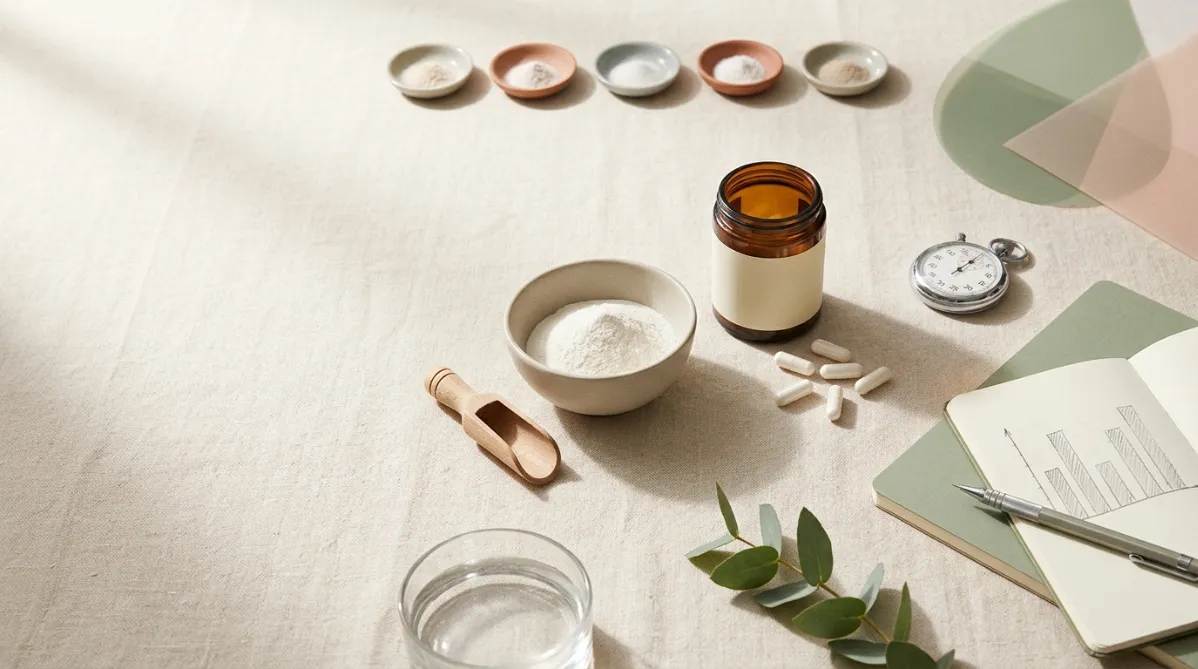
A wide, editorial-style still life photographed from slightly above on a pale oat-colored linen surface, lit by soft morning window light from the left. In the center sits a small matte ceramic bowl holding a mound of fine white powder, with a minimalist wooden scoop resting beside it. Next to the bowl is an open amber glass supplement jar with a plain cream label, and a few white capsules spill across the linen in a loose arc.

To the right, a neatly arranged cluster of analog "study" objects suggests careful measurement: a vintage stopwatch with a clean white face, a slim notebook with a sage-green cover open to a hand-drawn bar chart (blurred, no legible text), and a mechanical pencil lying across the page. A small row of six identical ceramic dishes, each holding a pinch of powder, is lined up along the top edge of the frame to hint at the six-week trial. One dish is slightly out of alignment, a subtle visual cue for ambiguity.

A shallow glass of water and a single sprig of green eucalyptus add a calm, organic note in the foreground. Soft, long shadows fall across the textured linen, and the palette stays restrained: warm cream, soft sage, muted terracotta, pale gray, and touches of amber from the glass jar. A few translucent paper cutouts in two tones (sage and blush) overlap in the upper right corner as a modern graphic accent, evoking overlapping data points without showing any numbers.

Depth of field is shallow, with the bowl and stopwatch in crisp focus and the edges gently softened. The composition leaves generous negative space on the left third for title text overlay. The overall mood is thoughtful, balanced, and quietly skeptical, in the style of a contemporary wellness and science magazine: clean, tactile, minimal, with a subtle film-like grain and natural color grading. No people, no futuristic or sci-fi elements, no readable text or logos.
nutrition

GAA: Potencializador Cerebral? Resultado do Estudo de 6 Semanas é Complicado

BY DR. GYMBRO ·

GAA, precursor da creatina vendido como potencializador cerebral, acabou de receber seu primeiro teste humano sério. Em um estudo duplo‑cego de seis semanas com 58 adultos saudáveis, ele acelerou alguns tempos de reação e gerou indícios de mudanças no humor e no estresse. Contudo, a maioria dos testes cognitivos não revelou efeitos, e muitos dos resultados principais foram apenas tendências. Os marcadores de segurança permaneceram dentro da normalidade, mas o estudo foi pequeno, exploratório e não incluiu um grupo comparativo apenas com creatina. Veja o que realmente foi observado, quem pode se interessar e por que o veredicto é misto.

A sleek aluminum energy drink can and a matte scoop of white pre-workout powder sit side by side on a pale concrete gym bench, lit by soft morning window light. The can is slim and minimalist, with a muted sage green label and no legible text. Beside it is a clear glass shaker half full of cloudy, lightly frothy liquid with condensation beading on its surface. A few fine grains of powder are scattered across the bench, catching the light. Behind them, slightly out of focus, a stainless steel barbell rests on a rack, and a folded charcoal gym towel sits at the edge of the frame.

The color palette is warm neutral: oatmeal, soft gray, and sage, with a single accent of pale citrus yellow from a halved lemon wedge placed near the glass. A thin, elegant shadow from the window blinds falls diagonally across the scene, giving it an editorial, magazine-style rhythm. The composition leaves generous negative space on the right third of the frame, a smooth blurred wall in warm off-white, suitable for headline text overlay.

The shot is a low-angle, shallow depth-of-field product-style photograph, as if taken with an 85mm lens at f/2. The foreground objects are tack sharp and the background melts into creamy blur. The mood is calm, clean, and modern, like a wellness or science journal feature. Subtle film grain and gentle contrast add a tactile, contemporary lifestyle feel. There are no people, no logos, and no futuristic or sci-fi elements, just a quiet, considered still life that suggests the choice between a canned drink and a scooped supplement.
nutrition

Sua Bebida Energética Pode Funcionar como um Pré‑treino — Mas tem uma Pegadinha

BY DR. GYMBRO ·

Cafeína e taurina aparecem lado a lado em energéticos e suplementos pré‑treino, mas será que a combinação realmente eleva o desempenho? Uma meta‑análise de 11 ensaios randomizados (234 participantes) mostrou ganhos modestos de potência máxima e tempo até a exaustão, além de sensação de esforço reduzida. A frequência cardíaca ficou inalterada e o efeito sobre tempo de reação foi inconsistente. Como os estudos foram pequenos, ainda não se sabe se a taurina traz algum benefício além da cafeína.

A wide, editorial-style still life shot from a slightly elevated angle on a pale oatmeal-colored linen surface in soft, diffused morning light. At the center, a shallow matte ceramic bowl in warm terracotta holds a small mound of fine, golden-tan ashwagandha root powder. Beside it lie a few gnarled, dried ashwagandha roots and a sprig of green leaves with tiny orange-red berries in their papery husks. To the left, a minimalist amber glass supplement bottle sits with a few capsules spilled beside it, label blank and clean. A wooden scoop rests on the surface, dusted with powder.

On the right side of the frame, a pair of sleek, muted sage-green running shoes sits slightly off-center. A folded cream towel and a stainless steel water bottle sit just behind them, with a single brushed-steel kettlebell partly out of focus in the background to hint at strength training without dominating the scene. The running shoes and the botanical elements share equal visual weight, suggesting the endurance theme.

A thin, curved line of scattered powder sweeps across the linen from the bowl toward the shoes, like a gentle path or track. Soft shadows fall to the left, and a warm sunbeam crosses the surface and picks out the texture of the powder and the roots.

The palette is restrained and modern: warm terracotta, sage green, cream, soft gold, and touches of charcoal. The background is a blurred pale plaster wall with a hint of a window shadow. Shallow depth of field, crisp focus on the bowl and roots, and generous negative space in the upper left for a headline. Contemporary wellness magazine aesthetic, calm, natural, tactile, high-end lifestyle photography, no text, no people, no futuristic elements.
science research

Surpresa da Ashwagandha: ela ajuda mais na resistência do que na força

BY DR. GYMBRO ·

A ashwagandha costuma ser vendida como potenciadora de força e ganho muscular, mas uma nova meta‑análise aponta para outro benefício principal: a resistência aeróbica. Analisando 13 ensaios randomizados com 599 participantes, os pesquisadores encontraram um efeito médio de g = 0,54 para o desempenho aeróbico. Os ganhos de força foram positivos, porém incertos, e os dados sobre potência ainda são escassos. A dose aparentemente ideal seria 500‑600 mg/dia de extrato, mas há importantes ressalvas a considerar.

This page is available in