Dr. Gymbro
A wide, softly lit editorial still life on a warm, pale oat-colored surface. At the left, a lower leg and foot rest on a folded cream linen towel, wrapped in a matte white fiberglass cast with a subtle texture and a few faint pen scribbles near the ankle. The skin tone is natural and the lighting is gentle. At the center-right, a small ceramic bowl holds fine white creatine powder, with a matte wooden scoop resting beside it and a dusting of powder on the surface. Next to the bowl is a clear glass of water with light refracting through it, casting soft caustic ripples on the table. This hints at the water-retention idea without being literal.

In the background on the right, slightly out of focus, a pair of light grey resistance bands and a small sage-green dumbbell sit on a wooden stool, suggesting rehab. A tall, leafy plant in a terracotta pot adds organic greenery at the edge of the frame. Morning sunlight streams from a window on the left and creates long, soft shadows and a warm golden-peach glow. The palette is cream, sage green, terracotta, soft sky-blue shadows, and touches of natural wood. The composition has generous negative space in the upper left for a title overlay. Shallow depth of field, shot as if with an 85mm lens, with fine film grain. The look is clean, calm, modern wellness-magazine photography with a minimalist, tactile, trendy feel.
Recovery

Creatina em Gesso Não Salva Claramente o Músculo, Mas a Reabilitação É Diferente

Dr. Gymbro · · 5 min read

Creatina em Gesso Não Salva Claramente o Músculo, Mas a Reabilitação É Diferente

Excerpt: Todo mundo quer saber se a creatina pode salvar o músculo quando uma lesão o deixa em gesso. Uma nova revisão sistemática de seis ensaios randomizados (118 jovens, 1‑2 semanas de imobilização) indica que as evidências durante o período de desuso são confusas, e alguns benefícios aparentes de massa magra podem ser apenas água. O sinal mais intrigante apareceu na fase de reabilitação, onde dois estudos encontraram ganhos maiores no tamanho do quadríceps, potência e força com creatina. Aqui estão os números reais, as limitações e quem pode se interessar em experimentar.

O que os pesquisadores realmente fizeram

Uma equipe liderada por Pratt, juntamente com Candow, Rawson, Forbes e Prokopidis, buscou nos bancos PubMed, Scopus, Web of Science e Cochrane Library desde o início até março de 2026, seguindo as diretrizes PRISMA para revisões sistemáticas.

Encontraram seis ensaios randomizados, controlados por placebo, com um total de 118 participantes. As idades médias variaram de 15 a 24 anos. O modelo de desuso, em todos os casos, foi de uma a duas semanas de imobilização de um membro. Avaliaram tamanho muscular, massa magra e desempenho (força, potência, resistência) durante o desuso e, quando disponível, durante a fase de recuperação.

A revisão é uma síntese da evidência existente, não um novo ensaio. Os estudos incluídos eram pequenos e heterogêneos, o que limita a força das conclusões combinadas.

Primeira rodada: a creatina impede o encolhimento?

Não de forma clara. Os resultados são contraditórios.

Tamanho muscular (área transversal do quadríceps, medida por TC ou RM): Dois estudos mostraram que a creatina praticamente não fez diferença. As reduções foram de -5,6 % com creatina versus -5,5 % com placebo em um estudo, e -11,0 % versus -9,4 % no outro.

Massa magra (medida por BIA ou DXA): Dois estudos relataram benefício.

  • Massa magra dos membros inferiores caiu 5,6 % com creatina versus 8,9 % com placebo.
  • Massa magra dos membros superiores foi preservada (+0,9 %) com creatina versus -3,7 % com placebo.

Isso parece uma vitória, até que consideremos como as medições foram feitas.

O problema da água

Os autores alertam que os achados conflitantes podem refletir limitações da BIA e da DXA, especialmente em relação à hidratação, e não à preservação real do tecido muscular. A creatina atrai água para dentro das células; ambos os métodos podem interpretar esse fluido extra como massa magra, de modo que a “vantagem” de massa magra pode ser, em parte, água. Os métodos de imagem (TC e RM) analisam o tamanho real do músculo e não mostraram diferença.

A revisão não afirma que a creatina seja inútil, apenas que o sinal de aumento de massa magra não constitui prova de que o músculo foi efetivamente salvo.

Força e potência durante o desuso

Os resultados de desempenho foram inconsistentes. A creatina mostrou efeitos favoráveis nos membros superiores, mas não nos inferiores. Por que essa divisão? A revisão não resolve a questão. Com tão poucos ensaios pequenos, qualquer explicação seria mera especulação. Os autores concluem que a evidência atual não sustenta unanimemente a creatina como contramedida contra atrofia induzida por desuso, perda de massa magra ou declínio de desempenho.

Segunda rodada: o retorno na reabilitação

É aqui que a revisão se torna mais interessante. Quatro dos seis estudos incluíram uma fase de recuperação, e três usaram reabilitação baseada em resistência. Dois deles relataram ganhos maiores com creatina:

  • CSA do quadríceps: +21,3 % vs. +14,3 % com placebo
  • Massa magra dos membros inferiores: +5,6 % vs. +3,8 %
  • Potência: +52,2 % vs. +35,2 %
  • Força: +28,7 % vs. +22,8 %

São diferenças relevantes, mas only dois estudos as reportaram, os participantes eram jovens, e a medição de massa magra tem a mesma ressalva de hidratação. Encare como um indício promissor, não como um protocolo comprovado.

Limitações que você precisa saber

  • Base de evidência reduzida: seis ensaios, 118 pessoas.
  • Apenas participantes jovens: 15‑24 anos. Adultos mais velhos e pacientes clínicos, que são os que mais correm risco de atrofia por desuso e recuperação incompleta, não foram representados. Os autores chamam explicitamente por pesquisas nesses grupos.
  • Desuso curto: uma a duas semanas de imobilização, menos do que muitos gessos ou períodos pós‑cirúrgicos reais.
  • Problemas de medição: BIA e DXA podem ser confundidas por retenção hídrica.
  • Só dois estudos mostraram vantagem na fase de reabilitação.
  • Conflitos de interesse: alguns autores declararam financiamento da indústria de creatina, doações de creatina, consultorias com fabricantes e atuação como peritos em casos envolvendo o suplemento. Isso não invalida a revisão, mas os leitores devem estar cientes.

Dicas práticas

Dosagem: O resumo da revisão não recomenda dose específica. A abordagem baseada em evidência para a creatina monohidratada é 3‑5 g por dia. Alguns ensaios usaram fase de “loading” inicial, que é opcional. O mais importante é a ingestão diária constante; o horário em relação ao treino tem menos importância que a regularidade.

Cronograma: Iniciar aproximadamente no momento da imobilização e manter a suplementação durante a reabilitação segue o padrão dos ensaios. Não espere que ela impeça o encolhimento nos primeiros dias fora do gesso.

Quem pode se beneficiar: Pessoas saudáveis e em boa forma, que enfrentam um curto período de imobilização e planejam fazer reabilitação progressiva de resistência. A creatina já está bem estudada em populações que treinam, portanto adicioná‑la representa um experimento de baixo custo e risco razoável.

Quem deve evitar ou consultar antes: Quem tem doença renal ou outras condições médicas, quem usa medicações que afetam a função renal, gestantes e lactantes. Adultos mais velhos e pacientes clínicos também devem ser cautelosos ao extrapolar esses resultados, pois não foram estudados.

O que não pode faltar: Creatina ajuda no treinamento, mas não substitui o treino. Os benefícios na reabilitação apareceram em estudos que usaram reabilitação baseada em resistência. Siga o plano do seu fisioterapeuta e carregue o músculo de forma progressiva assim que for liberado.

Conclusão

Creatina não funciona como um escudo protetor para o músculo enquanto ele está em gesso. Os dados de tamanho mostram pouca proteção, e os ganhos de massa magra podem ser, em parte, água. Contudo, a fase de reabilitação oferece um sinal mais atrativo: crescimento mais rápido, mais potência e mais força em dois estudos. Trata‑se de uma vantagem plausível para jovens saudáveis que realizam reabilitação efetiva, mas são necessários ensaios maiores e mais longos, especialmente em idosos e grupos clínicos, antes de considerá‑la comprovada.
Original study

Read the original research on pubmed.ncbi.nlm.nih.gov →

This article summarizes published research for general information. It is not medical advice.

DG

Written by

Dr. Gymbro

Dr. Gymbro writes for Dr. Gymbro: science-backed fitness, nutrition & performance.

Related Articles

A wide, softly lit editorial still life on a pale oatmeal-colored linen surface. In the center sits a small matte ceramic bowl of fine white creatine powder, with a wooden scoop resting beside it and a few loose pale crystals scattered across the linen. Around the bowl, a fresh plant-based spread is arranged in an organic, uncluttered way: a halved avocado, a handful of chickpeas, bright green edamame pods, a cluster of dark leafy kale, a few red lentils spilled from a small wooden spoon, and a split pomegranate with glossy ruby seeds. A tall glass of water with condensation stands on the right, catching a sliver of window light.

In the soft-focus background, a young athlete in a muted sage-green tank top is mid-jump in a bright, minimalist studio with whitewashed brick walls and pale hardwood floors. The figure is slightly blurred and only partly in frame, which gives a sense of motion and vertical lift without pulling attention from the foreground. A pair of clean white sneakers and a folded gray towel sit on a low wooden bench nearby.

The light is warm natural morning daylight from the left. It casts gentle long shadows and subtle highlights on the powder and the glass. The palette is earthy and calm: cream, sage green, terracotta, warm wood tones, and small pops of avocado green and pomegranate red. The depth of field is shallow, with crisp focus on the bowl and scoop. The composition leaves generous negative space on the upper left for a title overlay, in the clean, contemporary style of a modern health and science magazine. Photographic, high-resolution, refined, and minimal.
science research

Veganos tomam creatina por 4 semanas: saltos aumentam, sprints não

BY DR. GYMBRO ·

Veganos consomem quase nenhuma creatina na dieta, então a suplementação teria um efeito maior? Um ensaio aleatório, triplo‑cego, deu a 20 veganos ativos 0,1 g/kg/dia de creatina monohidratada durante quatro semanas. O desempenho nos saltos melhorou, assim como algumas medidas de composição corporal, mas não houve mudanças nos testes de sprint, força de preensão ou puxada isométrica de coxa. A água corporal aumentou 1,4 kg, e o estudo não comparou veganos a onívoros. Veja os números, o que o estudo não revelou e quem pode se interessar em experimentar.

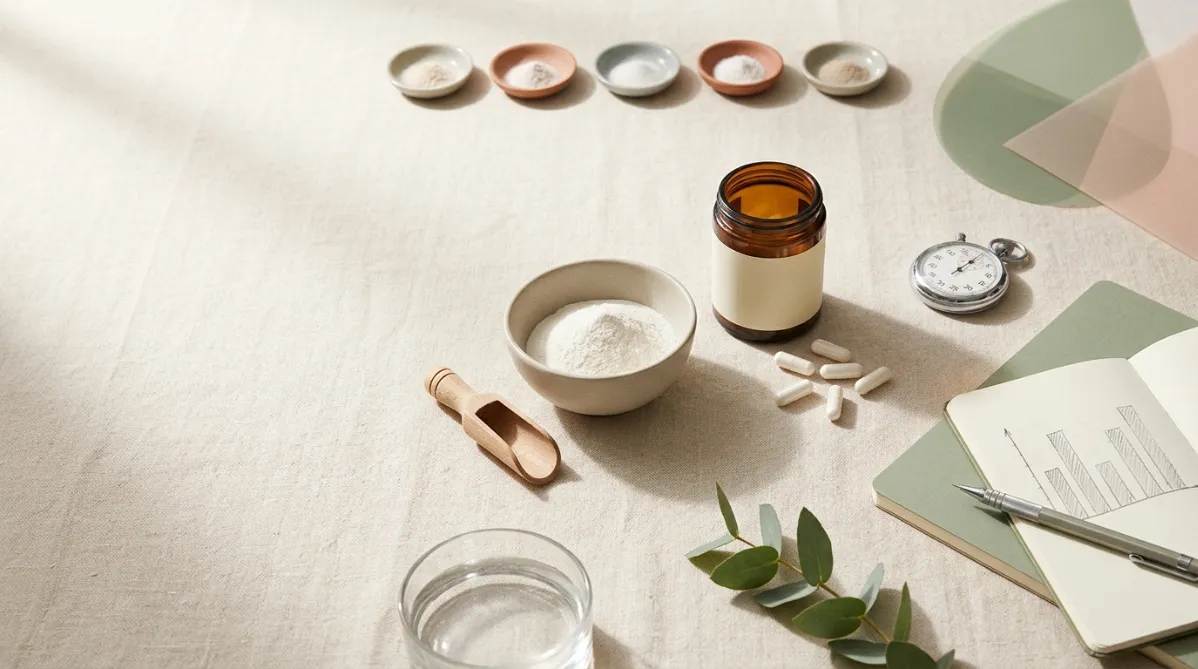
A wide, editorial-style still life photographed from slightly above on a pale oat-colored linen surface, lit by soft morning window light from the left. In the center sits a small matte ceramic bowl holding a mound of fine white powder, with a minimalist wooden scoop resting beside it. Next to the bowl is an open amber glass supplement jar with a plain cream label, and a few white capsules spill across the linen in a loose arc.

To the right, a neatly arranged cluster of analog "study" objects suggests careful measurement: a vintage stopwatch with a clean white face, a slim notebook with a sage-green cover open to a hand-drawn bar chart (blurred, no legible text), and a mechanical pencil lying across the page. A small row of six identical ceramic dishes, each holding a pinch of powder, is lined up along the top edge of the frame to hint at the six-week trial. One dish is slightly out of alignment, a subtle visual cue for ambiguity.

A shallow glass of water and a single sprig of green eucalyptus add a calm, organic note in the foreground. Soft, long shadows fall across the textured linen, and the palette stays restrained: warm cream, soft sage, muted terracotta, pale gray, and touches of amber from the glass jar. A few translucent paper cutouts in two tones (sage and blush) overlap in the upper right corner as a modern graphic accent, evoking overlapping data points without showing any numbers.

Depth of field is shallow, with the bowl and stopwatch in crisp focus and the edges gently softened. The composition leaves generous negative space on the left third for title text overlay. The overall mood is thoughtful, balanced, and quietly skeptical, in the style of a contemporary wellness and science magazine: clean, tactile, minimal, with a subtle film-like grain and natural color grading. No people, no futuristic or sci-fi elements, no readable text or logos.
nutrition

GAA: Potencializador Cerebral? Resultado do Estudo de 6 Semanas é Complicado

BY DR. GYMBRO ·

GAA, precursor da creatina vendido como potencializador cerebral, acabou de receber seu primeiro teste humano sério. Em um estudo duplo‑cego de seis semanas com 58 adultos saudáveis, ele acelerou alguns tempos de reação e gerou indícios de mudanças no humor e no estresse. Contudo, a maioria dos testes cognitivos não revelou efeitos, e muitos dos resultados principais foram apenas tendências. Os marcadores de segurança permaneceram dentro da normalidade, mas o estudo foi pequeno, exploratório e não incluiu um grupo comparativo apenas com creatina. Veja o que realmente foi observado, quem pode se interessar e por que o veredicto é misto.

A bright, minimalist flat-lay photograph of two supplement scoops on a pale warm-gray stone surface, shot from directly above in soft natural window light. On the left, a matte ceramic scoop holds fine white creatine monohydrate powder, heaped in a clean mound. On the right, a second scoop of the same shape holds slightly coarser off-white beta-alanine powder, with a small, deliberate gap between the two. Each scoop sits in its own soft shadow, which suggests separation rather than combination. Between them, a thin brushed-brass ruler or a single slim line of fine powder runs across the surface and subtly divides the composition.

Around the scoops, a few restrained props in a muted editorial palette of sage green, cream, terracotta, and soft charcoal: a small glass jar with a minimalist label that has no readable text, a folded linen napkin, a single sprig of eucalyptus, and a stainless-steel shaker bottle softly out of focus in the upper corner. A few loose powder grains are scattered naturally across the stone. A small stack of blank cream index cards with a pencil rests in the lower right, hinting at research and note-taking without any legible writing.

The composition follows a clean rule-of-thirds layout, with generous negative space on the right third for headline overlay. The lighting is gentle and diffused, with long, soft shadows falling to the lower left. The color grading is calm and slightly desaturated, with creamy highlights and a subtle film-like grain. The overall look is a modern wellness and science journal cover, with an airy, trustworthy, contemporary editorial feel, shallow depth of field, and crisp detail on the powders.
nutrition

Creatina + Beta‑Alanina: O Bônus de Combinação que os Pesquisadores Não Encontraram

BY DR. GYMBRO ·

A combinação de creatina e beta‑alanina é divulgada como o casal‑potência para a performance, mas uma nova meta‑análise de rede com 52 ensaios randomizados não encontrou sinergia entre elas. A creatina, isolada, melhorou significativamente sprint, salto, sprints repetidos e resistência muscular da parte superior em comparação ao placebo. Os efeitos da beta‑alanina foram não significativos ou dependentes do contexto, e a combinação não acrescentou nada além da criatina. Veja o que o estudo fez, suas limitações e o que isso significa para o seu orçamento de suplementos.

A wide, editorial-style photograph of a volleyball player mid-landing from a jump on a sunlit indoor court, captured from a low side angle. The athlete's knee is slightly bent and the patellar tendon area is in sharp focus, with soft natural muscle definition and a light strip of kinesiology tape just below the kneecap. The polished honey-toned hardwood floor reflects warm window light, and the background falls away into a creamy blur of pale court lines and tall windows.

In the lower right foreground, slightly out of focus, a matte ceramic bowl holds a small mound of fine white creatine powder. A wooden scoop rests beside it, next to a clear glass of water and a folded white towel. This sits on a light oak bench at the edge of the court. A resistance band and a slanted decline board, used for eccentric rehab, lean softly against the wall behind the bench.

The palette is warm and natural: cream, soft white, honey oak, muted sage green accents from a gym bag, and a touch of terracotta from the athlete's sneakers. Light is golden-hour and diffused, with gentle shadows and a subtle film-grain finish. The composition follows the rule of thirds, with the athlete on the left and the supplement still life on the right. Negative space in the upper portion leaves room for a headline overlay.

The overall mood is calm, modern, and health-focused, like a contemporary wellness or sports-science journal cover. Shallow depth of field, a clean minimalist aesthetic, and true-to-life color. No text, no logos, no futuristic or digital elements.
recovery

Creatina para Joelho do Saltador? Alívio da Dor Surgiu na Semana 4

BY DR. GYMBRO ·

O joelho do saltador pode deixar atletas de fora por meses, e um novo estudo investiga se a creatina pode acelerar a recuperação. Em 20 atletas em reabilitação excêntrica, somente o grupo que recebeu creatina apresentou melhora significativa de dor e função (VISA‑P) após 4 semanas, além de aumento na altura do salto. Já na semana 8, ambos os grupos mostraram progresso semelhante, e a interação entre eles foi apenas tendencial (p = 0,099). A seguir, veja o que o estudo fez, como a creatina foi administrada, quem pode se beneficiar e por que a amostra pequena exige cautela.

This page is available in