Dr. Gymbro
A wide, cinematic landscape photograph of a freediver suspended mid-water in a calm, sunlit turquoise sea, shot from slightly below so the surface glimmers above like rippling silver glass. The diver wears a sleek matte black wetsuit and a long, elegant pair of carbon fins. Their body is streamlined, arms relaxed at their sides, head tilted slightly down in a state of serene focus. Shafts of soft golden sunlight pierce the water diagonally and illuminate fine floating particles and a trail of tiny bubbles rising from the diver's fins. A single thin dive line descends vertically into deeper blue at the right of the frame, adding a graphic compositional element.

In the lower left foreground, slightly out of focus, a minimalist still-life element rests on a pale sandy seabed: a small, clean white scoop with a mound of fine white powder, casually echoing creatine without any text or labels. The scoop is softly lit and has a shallow depth of field blur, creating a gentle visual link between supplement and sport.

The color palette is refined and modern: deep teal, aquamarine, soft cerulean, warm cream highlights, and touches of sunlit gold. The water gradients smoothly from bright, luminous turquoise near the top to a rich inky navy at the bottom, giving depth and a sense of quiet intensity. Leave generous negative space on the left third of the image for headline placement, with the diver positioned on the right third following the rule of thirds.

The mood is calm, athletic, and contemplative, like an editorial image from a premium health and science magazine. Style: high-end editorial photography, natural light, subtle film grain, soft contrast, crisp detail on the diver and gentle bokeh in the background. No text, no logos, no futuristic or sci-fi elements, no graphics overlays.
Nutrition

Creatina funciona mesmo quando você não respira: estudo com freedivers demonstra

Dr. Gymbro · · 4 min read

O que acontece com os músculos quando eles são exigidos ao máximo sem receber oxigênio novo?

Um estudo randomizado com freedivers sugere que a creatina – o suplemento mais investigado na nutrição esportiva – pode ser útil exatamente nessa situação.

A Grande Descoberta: Mais Trabalho, Menor Lactato

Pesquisadores liderados por Kurmazovic avaliaram um protocolo clássico de carregamento de creatina monohidratada em mergulhadores treinados em apneia. Os participantes pedalavam em um ergômetro após uma única inspiração, tentando percorrer a maior distância possível. Após uma semana de suplementação, quem recebeu creatina produziu mais trabalho total e permaneceu em exercício por mais tempo antes da exaustão, em comparação ao grupo placebo.

O resultado relativo ao lactato foi a parte mais surpreendente: o lactato sanguíneo foi significativamente menor no grupo da creatina, apesar do desempenho superior. Normalmente, esforços maiores geram mais lactato, então esse achado vai contra a expectativa. O artigo relata uma interação significativa Tempo × Grupo para o lactato (p = 0,003).

Como o Estudo Foi Conduzido

Trata‑se de um ensaio duplo‑cego, randomizado e controlado por placebo, publicado no Journal of the International Society of Sports Nutrition em 2026.

  • Participantes: 20 mergulhadores treinados em apneia (18 homens e 2 mulheres), idade média de 41,6 anos.
  • Teste: Aquecimento breve, seguido de esforço máximo de ciclismo com uma única respiração, visando a maior distância possível.
  • Protocolo: Avaliações pré‑suplementação, randomização para creatina monohidratada (20 g/dia por 7 dias) ou placebo, e novo teste após a fase de carregamento.
  • Variáveis mensuradas: trabalho total, tempo até exaustão, lactato sanguíneo, pCO₂ expirado pós‑esforço, percepção de esforço para a apneia e para fadiga muscular, e composição corporal por DXA.
  • Registro: ClinicalTrials.gov NCT07233707.

Por que a Creatina Pode Importar Quando Você Segura a Respiração?

O raciocínio dos autores é direto. Sabe‑se que a creatina aumenta a disponibilidade de energia anaeróbica e a capacidade de tamponamento. Durante um esforço de apneia, os músculos dependem ainda mais da produção anaeróbica de ATP; assim, o ATP derivado da fosfocreatina pode ser especialmente valioso. Até agora, ninguém havia testado se esse benefício se manifesta sob apneia voluntária.

Os resultados são coerentes com essa hipótese. O trabalho total (p = 0,011) e o tempo até exaustão (p = 0,028) melhoraram mais com creatina que com placebo. O artigo não comprova diretamente o mecanismo, portanto a explicação deve ser vista como plausível, não como fato definitivo.

Outros Resultados

  • Massa magra aumentou mais no grupo da creatina (p = 0,017). Como a creatina costuma reter água intracelular, o estudo não separou a origem do ganho, sendo preciso cautela ao interpretar como puro aumento muscular.
  • Percepção de esforço durante a apneia não difere entre os grupos. A creatina melhorou o desempenho sem tornar a apneia mais difícil.
  • Avaliações de fadiga muscular mostraram um leve aumento na percepção de fadiga no grupo da creatina, conforme destacado pelos próprios autores.
  • pCO₂ expirado, massa gorda e peso corporal total não apresentaram diferenças significativas entre os grupos.

Dicas Práticas

Dosagem: o estudo utilizou 20 g/dia de creatina monohidratada por 7 dias – o clássico protocolo de carregamento. O resumo não especifica como a dose foi fracionada; atletas costumam dividir a ingestão ao longo do dia, prática comum embora não testada aqui.

Momento da ingestão: não foi avaliado o timing em relação ao treino ou à competição, portanto não há evidência de benefício de uma dose pré‑mergulho.

Quem pode se beneficiar:

  • Freedivers e pescadores submarinos: são o grupo estudado, logo a evidência é direta para eles.
  • Atletas de combate e nadadores: esses esportes incluem esforços curtos com respiração restrita; a extrapolação é plausível, mas ainda carece de estudo específico.
  • Qualquer pessoa que realize trabalho anaeróbico de alta intensidade: a creatina já tem longo histórico de eficácia; este ensaio acrescenta um novo contexto em que parece ser útil.

Limitações

  1. Amostra pequena: com apenas 20 participantes, os resultados são preliminares e podem superestimar o efeito.
  2. População restrita: a maioria são homens de cerca de 41 anos; apenas duas mulheres participaram, limitando conclusões sobre diferenças de sexo.
  3. Ciclismo em laboratório não é mergulho: o teste máximo de ciclismo com uma respiração não equivale a um mergulho profundo, a apneia estática ou a uma competição real.
  4. Segurança: o freediving traz riscos sérios de hipóxia. Nada no estudo torna a apneia prolongada mais segura, e a creatina não deve ser usada como justificativa para ultrapassar limites. Nunca pratique apneia sozinho.
  5. Lactato inesperado: menor lactato junto a maior trabalho é intrigante, porém o resumo não esclarece o motivo, exigindo cautela nas interpretações.
  6. Fadiga muscular: o leve aumento na percepção de fadiga indica que o benefício não é totalmente livre de trade‑offs.

Conclusão

Uma semana de carregamento com creatina monohidratada aumentou o trabalho total e o tempo até exaustão em um teste de ciclismo com apneia entre mergulhadores treinados, além de reduzir o lactato sanguíneo em comparação ao placebo. Dada a amostra reduzida, trata‑se de um sinal promissor, mas não de um veredicto definitivo. Se você pratica apneia ou esportes anaeróbicos e já considera usar creatina, esse dado reforça a escolha, mas consulte um profissional de saúde antes, especialmente se houver problemas renais ou outras condições clínicas.

Fonte: Kurmazovic et al. Load and breath‑hold: impact of 7‑day creatine monohydrate loading on breath‑hold exercise performance – a double‑blind randomized controlled trial. J Int Soc Sports Nutr, 2026. DOI: https://doi.org/10.1080/15502783.2026.2732743 | PubMed 42868132
Original study

Read the original research on pubmed.ncbi.nlm.nih.gov →

This article summarizes published research for general information. It is not medical advice.

DG

Written by

Dr. Gymbro

Dr. Gymbro writes for Dr. Gymbro: science-backed fitness, nutrition & performance.

Related Articles

A bright, modern editorial flat-lay photographed from above on a soft off-white stone surface. At the center sits a matte ceramic scoop heaped with fine white creatine powder, with a loose dusting of powder fanning out across the surface. Beside it is a minimalist frosted-glass jar with a plain label and a brushed-steel shaker bottle lying on its side. To the left, a wooden comb and a small folded strip of graph paper with a single hand-drawn upward curve in muted terracotta ink, suggesting a data spike without any text. A few loose strands of dark brown hair curve elegantly across the stone near the comb. To the right, a clean glass beaker filled with water and a sprig of green rosemary, and an open notebook with blank pages and a sleek pen. The palette is warm neutrals: cream, sand, soft sage green, and a single accent of terracotta orange. Natural window light falls from the upper left, casting long, gentle shadows and a subtle diffused glow. The composition leaves generous negative space on the right third for title overlay. Shallow depth of field with crisp focus on the powder scoop, a premium health-and-science magazine look, minimalist, calm, and trendy, with fine grain and soft contrast. Landscape 16:9 framing.
science research

Creatina e queda de cabelo: o que realmente significa o aumento de 56 % no DHT

BY DR. GYMBRO ·

Um estudo de 2009 mostrou que, após uma fase de carregamento de creatina de 7 dias com 25 g/dia, o DHT subiu 56 % e manteve‑se cerca de 40 % acima do valor basal durante a dose de manutenção de 5 g/dia, sem alterações na testosterona. Como o DHT está ligado à calvície de padrão masculino, o resultado gerou debate sobre creatina e queda de cabelo. Contudo, o ensaio contou apenas com 20 jogadores de rúgbi, durou três semanas e não avaliou o cabelo. Pesquisas posteriores não reproduziram consistentemente o aumento de DHT. A seguir, veja o que a pesquisa realmente demonstra, quem pode se interessar e como agir se você está preocupado.

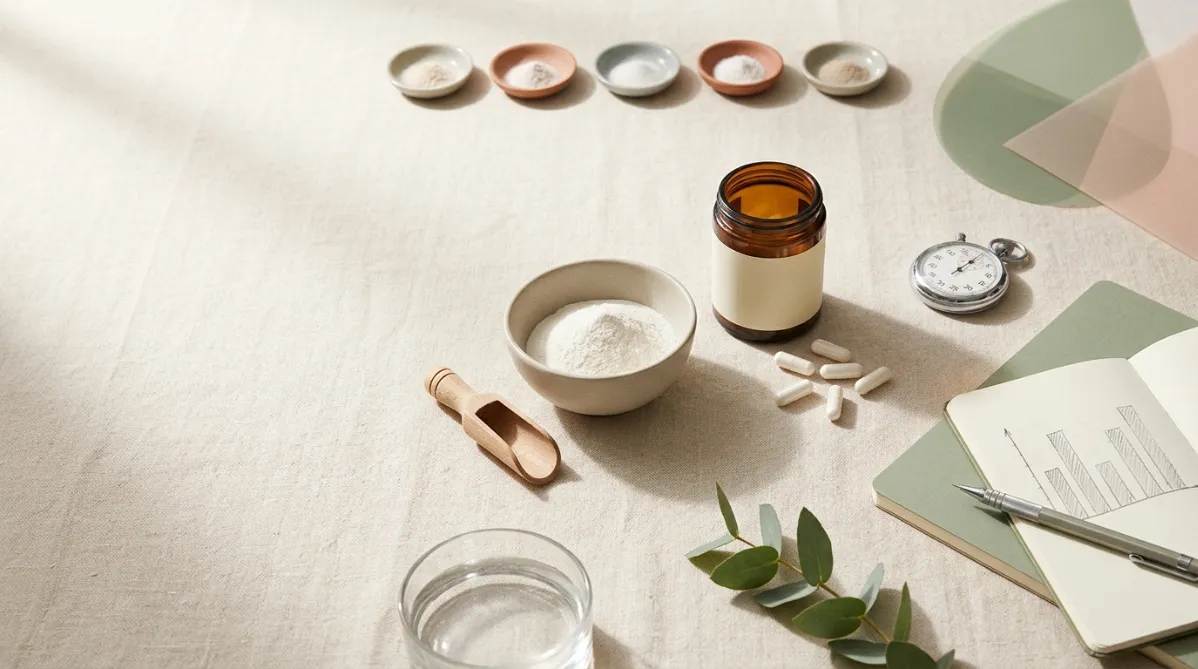
A wide, editorial-style still life photographed from slightly above on a pale oat-colored linen surface, lit by soft morning window light from the left. In the center sits a small matte ceramic bowl holding a mound of fine white powder, with a minimalist wooden scoop resting beside it. Next to the bowl is an open amber glass supplement jar with a plain cream label, and a few white capsules spill across the linen in a loose arc.

To the right, a neatly arranged cluster of analog "study" objects suggests careful measurement: a vintage stopwatch with a clean white face, a slim notebook with a sage-green cover open to a hand-drawn bar chart (blurred, no legible text), and a mechanical pencil lying across the page. A small row of six identical ceramic dishes, each holding a pinch of powder, is lined up along the top edge of the frame to hint at the six-week trial. One dish is slightly out of alignment, a subtle visual cue for ambiguity.

A shallow glass of water and a single sprig of green eucalyptus add a calm, organic note in the foreground. Soft, long shadows fall across the textured linen, and the palette stays restrained: warm cream, soft sage, muted terracotta, pale gray, and touches of amber from the glass jar. A few translucent paper cutouts in two tones (sage and blush) overlap in the upper right corner as a modern graphic accent, evoking overlapping data points without showing any numbers.

Depth of field is shallow, with the bowl and stopwatch in crisp focus and the edges gently softened. The composition leaves generous negative space on the left third for title text overlay. The overall mood is thoughtful, balanced, and quietly skeptical, in the style of a contemporary wellness and science magazine: clean, tactile, minimal, with a subtle film-like grain and natural color grading. No people, no futuristic or sci-fi elements, no readable text or logos.
nutrition

GAA: Potencializador Cerebral? Resultado do Estudo de 6 Semanas é Complicado

BY DR. GYMBRO ·

GAA, precursor da creatina vendido como potencializador cerebral, acabou de receber seu primeiro teste humano sério. Em um estudo duplo‑cego de seis semanas com 58 adultos saudáveis, ele acelerou alguns tempos de reação e gerou indícios de mudanças no humor e no estresse. Contudo, a maioria dos testes cognitivos não revelou efeitos, e muitos dos resultados principais foram apenas tendências. Os marcadores de segurança permaneceram dentro da normalidade, mas o estudo foi pequeno, exploratório e não incluiu um grupo comparativo apenas com creatina. Veja o que realmente foi observado, quem pode se interessar e por que o veredicto é misto.

A bright, minimalist flat-lay photograph of two supplement scoops on a pale warm-gray stone surface, shot from directly above in soft natural window light. On the left, a matte ceramic scoop holds fine white creatine monohydrate powder, heaped in a clean mound. On the right, a second scoop of the same shape holds slightly coarser off-white beta-alanine powder, with a small, deliberate gap between the two. Each scoop sits in its own soft shadow, which suggests separation rather than combination. Between them, a thin brushed-brass ruler or a single slim line of fine powder runs across the surface and subtly divides the composition.

Around the scoops, a few restrained props in a muted editorial palette of sage green, cream, terracotta, and soft charcoal: a small glass jar with a minimalist label that has no readable text, a folded linen napkin, a single sprig of eucalyptus, and a stainless-steel shaker bottle softly out of focus in the upper corner. A few loose powder grains are scattered naturally across the stone. A small stack of blank cream index cards with a pencil rests in the lower right, hinting at research and note-taking without any legible writing.

The composition follows a clean rule-of-thirds layout, with generous negative space on the right third for headline overlay. The lighting is gentle and diffused, with long, soft shadows falling to the lower left. The color grading is calm and slightly desaturated, with creamy highlights and a subtle film-like grain. The overall look is a modern wellness and science journal cover, with an airy, trustworthy, contemporary editorial feel, shallow depth of field, and crisp detail on the powders.
nutrition

Creatina + Beta‑Alanina: O Bônus de Combinação que os Pesquisadores Não Encontraram

BY DR. GYMBRO ·

A combinação de creatina e beta‑alanina é divulgada como o casal‑potência para a performance, mas uma nova meta‑análise de rede com 52 ensaios randomizados não encontrou sinergia entre elas. A creatina, isolada, melhorou significativamente sprint, salto, sprints repetidos e resistência muscular da parte superior em comparação ao placebo. Os efeitos da beta‑alanina foram não significativos ou dependentes do contexto, e a combinação não acrescentou nada além da criatina. Veja o que o estudo fez, suas limitações e o que isso significa para o seu orçamento de suplementos.

A wide, editorial-style photograph of a volleyball player mid-landing from a jump on a sunlit indoor court, captured from a low side angle. The athlete's knee is slightly bent and the patellar tendon area is in sharp focus, with soft natural muscle definition and a light strip of kinesiology tape just below the kneecap. The polished honey-toned hardwood floor reflects warm window light, and the background falls away into a creamy blur of pale court lines and tall windows.

In the lower right foreground, slightly out of focus, a matte ceramic bowl holds a small mound of fine white creatine powder. A wooden scoop rests beside it, next to a clear glass of water and a folded white towel. This sits on a light oak bench at the edge of the court. A resistance band and a slanted decline board, used for eccentric rehab, lean softly against the wall behind the bench.

The palette is warm and natural: cream, soft white, honey oak, muted sage green accents from a gym bag, and a touch of terracotta from the athlete's sneakers. Light is golden-hour and diffused, with gentle shadows and a subtle film-grain finish. The composition follows the rule of thirds, with the athlete on the left and the supplement still life on the right. Negative space in the upper portion leaves room for a headline overlay.

The overall mood is calm, modern, and health-focused, like a contemporary wellness or sports-science journal cover. Shallow depth of field, a clean minimalist aesthetic, and true-to-life color. No text, no logos, no futuristic or digital elements.
recovery

Creatina para Joelho do Saltador? Alívio da Dor Surgiu na Semana 4

BY DR. GYMBRO ·

O joelho do saltador pode deixar atletas de fora por meses, e um novo estudo investiga se a creatina pode acelerar a recuperação. Em 20 atletas em reabilitação excêntrica, somente o grupo que recebeu creatina apresentou melhora significativa de dor e função (VISA‑P) após 4 semanas, além de aumento na altura do salto. Já na semana 8, ambos os grupos mostraram progresso semelhante, e a interação entre eles foi apenas tendencial (p = 0,099). A seguir, veja o que o estudo fez, como a creatina foi administrada, quem pode se beneficiar e por que a amostra pequena exige cautela.

This page is available in