Dr. Gymbro
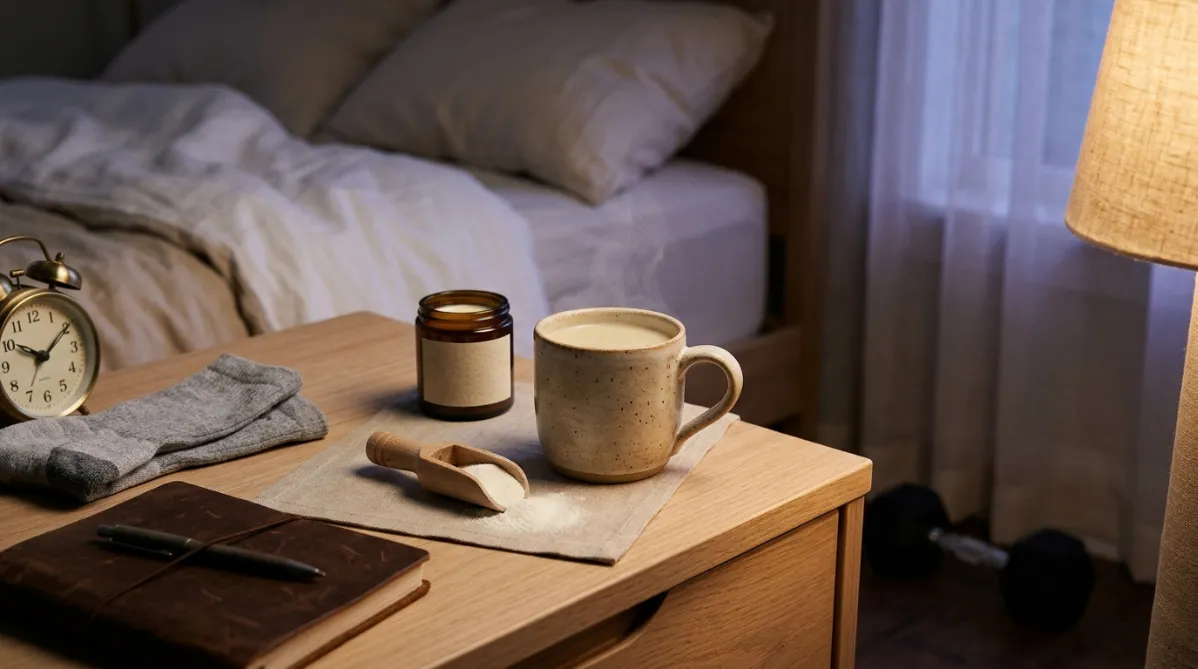
A softly lit bedroom nightstand scene in landscape format, photographed in a modern editorial lifestyle style. In the center of the frame sits a handmade ceramic mug in warm oatmeal tones, filled with a pale creamy drink. A thin wisp of steam rises from it. Beside the mug, a small wooden scoop rests on a matte linen-textured surface with a fine dusting of white collagen powder. A minimal amber glass jar with a cream label stands just behind, with no readable text. The nightstand is pale oak with subtle grain.

To the left, a neatly folded pair of gray cotton athletic socks and a worn leather-bound training journal with a pen on top hint at a lifter's routine. A small brass alarm clock reads about 9:30 and is slightly out of focus. On the right side, a sheer curtain filters the last blue-violet twilight from a window, while a warm bedside lamp with a linen shade casts a honey-colored glow across the scene. The glow contrasts gently with the cool dusk tones.

Behind the nightstand, the edge of a rumpled bed with soft white and sand-colored bedding is visible, with a dumbbell resting quietly on the floor in the soft-focus background to suggest recovery after training. The depth of field is shallow, with the mug and scoop in crisp focus and the background dissolving into creamy bokeh.

The palette is calm and earthy: warm beige, soft cream, muted terracotta, and dusk blue accents. The lighting is cinematic and low-key, with gentle highlights on the ceramic rim and a subtle rim light on the steam. The composition follows the rule of thirds, with the mug placed on the left third and generous negative space on the right for title overlay. The mood is serene, restorative, and quietly scientific without any clinical elements. The finish is clean, high-end, and magazine-worthy, with fine film grain and natural color grading, like a wellness feature in a contemporary online journal.
Recovery

O truque do colágeno de 15 g antes de dormir que reduziu os despertares noturnos em 27 %

Dr. Gymbro · · 4 min read

Você pode cumprir todas as séries, fazer todas as refeições e ainda assim atrapalhar seu progresso se passar a noite acordado. O sono fragmentado é o vazamento oculto na recuperação de muitos praticantes de musculação. Um estudo pequeno de 2024, publicado no European Journal of Nutrition, indica que uma dose de peptídeos de colágeno antes de dormir pode ajudar a selar essa “goteira”. O resultado é interessante, mas vem acompanhado de ressalvas que você deve conhecer antes de comprar um pote.

Por que colágeno na hora de deitar? É a glicina

O colágeno é incomumente rico em glicina, um aminoácido que representa aproximadamente um em cada três resíduos da sua sequência. A maioria dos suplementos de proteína contém muito menos. A glicina tem sido estudada há tempos como auxílio ao sono, e ensaios pequenos que usaram cerca de 3 g antes de deitar relataram melhora na qualidade subjetiva do sono. Os peptídeos de colágeno são uma forma mais barata e prática de obter glicina, além de outros aminoácidos, para quem levanta peso.

Os pesquisadores, da Loughborough University e colaboradores, queriam saber se um suplemento de colágeno rico em glicina poderia melhorar o sono de homens fisicamente ativos que já tinham queixas de sono.

O estudo: o que realmente foi feito

O desenho foi sólido para um ensaio pequeno:

  • Participantes: 13 homens atléticos, idade média 24 anos, treinando cerca de 7 h por semana.
  • Problemas de sono: escore médio de 9 na Athens Insomnia Scale, indicando queixas reais de sono.
  • Intervenção: 15 g de peptídeos de colágeno ou placebo, tomados 1 hora antes de dormir, durante 7 noites.
  • Formato: crossover randomizado, de modo que cada participante passou por ambas as condições, com pelo menos 7 dias de intervalo entre os períodos e uma fase de familiarização de 7 noites antes.
  • Medições: diários de sono e actigrafia em todas as 7 noites, além de polisomnografia (padrão‑ouro) e temperatura central na noite 7. Cognição, inflamação e hormônios foram avaliados nessa noite e na manhã seguinte.

O formato crossover importa porque cada atleta serviu como seu próprio controle, reduzindo o ruído em uma amostra tão pequena.

O que melhorou: menos despertares e atenção matinal mais aguçada

Menos despertares. A polisomnografia registrou 21,3 ± 9,7 despertares com colágeno versus 29,3 ± 13,8 com placebo (P = 0,028). Isso corresponde a cerca de 8 interrupções a menos por noite, ou 27 % de redução.

Os diários de sono apontaram a mesma direção. Ao longo dos 7 dias, os despertares auto‑relatados foram, em média, 1,3 ± 1,5 com colágeno versus 1,9 ± 0,6 com placebo (P = 0,023). Quando medidas objetivas e subjetivas concordam, o sinal é mais confiável.

Acurácia maior no Stroop matinal. Na manhã seguinte à noite 7, os participantes acertaram uma proporção maior de tentativas no teste Stroop com colágeno (1,00 ± 0,00) do que com placebo (0,97 ± 0,05; P = 0,009). O Stroop avalia atenção e a capacidade de inibir respostas automáticas. Uma diferença de 0,03 pontos é pequena e pode refletir um efeito teto, mas ainda indica algum benefício cognitivo.

O que não melhorou: o alerta da realidade

É aqui que o "click‑bait" termina. O colágeno não alterou:

  • Tempo total de sono;
  • Latência do sono (tempo para adormecer);
  • Eficiência do sono;
  • Temperatura corporal central;
  • Hormônios ou marcadores inflamatórios;
  • Sonolência subjetiva, fadiga ou qualidade geral do sono;
  • Outros testes cognitivos.

Portanto, o colágeno não é um sedativo e não ajuda a adormecer mais rápido nem a prolongar o sono. A única coisa que mudou foi a frequência com que o sono foi interrompido. Se o seu problema é ficar deitado horas sem conseguir adormecer, este estudo oferece pouco.

Limitações que você deve saber

  • Amostra diminuta: apenas 13 homens. Ensaios tão pequenos tendem a superestimar efeitos e não permitem concluir se os resultados valeriam para mulheres, idosos ou não‑atletas.
  • Duração curta: 7 noites. Não sabemos se o benefício persiste, aumenta ou desaparece com o tempo.
  • Dados de laboratório em única noite: a polisomnografia foi feita só na noite 7, então o número de despertares divulgado provém de uma única noite por condição.
  • Produto fornecido pela indústria: o suplemento foi fornecido pela Rousselot, e dois autores são funcionários da empresa. Isso não invalida o trabalho, mas uma replicação independente teria mais peso.
  • Múltiplos desfechos: muitas variáveis foram analisadas e apenas algumas alcançaram significância; alguns achados podem ser fruto do acaso.

Como usar isso: recomendações práticas

Protocolo estudado: 15 g de peptídeos de colágeno, cerca de 1 hora antes de deitar.

Quem pode se beneficiar: atletas e praticantes de musculação que dormem mal por causa de despertares frequentes, não aqueles que têm dificuldade em adormecer. Se você monitora seu sono e vê várias interrupções ao longo da noite, um experimento autodirigido de 1‑2 semanas tem baixo risco. Mantenha tudo o resto constante e julgue pelos números de vezes que desperta e como se sente pela manhã.

Colágeno vs. 3 g de glicina: A glicina pura, em torno de 3 g, é a opção mais estudada para melhorar o sono, barata e fácil de usar. O colágeno oferece glicina + outros aminoácidos e cabe facilmente num shake noturno, mas requer dose maior e a evidência ainda é fraca. O colágeno não é uma proteína completa, portanto não deve substituir suas fontes principais de proteína. Considere‑o um complemento, não um substituto. Se quer a rota mais simples e com melhor embasamento, opte pela glicina pura. Se já usa colágeno, a dose de 15 g antes de dormir é um teste lógico.

Conclusão

Uma queda de 27 % nos despertares noturnos é um resultado real e mensurável, mas provém de 13 homens em uma semana com um produto industrial. Peptídeos de colágeno antes de dormir parecem um experimento promissor e de baixo risco para quem tem sono fragmentado, mas não uma cura comprovada. Experimente, registre os dados de forma honesta e mantenha os fundamentos: horários regulares de deitar, ambiente escuro e fresco, e corte de cafeína.

Fonte: Thomas C, et al. Eur J Nutr. 2024;63(1):323‑335. doi: 10.1007/s00394-023-03267-w.
Original study

Read the original research on pubmed.ncbi.nlm.nih.gov →

This article summarizes published research for general information. It is not medical advice.

DG

Written by

Dr. Gymbro

Dr. Gymbro writes for Dr. Gymbro: science-backed fitness, nutrition & performance.

Related Articles

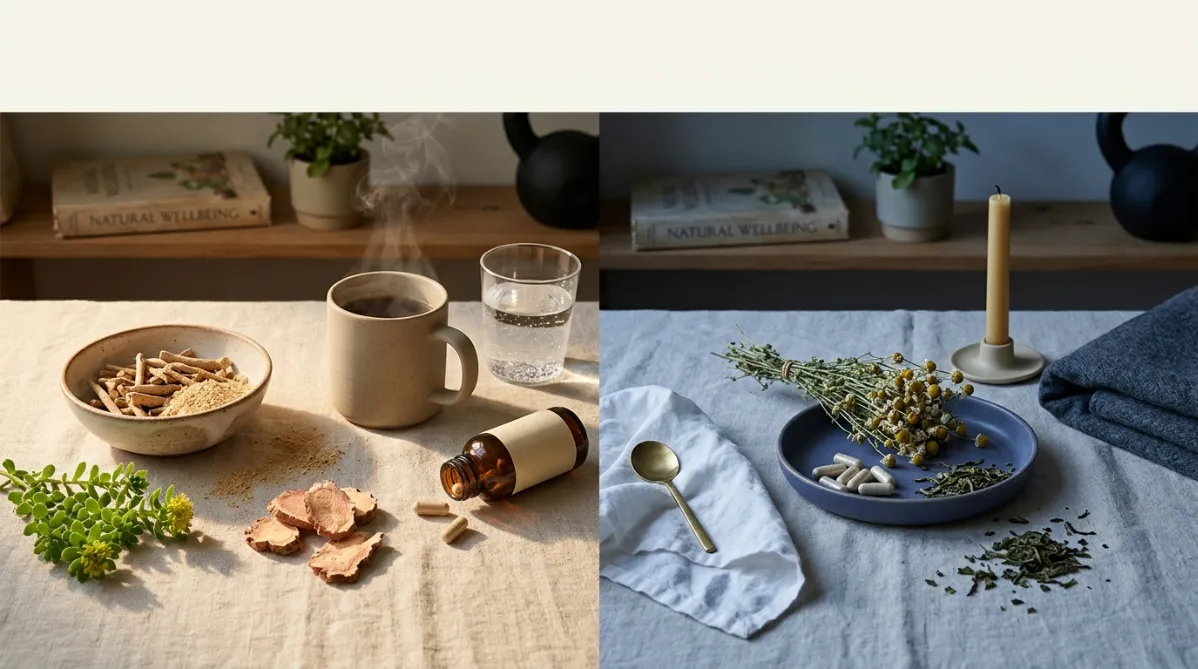
A landscape editorial still life shot from slightly above on a pale oat-colored linen surface, lit by soft morning window light with gentle long shadows. On the left, in warm golden sunlight, sits a small ceramic bowl of dried ashwagandha root pieces and a scatter of fine tan powder. Beside it are a few rough, rosy-gold slices of Rhodiola rosea root and a sprig of tiny succulent-like green leaves with yellow blossoms. A matte sand-colored stoneware mug of steaming tea and a simple glass of water stand nearby. A small amber glass bottle with a minimal unbranded label tips out two capsules.

The right side of the frame is cooler and bluer, as if dusk is arriving. It holds a muted indigo ceramic dish with a few pale capsules, a small bundle of dried chamomile flowers (the source of apigenin), and a few green tea leaves. A slim, unlit beeswax candle and a folded charcoal wool blanket suggest evening. The warm and cool halves meet softly in the center, where a rumpled white cotton napkin sits beneath a small brass spoon.

In the background, out of focus, a wooden shelf holds a worn paperback, a small potted plant, and the edge of a kettlebell in matte black, hinting at an active lifestyle. Subtle film grain, shallow depth of field, and a muted palette of cream, terracotta, sage green, and deep indigo give it a clean, modern wellness-magazine feel. Leave generous negative space in the upper third for a headline overlay. No text, no logos, no people.
recovery

Ashwagandha + Rhodiola funcionou. O combo noturno de sono não.

BY DR. GYMBRO ·

Um novo ensaio de quatro braços surpreendeu a comunidade de combinações de suplementos. Em 103 adultos saudáveis e ativos, a combinação matinal de 600 mg de ashwagandha e 300 mg de Rhodiola rosea esteve associada a menor estresse percebido, melhor qualidade do sono e humor mais positivo. O popular combo noturno de magnésio L‑trionato, L‑teanina e apigenina não trouxe nenhum ganho adicional, e usar ambos pareceu piorar um parâmetro de afeto positivo. O estudo durou apenas duas semanas e teve grupos pequenos, então os resultados devem ser interpretados com cautela.

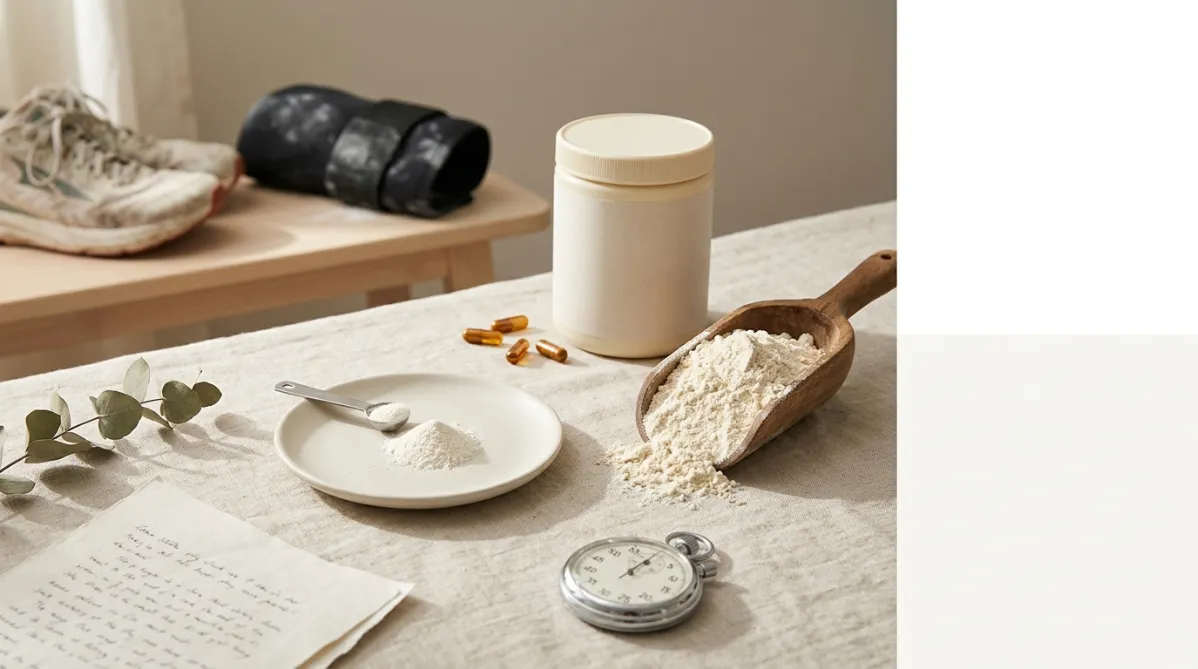
A wide, softly lit editorial still life on a pale oatmeal-colored linen surface, shot from a slightly elevated three-quarter angle. In the center-left, a small matte ceramic dish holds a tiny pile of fine white powder, with a single minuscule measuring spoon resting beside it. To the right, a much larger wooden scoop is heaped high with the same pale powder, spilling gently onto the linen, creating a striking visual contrast of tiny versus large quantity. Behind them, a cream-colored supplement tub with a blank, minimalist label sits slightly out of focus, along with a few amber glass capsules scattered casually.

In the soft-focus background, a runner's well-worn sneaker and a chalk-dusted, wrapped knee sleeve rest on a light ash-wood bench, hinting at gym and road without showing a person. A thin brushed-steel stopwatch lies in the foreground, its hands paused, subtly suggesting timing and endurance. A sprig of dried eucalyptus and a folded sheet of paper with out-of-focus handwritten notes add a quiet, editorial research feel.

Natural morning light streams in from the left through a sheer curtain, casting long, gentle shadows and a warm, creamy glow. The palette is restrained and modern: warm ivory, sand, soft sage green, muted terracotta, and touches of brushed silver. Shallow depth of field with crisp detail on the powders and stopwatch, creamy bokeh in the background. The composition leaves open negative space on the right third for headline text. The overall mood is calm, trustworthy, and contemporary, like a premium health and wellness journal cover, with fine film-like grain and clean, minimalist styling.
recovery

Uma dose de 40 mg de colágeno dobra o tempo até a dor no joelho: o que isso significa

BY DR. GYMBRO ·

Os joelhos doem na barra ou na pista? Um ensaio randomizado mostrou que apenas 40 mg diários de colágeno tipo II não desnaturado (UC‑II) atrasaram o início da dor, de 1,4 para 2,8 minutos, e melhoraram a extensão do joelho. Isso equivale a cerca de 250 vezes menos que o típico scoop de 10 g de colágeno hidrolisado, e trata‑se de um produto completamente diferente. Porém o estudo foi pequeno, financiado pela indústria e realizado em pessoas saudáveis, não em pacientes com artrite. Veja o que os dados realmente indicam, o contexto por trás da manchete e como interpretar rótulos.

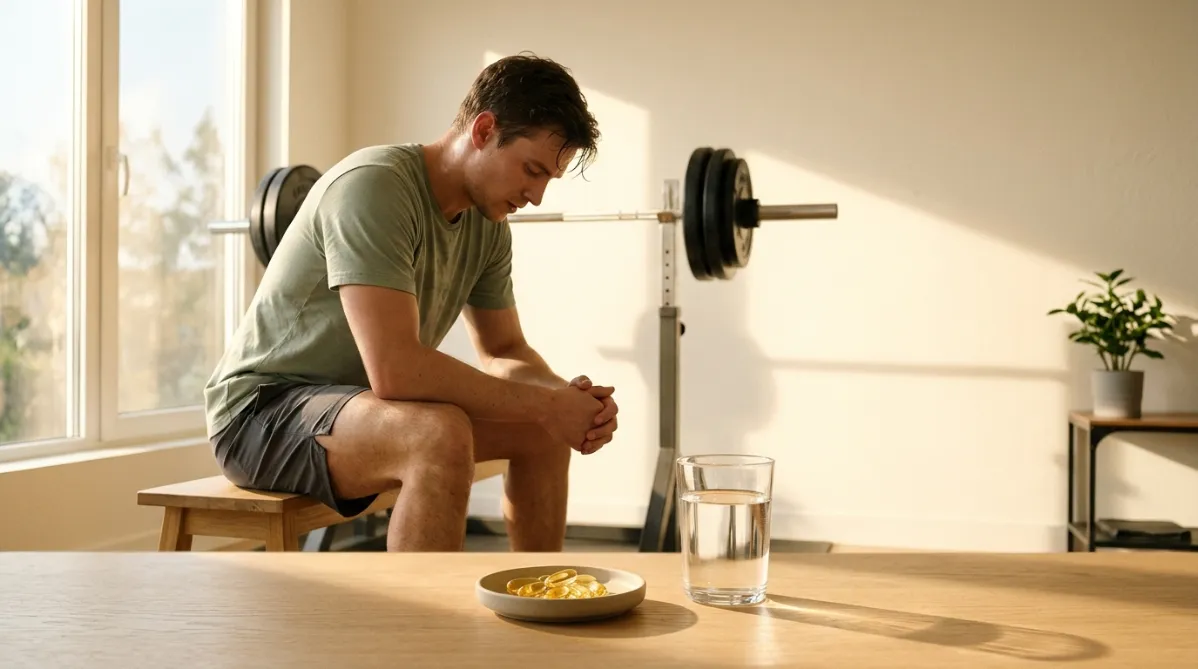
A sunlit, minimalist home gym corner photographed in soft golden morning light, with a young athletic man seated on a wooden bench, leaning forward with his elbows resting on his knees, catching his breath after a hard leg session. He wears a muted sage-green t-shirt and charcoal shorts, his face turned slightly away from the camera, calm and focused. A matte ceramic dish in the foreground holds a few small, translucent golden softgel capsules, with a glass of water beside it catching the light and casting a soft caustic shadow across a pale oak floor. Behind him, a loaded barbell rests on a squat rack, slightly out of focus, and a tall window pours warm sunlight diagonally across the scene, creating long gentle shadows and a hazy glow. A small potted green plant sits on a shelf at the edge of the frame. The color palette is warm and editorial: cream, soft gold, sage green, pale wood, and charcoal accents. Shallow depth of field, with crisp focus on the capsules and glass in the lower third and a creamy bokeh background. The composition leaves generous negative space on the right side for a headline overlay. The mood is clean, modern, and aspirational, like a high-end wellness magazine or a trendy health journal feature. Shot on a 50mm lens, natural light, fine film grain, subtle matte finish, landscape 16:9 framing.
recovery

Vitamina D acelera a recuperação de força em homens que não eram deficientes

BY DR. GYMBRO ·

Homens com níveis perfeitamente normais de vitamina D ainda recuperaram a força mais rapidamente após um treino de pernas intenso ao tomarem 4.000 UI por dia. Em um ensaio randomizado, controlado por placebo, com 28 homens ativos, a força isométrica máxima retornou cerca de 8 % melhor em 24 h. Os marcadores de dano muscular ALT e AST também aumentaram menos. Contudo, a dor muscular não melhorou. Veja o que o estudo encontrou, suas limitações e quem realmente pode se interessar.

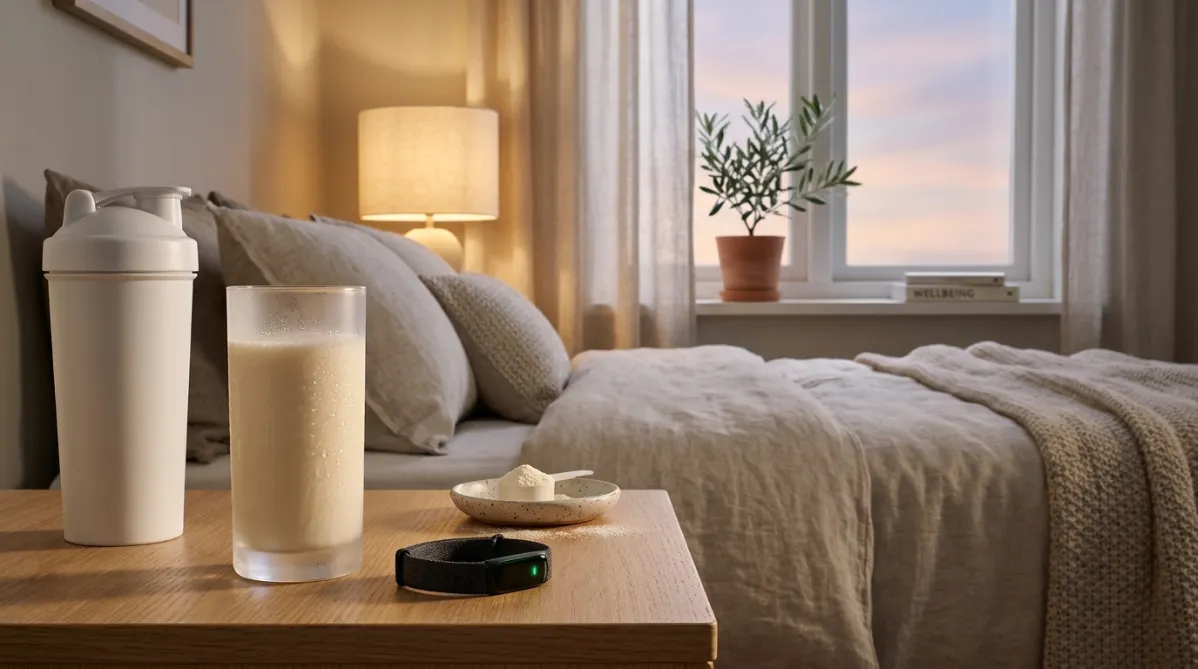
A softly lit bedside table in a calm, modern bedroom at dusk, photographed in wide landscape format with shallow depth of field. In the foreground, a matte white shaker bottle sits beside a tall frosted glass of creamy, pale vanilla-colored protein shake, with a few condensation droplets catching warm light. Next to the glass rests a slim fitness band on a dark charcoal fabric strap, its small LED glowing a gentle green, lying casually on a light oak wooden surface. A small scoop of fine white protein powder rests on a ceramic dish nearby, with a light dusting of powder on the wood.

In the soft-focus background, a neatly made bed with oatmeal-colored linen bedding and a textured knit throw blanket. A sheer curtain filters the last peach and lavender light of evening from a large window. A small potted olive branch in a terracotta vase and a closed paperback book add a quiet editorial touch. A bedside lamp with a warm, cream-colored shade casts a golden glow across the scene and creates gentle highlights on the glass.

The palette is muted and harmonious: warm cream, soft sand, oatmeal beige, faint sage green accents, and touches of dusty lavender in the window light. The mood is peaceful, reassuring, and clean, like a contemporary wellness magazine or a trendy health journal feature. Lighting is natural and cinematic, with soft shadows and a subtle film-like grain. The composition follows the rule of thirds, with the shake and band on the left third and open negative space on the right for headline overlay. Minimalist, Scandinavian-inspired styling, high-end lifestyle photography, crisp details, and a tranquil, premium editorial feel.
recovery

Caseína antes de dormir não prejudica o sono, dados da WHOOP mostram

BY DR. GYMBRO ·

Já ouviu dizer que um shake de proteína pesado antes de deitar atrapalha o sono e impede a recuperação? Um estudo randomizado com 21 atletas universitárias de alto nível, monitoradas por pulseiras WHOOP 4.0, não encontrou efeitos negativos na duração, eficiência, frequência cardíaca de repouso ou HRV. Alfa‑lactalbumina e carboidrato apresentaram resultados equivalentes, mas nenhum dos suplementos melhorou o sono. Confira o que os dados revelam, as limitações do estudo e quem ainda deve evitar o shake noturno.

This page is available in