Dr. Gymbro
←

#glycine

1 article
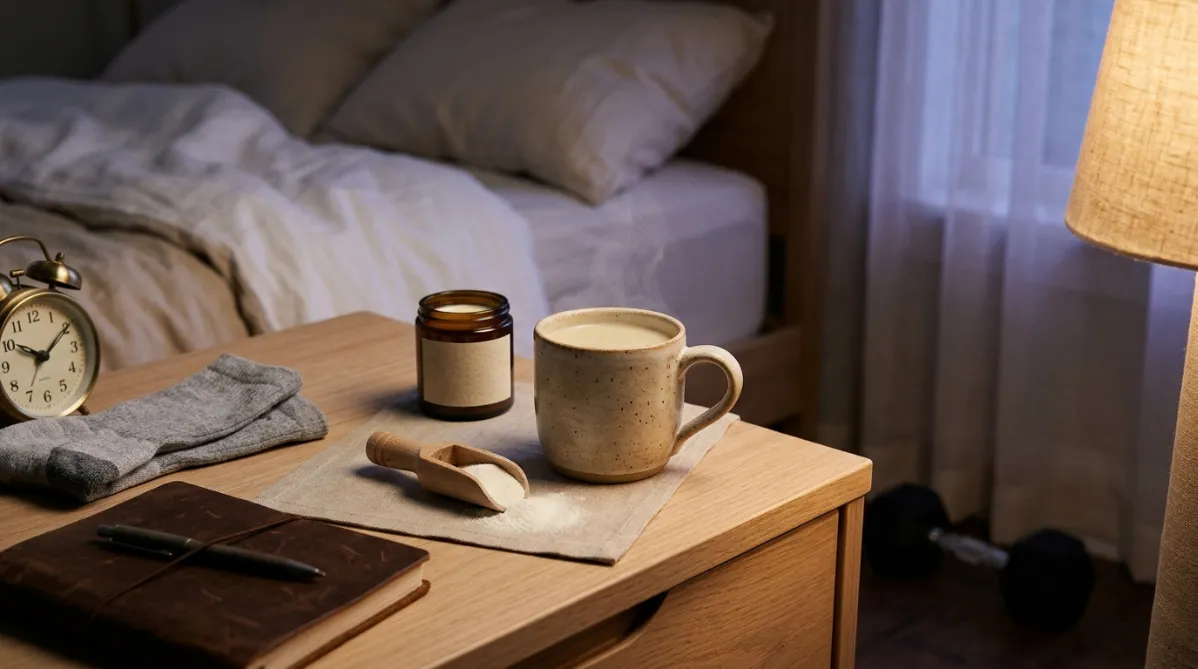
A softly lit bedroom nightstand scene in landscape format, photographed in a modern editorial lifestyle style. In the center of the frame sits a handmade ceramic mug in warm oatmeal tones, filled with a pale creamy drink. A thin wisp of steam rises from it. Beside the mug, a small wooden scoop rests on a matte linen-textured surface with a fine dusting of white collagen powder. A minimal amber glass jar with a cream label stands just behind, with no readable text. The nightstand is pale oak with subtle grain.

To the left, a neatly folded pair of gray cotton athletic socks and a worn leather-bound training journal with a pen on top hint at a lifter's routine. A small brass alarm clock reads about 9:30 and is slightly out of focus. On the right side, a sheer curtain filters the last blue-violet twilight from a window, while a warm bedside lamp with a linen shade casts a honey-colored glow across the scene. The glow contrasts gently with the cool dusk tones.

Behind the nightstand, the edge of a rumpled bed with soft white and sand-colored bedding is visible, with a dumbbell resting quietly on the floor in the soft-focus background to suggest recovery after training. The depth of field is shallow, with the mug and scoop in crisp focus and the background dissolving into creamy bokeh.

The palette is calm and earthy: warm beige, soft cream, muted terracotta, and dusk blue accents. The lighting is cinematic and low-key, with gentle highlights on the ceramic rim and a subtle rim light on the steam. The composition follows the rule of thirds, with the mug placed on the left third and generous negative space on the right for title overlay. The mood is serene, restorative, and quietly scientific without any clinical elements. The finish is clean, high-end, and magazine-worthy, with fine film grain and natural color grading, like a wellness feature in a contemporary online journal.
recovery

O truque do colágeno de 15 g antes de dormir que reduziu os despertares noturnos em 27 %

BY DR. GYMBRO ·

Acordar repetidamente durante a noite pode sabotar silenciosamente sua recuperação, mesmo quando treino e nutrição estão alinhados. Um pequeno ensaio revelou que 15 g de peptídeos de colágeno consumidos uma hora antes de deitar reduziram os despertares registrados por polisomnografia de 29,3 para 21,3, cerca de 27 % a menos. Os participantes também tiveram desempenho melhor no teste Stroop matinal. Contudo, o tempo total de sono, a latência e a eficiência do sono não mudaram, e o estudo contou apenas com 13 homens durante 7 noites, usando um produto fornecido pela indústria. Veja o que os dados realmente mostram e como os praticantes de musculação podem testá‑lo com segurança.

This page is available in