Dr. Gymbro
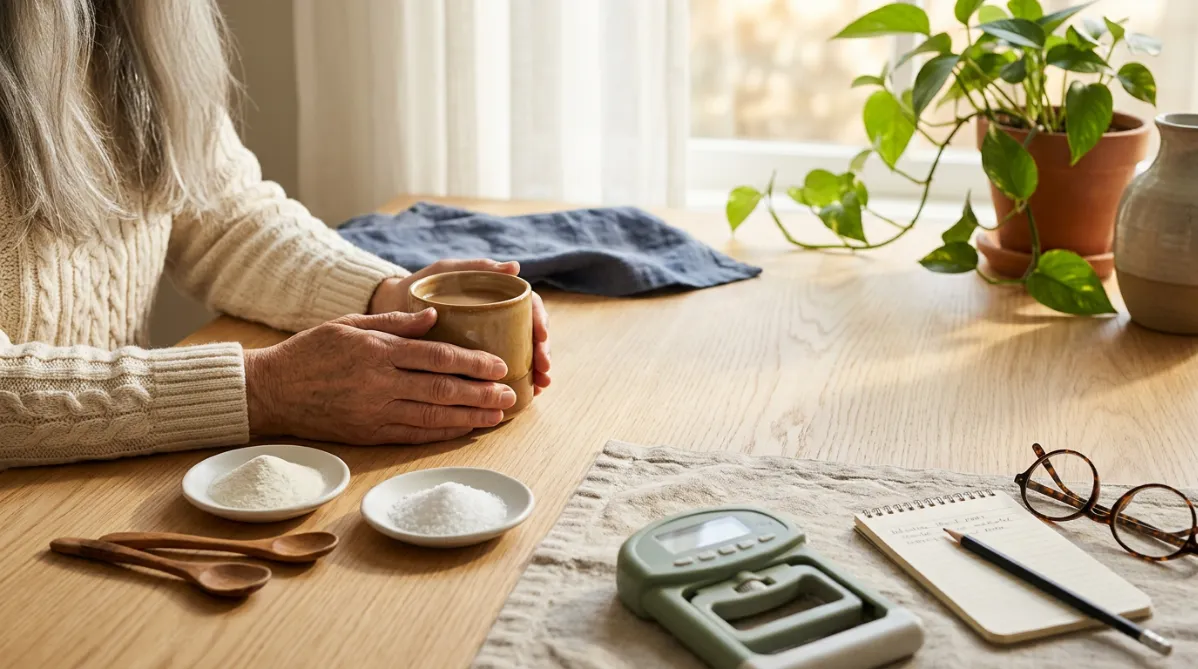
A landscape editorial photograph of a sunlit kitchen table in soft morning light. An older adult's hands, with silver hair and a cream knit sleeve just visible, rest around a ceramic mug. Beside the mug are two small matte white ceramic dishes. One holds a mound of fine white powder, and the other holds a slightly different crystalline white powder. Two wooden spoons lie next to them. A handheld hand-grip dynamometer in muted sage green sits on a linen placemat in the foreground, slightly out of focus. A small open notebook with a pencil and a pair of round tortoiseshell reading glasses sit nearby, with no legible text.

The tabletop is pale oak with a visible grain. Behind it, a window with sheer curtains lets in warm golden light, and the blurred shapes of a trailing green pothos plant and a pale terracotta vase show in the background. The color palette is warm cream, sage green, soft terracotta, and pale wood, with a touch of muted navy from a folded napkin. The mood is calm, thoughtful, and quietly scientific without any laboratory feel.

The composition follows the rule of thirds. The hands and dishes sit in the left-center, and generous negative space on the right is suitable for a title overlay. Shallow depth of field, 50mm lens look, gentle film grain, and soft shadows. Modern lifestyle-magazine and health-journal aesthetic, natural and unstaged, high-end editorial photography.
Nutrition

Precursor da Creatina supera a creatina monohidratada na força de preensão em maiores de 65 anos

Dr. Gymbro · · 5 min read

Precursor da Creatina supera a creatina monohidratada na força de preensão em maiores de 65 anos

Um parente menos conhecido – e aparentemente mais barato – da creatina acabou superando o padrão‑ouro dos suplementos em força de preensão em adultos com mais de 65 anos. Antes de mudar sua pilha de suplementos, confira as letras miúdas: trata‑se de um piloto pequeno, de 8 semanas, com 21 concluidores, sem programa de exercícios e com intervalos de confiança que mal ultrapassam zero. É um achado interessante e que merece atenção, mas não é motivo para abandonar a creatina monohidratada.

O que é GAA e por que compará‑lo à creatina?

O ácido guanidinoacetato (GAA) é o precursor metabólico imediato da creatina. No organismo, ele é produzido nos rins e, em seguida, metilado no fígado para formar a creatina. Essa etapa final utiliza um grupo metil doado pela S‑adenosil‑metionina (SAMe).

Os pesquisadores raciocinam que o envelhecimento pode comprometer a síntese e o transporte de creatina. Se for esse o caso, fornecer o precursor poderia contornar alguns desses gargalos e influenciar a energia muscular e o metabolismo de proteínas de maneira diferente da própria creatina. A creatina já beneficia idosos, sobretudo quando combinada com treinamento de resistência, mas os resultados sem exercício são menos consistentes. Essa lacuna foi o foco do ensaio.

Como o estudo foi conduzido

O ensaio, publicado no Journal of Nutritional Science and Vitaminology (2026; 72 (4): 284‑290), saiu do Laboratório de Bioenergia Aplicada de Ostojic e colaboradores. Foi randomizado, duplo‑cego e explicitamente rotulado como piloto exploratório.

  • Participantes: 25 adultos aparentemente saudáveis, com ≥ 65 anos, foram randomizados; 21 completaram o protocolo (GAA = 11, creatina = 10).
  • Intervenção: 2,0 g/dia de GAA versus dose equipotente de creatina monohidratada por 8 semanas. Aproximadamente, isso corresponde a 2,5 g de creatina monohidratada, devido às diferenças de massa molar.
  • Nenhum exercício estruturado fez parte do protocolo.
  • Desfechos: força de preensão manual, composição corporal e compartimentos de fluidos por bioimpedância multifrequencial (BIA), além de marcadores sanguíneos como miostatina, IGF‑1, mTOR, homocisteína total, albumina e proteína total.

A adesão foi superior a 97 % em ambos os grupos e nenhum evento adverso foi relatado.

Resultados: força de preensão, massa muscular e miostatina

Força de preensão. A força de preensão aumentou de forma significativa com GAA (p = 0,01) e não com creatina. A interação tempo‑tratamento foi significativa (p = 0,04) e o tamanho do efeito entre grupos foi grande a favor do GAA (g de Hedges = 0,91). O intervalo de confiança de 95 % variou de 0,00 a 1,81; o limite inferior em zero indica que a vantagem real pode oscilar entre insignificante e muito grande.

Composição corporal. Pela BIA, o grupo GAA mostrou aumentos significativos intra‑grupo em massa magra, massa corporal celular, massa muscular e água corporal total. O grupo creatina não apresentou mudanças comparáveis. Os tamanhos de efeito geralmente favoreceram o GAA para força, índices relacionados ao músculo e compartimentos ligados à hidratação, embora novamente com intervalos amplos.

Miostatina. Ambos os suplementos reduziram a miostatina circulante – uma proteína que inibe o crescimento muscular – com supressão maior no grupo GAA. Ainda não está claro se a mudança sanguínea de miostatina se traduz em alterações musculares relevantes em idosos.

Outros marcadores. A creatina provocou uma queda modesta na albumina sérica, que permaneceu dentro da faixa de referência normal. O IGF‑1 sérico ficou abaixo do limite de detecção na maioria dos participantes, impedindo a avaliação do eixo GH‑IGF‑1.

Avisos que você não pode ignorar

  • Tamanho do piloto. Com 10 a 11 pessoas por braço, o estudo não tem poder estatístico suficiente para conclusões definitivas. Os próprios autores classificam os achados como preliminares e geradores de hipótese.
  • BIA não é exame de imagem. A bioimpedância estima músculo a partir de propriedades elétricas e é sensível à hidratação. Sabemos que a creatina desloca água para dentro do músculo; o GAA também mostrou aumento da água corporal total. Assim, os ganhos de “massa muscular” podem refletir, em parte, fluidos. DXA ou ressonância magnética ofereceriam medidas mais precisas.
  • Sem exercício. O estudo investigou os efeitos dos suplementos isoladamente. Na prática, a maior parte dos benefícios da creatina em idosos aparece quando há treinamento de resistência, de modo que esses resultados podem não se aplicar a quem levanta pesos.
  • A questão da homocisteína. Como a síntese de creatina a partir do GAA consome grupos metil, o GAA elevou a homocisteína em outros trabalhos. Níveis altos de homocisteína são preocupantes para o coração e a cognição. Este ensaio mediu a homocisteína total, mas o resumo não destaca um resultado relevante; portanto, consulte o artigo completo antes de tirar conclusões. Na prática, pesquisadores que utilizam GAA costumam recomendar suplementação de folato, B6, B12 e outros doadores de metil, como a betaina, sobretudo em idosos mais propensos à deficiência de B12.
  • Curta duração e intervalos amplos. Oito semanas não dizem nada sobre segurança a longo prazo ou persistência dos efeitos.

Lições práticas

  • Dose estudada: 2 g/dia de GAA, versus dose equipotente de creatina monohidratada (cerca de 2,5 g, segundo meus cálculos).
  • Quem poderia considerar GAA: idosos que não respondem à creatina ou que não praticam exercícios. Isso ainda é especulação e deve ser discutido com um profissional de saúde, especialmente em quem tem risco cardiovascular, problemas renais ou deficiência de vitaminas do complexo B.
  • Por que a creatina monohidratada continua sendo o padrão: tem décadas de dados de segurança e eficácia em diversas populações, é barata e seus benefícios são melhor documentados quando associada ao treinamento de resistência. O GAA tem uma fração desse corpo de evidência e um potencial custo em termos de homocisteína.
  • O que mudaria esse panorama: ensaios maiores, com poder adequado, em pessoas com sarcopenia, usando DXA ou ressonância magnética, acompanhando homocisteína e status de vitaminas B, e incluindo braços com exercício.

Conclusão

Este piloto confere ao GAA um título real, embora ainda provisório: melhor força de preensão do que a creatina em idosos por 8 semanas sem exercício. Contudo, o intervalo de confiança que toca zero, o número pequeno de concluidores e as estimativas de músculo baseadas em BIA compõem um sinal que merece acompanhamento, não um veredicto definitivo. Por enquanto, a creatina monohidratada associada ao treinamento de resistência permanece a estratégia comprovada, e o GAA é um candidato a ser observado.
Original study

Read the original research on pubmed.ncbi.nlm.nih.gov →

This article summarizes published research for general information. It is not medical advice.

DG

Written by

Dr. Gymbro

Dr. Gymbro writes for Dr. Gymbro: science-backed fitness, nutrition & performance.

Related Articles

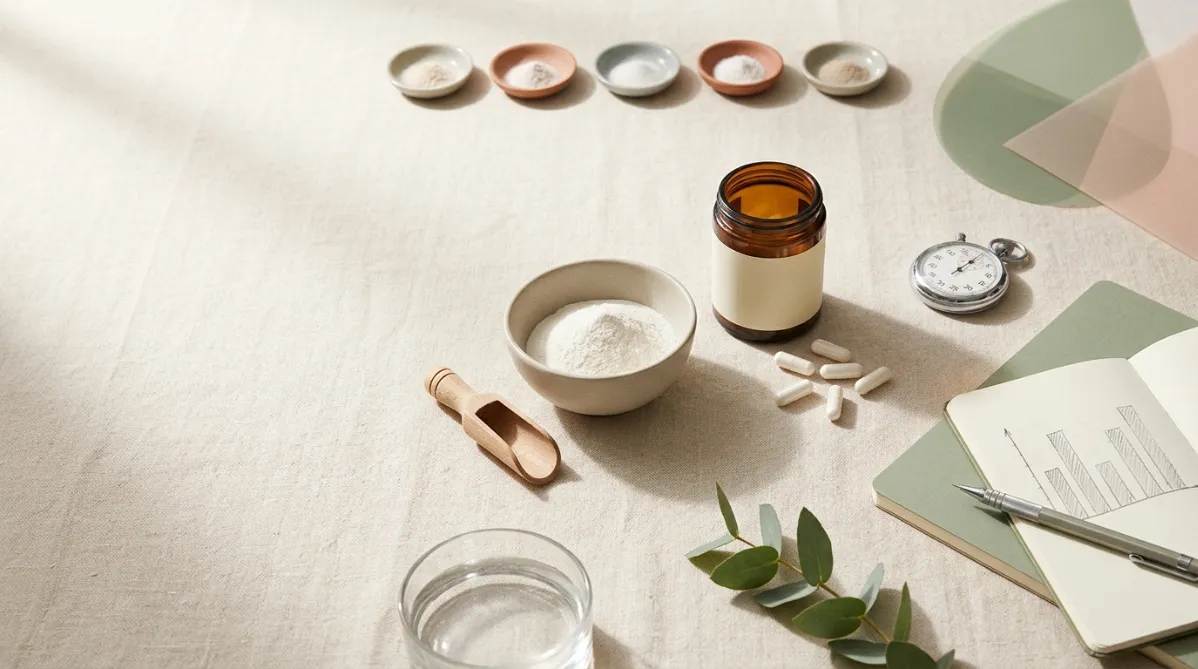
A wide, editorial-style still life photographed from slightly above on a pale oat-colored linen surface, lit by soft morning window light from the left. In the center sits a small matte ceramic bowl holding a mound of fine white powder, with a minimalist wooden scoop resting beside it. Next to the bowl is an open amber glass supplement jar with a plain cream label, and a few white capsules spill across the linen in a loose arc.

To the right, a neatly arranged cluster of analog "study" objects suggests careful measurement: a vintage stopwatch with a clean white face, a slim notebook with a sage-green cover open to a hand-drawn bar chart (blurred, no legible text), and a mechanical pencil lying across the page. A small row of six identical ceramic dishes, each holding a pinch of powder, is lined up along the top edge of the frame to hint at the six-week trial. One dish is slightly out of alignment, a subtle visual cue for ambiguity.

A shallow glass of water and a single sprig of green eucalyptus add a calm, organic note in the foreground. Soft, long shadows fall across the textured linen, and the palette stays restrained: warm cream, soft sage, muted terracotta, pale gray, and touches of amber from the glass jar. A few translucent paper cutouts in two tones (sage and blush) overlap in the upper right corner as a modern graphic accent, evoking overlapping data points without showing any numbers.

Depth of field is shallow, with the bowl and stopwatch in crisp focus and the edges gently softened. The composition leaves generous negative space on the left third for title text overlay. The overall mood is thoughtful, balanced, and quietly skeptical, in the style of a contemporary wellness and science magazine: clean, tactile, minimal, with a subtle film-like grain and natural color grading. No people, no futuristic or sci-fi elements, no readable text or logos.
nutrition

GAA: Potencializador Cerebral? Resultado do Estudo de 6 Semanas é Complicado

BY DR. GYMBRO ·

GAA, precursor da creatina vendido como potencializador cerebral, acabou de receber seu primeiro teste humano sério. Em um estudo duplo‑cego de seis semanas com 58 adultos saudáveis, ele acelerou alguns tempos de reação e gerou indícios de mudanças no humor e no estresse. Contudo, a maioria dos testes cognitivos não revelou efeitos, e muitos dos resultados principais foram apenas tendências. Os marcadores de segurança permaneceram dentro da normalidade, mas o estudo foi pequeno, exploratório e não incluiu um grupo comparativo apenas com creatina. Veja o que realmente foi observado, quem pode se interessar e por que o veredicto é misto.

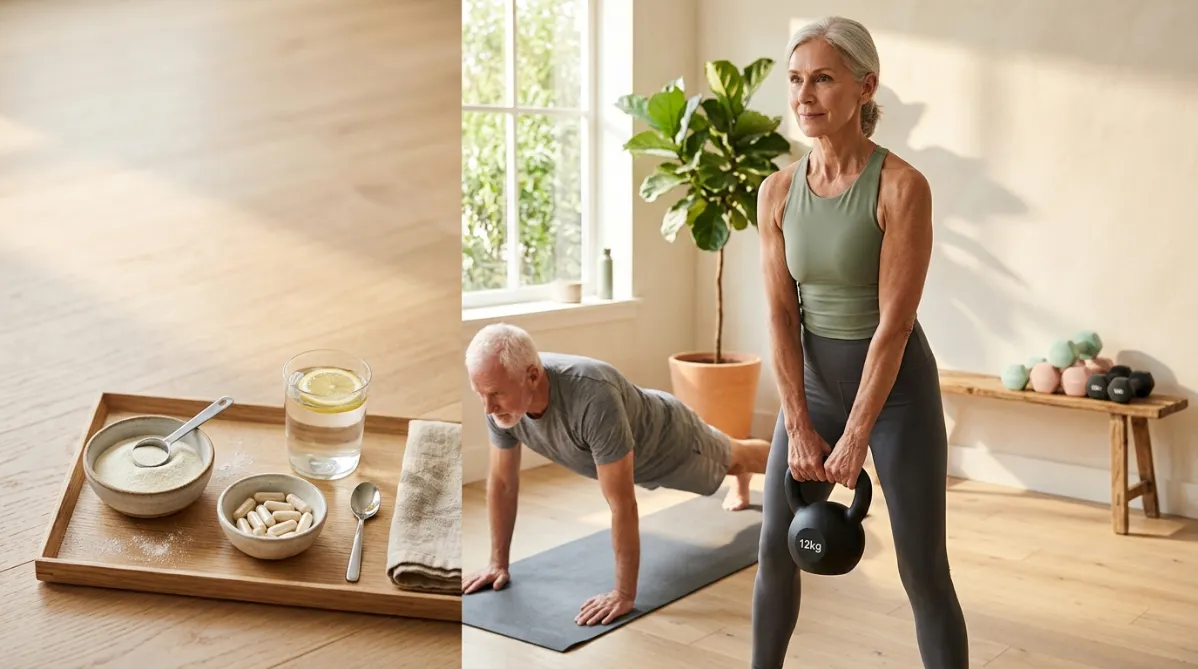
A warm, softly lit modern home gym or sunlit studio, photographed in a clean editorial style. In the center-right of the frame, a silver-haired woman in her mid-60s with a calm, confident expression grips a matte black kettlebell at hip height. She wears a fitted sage-green athletic top and charcoal leggings. Her forearms and shoulders show lean, defined strength rather than bulk. Beside her, slightly out of focus, a man in his late 60s with short white hair and a trim beard performs a controlled bodyweight plank on a pale oak floor.

In the foreground on the left, a minimalist wooden tray holds two small ceramic bowls. One contains fine white powder and the other holds a few cream-colored capsules. Next to them sit a glass of water with a lemon slice and a folded linen towel. A subtle scatter of powder dusts the tray. The foreground is shot with shallow depth of field and a creamy bokeh falloff.

Behind them, tall windows pour in golden morning light, with long soft shadows across the floor. A potted fiddle-leaf fig and a stacked set of pastel-toned dumbbells on a low wooden shelf add texture. The wall is warm off-white plaster with a hint of terracotta in the corner.

The palette is muted and modern: sage green, warm cream, soft terracotta, natural oak, and charcoal, with gentle highlights. The mood is quietly optimistic, focused, and grounded, suggesting strength, vitality, and measured scientific curiosity. The composition leaves clean negative space in the upper-left for a headline overlay. The look is a high-end wellness magazine cover with natural film-like grain, soft contrast, and crisp detail on the hands and kettlebell. There is no text, no logos, and no futuristic elements, only authentic, aspirational realism.
nutrition

Creatina + HMB deixam pessoas com mais de 60 anos mais fortes em 6 semanas, sem aumento significativo de massa muscular

BY DR. GYMBRO ·

Adultos com mais de 60 anos que usaram a combinação de creatina + HMB ficaram mais fortes em apenas seis semanas, embora o índice de massa muscular praticamente não tenha mudado. O estudo, duplo‑cego e cruzado, com 30 idosos ativos, mostrou ganhos de força nas pernas, costas e braços, além de resistência do tronco e da parte superior do corpo. Análises de regressão sugerem que essas melhorias foram, em grande parte, independentes do aumento de massa muscular, apontando para um efeito neuromuscular. Antes de sair comprando, vale notar as limitações: período curto de seis semanas, amostra pequena e composição corporal medida por BIA.

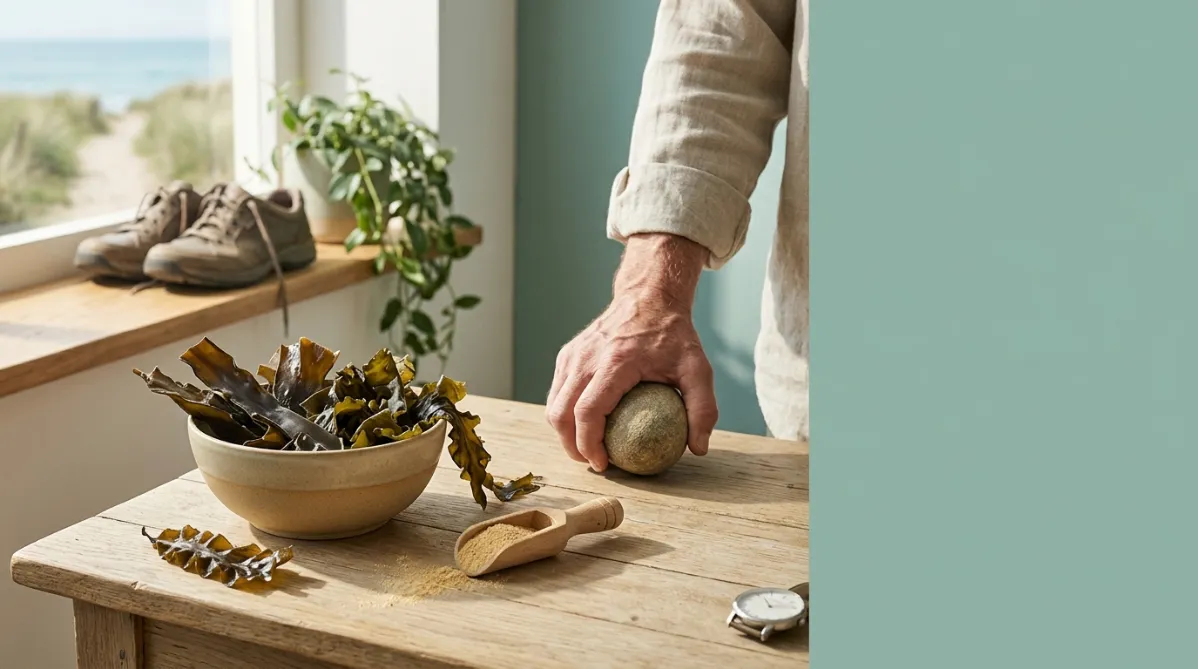
A wide, softly lit editorial photograph of a rustic light-oak table by a sunny window. On it, a handful of dried brown kelp and wakame seaweed fronds spill from a handmade matte ceramic bowl in warm sand tones, their glossy, ruffled edges catching the light. Beside the bowl sits a small wooden scoop holding fine golden-beige powder, with a little of it dusted across the table. In the middle ground, an older adult's weathered but strong hand grips a smooth, rounded river stone, with the knuckles and tendons subtly emphasized to suggest strength and vitality. Only the hand and part of a forearm in a soft oatmeal linen sleeve are visible.

In the background, slightly out of focus, a pair of worn leather walking shoes rests on a windowsill next to a trailing green plant. Beyond the window, a blurred coastal path winds through dune grass toward a pale blue sea, hinting at walking and an active daily life. A simple analog wristwatch lies on the table's edge, a quiet nod to the twelve-week timeline.

The palette is muted and natural: sage green, warm sand, soft ocean teal, and creamy off-white, with deep olive-brown accents from the seaweed. Morning light streams in from the left, casting long, gentle shadows and a faint golden glow. The depth of field is shallow, with crisp focus on the hand and seaweed and a creamy bokeh background. The composition follows the rule of thirds, with the hand and bowl on the left and generous negative space on the right for headline text. The mood is calm and hopeful, with a clean, contemporary wellness-magazine feel. The image is shot as if on a 50mm lens with subtle film grain and a natural, uncluttered, tactile look.
science research

Fucoidana de Alga Marinha Aumenta a Força de Preensão em Pessoas com Mais de 60 Anos em 12 Semanas

BY DR. GYMBRO ·

Perder força com a idade é uma mudança comum e pouco discutida, e o treinamento de resistência nem sempre é viável. Um ensaio randomizado de 12 semanas mostrou que fucoidana de alga marinha de baixo peso molecular, consumida a 1 650 mg/dia, aumentou significativamente a força de preensão e o desempenho na caminhada de seis minutos em adultos com mais de 60 anos. Surpreendentemente, a massa muscular não mudou e a combinação com BCAAs e vitamina D não trouxe benefício adicional. O estudo é pequeno e testou um único produto de marca, sendo um indício promissor, mas não uma conclusão definitiva. Veja o que a pesquisa revelou e o que isso significa na prática.

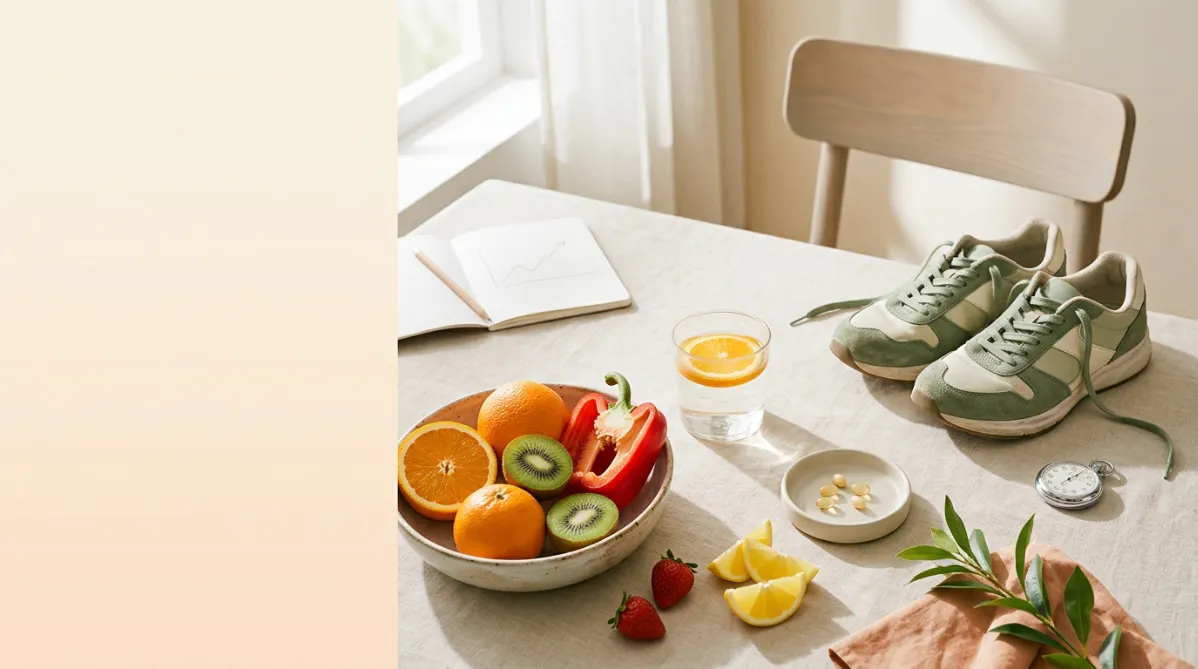
A bright, airy editorial still life photographed from slightly above on a pale oat-colored linen surface, in soft natural window light with gentle long shadows. In the foreground, a rustic ceramic bowl holds halved and whole oranges, glossy red bell pepper slices, and a few kiwi halves with emerald flesh. Beside it sit loose strawberries and a small pile of bright yellow lemon wedges. Their colors pop against the muted neutral palette. A single clear glass of water with a slice of orange rests nearby, catching the light.

On the right side of the frame, a pair of well-worn but clean walking sneakers in sage green and cream sits casually on the surface, with one lace loosely trailing. Behind them, a simple wooden chair with a light ash finish is partly visible and slightly out of focus, a quiet nod to the sit-to-stand test. A small stainless-steel stopwatch lies next to the shoes, with a subtle reflective glint.

A minimalist ceramic dish holds a few small, round, pale-yellow vitamin capsules, kept understated. A sprig of green leaves and a folded cotton napkin in soft terracotta add a warm accent. A small open notebook with a pencil rests in the upper left, its page blank except for faint, abstract pencil lines suggesting a simple rising graph, with no legible text.

The composition leaves generous negative space on the left third for title overlay, with a soft cream-to-peach gradient background. The mood is fresh, healthy, and contemplative, like a modern wellness magazine or a trendy online journal. The color palette is warm citrus orange, sunny yellow, sage green, and soft cream, with gentle terracotta accents. The depth of field is shallow, with crisp focus on the fruit and shoes and a creamy blur in the background. The overall look is clean, natural, and editorial, with fine film-like grain, true-to-life color, and a calm, optimistic tone. Landscape 16:9 framing.
nutrition

Vitamina C barata associada a pernas mais fortes à medida que você envelhece

BY DR. GYMBRO ·

Um amplo estudo britânico com mais de 5 mil adultos entre 48 e 92 anos mostrou que quem tem níveis ótimos de vitamina C no sangue (≥ 50 µmol/L) caminha mais rápido e se levanta de uma cadeira com mais agilidade que quem apresenta níveis baixos. Nas mulheres, a força de preensão manual ajustada à altura também foi maior; nos homens, não houve essa associação. A ingestão de vitamina C pelos alimentos correlacionou-se apenas de forma irregular e somente nas mulheres. Como o desenho do estudo é transversal, não há evidência de causa‑efeito. Veja o que os números revelam, o que eles não mostram e por que pode valer a pena conferir seu nível sanguíneo.

This page is available in