Dr. Gymbro
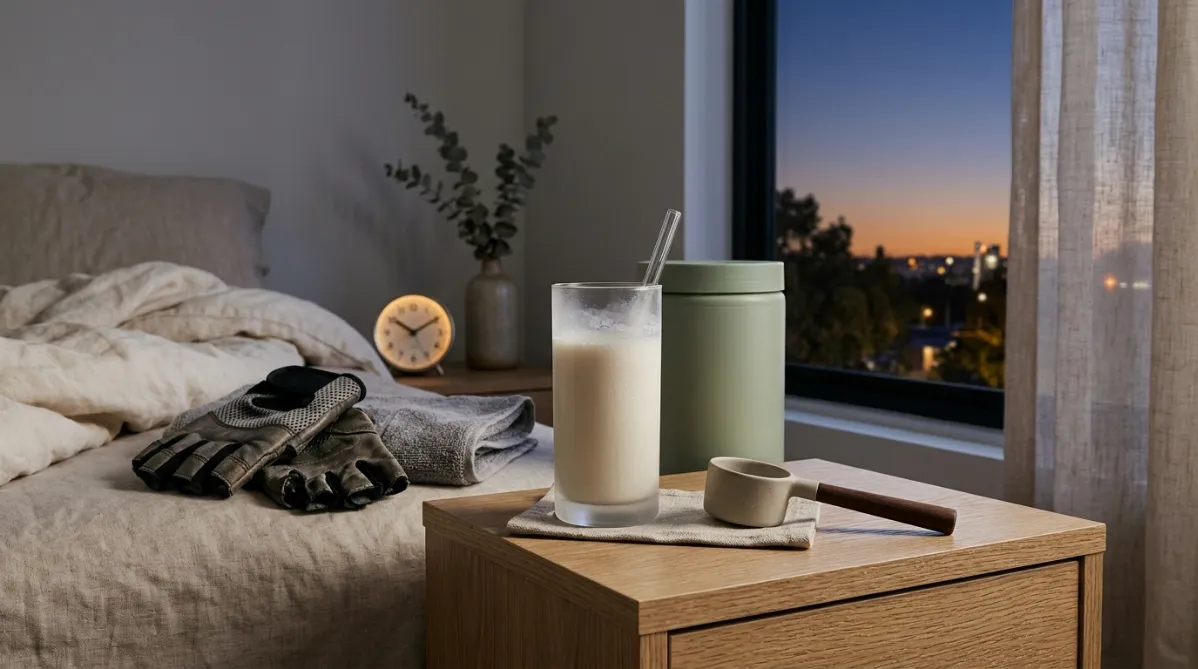
A quiet bedside scene at dusk, shot in soft natural light with a shallow depth of field. A tall frosted glass of creamy, pale-white shake sits on a light oak nightstand, with a thin film of condensation on the glass and a faint milky residue near the rim. Beside it, a matte ceramic scoop rests on a small linen coaster. A minimalist tub of unbranded protein powder in muted sage green sits slightly out of focus in the background.

To the left, a neatly made bed with oatmeal-colored linen sheets and a rumpled cream duvet. A pair of worn lifting gloves and a folded gray gym towel sit on the edge of the bed, suggesting an evening workout just finished. A small analog alarm clock reads about 10:30 PM, its soft face glowing faintly. A sprig of dried eucalyptus in a small stoneware bud vase adds an organic touch.

Through a large window on the right, deep indigo twilight fades into a warm amber horizon, and the last light spills across the wall in long, gentle gradients. A sheer curtain moves slightly. The palette is warm neutrals (cream, oak, sand, soft terracotta) with a few muted blue-violet accents from the evening sky.

The composition uses the rule of thirds, with the glass at the left-center foreground and generous negative space on the right, where headline text could sit. The mood is calm, restorative, and editorial, like a modern wellness and nutrition journal. The lighting is gentle and diffused, with subtle film grain and slightly lifted shadows. The textures of linen, wood, glass, and ceramic are crisp. The image is clean and uncluttered, with no text, logos, or people, and no futuristic or sci-fi elements.
Nutrition

O shake de 40 g antes de dormir: o que a caseína pré‑sono faz durante a noite

Dr. Gymbro · · 4 min read

Descoberta: seu corpo continua trabalhando enquanto você dorme

Treinar à noite levanta uma questão incômoda: o que acontece com a recuperação nas aproximadamente oito horas em que você não se alimenta? Um estudo de 2012, liderado por Res e colaboradores e publicado em Medicine & Science in Sports & Exercise, investigou essa hipótese. Dezesseis homens jovens e saudáveis treinaram à noite e, 30 minutos antes de ir para a cama, consumiram 40 g de caseína. A proteína foi digerida e absorvida durante o sono, a síntese proteica total aumentou e o balanço proteico líquido passou de negativo para positivo.

Trata‑se de um resultado claro e útil, mas merece uma leitura cuidadosa, pois o estudo pode ser facilmente supervalorizado.

Como o estudo foi conduzido

Todos os participantes realizaram uma única sessão de treinamento de resistência às 20h, após um dia de alimentação padronizada. Às 21h receberam uma refeição de recuperação contendo 20 g de proteína e 60 g de carboidrato. Em seguida, às 23h30, cerca de 30 minutos antes de dormir, ingeriram 40 g de caseína ou uma bebida placebo.

Os pesquisadores usaram caseína rotulada intrinsecamente, ou seja, a proteína continha um traçador ([1‑C]fenilalanina). Por meio de infusões contínuas de traçador intravenoso, coleta de sangue e biópsias musculares, puderam acompanhar o destino da proteína ao longo de 7,5 h de sono. Rastrear a digestão, absorção e turnover proteico dessa maneira é uma grande força do estudo e explica por que ele é tão citado.

Os números

Os principais resultados:

  • Digestão e absorção: a caseína foi efetivamente digerida e absorvida durante o sono. Os aminoácidos circulantes subiram rapidamente e permaneceram elevados durante o resto da noite.
  • Síntese proteica total: 311 ± 8 µmol/kg em 7,5 h com caseína, versus 246 ± 9 µmol/kg com placebo (P < 0,01).
  • Balanço proteico líquido: +61 ± 5 µmol/kg com caseína, versus –11 ± 6 µmol/kg com placebo (P < 0,01). Ou seja, a noite placebo foi levemente negativa, enquanto a noite da caseína foi claramente positiva.
  • Síntese proteica muscular: aproximadamente 22 % maior com caseína (0,059 %/h vs 0,048 %/h). Esse aumento atingiu apenas significância marginal (P = 0,05).

Os achados de síntese total são robustos. O resultado específico para o músculo é sugestivo, não definitivo, e deve ser apresentado assim.

Por que caseína?

A caseína forma um gel no estômago, retardando sua liberação e proporcionando um suprimento prolongado de aminoácidos. Esse perfil combina melhor com o jejum noturno do que uma proteína de digestão rápida, que gera um pico rápido que desaparece logo depois. O estudo reforça a ideia prática de que o sono não interrompe a digestão a ponto de desperdiçar a proteína; os aminoácidos chegam e permanecem disponíveis ao longo da noite.

Limitações honestas

  • Amostra pequena: 16 homens jovens e saudáveis. Os resultados podem não se aplicar diretamente a mulheres, idosos ou atletas com histórico de treinamento diferente.
  • Uma única noite: as medidas foram agudas. Um aumento de síntese em uma noite não garante hipertrofia maior ao longo de meses.
  • Desfechos substitutos: síntese e balanço proteico são marcadores mecânicos, não tamanho muscular ou força.
  • Resultado muscular marginal: o aumento de ~22 % na síntese muscular ficou exatamente no limiar de significância.
  • Contexto: os participantes já haviam consumido uma refeição de recuperação após o treino, de modo que o shake foi um acréscimo, não um substituto.

Ensaios mais longos investigaram se isso se traduz em crescimento, mas a principal contribuição deste estudo foi demonstrar a plausibilidade fisiológica: a proteína funciona durante a noite.

Aplicações práticas

Dose: o estudo utilizou 40 g de caseína. É uma porção considerável; ajuste de acordo com sua ingestão diária total, em vez de tratá‑la como um número mágico.

Opções alimentares: o pó de caseína é a maneira mais simples de reproduzir a dose. Queijo cottage e iogurte grego são alternativas integrais ricas em caseína. As porções variam, então verifique os rótulos para estimar a quantidade de proteína por porção.

Timing: o protocolo fez os participantes ingerirem a bebida cerca de 30 minutos antes de dormir, após uma refeição de recuperação mais cedo.

Quem se beneficia mais:

  • Levantadores que treinam à noite e enfrentam um longo intervalo até a próxima refeição.
  • Pessoas que têm dificuldade em alcançar a meta diária de proteína. Uma dose antes de dormir é um ponto fácil para acrescentar 30‑40 g.
  • Quem já consome proteína suficiente e dorme bem não deve esperar mudanças dramáticas. A ingestão diária total e o treinamento consistente permanecem como base.

Conclusão

O shake de 40 g antes de dormir é uma estratégia de baixo esforço, respaldada por evidências, para manter aminoácidos disponíveis durante o maior jejum do seu dia. Res e colegas mostraram que a caseína pré‑sono é digerida, absorvida e muda o balanço proteico noturno de ligeiramente negativo para claramente positivo. O que eles não demonstraram é um aumento garantido no crescimento muscular a longo prazo. Use‑o como uma ferramenta prática para preencher lacunas de proteína e apoiar a recuperação noturna, não como substituto de uma dieta equilibrada e de um treino sólido.
Original study

Read the original research on pubmed.ncbi.nlm.nih.gov →

This article summarizes published research for general information. It is not medical advice.

DG

Written by

Dr. Gymbro

Dr. Gymbro writes for Dr. Gymbro: science-backed fitness, nutrition & performance.

Related Articles

A softly lit bedside table in a calm, modern bedroom at dusk, photographed in wide landscape format with shallow depth of field. In the foreground, a matte white shaker bottle sits beside a tall frosted glass of creamy, pale vanilla-colored protein shake, with a few condensation droplets catching warm light. Next to the glass rests a slim fitness band on a dark charcoal fabric strap, its small LED glowing a gentle green, lying casually on a light oak wooden surface. A small scoop of fine white protein powder rests on a ceramic dish nearby, with a light dusting of powder on the wood.

In the soft-focus background, a neatly made bed with oatmeal-colored linen bedding and a textured knit throw blanket. A sheer curtain filters the last peach and lavender light of evening from a large window. A small potted olive branch in a terracotta vase and a closed paperback book add a quiet editorial touch. A bedside lamp with a warm, cream-colored shade casts a golden glow across the scene and creates gentle highlights on the glass.

The palette is muted and harmonious: warm cream, soft sand, oatmeal beige, faint sage green accents, and touches of dusty lavender in the window light. The mood is peaceful, reassuring, and clean, like a contemporary wellness magazine or a trendy health journal feature. Lighting is natural and cinematic, with soft shadows and a subtle film-like grain. The composition follows the rule of thirds, with the shake and band on the left third and open negative space on the right for headline overlay. Minimalist, Scandinavian-inspired styling, high-end lifestyle photography, crisp details, and a tranquil, premium editorial feel.
recovery

Caseína antes de dormir não prejudica o sono, dados da WHOOP mostram

BY DR. GYMBRO ·

Já ouviu dizer que um shake de proteína pesado antes de deitar atrapalha o sono e impede a recuperação? Um estudo randomizado com 21 atletas universitárias de alto nível, monitoradas por pulseiras WHOOP 4.0, não encontrou efeitos negativos na duração, eficiência, frequência cardíaca de repouso ou HRV. Alfa‑lactalbumina e carboidrato apresentaram resultados equivalentes, mas nenhum dos suplementos melhorou o sono. Confira o que os dados revelam, as limitações do estudo e quem ainda deve evitar o shake noturno.

A wide, editorial-style still life photographed on a pale limestone countertop in soft morning window light. At the center sits a matte white scoop of fine white powder resting beside a frosted glass tumbler of cloudy, pale pink-orange water, with a few watermelon slices and a halved wedge showing glossy coral flesh and thin green rind, a nod to citrulline's natural source. To the left, a neatly folded charcoal gym towel and a brushed steel dumbbell rest at the edge of the frame, slightly out of focus. To the right, a minimalist open notebook with a few hand-drawn tally marks and a simple line graph sketched in black ink rises toward the right edge, next to a slim mechanical pencil and a small analog stopwatch with a clean white face. A few loose grains of powder are scattered across the stone, catching the light. Soft diagonal shadows fall across the surface from a nearby window, and a gentle sage-green wall in the background adds calm contrast. The palette is warm cream, watermelon coral, sage green, and soft graphite gray, with plenty of negative space on the upper left for headline overlay. Shallow depth of field, crisp focus on the powder scoop and watermelon, subtle film grain, natural tones, and a clean, modern wellness-journal aesthetic. Shot at eye level with a slight downward angle, like a contemporary health and science magazine cover. No text, no logos, no people.
nutrition

8 g de Citrulina Malato = 53 % Mais Repetições e 40 % Menos Dor Muscular? O Que o Estudo Revela

BY DR. GYMBRO ·

Um ensaio cruzado de 2010 constatou que 8 g de citrulina malato foram associados a cerca de 53 % a mais de repetições no supino na última série avaliada e aproximadamente 40 % menos de dor muscular 24 h e 48 h depois. O detalhe importante é que o maior ganho de repetições apareceu apenas nas fases finais da sessão, quando a fadiga já estava instalada. A seguir, explicamos o que realmente foi testado, como usar a dose e o timing de forma sensata, quem pode se beneficiar e por que a taxa de 14,63 % de desconforto gastrointestinal e as limitações do estudo merecem atenção.

A wide editorial still life on a pale, warm-gray stone surface lit by soft morning window light from the left. In the foreground, a rustic ceramic bowl in matte oatmeal glaze holds dried ashwagandha roots, pale tan and gnarled, with a few scattered beside it. A small wooden scoop dusted with fine golden-beige powder rests next to the bowl. Behind them, a few olive-green ashwagandha sprigs with small orange-red berries in papery husks arc across the frame, adding a quiet pop of color.

Midground right: a matte black chalk-dusted dumbbell handle and a single brushed-steel weight plate lean casually against a linen-textured backdrop in muted sage. A folded cream cotton towel and a slim notebook with a pencil suggest a training log. The notebook is open to blank, softly lined pages with no legible text.

The background fades into a gentle blur of neutral beige and soft terracotta tones, with a hint of a plant shadow cast across the wall in dappled light. Fine dust and powder particles float in the light beams, giving a tactile, organic feel.

The composition follows the rule of thirds: botanical elements on the left and center, gym elements on the right, and negative space in the upper right for headline overlay. Shallow depth of field, crisp focus on the roots and powder, creamy bokeh behind. Color palette: sage green, warm sand, terracotta, charcoal black, and a touch of burnt orange. The mood is calm, modern, and trustworthy, like a premium wellness and science magazine. Photographed on a 50mm lens, natural grain, subtle film-like contrast, clean minimalist styling, high-end editorial photography.
nutrition

A Erva Milenar que Superou o Placebo em um Estudo de 8 Semanas: Força, Massa Muscular e Testosterona

BY DR. GYMBRO ·

Será que uma raiz ayurvédica de séculos atrás realmente supera um placebo? Em um ensaio randomizado de 8 semanas com 57 iniciantes em musculação, os homens que tomaram 300 mg de extrato de ashwagandha duas vezes ao dia ganharam mais força no supino, maior volume nos braços e no peito e apresentaram um aumento mais acentuado de testosterona que o grupo placebo. Eles também perderam mais gordura corporal. O problema é que o estudo foi pequeno, curto e limitado a homens iniciantes. Veja o que os dados revelam, como foi a dosagem, quem pode se beneficiar e por que é preciso manter o ceticismo.

A wide, editorial flat-lay photograph shot from directly above on a pale warm-gray stone countertop, lit by soft natural morning window light with gentle diagonal shadows. On the left, a neatly arranged cluster of whole-food protein sources: two seared chicken breast slices with a golden crust, a small ceramic bowl of creamy Greek yogurt topped with blueberries, three halved soft-boiled eggs with jammy orange yolks, a handful of raw almonds, and a small pile of dried lentils scattered on a linen napkin. At the center, a matte white shaker bottle and a wooden scoop resting in a pile of fine vanilla-colored protein powder, a few grains dusted artfully across the surface. On the right, a minimalist kitchen scale in matte black displaying a portion of food, next to an open notebook with a hand-drawn curve that rises steeply and then flattens into a plateau, drawn in a deep terracotta ink pen, with a small dot marking the bend. A brass pen lies beside the notebook. A single dumbbell with a brushed steel finish sits partially in frame at the upper right corner, grounding the fitness theme without feeling gym-like. Color palette: warm cream, sage green, terracotta, soft charcoal, and butter yellow accents, with generous negative space along the top edge for title overlay. Shallow depth of field, crisp textures, subtle film grain, modern lifestyle magazine aesthetic, clean and calm composition, 16:9 landscape.
nutrition

Quanto proteína realmente maximiza o músculo? O platô de 1,6 g/kg explicado

BY DR. GYMBRO ·

Acha que precisa de mais de 2 g de proteína por quilograma para ganhar músculo? Uma meta‑análise de 49 ensaios com 1.863 adultos mostrou que o benefício estabiliza por volta de 1,6 g/kg/dia, com o limite superior da confiança em torno de 2,2 g/kg. Levantadores experientes obtiveram os maiores ganhos com a suplementação, enquanto o efeito diminuía com a idade. Veja como esses números se traduzem no seu prato, no seu copo de shake e no seu bolso.

This page is available in