Dr. Gymbro
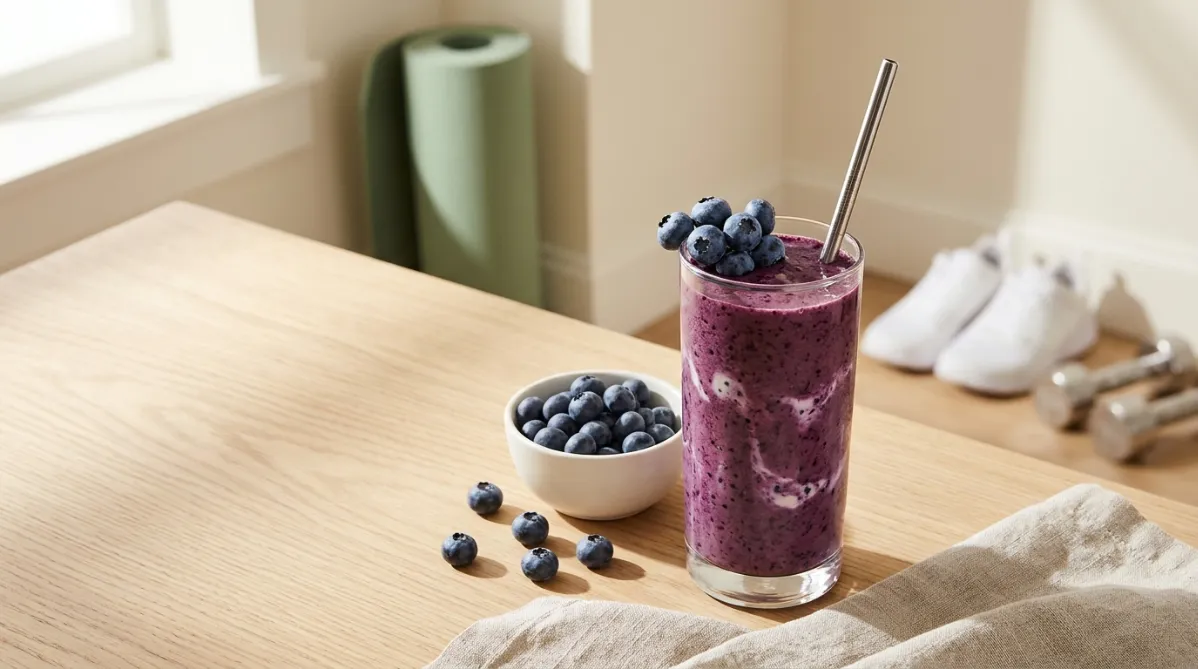
A bright, airy editorial photograph shot from above at a slight angle, showing a tall clear glass of deep violet blueberry smoothie on a pale oak wooden table. The smoothie has a creamy, velvety texture with a few lighter swirls, and a small cluster of fresh blueberries with dusty blue skins rests on the rim of the glass. A matte white ceramic bowl of whole blueberries sits to the left, with a few berries scattered naturally across the tabletop. A folded linen napkin in soft oatmeal tones and a stainless steel straw add subtle texture.

In the softly blurred background, a rolled-up sage green yoga mat leans against a light wall next to a pair of clean white running shoes and a small pair of brushed-metal dumbbells. A sliver of warm morning sunlight enters from the left window, casting gentle diagonal shadows and a golden glow across the table, with soft highlights on the glass and the berries' surface bloom.

The color palette is fresh and modern: deep indigo and violet from the smoothie, balanced by cream, warm beige, soft sage green, and touches of white. The composition follows the rule of thirds, with the glass placed on the right third and generous negative space on the left, suitable for headline overlay. Shallow depth of field, crisp focus on the glass and berries, creamy bokeh in the background. The mood is calm, healthy, and aspirational, like a contemporary wellness magazine or a trendy health journal website. Natural, realistic, high-end food and lifestyle photography style, 16:9 landscape format, clean and uncluttered.
Nutrition

Smoothie de mirtilo ajuda pernas doloridas a recuperar a força mais rápido

Dr. Gymbro · · 4 min read

Você conhece a sensação: dois dias depois de um treino de pernas brutal, subir escadas vira uma negociação. O músculo que deveria estar forte parece fraco, e o próximo treino acaba sendo adiado. Um pequeno experimento na Nova‑Zelândia testou uma solução simples baseada em alimentos — um smoothie de mirtilo — e constatou que ele acelerou a recuperação de uma medida‑chave de força. O efeito é real, porém modesto, e os detalhes são importantes.

O Estudo em Resumo

A pesquisa, publicada no Journal of the International Society of Sports Nutrition em 2012, foi realizada pela Massey University e pelo New Zealand Institute for Plant and Food Research. O desenho do estudo foi o seguinte:

  • Desenho: crossover randomizado. Cada participante passou por ambas as condições, o que torna a comparação mais rigorosa que um ensaio típico de dois grupos.
  • Participantes: 10 mulheres.
  • Protocolo de dano: 300 contrações excêntricas intensas do quadríceps, fase de descida de um levantamento, conhecida por causar dor e fraqueza temporárias.
  • Intervenção: um smoothie preparado com mirtilos da Nova‑Zelândia versus um smoothie placebo com capacidade antioxidante semelhante.
  • Temporização: doses 5 h e 10 h antes do exercício, imediatamente após, e novamente 12 h e 36 h depois.
  • Monitoramento: torque do joelho (concêntrico, isométrico e excêntrico) e marcadores sanguíneos de estresse oxidativo, capacidade antioxidante e inflamação ao longo de 60 h de recuperação.

O resumo não indica a quantidade exata de mirtilos em cada porção, portanto não há um número de gramas verificado para citar.

Principal Resultado: Força Isométrica Recuperou Mais Rápido

O protocolo de dano funcionou. Doze horas após o exercício, o torque isométrico, concêntrico e excêntrico diminuíram significativamente (p < 0,001) em ambas as condições. Todos ficaram mais fracos, e o smoothie não impediu essa perda.

A diferença apareceu na fase de recuperação. Durante o período de 60 h, a tensão isométrica máxima mostrou um efeito de interação significativo (p = 0,047), indicando que a força voltou a subir mais rápido após o smoothie de mirtilo do que após o placebo. A força concêntrica e excêntrica seguiu tendência semelhante, mas o resumo as descreve apenas como tendência, não como resultado significativo.

Portanto, apenas um desfecho ultrapassou o limiar de significância, e por pouco. É um sinal encorajador, não uma certeza.

Por Que o Detalhe do Placebo é Importante

Muitos estudos com frutas deixam uma dúvida: o benefício vem da fruta em si ou apenas de seus antioxidantes? Neste caso, o smoothie placebo foi pareado em capacidade antioxidante, de modo que a vantagem do mirtilo não pode ser explicada apenas por uma "contagem de antioxidantes".

Os autores chegaram à mesma conclusão. Eles argumentam que o efeito foi independente da capacidade antioxidante intrínseca da bebida. A explicação proposta é que os mirtilos, combinados com o estímulo excêntrico, parecem amplificar processos adaptativos, particularmente os sistemas antioxidantes endógenos do corpo. Essa é uma hipótese baseada nos dados, não um mecanismo comprovado.

O Que os Marcadores Sanguíneos Revelaram

Ambos os grupos apresentaram elevações nos biomarcadores de estresse oxidativo e inflamação após o exercício danoso, como era esperado. O grupo do mirtilo reduziu o estresse oxidativo mais rapidamente, mas essa diferença só se tornou significativa 36 h pós‑exercício. Esse momento coincidiu com um aumento gradual na capacidade antioxidante plasmática.

A inflamação contou outra história. Os biomarcadores ainda estavam elevados aos 60 h de recuperação, sugerindo que o smoothie não abortou a inflamação nesse intervalo. O ganho de força pareceu surgir sem um efeito anti‑inflamatório claro.

O Que Isso Significa Para Você

Trata‑se de um único ensaio pequeno, então encare estas informações como ideias práticas, não como prescrições.

  • Temporização: o protocolo usou várias doses distribuídas ao redor da sessão: 10 h e 5 h antes, imediatamente após, e depois 12 h e 36 h. Se quiser reproduzir, o raciocínio é "cobrir" um dia de pernas duras, não apenas tomar um smoothie depois.
  • Dose: o resumo não especifica a quantidade de mirtilos, portanto não há uma dose baseada em evidência a citar. Uma abordagem sensata é preparar um smoothie padrão com mirtilos frescos ou congelados.
  • Casos de uso ideais: sessões com grande carga excêntrica – como descidas de corrida, agachamentos e avanços pesados, ou o retorno após um período de pausa – são onde a evidência se aplica.
  • Para quem é: praticantes recreacionais e atletas treinados que desejam estar prontos para a próxima sessão mais cedo e não se importam de usar uma estratégia baseada em alimentos.
  • Quem pode pular:
    • Pessoas que controlam glicemia ou calorias e precisariam contar o smoothie como fruta.
    • Quem tem alergia ou intolerância a frutas.
    • Quem busca garantia total de resultado. Apenas um desfecho ficou significativo em 10 mulheres, portanto não é um fato certo.

Advertências a Considerar

  • Amostra diminuta: 10 mulheres. Os achados podem não se aplicar a homens ou a outras populações.
  • Um efeito significativo: pico de torque isométrico (p = 0,047). Força concêntrica e excêntrica mostraram apenas tendência.
  • Janela curta: 60 h de recuperação, sem dados sobre adaptações a longo prazo.
  • Dose não especificada: o resumo não indica a quantidade de mirtilos.
  • Não é cura para dor muscular: o torque diminuiu significativamente em ambos os grupos, e a inflamação permaneceu elevada.

Conclusão

Um smoothie de mirtilo, consumido ao redor de uma sessão excêntrica castigadora, ajudou essas 10 mulheres a recuperar a força isométrica das pernas mais rápido que um placebo com capacidade antioxidante semelhante. O efeito foi modesto e estatisticamente marginal, e o mecanismo ainda é hipotético. Se você já planeja um bloco de pernas pesado, acrescentar mirtilos ao redor do treino é um experimento de baixo risco. Só não espere um milagre só com a fruta.
Original study

Read the original research on pubmed.ncbi.nlm.nih.gov →

This article summarizes published research for general information. It is not medical advice.

DG

Written by

Dr. Gymbro

Dr. Gymbro writes for Dr. Gymbro: science-backed fitness, nutrition & performance.

Related Articles

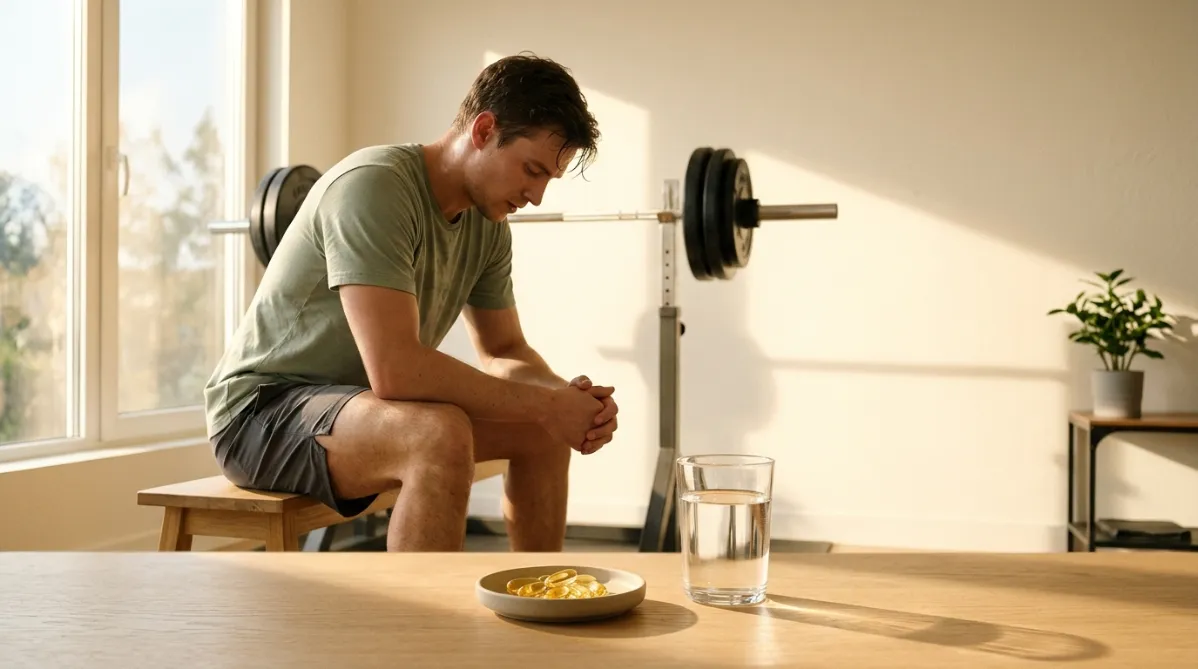
A sunlit, minimalist home gym corner photographed in soft golden morning light, with a young athletic man seated on a wooden bench, leaning forward with his elbows resting on his knees, catching his breath after a hard leg session. He wears a muted sage-green t-shirt and charcoal shorts, his face turned slightly away from the camera, calm and focused. A matte ceramic dish in the foreground holds a few small, translucent golden softgel capsules, with a glass of water beside it catching the light and casting a soft caustic shadow across a pale oak floor. Behind him, a loaded barbell rests on a squat rack, slightly out of focus, and a tall window pours warm sunlight diagonally across the scene, creating long gentle shadows and a hazy glow. A small potted green plant sits on a shelf at the edge of the frame. The color palette is warm and editorial: cream, soft gold, sage green, pale wood, and charcoal accents. Shallow depth of field, with crisp focus on the capsules and glass in the lower third and a creamy bokeh background. The composition leaves generous negative space on the right side for a headline overlay. The mood is clean, modern, and aspirational, like a high-end wellness magazine or a trendy health journal feature. Shot on a 50mm lens, natural light, fine film grain, subtle matte finish, landscape 16:9 framing.
recovery

Vitamina D acelera a recuperação de força em homens que não eram deficientes

BY DR. GYMBRO ·

Homens com níveis perfeitamente normais de vitamina D ainda recuperaram a força mais rapidamente após um treino de pernas intenso ao tomarem 4.000 UI por dia. Em um ensaio randomizado, controlado por placebo, com 28 homens ativos, a força isométrica máxima retornou cerca de 8 % melhor em 24 h. Os marcadores de dano muscular ALT e AST também aumentaram menos. Contudo, a dor muscular não melhorou. Veja o que o estudo encontrou, suas limitações e quem realmente pode se interessar.

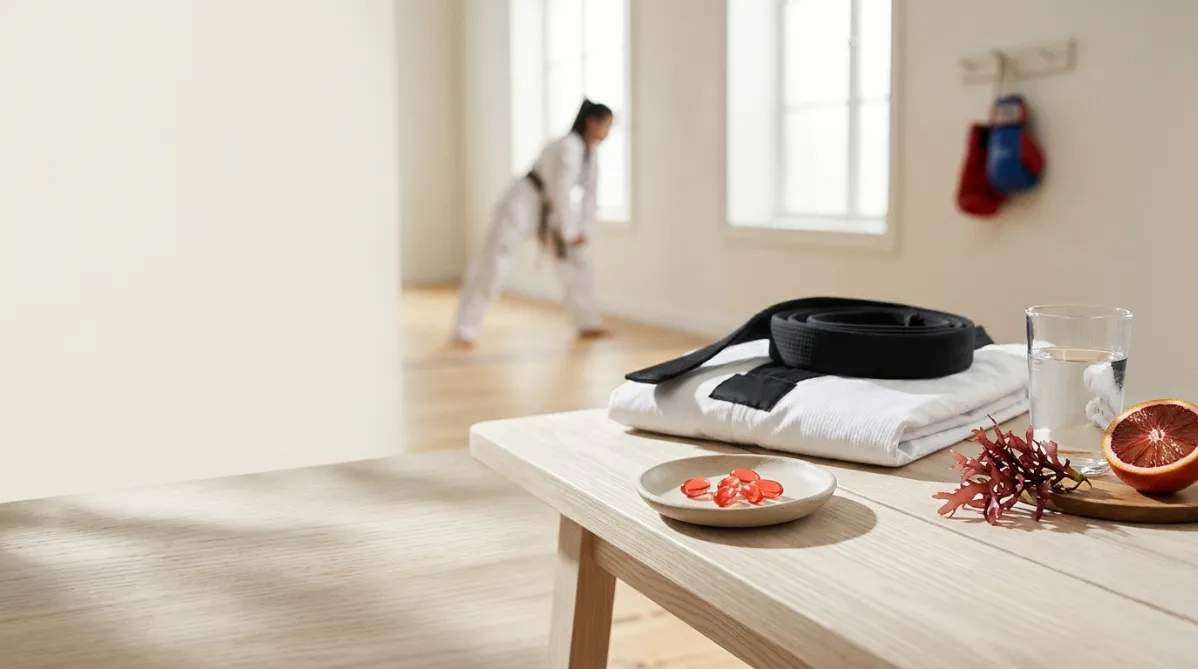
A wide editorial still life shot from a slightly elevated angle on a pale ash-wood bench in a bright, airy training hall. In the center sits a small matte ceramic dish holding a few translucent coral-red softgel capsules, their glossy surfaces catching soft window light. Beside the dish rests a folded white taekwondo dobok with a black belt loosely coiled on top. A sprig of fresh red microalgae-toned seaweed and a halved blood orange add natural color accents. A clean glass of water with subtle condensation stands to one side.

In the softly blurred background, the silhouette of a martial artist in a white uniform stretches near tall windows, with diffused morning light streaming across a sprung wooden floor. A pair of red and blue sparring gloves hangs on a minimal wall hook. Thin, elegant shadows stretch across the bench.

The palette is restrained and modern: warm off-white, soft sand, muted charcoal, with a vivid coral-red accent pulled from the capsules. Shallow depth of field, crisp focus on the capsules and dish, creamy bokeh behind. Natural, gentle lighting with a subtle film-like grain, reminiscent of a contemporary wellness and science magazine cover. Generous negative space on the left third of the frame for headline text. Calm, precise, and quietly athletic in mood, with no text, logos, or futuristic elements.
science research

12 mg de Astaxantina por 28 dias: danos musculares e burnout em lutadores

BY DR. GYMBRO ·

Um ensaio randomizado recente avaliou 12 mg diários de astaxantina em jovens atletas masculinos de taekwondo. Após 28 dias, o grupo suplementado apresentou uma trajetória de creatina quinase (CK) significativamente distinta da do placebo, além de níveis mais elevados de superóxido dismutase (SOD) e indícios exploratórios de menor malondialdeído (MDA) e de exaustão física e emocional. Contudo, os achados sobre burnout foram preliminares, sem interação grupo × tempo em nenhuma subescala. O estudo foi pequeno, focado em biomarcadores e não em desempenho. Confira o que os dados revelam, o que ainda resta incerto e quem pode se interessar.

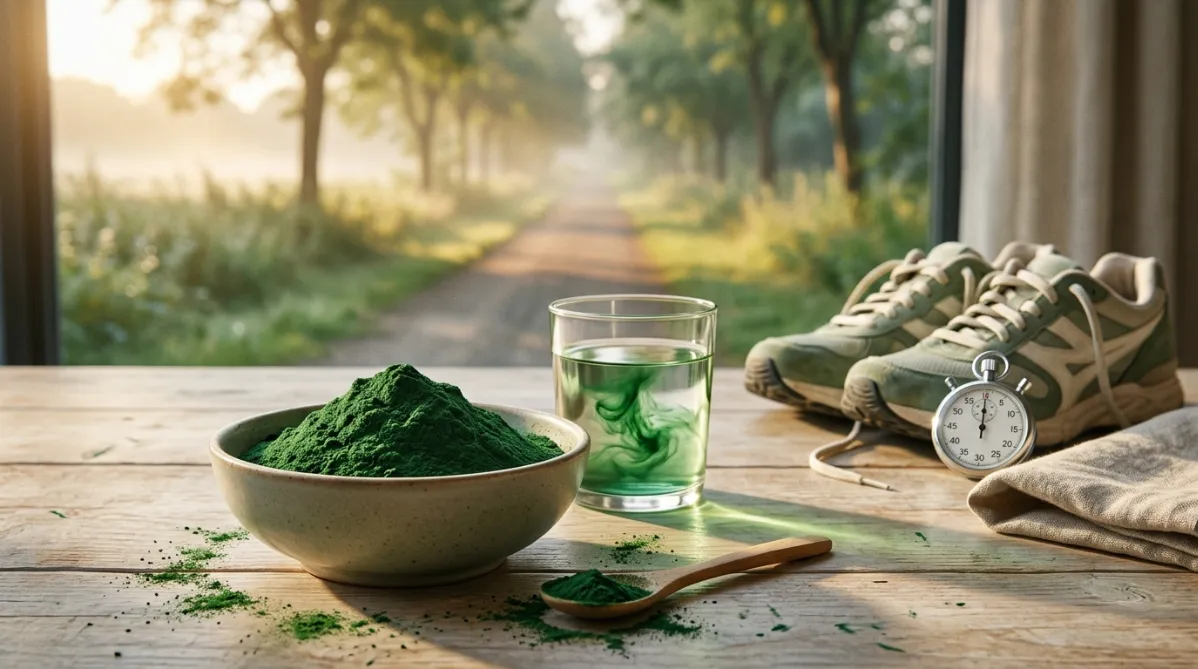
A wide, landscape editorial photograph with soft natural morning light. In the foreground, a rustic matte ceramic bowl rests on a pale oak wooden table, filled with vivid deep-green spirulina powder heaped in a gentle mound. A small wooden spoon dusted with the powder lies beside it, and a few scattered green flecks dust the surface. Next to the bowl sits a clear glass of water with a swirl of emerald green just blending in, catching sunlight and casting soft green-tinted shadows.

In the middle ground, slightly out of focus, a pair of worn running shoes in muted sage and cream tones sits on the edge of the table, laces loosely undone. A simple analog stopwatch with a clean white face lies beside them, its hands frozen at a moment suggesting a close finish. A folded linen towel in warm oatmeal tone drapes casually nearby.

The background is a softly blurred outdoor setting seen through a large window: a quiet tree-lined running path at dawn, with golden-hazy light, dewy greenery, and a faint mist. The color palette is calm and modern: deep emerald, sage, cream, warm wood, and touches of soft gold. The composition leaves generous negative space on the right side for headline text, with a shallow depth of field, crisp detail on the powder texture, and a clean, minimalist, lifestyle-magazine aesthetic. Subtle film-like grain, natural shadows, and a fresh, healthy, energetic mood. No people, no text, no logos.
nutrition

Spirulina ajudou corredores a durar 32 % mais tempo — o detalhe

BY DR. GYMBRO ·

Corredores que usaram spirulina por quatro semanas conseguiram aguentar cerca de 32 % a mais em um esforço máximo após uma corrida exaustiva de duas horas. O mesmo estudo registrou um aumento de 10,9 % na oxidação de gordura e níveis mais elevados do antioxidante glutationa. Mas antes de encher o carrinho, há um detalhe: apenas nove homens participaram e o ganho real foi de cerca de 39 segundos. Veja o que a pesquisa revelou, por que pode funcionar e como testar com segurança.

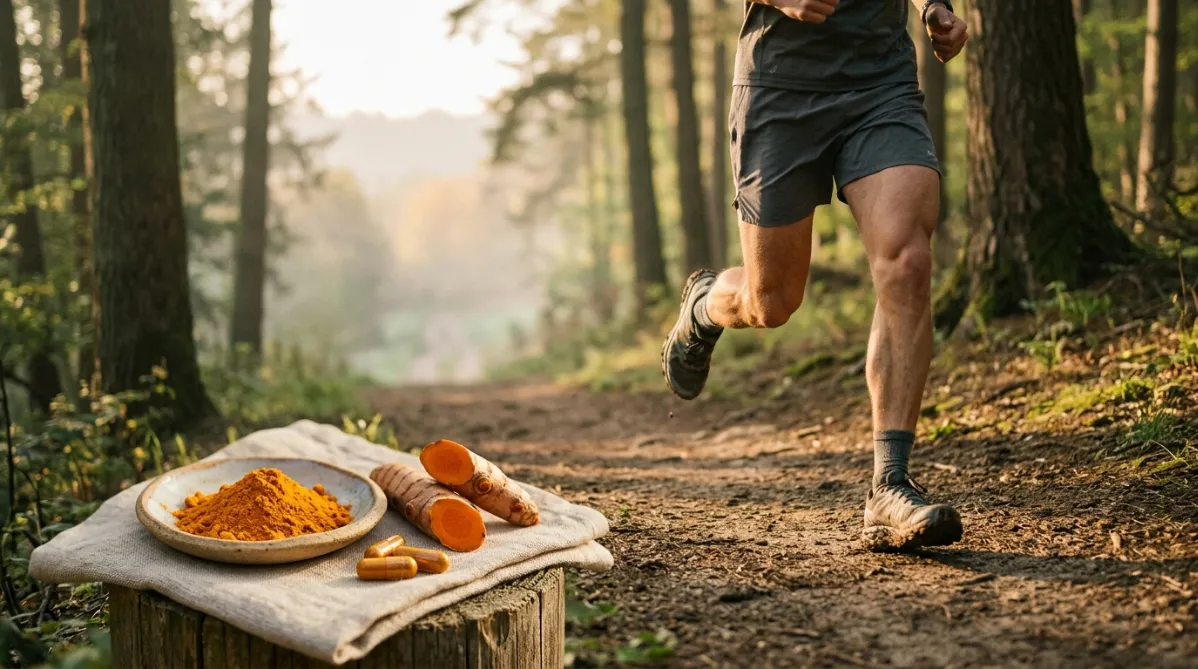
A wide, editorial-style photograph of a male runner mid-stride on a gently sloping forest trail at early morning, shot from a low three-quarter angle. Soft golden light filters through tall trees and casts long dappled shadows across the packed dirt path. The runner is captured from the waist down and slightly from the side, wearing charcoal running shorts and worn trail shoes, with the quadriceps and thigh muscles defined and naturally lit. A fine mist hangs in the background, and the slope descends toward a blurred, softly glowing horizon.

In the foreground, slightly out of focus on a weathered wooden post or flat mossy stone at the trail's edge, rests a small ceramic dish holding a pile of vivid golden-orange turmeric powder. Beside it sit two fresh turmeric roots, one cut open to show a deep saffron interior, and a few amber capsules. A thin linen cloth is draped beneath them. The saturated yellow-orange of the turmeric contrasts with the cool green and muted brown tones of the forest, creating a strong color anchor on the left third of the frame.

The composition follows the rule of thirds, with the turmeric in the lower left foreground and the runner in the right two-thirds, leaving open negative space in the upper left for headline text. Shallow depth of field, creamy bokeh, and natural film-like grain give it a refined, modern health-and-science magazine feel. The palette is warm and earthy: golden amber, moss green, soft cream, and deep umber. The lighting is natural and gentle, with subtle rim light on the runner's calves and hamstrings. No text, no logos, no graphics, and no futuristic elements. The result should feel clean, calm, and aspirational, like a cover image for a premium wellness and sports-nutrition journal.
recovery

Curcumina Meriva Reduz Danos Musculares Visíveis por RM após Corrida em Descida

BY DR. GYMBRO ·

Um pequeno ensaio randomizado de 2014 mostrou que a curcumina Meriva – forma baseada em lecitina produzida pela Indena – reduziu lesões musculares de coxa visíveis por RM após uma corrida em descida. Vinte homens tomaram 1 g duas vezes ao dia, começando 48 h antes do teste e continuando 24 h depois. A diferença nas imagens foi marcante, embora o benefício na dor tenha sido significativo apenas nas partes anteriores das coxas. Marcadores de estresse oxidativo e histologia muscular não apresentaram diferenças. A seguir, a dose, o timing, os cuidados com a indústria e o que os dados podem – e não podem – nos dizer.

This page is available in