Dr. Gymbro
A wide, editorial-style still life photographed on a pale warm-gray concrete surface in soft, diffused morning window light. On the left side, a tall clear glass filled with deep magenta-crimson beetroot juice sits beside two halved raw beetroots, their concentric rings of vivid fuchsia and purple clearly visible, with a few small green-and-red-veined leaves draped casually nearby. On the right side, a matching clear glass of cloudy white creatine solution rests next to a small matte ceramic bowl heaped with fine white powder and a minimal wooden scoop, a light dusting of powder scattered across the surface. In the center, between the two sides, a simple matte black barbell grip and a single chalk-dusted weight plate edge rise into the frame at a low angle, hinting at lifting without showing a person. The composition is split in a balanced, symmetrical way, with a subtle vertical shadow line dividing the saturated magenta tones on the left from cool, neutral whites and creams on the right. The background is softly blurred with a muted sage-green and oatmeal-toned wall, with plenty of negative space at the top for a headline overlay. Shallow depth of field, crisp focus on the glasses' condensation droplets and the textured beetroot flesh. The color palette is limited and refined: magenta, cream, charcoal, and soft sage. The mood is clean, modern, and health-journal chic, like a contemporary wellness magazine cover, with natural shadows, a tactile matte finish, and subtle film-like grain. No text, no logos, no futuristic elements.
Nutrition

Suco de Beterraba vs. Creatina: Quem Vence no Levantamento em 72 horas?

Dr. Gymbro · · 4 min read

Um ensaio de confronto direto comparou dois suplementos populares ao longo de um período muito curto. O estudo, conduzido por Ammar e colaboradores e publicado no International Journal of Food Sciences and Nutrition (2026), avaliou creatina (CR), suco de beterraba (BJ) e placebo (PLA) em relação à capacidade de resistência, desempenho e respostas fisiológicas durante aproximadamente 72 h de suplementação. A resposta à pergunta "qual vence" depende do que se mede.

Como o estudo foi conduzido

Trata‑se de um ensaio randomizado controlado cruzado. Onze homens iniciantes em treinamento de força realizaram séries de supino e agachamento com carga entre 60 % e 80 % da carga máxima (1RM) nas três condições: creatina, suco de beterraba e placebo. Como cada participante atuou como seu próprio controle, as diferenças entre condições são menos propensas a refletir variáveis individuais.

Os pesquisadores acompanharam os seguintes desfechos:

  • Número de repetições
  • Velocidade de movimento
  • Saturação de oxigênio muscular (SmO₂)
  • Frequência cardíaca máxima
  • Variabilidade da frequência cardíaca (HRV), indicativo de recuperação autonômica
  • Prevalência de respostas individuais relevantes ("modulação")

Onde a creatina venceu

A vantagem clara da creatina foi no output mecânico que mais interessa aos levantadores. Ela aumentou significativamente o número de repetições no supino a 80 % de 1RM em comparação ao placebo (d = 1,33, efeito grande). O resumo menciona esse benefício de repetições apenas para a creatina. Os autores concluíram que a creatina "potencializou preferencialmente o desempenho mecânico".

Isso está alinhado ao papel bem estabelecido da creatina no apoio à produção de energia baseada em fosfocreatina para esforços curtos e de alta intensidade. Séries pesadas próximas da falha são onde esse sistema é mais exigido.

Onde o suco de beterraba venceu

O suco de beterraba se sobressaiu nas demais categorias, segundo o resumo:

  • Velocidade: Ambos os suplementos produziram efeitos de moderado a muito grande na velocidade de movimento, mas o BJ foi superior (d = 1,40‑2,82 vs. placebo).
  • Oxigenação muscular: O BJ elevou o SmO₂ (d = 1,74‑2,90) em relação ao placebo e à creatina.
  • Estresse cardiovascular: O BJ reduziu a frequência cardíaca máxima (d = 0,83‑2,74) comparado ao placebo e à creatina.
  • Recuperação autonômica: O BJ favoreceu a HRV, por exemplo o RMSSD (d = 0,91‑2,99), em relação ao placebo e à creatina.
  • Respostas individuais: A análise de modulação mostrou uma proporção maior de adaptações individuais significativas com o BJ do que com a CR.

Os autores resumem que o BJ oferece "benefícios cardiometabólicos e autonômicos mais amplos". Essa constatação é coerente com o teor de nitrato da beterraba, que costuma estar ligado à via do óxido nítrico, fluxo sanguíneo e utilização de oxigênio. O resumo não testou diretamente esse mecanismo, portanto deve ser visto como contexto e não como achado definitivo.

Placar

Desfecho Resultado segundo o resumo
Repetições no supino a 80 % 1RM Creatina superou o placebo (d = 1,33)
Velocidade Ambas superaram o placebo; beterraba foi mais forte
Saturação de oxigênio muscular Beterraba superou placebo e creatina
Frequência cardíaca máxima Beterraba menor que placebo e creatina
HRV / recuperação autonômica Beterraba melhor que placebo e creatina
Respostas individuais significativas Beterraba superou creatina

O suco de beterraba não "perdeu" nenhuma dessas categorias para a creatina. Contudo, a creatina foi a única a melhorar as repetições, e a capacidade de repetições é a medida mais direta de volume de treino.

Doses e timing: o que podemos e não podemos dizer

O resumo confirma um período de suplementação de cerca de 72 h e testes em 60‑80 % 1RM no supino e no agachamento. Não são informadas as doses, o número de porções diárias nem o intervalo entre a ingestão e a sessão de treino. Consulte o texto completo antes de reproduzir o protocolo.

Para contextualizar, a literatura mais ampla costuma recomendar 3‑5 g de creatina monoidratada por dia. Protocolos com beterraba costumam fornecer vários milimoles de nitrato, ingeridos algumas horas antes do exercício. O teor de nitrato dos produtos varia bastante, portanto a leitura do rótulo é essencial.

Quem deve escolher qual?

  • Busca de performance em repetições de séries pesadas: A creatina possui a evidência mais direta, já que foi a única a melhorar as repetições no supino a 80 % 1RM.
  • Objetivo de maior velocidade de barra, menor esforço cardiovascular ou melhores marcadores de recuperação: O suco de beterraba se mostrou superior nesses aspectos.
  • Sessões de alto volume ou alta demanda metabólica: O perfil de oxigenação e de frequência cardíaca da beterraba pode ser vantajoso, embora o estudo não tenha testado isso diretamente.
  • Indeciso: O estudo comparou os suplementos isoladamente, não em combinação, portanto não há evidência de que a associação traga benefícios adicionais.

Limitações

A amostra incluiu apenas 11 homens treinados de forma iniciante, o que limita a generalização para mulheres, levantadores avançados ou idosos. Em ensaios cruzados pequenos, os tamanhos de efeito podem parecer exagerados e tendem a diminuir em amostras maiores. A janela de 72 h também não informa sobre efeitos a longo prazo em força ou hipertrofia. A creatina costuma ser estudada ao longo de semanas e é mais conhecida por aumentar os estoques musculares, de modo que um recorte de três dias pode não captar todo o seu potencial.

Conclusão

Neste ensaio breve, a creatina venceu no número que preenche um diário de treino: repetições no supino a 80 % 1RM. O suco de beterraba venceu na velocidade de movimento e nos marcadores fisiológicos ao redor do levantamento. Escolha o suplemento de acordo com seu objetivo e confirme as dosagens no artigo completo antes de colocar qualquer um em prática.
Original study

Read the original research on pubmed.ncbi.nlm.nih.gov →

This article summarizes published research for general information. It is not medical advice.

DG

Written by

Dr. Gymbro

Dr. Gymbro writes for Dr. Gymbro: science-backed fitness, nutrition & performance.

Related Articles

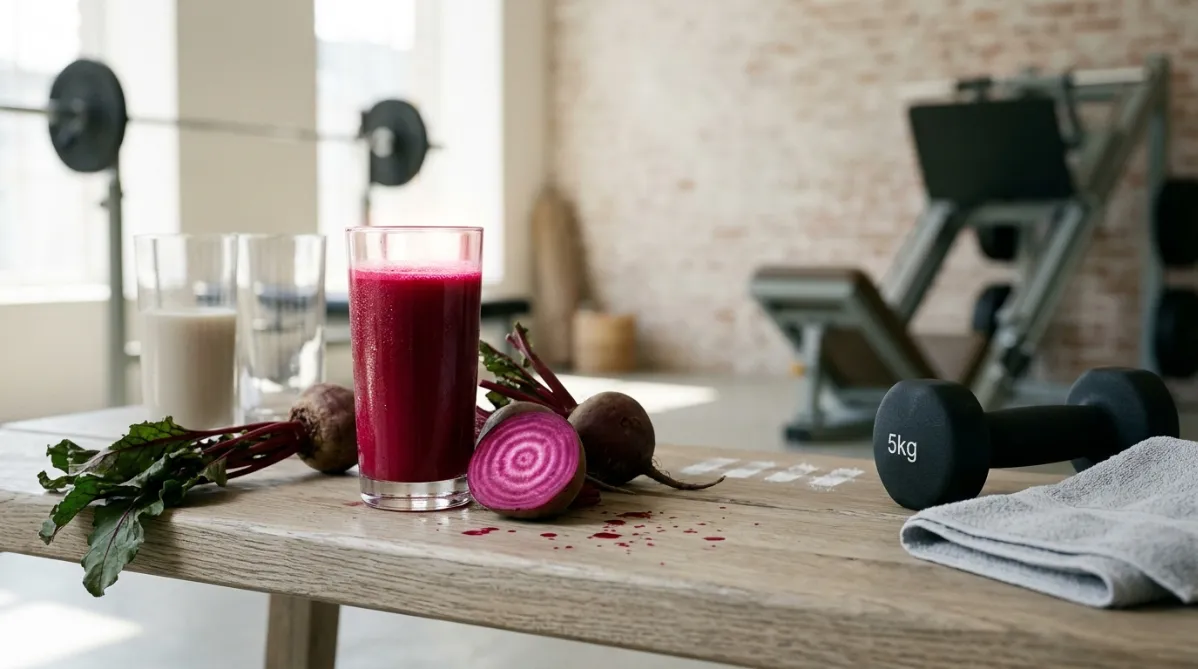
A wide, editorial-style still life photographed in soft natural window light, set on a pale oak gym bench or a light concrete surface. In the center foreground, a tall clear glass of deep magenta-crimson beetroot juice catches the light, with a faint luminous glow along its rim and condensation beading on the outside. Two other glasses sit slightly behind it, one holding a pale, neutral-colored liquid and one empty. They suggest the placebo and no-treatment conditions without any labels. Beside the glasses, a halved raw beetroot shows concentric rings of vivid fuchsia and violet. A few whole beets with their leafy stems and dark green and burgundy leaves are scattered casually nearby.

On the right side of the frame, slightly out of focus, a matte black women's-size dumbbell and a neatly folded light gray towel rest on the bench. Behind them, the soft blur of a minimalist, airy training space includes a barbell rack and a leg press machine in muted tones. The background is bright and neutral, in warm off-white, soft sand, and light gray, so the magenta of the juice is the dominant accent color.

A small, restrained motif of four evenly spaced chalk marks or four small round weight plates arranged in a neat row on the bench hints at the "four sets" of the trial. A few drops of beet juice have splashed onto the surface, forming a tasteful organic pattern.

The composition follows the rule of thirds, with the glass of juice on the left third and open negative space on the right for headline text. Shallow depth of field, crisp focus on the glass and beet, subtle film-like grain, and a calm, modern, trendy magazine aesthetic. The palette is magenta, deep burgundy, sage green, cream, and soft gray. The mood is quiet, skeptical, and scientific without any laboratory imagery, with clean lines and an elegant, minimal feel.
supplements

Suco de Beterraba Não Aumentou Nem Uma Repetição em Mulheres Treinadas em Resistência

BY DR. GYMBRO ·

O suco de beterraba é divulgado como potencializador natural de repetições, mas um ensaio duplo‑cego cruzado com mulheres treinadas em resistência não encontrou nenhum benefício. Dezesseis participantes ingeriram suco rico em nitrato (12,8 mmol), um placebo ou nada antes de quatro séries de supino e leg press até a falha. O total de repetições, a percepção de esforço, a frequência cardíaca, a pressão arterial e o lactato permaneceram inalterados. Os resultados não descartam a beterraba definitivamente, mas sugerem que o efeito ergogênico do nitrato pode ser limitado para essa população e esse protocolo.

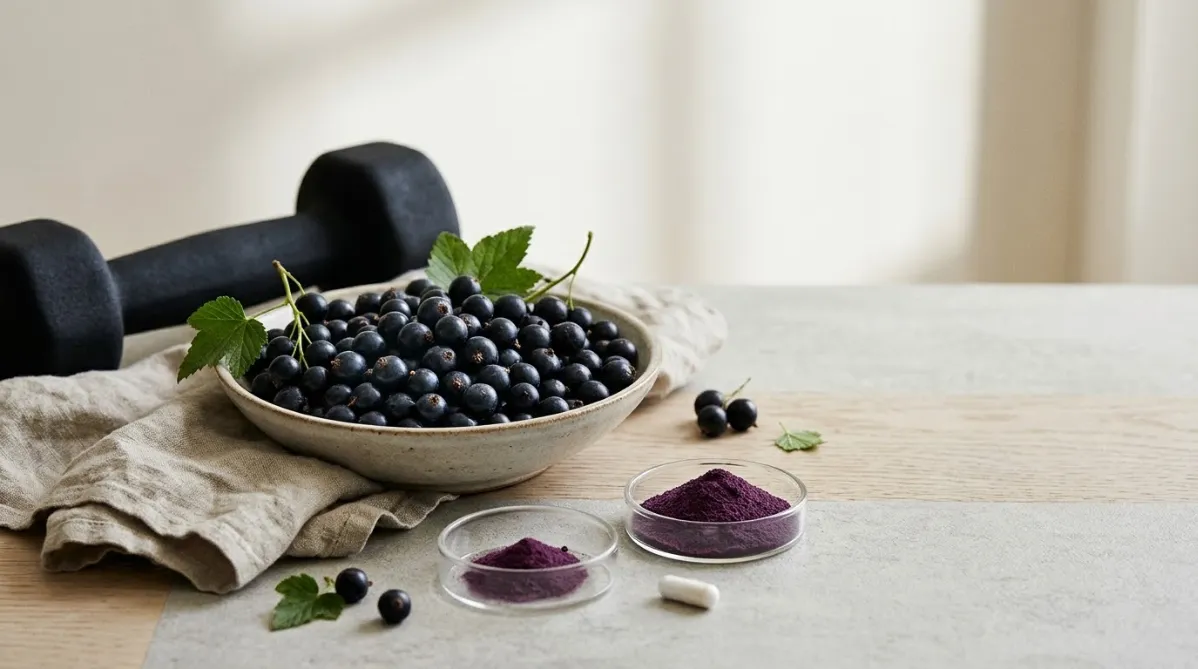
A wide, editorial-style still life photographed in soft natural window light on a pale oak or light grey concrete surface. In the center-left, a shallow ceramic bowl filled with plump, dusky blue-black blackcurrants, some with tiny glossy highlights and a few still attached to slender green stems with serrated leaves. Beside the bowl, a matte black dumbbell handle rests diagonally, partially in frame and slightly out of focus, suggesting strength training without a gym setting. In the foreground, two small minimalist glass dishes sit side by side: one holds a small pile of deep purple powder, the other a larger pile, a subtle visual nod to the low versus high dose. A few scattered berries add a natural touch. A folded linen cloth in muted oatmeal tone adds texture, and a single white capsule sits near the dishes for scale.

The background is a soft, creamy off-white wall with gentle shadow gradients from the window, leaving generous negative space on the right third of the frame for title overlay. The color palette is restrained and modern: deep indigo and violet from the berries, warm neutral beige, charcoal black, and touches of fresh leaf green. Shallow depth of field, crisp focus on the berries in the foreground, subtle film grain, and a calm, refined, contemporary magazine aesthetic like a wellness or sports science journal cover. Overhead angle tilted slightly to about 35 degrees, balanced composition, clean and uncluttered, with natural soft shadows and a premium, quietly athletic mood.
nutrition

Groselha Preta para Levantadores: Por que a Dose Baixa Superou a Dose Alta

BY DR. GYMBRO ·

Um suplemento de groselha preta, administrado por uma semana, aumentou o 1RM no supino de praticantes de treinamento resistido, e a dose menor (250 mg) frequentemente igualou ou superou a dose de 600 mg. A dose alta elevou a potência no supino em quase 80 W em comparação ao placebo, enquanto a dose baixa melhorou os escores cognitivos do teste Stroop. Contudo, o placebo também superou o controle sem cápsula no leg press; portanto, esses ganhos chamativos precisam ser analisados com cautela. Com apenas 20 participantes e um período de sete dias, trata‑se de um sinal promissor, não de um auxílio de força comprovado. A seguir, o que se confirmou, o que não se confirmou e quem pode se interessar em experimentar.

A wide, editorial-style still life photographed in soft natural window light on a pale oak gym bench. In the foreground, a small rustic ceramic bowl in warm sand tones holds a mound of fine golden-beige ashwagandha root powder, with a few dried gnarled ashwagandha roots and a sprig of green leaves with tiny orange-red berries resting beside it. A wooden scoop dusted with powder lies at an angle. Just behind, a matte black barbell with a single chalk-dusted steel plate sits slightly out of focus, a light haze of white chalk hanging in the air and catching the sunlight.

On the left side, a neat stack of printed research papers with a sharp black pen and a few muted sage-green sticky tabs. One page shows a simple, abstract forest-plot-style line graph with small squares and horizontal lines, subtly out of focus, hinting at statistics without legible text. A pair of minimal round reading glasses rests on the pages. A small linen gym towel is folded near the edge of the bench.

The palette is restrained and modern: warm cream, soft sage green, muted terracotta, charcoal black, and brushed steel highlights. The background is a softly blurred minimalist studio space with a pale plaster wall and a long soft shadow cast by a window frame, giving a calm, contemplative mood. Shallow depth of field, crisp detail on the powder and roots, gentle film-like grain, and generous negative space on the right third of the frame for a headline overlay. The overall look is a clean, trendy health-and-science journal cover, thoughtful and skeptical rather than promotional, balancing the natural herbal element against the discipline of strength training.
nutrition

Ashwagandha para Levantadores: Impulso de Força ou Miragem Estatística?

BY DR. GYMBRO ·

Ashwagandha é promovida como potenciador de força e volume para quem levanta pesos. Uma nova meta‑análise de ensaios clínicos de treinamento de resistência mostrou ganhos de 1RM em supino e agachamento que parecem impressionantes no papel. Contudo, apenas três estudos com 161 participantes puderam ser combinados e os efeitos perderam significância em testes mais rigorosos. A classificação GRADE apontou evidência de baixa a muito baixa, sem efeito confiável sobre a gordura corporal. Veja o que realmente os dados demonstram e quem ainda pode se interessar em experimentar.

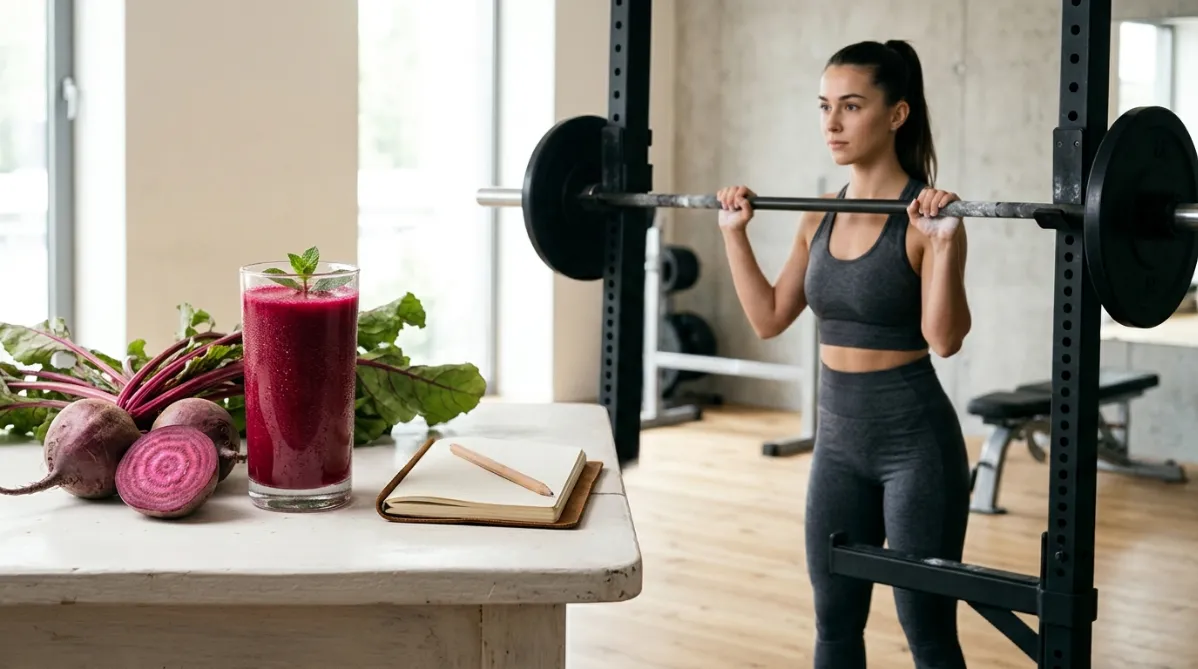
A wide, editorial-style photograph of a bright, modern gym corner softened by morning window light. In the foreground, a rustic matte-white ceramic table holds a tall clear glass of deep magenta beetroot juice, beads of condensation on the glass, a few fresh whole beetroots with leafy crimson-veined stems beside it, and one beetroot sliced in half to reveal its vivid concentric purple-pink rings. Next to the glass sits a small, neat notebook with a pencil, suggesting a research note, with no legible text. Behind the table, slightly out of focus, a young woman lifter with a tidy ponytail and a fitted charcoal training set stands at a barbell resting on a squat rack, chalk-dusted hands gripping the bar, calm and focused expression. A loaded bench with a bar is visible further back, with matte black plates and a light wooden floor. The palette is restrained and trendy: warm off-white, soft concrete gray, muted sage green accents from the beet leaves, and a bold beetroot magenta as the focal color. Shallow depth of field with a creamy bokeh background, natural side lighting casting long gentle shadows, subtle film grain. Composition follows the rule of thirds, with the juice and beets on the left third and the lifter on the right, leaving clean negative space in the upper area for a headline overlay. Mood is thoughtful, clean, and slightly skeptical, like a contemporary health and science journal cover. Realistic photography style, high-end magazine look, no text, no logos, no futuristic elements.
nutrition

Suco de beterraba decepciona mulheres levantadoras — e ainda reduz o supino

BY DR. GYMBRO ·

O suco de beterraba tem fama de potenciador natural de desempenho, mas um estudo cruzado com 18 mulheres treinadas em resistência não encontrou benefício algum no agachamento. Ainda mais curioso, a potência e a velocidade no supino diminuíram levemente em uma carga (60 % da 1RM) após a ingestão de ~6,7 mmol de nitrato, 2,5 h antes do treino. A queda foi de cerca de 5 W e 0,02 m/s, com valores‑p marginais, portanto longe de ser conclusiva. O que o estudo testou, o que ele não pode nos dizer e quem ainda pode querer experimentar o nitrato são abordados a seguir.

This page is available in