Dr. Gymbro
←

#oxidative stress

2 articles
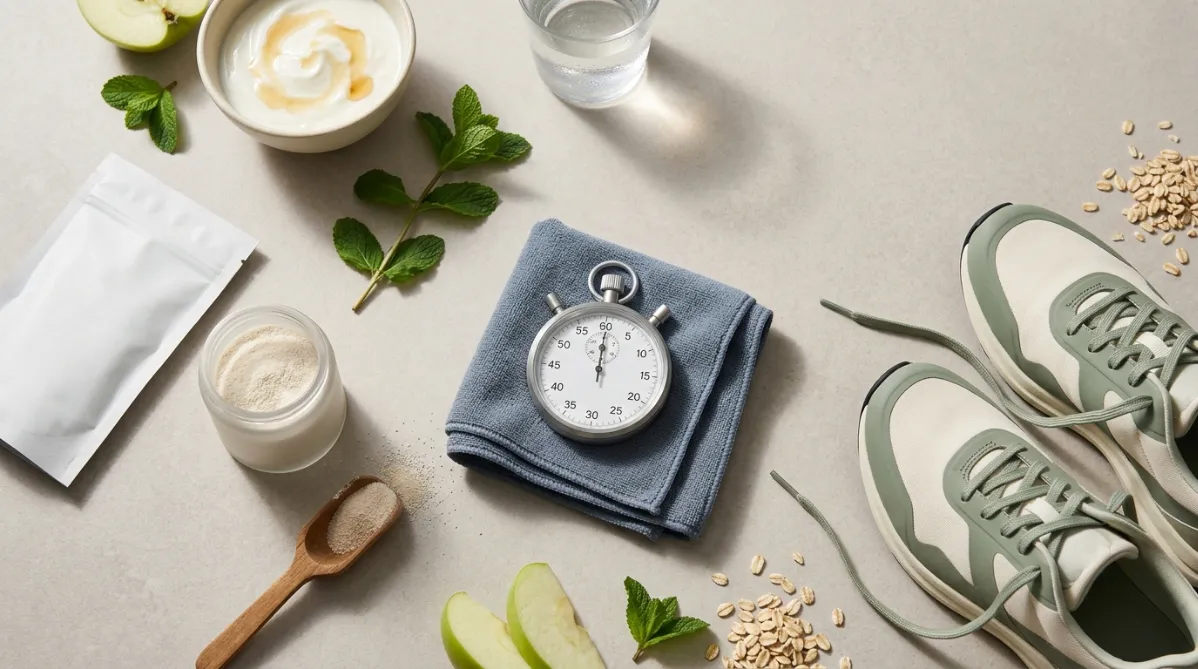
A wide, editorial-style flat lay photographed from above on a pale, warm-gray stone surface lit by soft natural window light. On the left, a matte white supplement sachet and a small frosted glass jar of off-white probiotic powder sit beside a wooden scoop dusted with fine granules. In the center, a modern minimalist stopwatch with a brushed silver case and crisp white face rests on a folded slate-blue running towel, its hands frozen just past the half-minute mark. On the right, a pair of sleek running shoes in cream and sage green are angled diagonally, with a few strands of laces trailing across the surface. Scattered around the arrangement are fresh, natural gut-health cues: a halved kefir-colored ceramic bowl of creamy yogurt with a drizzle of honey, a few sprigs of fresh mint, sliced green apple, and a handful of raw oats. A small glass of water with delicate condensation catches a soft highlight in the background. The color palette is calm and refined: sage green, cream, soft slate blue, and touches of warm honey gold against the neutral stone. Shadows are long and gentle, creating depth and a quiet, premium wellness-journal mood. The shallow depth of field softly blurs the edges, leaving the stopwatch and probiotic jar in crisp focus. Negative space on the upper right of the composition leaves room for a headline overlay. The overall feel is clean, modern, and trendy, like a contemporary health and sports science magazine cover, with realistic textures, natural tones, and no futuristic or digital elements.
nutrition

SLAB51: Uma Semana Concedeu 33 Segundos a Mais a Atletas de Elite

BY DR. GYMBRO ·

Uma semana de uso do probiótico multisséculo SLAB51 fez atletas de elite permanecerem cerca de 33 s a mais em um teste de esteira, enquanto uma dose única não teve efeito e o VO₂máx manteve‑se inalterado. O ensaio randomizado, duplo‑cego e cruzado também mostrou elevação da enzima antioxidante SOD antes do exercício. Mas o que é o SLAB51 e como a microbiota intestinal poderia influenciar a resistência? Este artigo descreve o desenho do estudo, os principais resultados e o que os atletas podem realmente tirar dessas descobertas, além de apontar as limitações: amostra pequena de homens de elite e intervenção muito curta.
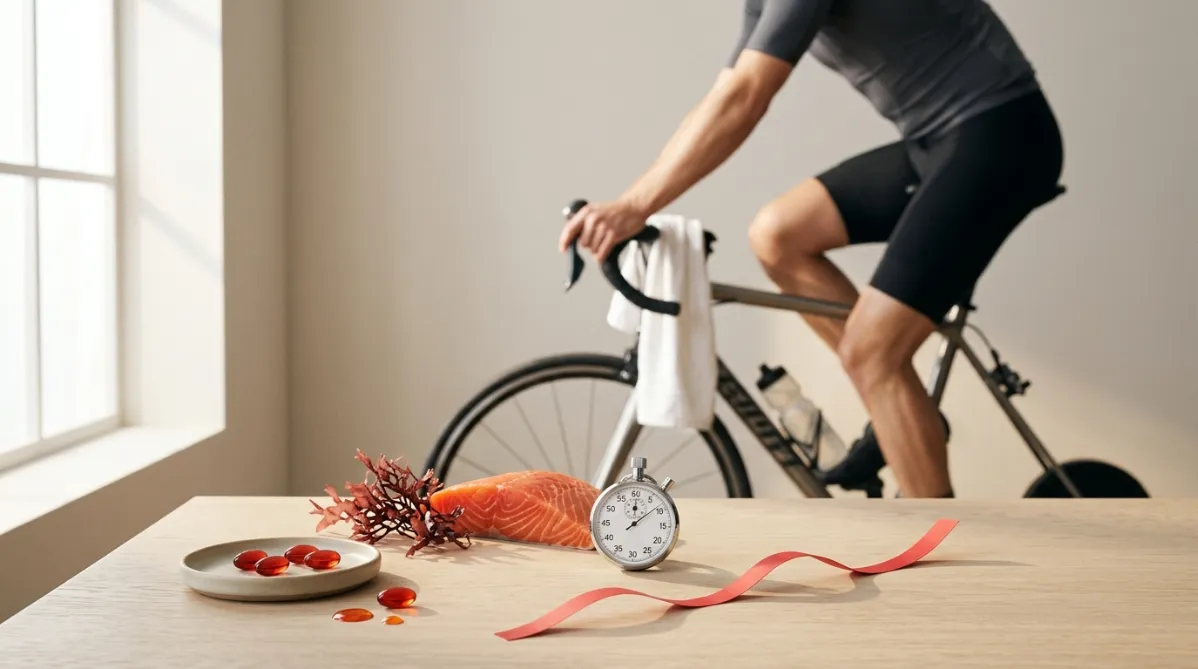
A cyclist's legs mid-pedal on a stationary road bike, shot in a bright, airy, minimalist studio with a soft warm-grey backdrop. In the foreground on a pale oak table sits a small ceramic dish holding four deep coral-red softgel capsules, with a few translucent droplets of red-orange oil glistening beside them. Beside the dish is a sprig of dried red microalgae-toned seaweed and a halved wild salmon fillet, its coral flesh echoing the capsule color. Behind the table, slightly out of focus, a cyclist in a fitted charcoal jersey and matte black shorts rides a bike on an indoor trainer. Only the torso and legs are visible, with no face. A white towel hangs over the handlebars and a clear water bottle catches the light.

Soft diffused morning light streams from a large window on the left, creating long gentle shadows and a subtle golden-hour glow on the skin and the glossy capsules. The palette is restrained and editorial: warm cream, sand, soft grey and charcoal, with vivid coral-red as the single accent color. A minimalist analog stopwatch with a clean white face sits on the table, its hands near the 85-minute mark. A thin, elegant line-graph shape is subtly suggested by a curved strip of red ribbon lying on the table, rising from left to right to hint at the performance gain without any text.

The composition follows the rule of thirds, with the capsules and stopwatch in the lower left and the cyclist's motion-blurred legs sweeping across the right. Shallow depth of field, crisp macro detail on the capsules, and a fine film-like grain. The overall feel is a modern health and science magazine cover: clean, calm, sophisticated, and natural, with negative space in the upper area for a headline. There are no futuristic elements, no glowing effects, no laboratory equipment, and no text or logos. Landscape 16:9 format.
nutrition

Astaxantina por 4 dias aumentou o tempo de exaustão no ciclismo de 72 para 85 minutos em um pequeno estudo

BY DR. GYMBRO ·

Quatro dias de astaxantina a 28 mg/dia aumentaram o tempo de exaustão no ciclismo de cerca de 72 para 85 minutos em um pequeno ensaio randomizado, um ganho de aproximadamente 18 %. O mesmo protocolo reduziu o aumento dos marcadores de dano muscular (CK e LDH) e da peroxidação lipídica (MDA) após um esforço intenso a 75 % do VO2máx. Os marcadores inflamatórios e o consumo de combustível não mudaram, portanto o mecanismo ainda é incerto. A dose também está bem acima do que a maioria das cápsulas oferece, e o estudo contou apenas com dez jovens adultos. Veja o que os números revelam e onde a evidência termina.

This page is available in