Dr. Gymbro
←

#oxidative stress

2 articles
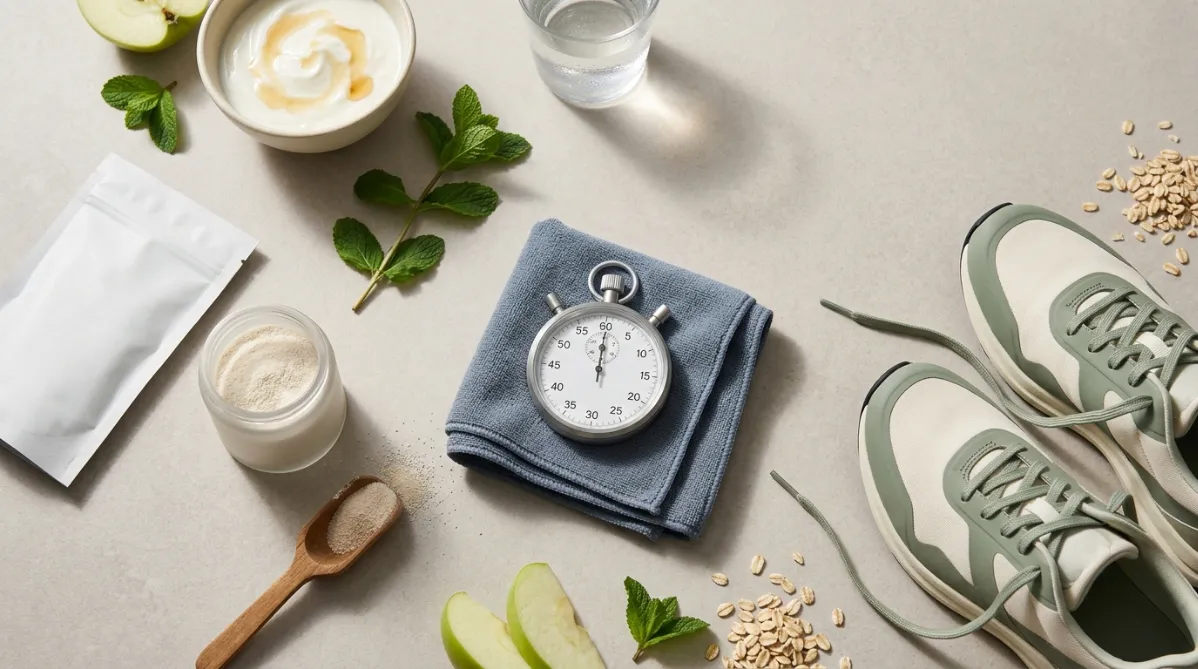
A wide, editorial-style flat lay photographed from above on a pale, warm-gray stone surface lit by soft natural window light. On the left, a matte white supplement sachet and a small frosted glass jar of off-white probiotic powder sit beside a wooden scoop dusted with fine granules. In the center, a modern minimalist stopwatch with a brushed silver case and crisp white face rests on a folded slate-blue running towel, its hands frozen just past the half-minute mark. On the right, a pair of sleek running shoes in cream and sage green are angled diagonally, with a few strands of laces trailing across the surface. Scattered around the arrangement are fresh, natural gut-health cues: a halved kefir-colored ceramic bowl of creamy yogurt with a drizzle of honey, a few sprigs of fresh mint, sliced green apple, and a handful of raw oats. A small glass of water with delicate condensation catches a soft highlight in the background. The color palette is calm and refined: sage green, cream, soft slate blue, and touches of warm honey gold against the neutral stone. Shadows are long and gentle, creating depth and a quiet, premium wellness-journal mood. The shallow depth of field softly blurs the edges, leaving the stopwatch and probiotic jar in crisp focus. Negative space on the upper right of the composition leaves room for a headline overlay. The overall feel is clean, modern, and trendy, like a contemporary health and sports science magazine cover, with realistic textures, natural tones, and no futuristic or digital elements.
nutrition

Probiótico SLAB51: una semana aporta 33 segundos a atletas de élite

BY DR. GYMBRO ·

Una semana de consumo del probiótico multiestrógeno SLAB51 permitió a atletas de élite durar aproximadamente 33 segundos más en una prueba de cinta de correr, mientras que una sola dosis no mostró efecto y el VO₂máx no cambió. El ensayo aleatorizado, doble ciego y cruzado también detectó niveles más altos de la enzima antioxidante SOD antes del ejercicio. ¿Qué es SLAB51 y por qué la microbiota intestinal podría influir en la resistencia? Este artículo desglosa el diseño del estudio, los resultados y la utilidad real para los deportistas, además de analizar sus limitaciones: una muestra pequeña de hombres de élite y una intervención muy breve.
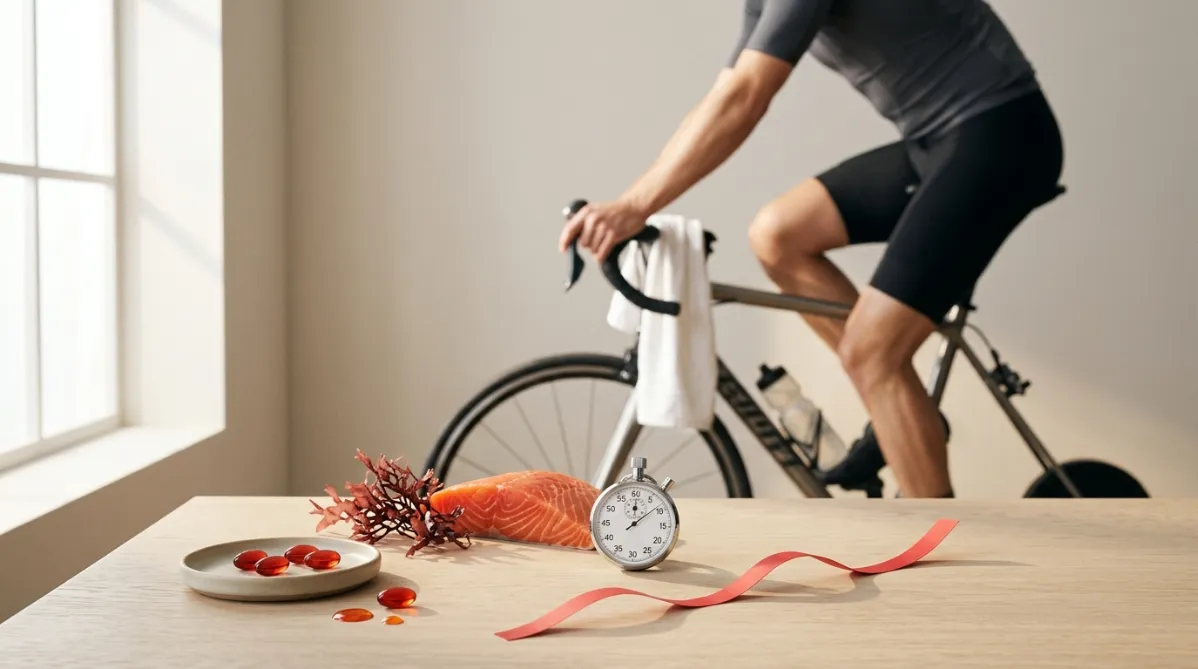
A cyclist's legs mid-pedal on a stationary road bike, shot in a bright, airy, minimalist studio with a soft warm-grey backdrop. In the foreground on a pale oak table sits a small ceramic dish holding four deep coral-red softgel capsules, with a few translucent droplets of red-orange oil glistening beside them. Beside the dish is a sprig of dried red microalgae-toned seaweed and a halved wild salmon fillet, its coral flesh echoing the capsule color. Behind the table, slightly out of focus, a cyclist in a fitted charcoal jersey and matte black shorts rides a bike on an indoor trainer. Only the torso and legs are visible, with no face. A white towel hangs over the handlebars and a clear water bottle catches the light.

Soft diffused morning light streams from a large window on the left, creating long gentle shadows and a subtle golden-hour glow on the skin and the glossy capsules. The palette is restrained and editorial: warm cream, sand, soft grey and charcoal, with vivid coral-red as the single accent color. A minimalist analog stopwatch with a clean white face sits on the table, its hands near the 85-minute mark. A thin, elegant line-graph shape is subtly suggested by a curved strip of red ribbon lying on the table, rising from left to right to hint at the performance gain without any text.

The composition follows the rule of thirds, with the capsules and stopwatch in the lower left and the cyclist's motion-blurred legs sweeping across the right. Shallow depth of field, crisp macro detail on the capsules, and a fine film-like grain. The overall feel is a modern health and science magazine cover: clean, calm, sophisticated, and natural, with negative space in the upper area for a headline. There are no futuristic elements, no glowing effects, no laboratory equipment, and no text or logos. Landscape 16:9 format.
nutrition

La astaxantina, tras 4 días, incrementó el tiempo hasta el agotamiento en ciclismo de 72 a 85 minutos en un pequeño ensayo

BY DR. GYMBRO ·

Cuatro días de astaxantina (28 mg/día) prolongaron el tiempo hasta el agotamiento en ciclismo de unos 72 a 85 minutos, lo que representa un aumento de alrededor del 18 %. El mismo protocolo atenuó la elevación de los marcadores de daño muscular (CK y LDH) y de peroxidación lipídica (MDA) tras un esfuerzo intenso al 75 % del VO2 máx. Los indicadores inflamatorios y el consumo de combustible no variaron, de modo que el mecanismo sigue sin quedar claro. La dosis supera con creces la que contienen la mayoría de las cápsulas blandas, y el estudio contó solo con diez hombres jóvenes. A continuación se presentan los números y los límites de la evidencia.

This page is available in