
Dr. Gymbro
←

#ashwagandha

8 articles
A wide, editorial-style still life photographed in soft natural window light on a pale oak gym bench. In the foreground, a small rustic ceramic bowl in warm sand tones holds a mound of fine golden-beige ashwagandha root powder, with a few dried gnarled ashwagandha roots and a sprig of green leaves with tiny orange-red berries resting beside it. A wooden scoop dusted with powder lies at an angle. Just behind, a matte black barbell with a single chalk-dusted steel plate sits slightly out of focus, a light haze of white chalk hanging in the air and catching the sunlight.

On the left side, a neat stack of printed research papers with a sharp black pen and a few muted sage-green sticky tabs. One page shows a simple, abstract forest-plot-style line graph with small squares and horizontal lines, subtly out of focus, hinting at statistics without legible text. A pair of minimal round reading glasses rests on the pages. A small linen gym towel is folded near the edge of the bench.

The palette is restrained and modern: warm cream, soft sage green, muted terracotta, charcoal black, and brushed steel highlights. The background is a softly blurred minimalist studio space with a pale plaster wall and a long soft shadow cast by a window frame, giving a calm, contemplative mood. Shallow depth of field, crisp detail on the powder and roots, gentle film-like grain, and generous negative space on the right third of the frame for a headline overlay. The overall look is a clean, trendy health-and-science journal cover, thoughtful and skeptical rather than promotional, balancing the natural herbal element against the discipline of strength training.
nutrition

Ashwagandha for Lifters: Strength Boost or Statistical Mirage?

BY DR. GYMBRO ·

Ashwagandha is sold to lifters as a strength and size booster, and a new meta-analysis of resistance-training RCTs found bench and squat 1RM gains that look impressive on paper. But only three trials with 161 participants could be pooled. Both strength results lost significance under stricter HKSJ testing, and each leaned on a single influential trial. GRADE rated the evidence low to very low, and there was no dependable effect on body fat. Here is what the review actually shows, and who might still want to try it.
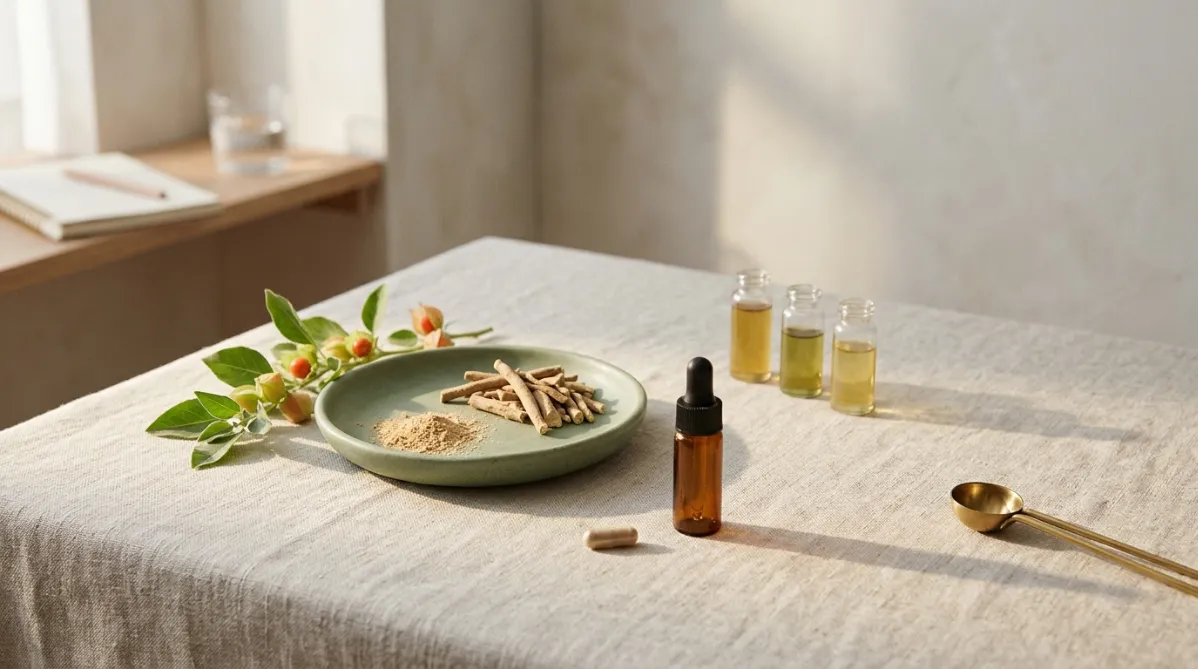
A softly lit, minimalist editorial still life on a pale oat-colored linen surface, shot from a slightly elevated three-quarter angle. In the center-left, a small handmade ceramic dish in matte sage green holds a modest pile of dried ashwagandha root pieces and a scattering of fine tan powder. A few fresh ashwagandha sprigs, with delicate green leaves and small orange-red berries in papery husks, rest beside it. In front, a single tiny capsule sits alone on the linen, with a slim glass dropper bottle in amber tint just behind it, suggesting a very small dose. To the right, a neat row of three small glass vials stands slightly out of focus, their contents a muted gold, hinting at comparison without any labels or text. A delicate brass measuring spoon lies at the edge of the frame, catching a thin highlight.

Soft morning window light falls from the upper left, casting long, gentle shadows and a warm glow across the textures: rough linen weave, matte ceramic, glossy glass, and the powdery root. The color palette is calming and earthy, with sage green, warm cream, soft terracotta, amber, and touches of muted coral from the berries. In the background, a blurred, airy room with a pale plaster wall and a hint of a wooden shelf holding a notebook and a small glass of water, adding a quiet wellness-journal atmosphere. Shallow depth of field, crisp focus on the dish and capsule, and generous negative space on the right third of the frame for headline overlay. The overall mood is calm, thoughtful, and slightly skeptical, like a contemporary health and science magazine feature, with natural, realistic photography, fine grain, and subtle film-like color grading.
science research

Just 30 mg of Ashwagandha Cut Stress in 4 Weeks—Here's the Catch

BY DR. GYMBRO ·

Most ashwagandha trials use 250-600 mg a day, but this one tested just 30 mg for 28 days in 60 stressed adults. The ashwagandha group reported lower stress, and their salivary cortisol stayed stable under a lab stressor while the placebo group's rose. The catch is that the p-values hover around 0.04-0.047, the per-protocol analysis wasn't significant, and most other outcomes showed no difference. The maker of the extract also funded the study. Here is what the data supports, who it might help, and what it doesn't prove.
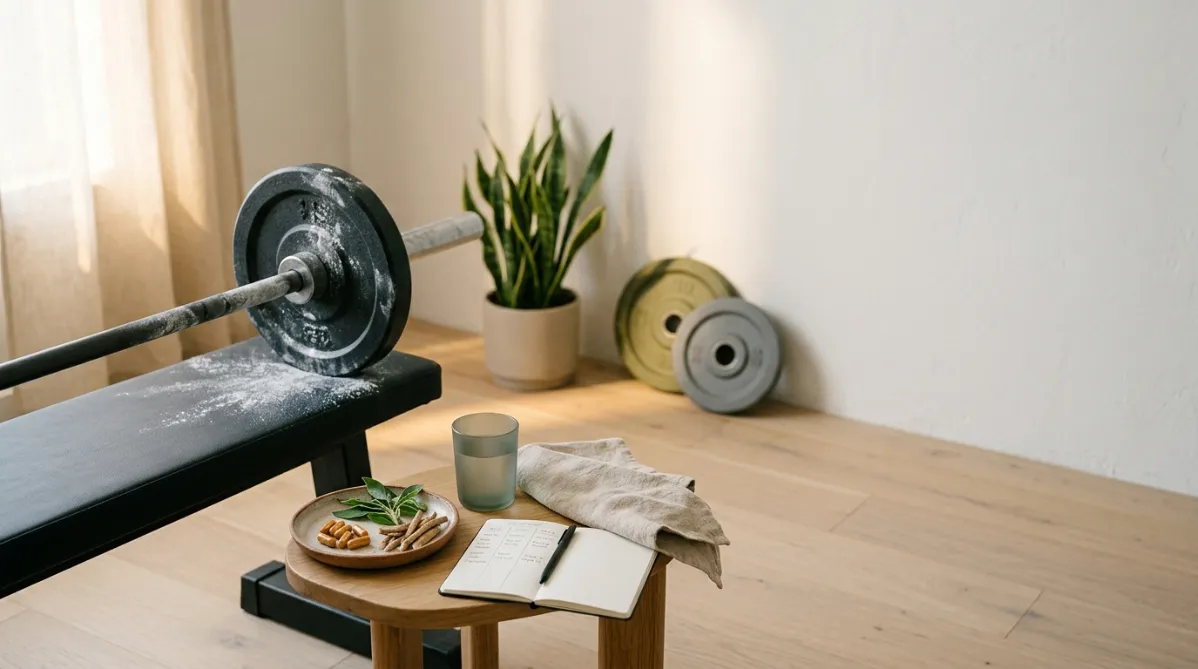
A wide landscape editorial photograph of a modern, softly lit home gym corner with pale oak flooring and a matte white wall. In the foreground, a chalk-dusted barbell rests across a minimalist bench, shot at a low angle with shallow depth of field. On a small natural-wood side table beside it sits a ceramic dish holding a few amber-colored capsules, a handful of dried ashwagandha roots, and a few green leaves. A matte glass of water and a folded linen towel sit nearby. A slim open notebook with a pen lies next to the dish, suggesting careful reading and note-taking, with blurred handwritten columns that suggest comparison, but no legible text.

Soft morning window light enters from the left, casting long, gentle shadows and a warm golden glow across the scene. The palette is muted and earthy: sage green, warm sand, cream, charcoal gray, and touches of terracotta. A single potted green plant in the background adds texture. Two weight plates in stacked, muted tones lean against the wall, slightly out of focus.

The composition follows the rule of thirds, with the barbell and supplement dish on the left and generous negative space on the right for headline overlay. The mood is calm, trustworthy, and analytical, like a contemporary health and science magazine cover. Crisp detail, natural film-like grain, subtle color grading, and a clean, uncluttered, premium lifestyle feel. No people, no text, no logos, no futuristic elements.
supplements

Ashwagandha SR Doubled Bench Gains in 90 Days—Read the Fine Print

BY DR. GYMBRO ·

A once-daily sustained-release ashwagandha capsule roughly doubled bench press gains versus placebo in a 90-day randomized trial. Participants taking 300 mg of AshwaSR added 15.31 kg to their 1-RM, compared with 7.33 kg on placebo. But the testosterone rise in men did not beat placebo, the study was funded by the product's developer, and the VO2max numbers look unusually large. Here's what the trial actually shows, the dose used, who it may suit, and who should skip it.
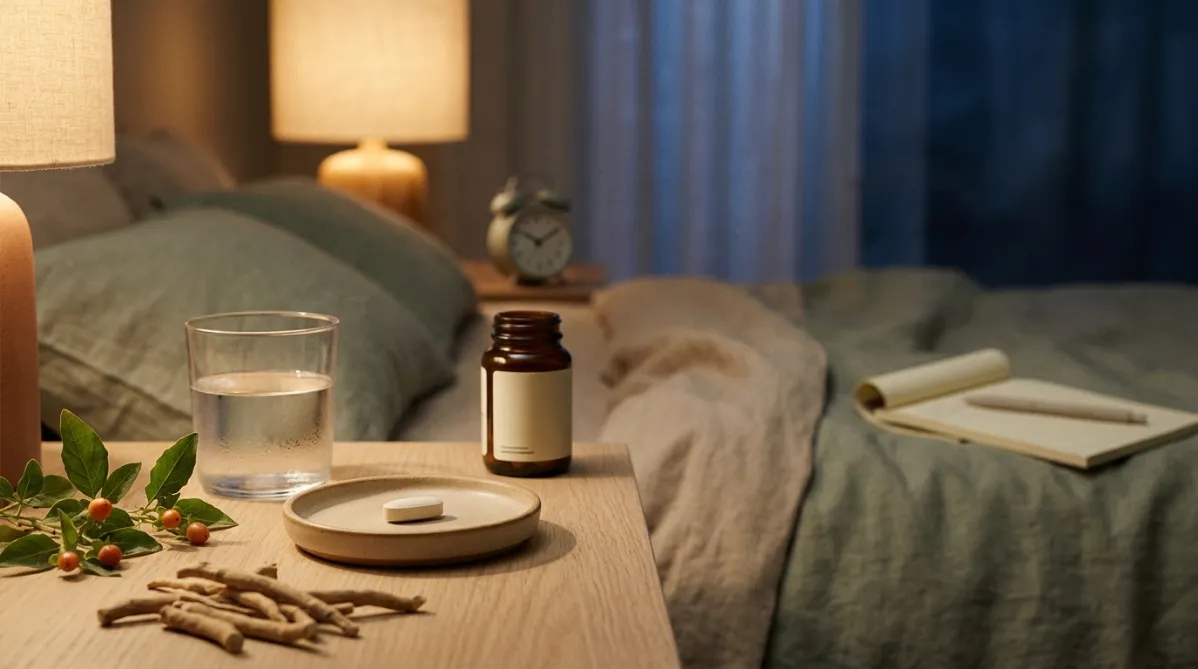
A soft, editorial still life photographed in a calm bedside setting at dusk, in landscape format. On a pale oak nightstand sits a single smooth, off-white oval caplet resting on a small matte ceramic dish in warm oatmeal tones. Next to it is a half-full glass of water with delicate condensation. Behind them, a small amber glass supplement bottle with a minimal cream label stands slightly out of focus. A few dried ashwagandha roots and a sprig of green leaves with small orange-red berries are arranged loosely across the wood grain in the foreground, adding an organic, botanical feel.

The background is a softly blurred bedroom with linen bedding in muted sage and sand tones. A warm lamp with a paper shade casts a golden glow from the left. Through a sheer curtain, deep blue twilight hints at evening. The light is gentle and directional, with long soft shadows and a subtle film-grain texture.

A small analog alarm clock with a muted face sits in the blurred distance, suggesting nighttime without dominating the scene. To the right, a folded cream notepad and a slim pen suggest research and note-taking, adding a quiet editorial touch. The composition follows the rule of thirds, with the caplet and dish in the lower-left third and generous negative space on the right for headline overlay.

The palette is earthy and restrained: sage green, warm beige, soft terracotta, and muted navy. The mood is thoughtful, trustworthy, and wellness-focused, like a modern health journal or a minimalist lifestyle magazine. Shallow depth of field with a crisp focus on the caplet, shot at eye level with an 85mm lens aesthetic, and high-end, natural, and tactile.
science research

One Ashwagandha Caplet a Night Beat Placebo. Read This Before Buying

BY DR. GYMBRO ·

In a 226-person double-blind trial, one ashwagandha caplet taken once a day after food, preferably at night, beat placebo on stress, anxiety and mental well-being over 8 weeks. The differences reached p<0.0001 in both intention-to-treat and per-protocol analyses, and no serious or drug-related adverse events were reported. But the abstract never states the dose or extract type, and two authors work for the manufacturer. Here is what the study shows, what it leaves out, and who should think twice before trying it.
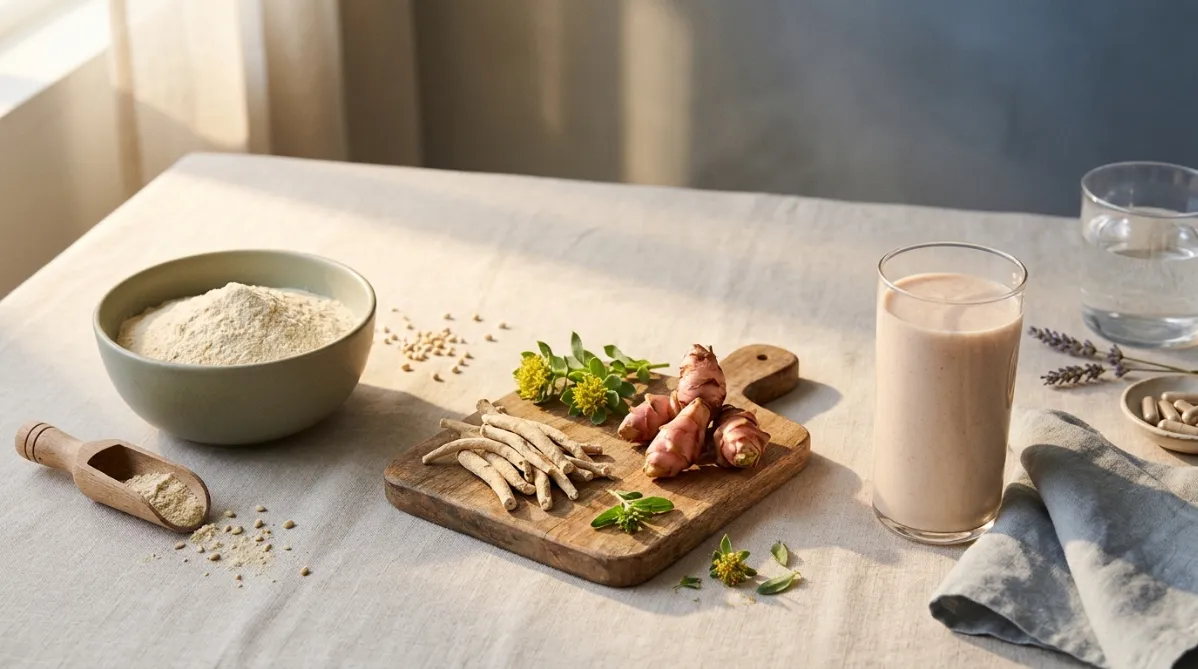
A calm, softly lit flat-lay on a pale oat-colored linen surface, shot from slightly above in a wide landscape composition. On the left, a matte ceramic bowl holds fine cream-colored plant protein powder, with a wooden scoop resting beside it and a few loose dusty-beige grains scattered across the linen. In the center, a small rustic wooden board displays dried ashwagandha roots, pale tan and gnarled, next to a few fresh rhodiola rhizomes with rosy-pink and coppery tones, and a few small sprigs of green leaves and tiny yellow-gold rhodiola flowers. On the right, a tall glass of creamy pale-blush smoothie sits next to a folded soft gray-blue cotton napkin, with a tumbler of water in the background. A delicate sprig of dried lavender and a small ceramic dish of capsules add subtle texture. Morning window light enters from the upper left, casting long, gentle shadows and a warm golden glow across the scene, with a faint hint of dusk-blue in the shadows to suggest restful sleep. The palette is muted and earthy: sage green, warm cream, dusty rose, soft terracotta, and touches of slate blue. The background is softly blurred with shallow depth of field, leaving generous negative space in the upper right for headline text. The style is editorial wellness photography, like a modern lifestyle journal, minimal, organic, tactile, and refined, with natural textures, subtle film grain, and a serene, restorative mood. No text, no people, no futuristic elements.
recovery

Ashwagandha + Rhodiola Protein Stack: Sleep Trouble Down 56%

BY DR. GYMBRO ·

Thirty days of a plant protein plus rhodiola and ashwagandha cut self-reported sleep difficulty by 56% in a double-blind, placebo-controlled trial. Daytime sleepiness dropped 60%, and the total sleep score improved 3.7 times more than placebo. But this was a bundled product, so no single ingredient can take the credit. The bioimpedance phase angle, a marker of cellular health, barely moved. Here is what the 100-person study found, what doses were used, and who the results really apply to.
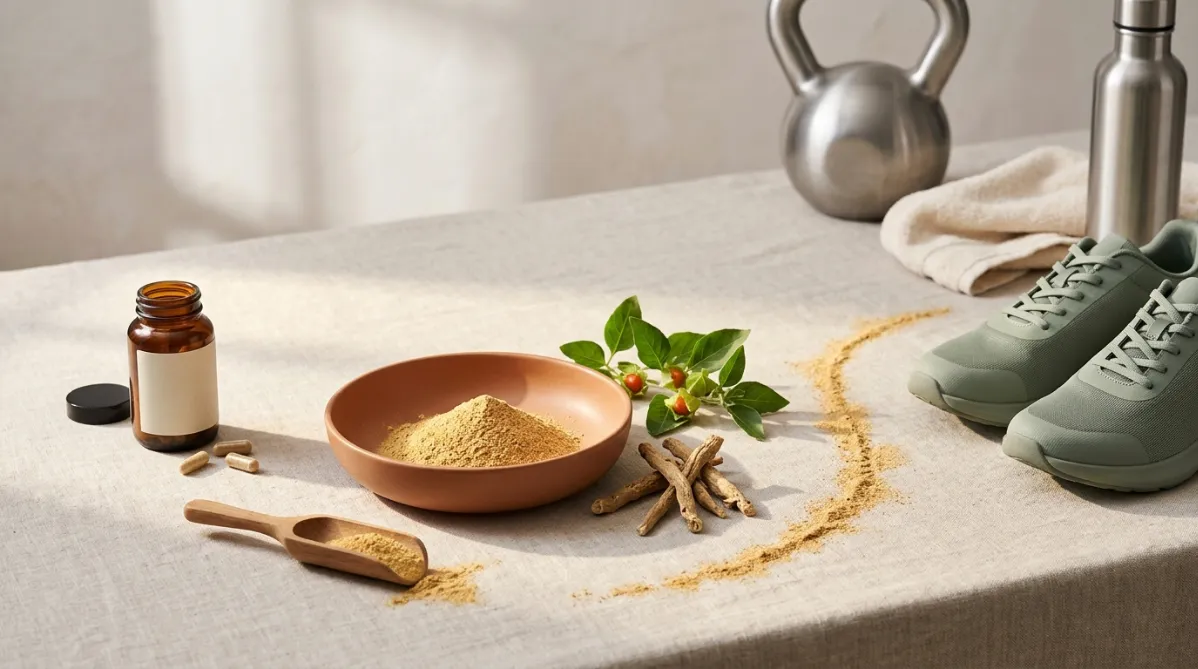
A wide, editorial-style still life shot from a slightly elevated angle on a pale oatmeal-colored linen surface in soft, diffused morning light. At the center, a shallow matte ceramic bowl in warm terracotta holds a small mound of fine, golden-tan ashwagandha root powder. Beside it lie a few gnarled, dried ashwagandha roots and a sprig of green leaves with tiny orange-red berries in their papery husks. To the left, a minimalist amber glass supplement bottle sits with a few capsules spilled beside it, label blank and clean. A wooden scoop rests on the surface, dusted with powder.

On the right side of the frame, a pair of sleek, muted sage-green running shoes sits slightly off-center. A folded cream towel and a stainless steel water bottle sit just behind them, with a single brushed-steel kettlebell partly out of focus in the background to hint at strength training without dominating the scene. The running shoes and the botanical elements share equal visual weight, suggesting the endurance theme.

A thin, curved line of scattered powder sweeps across the linen from the bowl toward the shoes, like a gentle path or track. Soft shadows fall to the left, and a warm sunbeam crosses the surface and picks out the texture of the powder and the roots.

The palette is restrained and modern: warm terracotta, sage green, cream, soft gold, and touches of charcoal. The background is a blurred pale plaster wall with a hint of a window shadow. Shallow depth of field, crisp focus on the bowl and roots, and generous negative space in the upper left for a headline. Contemporary wellness magazine aesthetic, calm, natural, tactile, high-end lifestyle photography, no text, no people, no futuristic elements.
science research

Ashwagandha's Surprise: It Helps Endurance More Than Strength

BY DR. GYMBRO ·

Ashwagandha is often marketed as a strength and muscle booster, but a new meta-analysis points somewhere else. Pooling 13 randomized trials and 599 participants, researchers found the most consistent benefit for aerobic endurance, with a pooled effect of g = 0.54. Strength gains were positive but uncertain, and the data on power were thin. The apparent dose sweet spot of 500-600 mg/day of extract comes with big caveats, including a prediction interval that crosses zero. Here is what the evidence supports, who might benefit, and who should hold off.
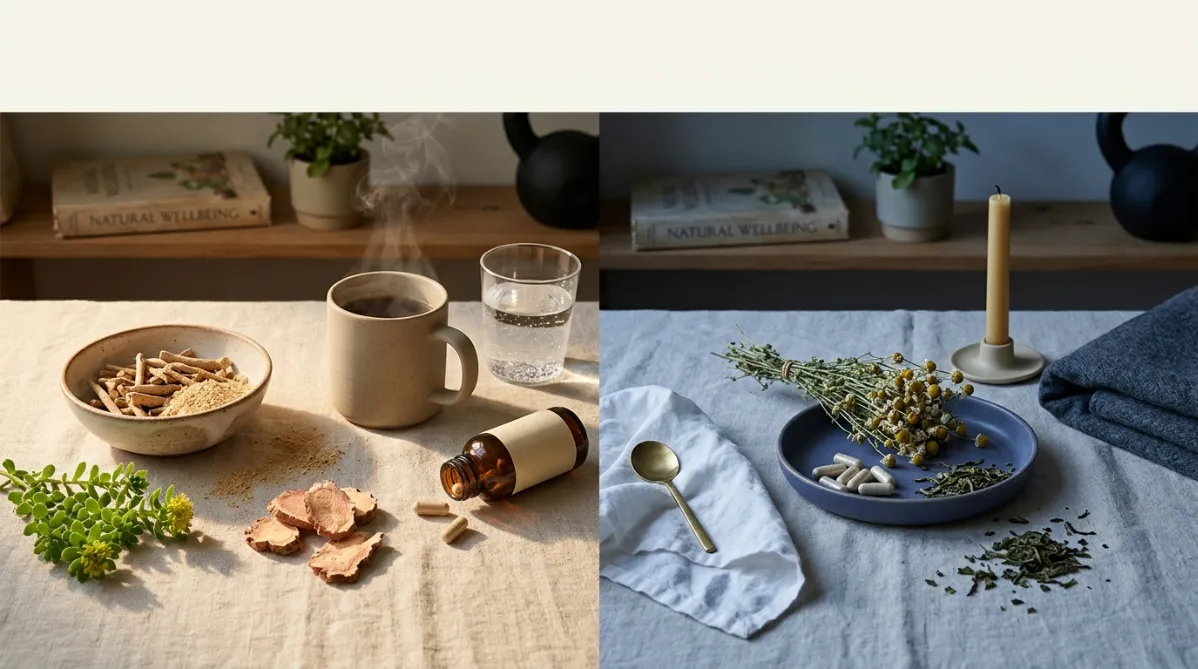
A landscape editorial still life shot from slightly above on a pale oat-colored linen surface, lit by soft morning window light with gentle long shadows. On the left, in warm golden sunlight, sits a small ceramic bowl of dried ashwagandha root pieces and a scatter of fine tan powder. Beside it are a few rough, rosy-gold slices of Rhodiola rosea root and a sprig of tiny succulent-like green leaves with yellow blossoms. A matte sand-colored stoneware mug of steaming tea and a simple glass of water stand nearby. A small amber glass bottle with a minimal unbranded label tips out two capsules.

The right side of the frame is cooler and bluer, as if dusk is arriving. It holds a muted indigo ceramic dish with a few pale capsules, a small bundle of dried chamomile flowers (the source of apigenin), and a few green tea leaves. A slim, unlit beeswax candle and a folded charcoal wool blanket suggest evening. The warm and cool halves meet softly in the center, where a rumpled white cotton napkin sits beneath a small brass spoon.

In the background, out of focus, a wooden shelf holds a worn paperback, a small potted plant, and the edge of a kettlebell in matte black, hinting at an active lifestyle. Subtle film grain, shallow depth of field, and a muted palette of cream, terracotta, sage green, and deep indigo give it a clean, modern wellness-magazine feel. Leave generous negative space in the upper third for a headline overlay. No text, no logos, no people.
recovery

Ashwagandha + Rhodiola Worked. The Evening Sleep Stack Didn't.

BY DR. GYMBRO ·

A new four-arm trial throws a curveball at the supplement-stacking crowd. In 103 healthy, active adults, a morning combo of 600 mg ashwagandha and 300 mg Rhodiola rosea was linked to lower perceived stress, better sleep quality and improved mood. The popular evening stack of magnesium L-threonate, L-theanine and apigenin added nothing, and taking both looked worse on positive affect. Here's what the study found, why it needs caution (only two weeks, small groups), and how lifters might use it.
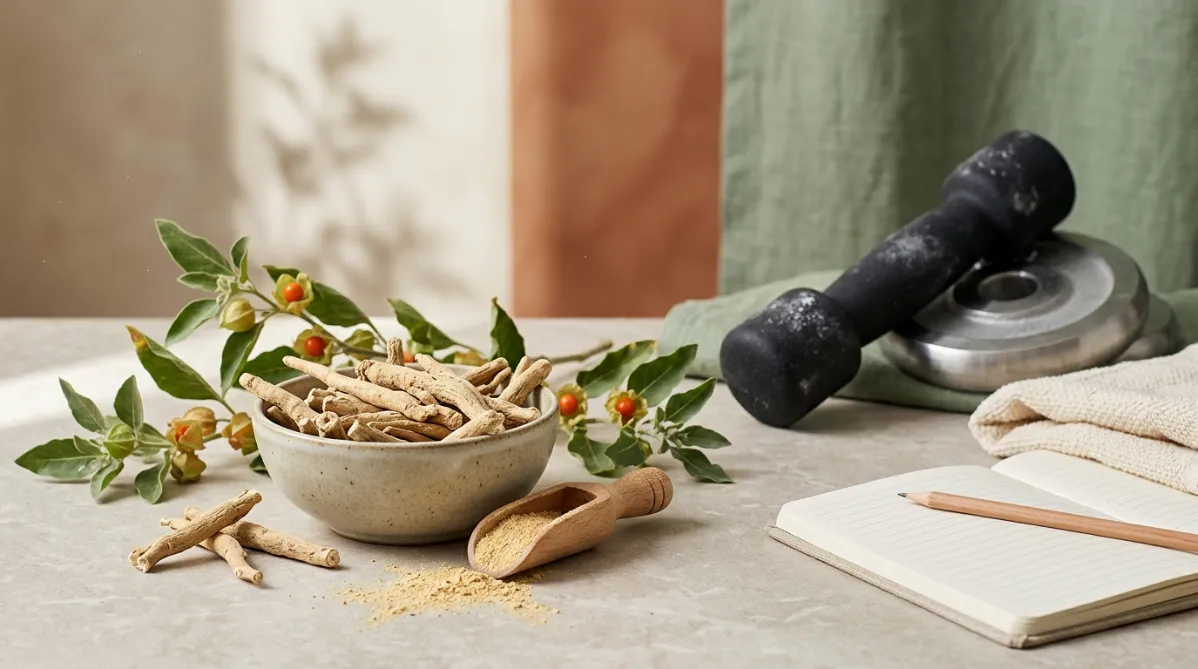
A wide editorial still life on a pale, warm-gray stone surface lit by soft morning window light from the left. In the foreground, a rustic ceramic bowl in matte oatmeal glaze holds dried ashwagandha roots, pale tan and gnarled, with a few scattered beside it. A small wooden scoop dusted with fine golden-beige powder rests next to the bowl. Behind them, a few olive-green ashwagandha sprigs with small orange-red berries in papery husks arc across the frame, adding a quiet pop of color.

Midground right: a matte black chalk-dusted dumbbell handle and a single brushed-steel weight plate lean casually against a linen-textured backdrop in muted sage. A folded cream cotton towel and a slim notebook with a pencil suggest a training log. The notebook is open to blank, softly lined pages with no legible text.

The background fades into a gentle blur of neutral beige and soft terracotta tones, with a hint of a plant shadow cast across the wall in dappled light. Fine dust and powder particles float in the light beams, giving a tactile, organic feel.

The composition follows the rule of thirds: botanical elements on the left and center, gym elements on the right, and negative space in the upper right for headline overlay. Shallow depth of field, crisp focus on the roots and powder, creamy bokeh behind. Color palette: sage green, warm sand, terracotta, charcoal black, and a touch of burnt orange. The mood is calm, modern, and trustworthy, like a premium wellness and science magazine. Photographed on a 50mm lens, natural grain, subtle film-like contrast, clean minimalist styling, high-end editorial photography.
nutrition

The Ancient Herb That Beat Placebo in an 8-Week Lifting Trial: Strength, Muscle Size and Testosterone

BY DR. GYMBRO ·

Could a centuries-old Ayurvedic root really out-lift a placebo? In an 8-week randomized trial of 57 novice lifters, men taking 300 mg of ashwagandha extract twice daily gained more bench-press strength, more arm and chest size, and a bigger testosterone rise than the placebo group. They also lost more body fat. The catch is that the study was small, short and limited to beginner men. Here's what the data show, how the dosing worked, who might benefit and why you should stay skeptical.

This page is available in