Dr. Gymbro
←

#avocado

1 article
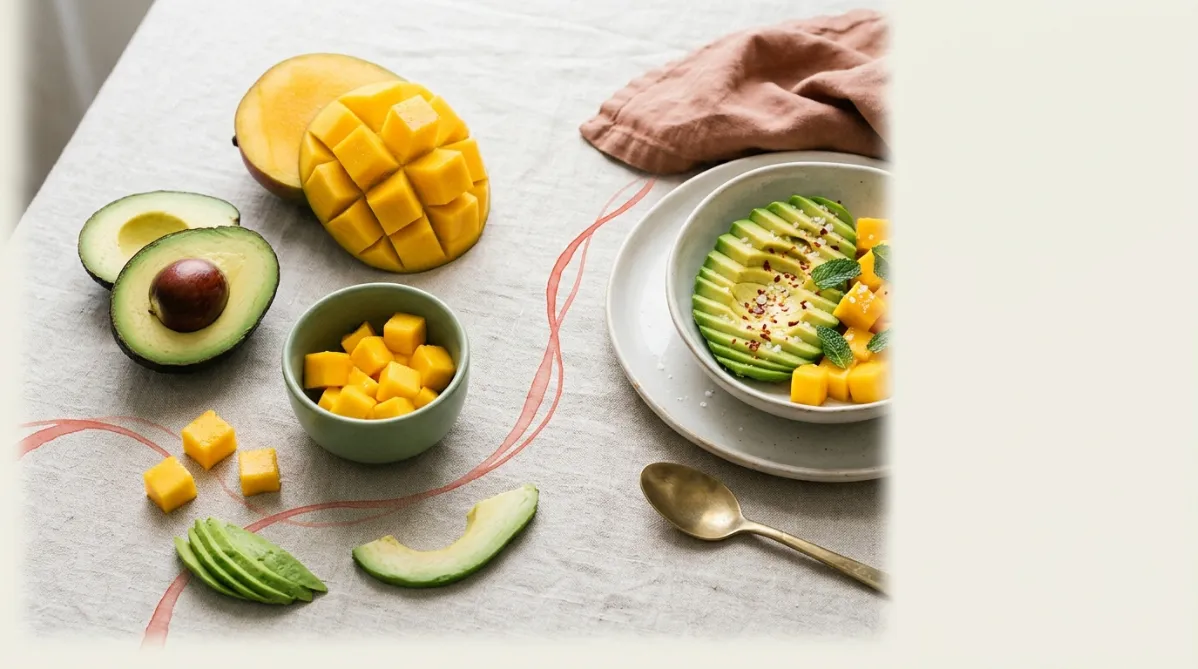
A wide, softly lit editorial still life photographed from slightly above on a pale oat-colored linen surface. On the left, a halved ripe Hass avocado with its glossy pit still nestled in one half, the flesh a buttery gradient from deep green at the skin to creamy yellow at the center. Beside it, a ripe mango is sliced into thick cheeks with a neat crosshatch pattern, the golden-orange flesh catching the light. A small ceramic bowl in matte sage green holds a cup of diced mango cubes. A few scattered mango cubes and a thin avocado slice fan out across the surface.

On the right, a minimalist ceramic plate holds a simple composed bowl: sliced avocado fanned over mango, with a sprinkle of flaky sea salt, a pinch of chili flakes, and a few torn mint leaves. A linen napkin in muted terracotta is draped casually at the edge of the frame. A single brushed-brass spoon rests nearby.

A subtle graphic touch ties in the artery theme: a thin, elegant line of warm coral red, like a hand-drawn ribbon or gentle wave, curves through the negative space on the surface, suggesting a blood vessel and flow without looking clinical. It passes softly beneath the fruit as if painted on the table in watercolor.

Natural morning window light enters from the upper left, creating soft long shadows and gentle highlights on the fruit's surface. The palette is warm and fresh: avocado greens, mango golds and oranges, cream, sage, and a hint of coral. Shallow depth of field blurs the background edges into creamy neutrals, leaving generous clean empty space on the right third for title text. Modern wellness magazine aesthetic, crisp but organic, high-end food photography, with a subtle film-like grain and calm, balanced composition.
nutrition

Avocado + Mango Daily: What Changed in Arteries (and What Didn't)

BY DR. GYMBRO ·

Eight weeks of one avocado and one cup of mango a day changed something in the arteries of adults with prediabetes. It wasn't blood sugar. In an 82-person randomized trial, flow-mediated dilation rose about 1% on the fruit diet while it fell on a low-fiber control, a between-group gap of roughly 2.1% (P=0.008). Diastolic blood pressure improved mainly in men, and most other markers showed no difference. The study was partly funded by the Hass Avocado Board and the National Mango Board, so here is what it does and doesn't show, and how to fit the combo into a cut or maintenance diet.

This page is available in