Dr. Gymbro
←

#gaming performance

1 article
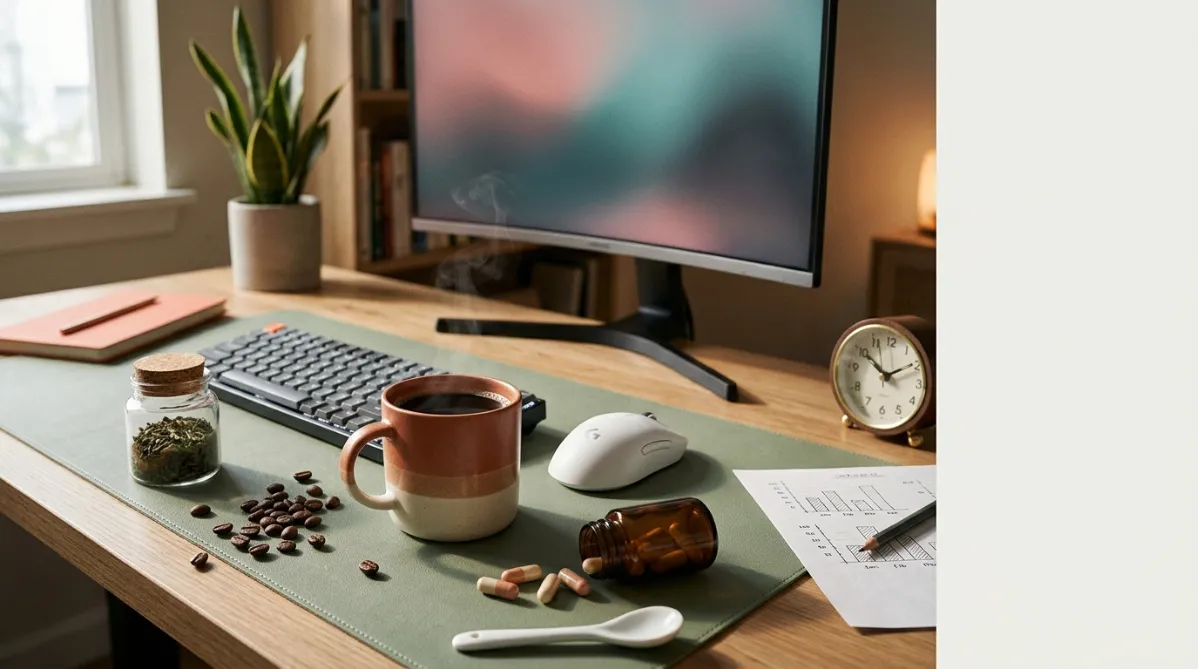
A landscape editorial still life on a softly lit desk, shot from a slightly elevated three-quarter angle with shallow depth of field. In the center sits a ceramic cup of black coffee with a thin curl of steam, on a matte sage-green desk mat. Beside it, a sleek white wireless gaming mouse and a minimal, low-profile keyboard are partly in focus. Scattered in the foreground are a few whole roasted coffee beans and a small glass jar of loose green tea leaves, as a quiet nod to caffeine sources. To the left, a few unlabeled supplement capsules in muted peach and cream spill from a small amber glass bottle onto the mat. Their blurred, ordinary look hints that they are less important than the coffee. In the background, a monitor glows with a soft, abstract, out-of-focus gradient of dusty rose and teal, with no readable game interface. A small analog alarm clock sits at the edge of the frame, its hands near late evening, suggesting sleep concerns. A sheet of paper with simple hand-drawn bar charts and a pencil rests near the cup, hinting at research and data without any legible text.

The palette is warm and modern: cream, sage, terracotta, charcoal, with a single accent of coral. Soft window light comes from the left, casting gentle long shadows and a subtle film-like grain. The composition is clean and uncluttered, with generous negative space on the right third for a title overlay. The look is contemporary and trendy, like a lifestyle-science magazine cover, calm, tactile, and sophisticated, with no sci-fi or neon cyberpunk elements.
supplements

The Gaming Supplement With Real Evidence Isn't What Ads Sell

BY DR. GYMBRO ·

Gaming supplement ads promise laser focus and lightning reflexes, but a new systematic review of 13 randomized trials (466 players) shows the evidence is mostly about one ingredient: caffeine. It appeared in 14 of 18 tested protocols and was linked to better attention, executive function, mood, and shooting accuracy and reaction time. Inositol-enhanced arginine silicate, GABA, and microalgae were also tested, but with far less backing. The authors warn that small samples, amateur players, and bias risk make the findings preliminary. Here's what the research shows, what side effects to watch for, and how to use caffeine sensibly without sacrificing sleep.

This page is available in