Dr. Gymbro
←

#ketogenic diet

2 articles
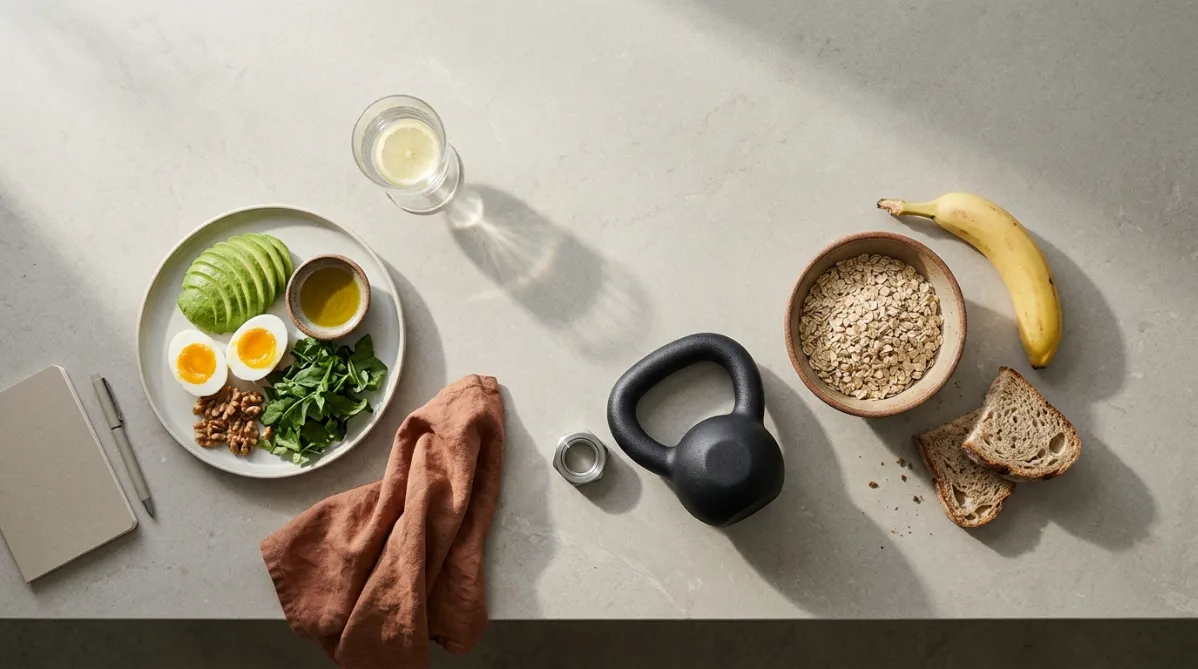
A wide, editorial-style flat lay photographed from above on a pale warm-gray stone countertop, bathed in soft natural window light with gentle long shadows. On the left half, a minimalist keto plate: sliced avocado fanned out in creamy green, two soft-boiled eggs halved to reveal golden yolks, a small pile of dark leafy greens, a few walnuts, and a glossy drizzle of olive oil in a small ceramic dish. On the right half, a contrasting arrangement of carbohydrates: a rustic bowl of oats, a ripe banana, and a few slices of sourdough, arranged with equal visual weight. Between the two sides, a matte black kettlebell sits at the center, and a slim brushed-steel barbell collar rests nearby, suggesting resistance training without a gym setting. A simple, elegant glass of water with a lemon slice catches the light and casts a delicate refracted glow, hinting at water weight and glycogen. A linen napkin and a small, neutral-toned notebook with a pen add a journal-like touch. The palette is muted and modern: sage green, cream, terracotta, charcoal, and soft butter yellow. The composition is clean and balanced with generous negative space across the top and bottom edges, suitable for headline overlay. The mood is calm, thoughtful, and science-informed, like a contemporary health and wellness magazine cover. Shallow depth of field, crisp textures on the food, subtle film-like grain, and high-end, trendy food photography styling.
nutrition

Keto for Lifters: Fat Drops, But Lean Mass Lagged by 1.4 kg

BY DR. GYMBRO ·

A 50-study review finds that ketogenic diets cut fat and generally keep strength intact. But in resistance-trained adults, lean mass came out about 1.37 kg lower than on non-keto diets. The authors rate that finding low certainty and stress it doesn't prove muscle loss, since glycogen and water may explain much of it. High-intensity performance was also more often unchanged or impaired. Here's who keto may suit for cutting, who should skip it, and how to protect lean mass.
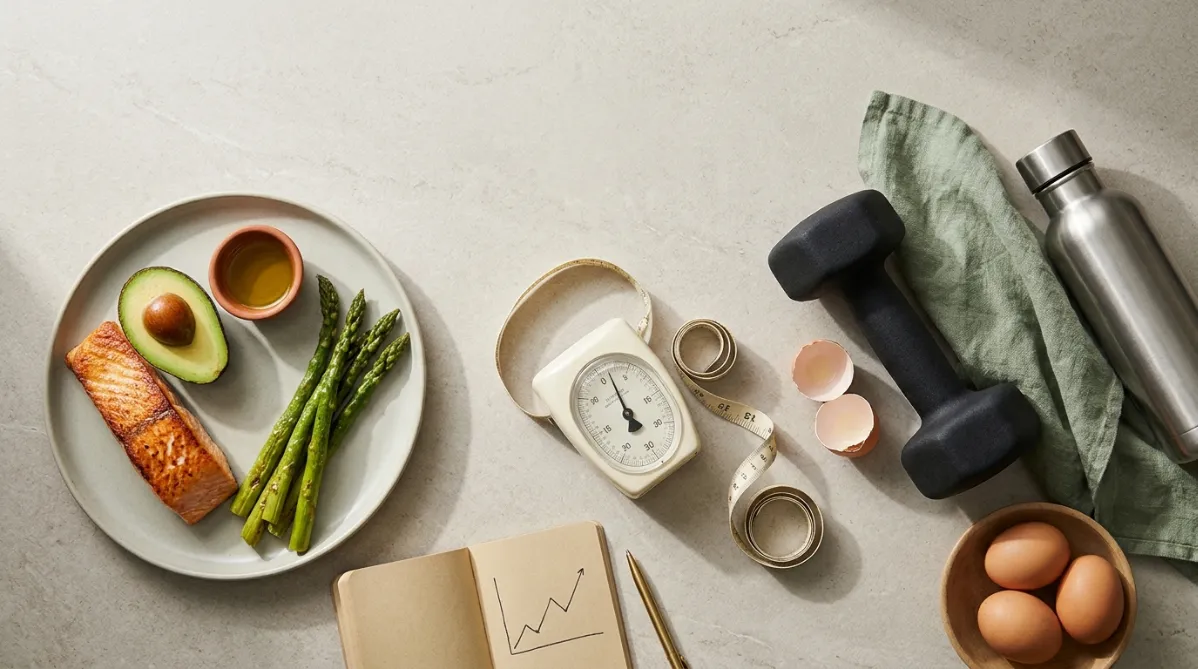
A bright, minimalist editorial flat-lay photographed from above on a pale warm-gray stone countertop in soft natural window light. On the left, a ceramic plate holds a keto-style meal: a seared salmon fillet with crisp skin, half an avocado with a glossy pit, a scattering of bright green asparagus spears, and a small dish of golden olive oil. On the right, a matte black dumbbell rests beside a folded sage-green linen towel and a slim stainless steel water bottle. A raw egg and a few whole eggs in a shallow wooden bowl add a protein cue. In the center, a clean analog kitchen scale and a flexible cream-colored measuring tape curl gracefully in a loose spiral, hinting at body composition tracking. A small open notebook with a minimal hand-drawn line graph, with no legible text, sits at the lower edge with a thin brass pen.

The palette is calm and modern: muted sage green, creamy ivory, warm terracotta accents from a small clay ramekin, and deep charcoal from the dumbbell. Shadows are soft and long, falling diagonally, giving gentle depth. The composition leaves generous negative space at the top and right for title placement. Shallow depth of field, crisp focus on the salmon and dumbbell, subtle film-like grain, and a refined, trendy health-journal look reminiscent of contemporary wellness magazines. Natural, airy, balanced, and slightly editorial, with no people, no text, and no futuristic elements.
nutrition

Does Keto Spare Muscle on a Cut? The Lean-Mass Data Surprises

BY DR. GYMBRO ·

Keto is often pitched as a muscle-sparing way to cut, thanks to the supposed anti-catabolic effects of ketones. A new narrative review in Nutrients tests that idea against clinical data and finds it wanting. Ketogenic diets mostly cut fat, but meta-analyses show slightly larger fat-free mass losses than non-keto diets. The catch is that DXA and BIA can't separate muscle from water and glycogen, so the true muscle effect remains unclear. What really protects lean tissue is the familiar trio of adequate protein, resistance training and a moderate deficit.

This page is available in