Dr. Gymbro
←

#motor units

1 article
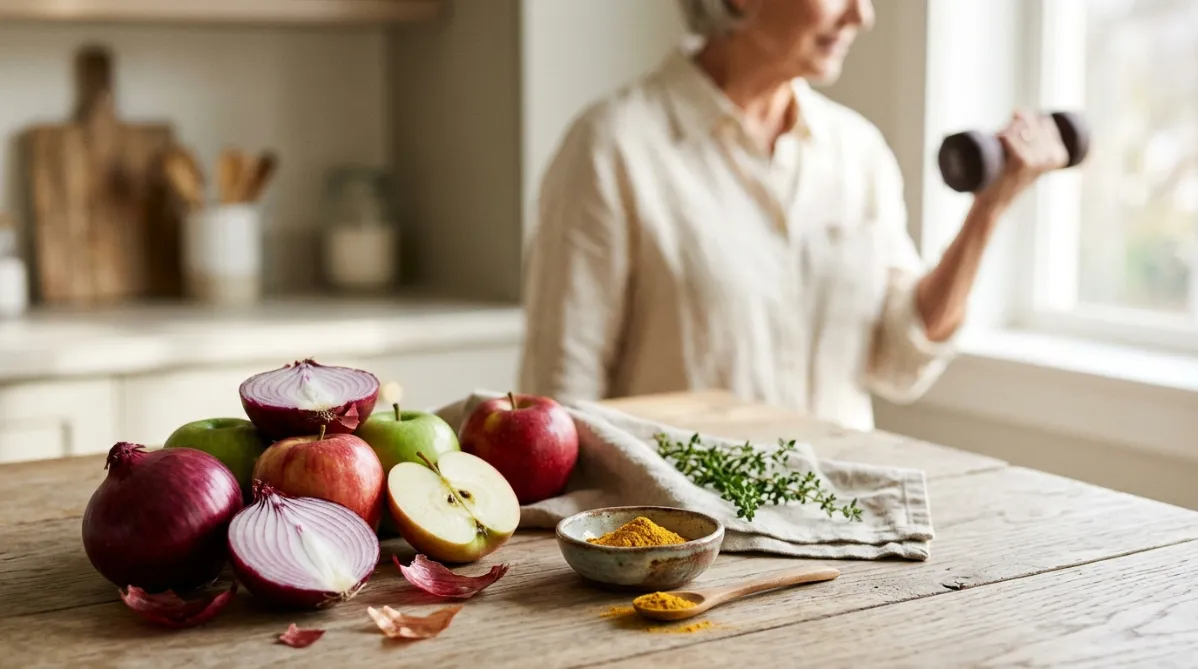
A landscape editorial photograph of a rustic kitchen table in soft morning window light. On a weathered light oak surface, a loose arrangement of fresh red onions, a few halved to show their purple-white rings, and crisp red and green apples, one sliced open to reveal pale flesh. A small ceramic bowl holds a pinch of golden-yellow quercetin powder, with a wooden spoon resting beside it. In the softly blurred background, an older woman in a cream linen shirt lifts a modest dumbbell near a sunlit window, her posture strong and relaxed. Her silhouette is out of focus, which keeps the produce as the main subject.

The palette is warm and natural: deep magenta onion skins, glossy apple reds, buttery yellow accents, and creamy neutrals. A gentle shallow depth of field gives creamy bokeh in the background. The light is diffused and golden, with delicate shadows and a few dried onion skin flakes scattered across the wood for texture. A folded linen napkin and a small sprig of thyme add a curated, modern lifestyle-magazine feel.

The composition follows the rule of thirds, with the produce at lower left and negative space on the right, where the blurred lifter and window glow provide balance. The overall look is clean, calm, and contemporary, like a premium health and wellness journal cover: natural, tactile, and optimistic, with fine film-like grain and true-to-life color.
nutrition

Quercetin Tripled Strength Gains in Older Lifters—Without More Muscle

BY DR. GYMBRO ·

A cheap flavonoid found in onions and apples may have just boosted strength gains in older lifters far beyond what training alone delivered. In a randomized, double-blind trial, older adults taking 200 mg/day of quercetin glycosides gained about 15% in knee strength over six weeks, versus about 5% on placebo. Strangely, muscle mass didn't change in either group. The edge appeared to come from the nervous system, with higher-threshold motor units firing faster. Here's what the study found, how to apply it, and why the small sample demands caution.

This page is available in