Dr. Gymbro
←

#perimenopause

1 article
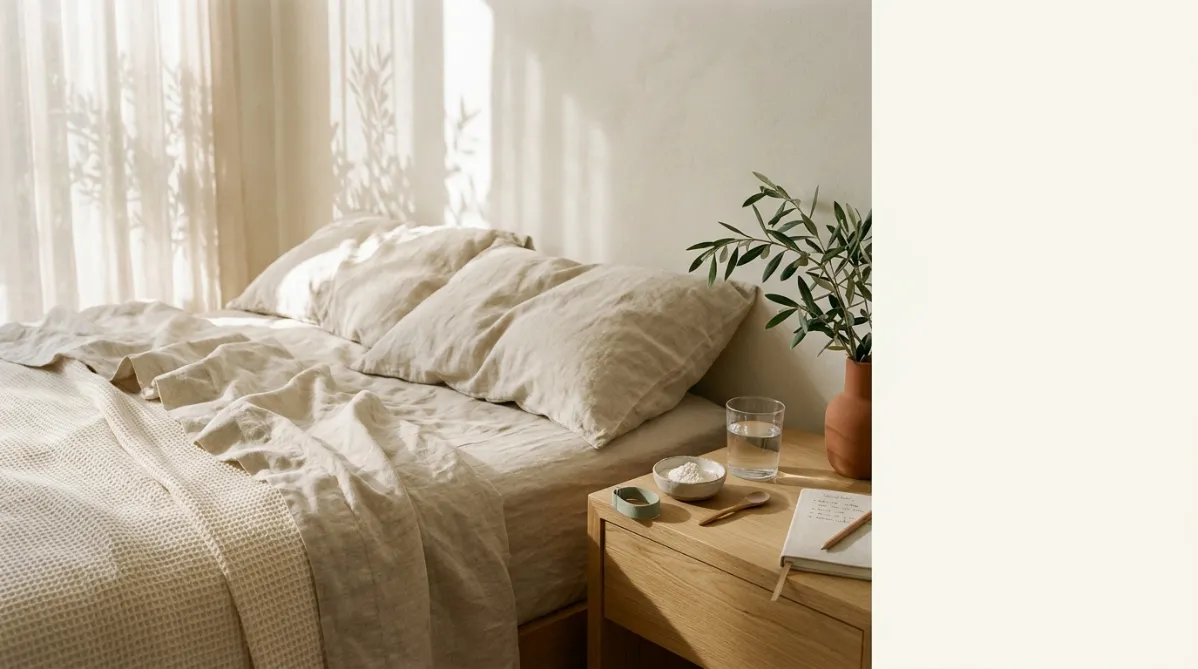
A calm, sunlit bedroom scene in soft editorial photography style, shot in landscape format. In the foreground, a rumpled bed with crisp oatmeal-colored linen sheets and a cream waffle-knit blanket, morning light spilling across it through sheer curtains. On a light oak nightstand sits a clear glass of water beside a small ceramic bowl holding a loose scoop of fine white powder, a wooden spoon resting next to it. A minimalist fabric wristband in muted sage green lies casually on the nightstand, suggesting sleep tracking without any screens or glowing displays. A slim open notebook with a pencil rests beside it, hinting at research and reflection. A potted olive branch in a terracotta vase adds an organic touch. The wall behind is warm off-white plaster with soft, gently shifting shadows of leaves. Color palette: warm sand, muted sage, soft blush, creamy white, and touches of terracotta. The mood is quiet, restorative, and thoughtful, like a modern wellness journal feature. Shallow depth of field, a soft film-like grain, natural diffused light, and generous negative space on the right side of the frame for title overlay. The composition is balanced and uncluttered, with a gentle golden-hour glow. The style is contemporary lifestyle editorial, tactile and understated, with no text, no people's faces, and no futuristic elements.
science research

Creatine Didn't Speed Up Perimenopausal Brains. Sleep Is Another Story

BY DR. GYMBRO ·

Creatine was supposed to sharpen perimenopausal brains, but the main thinking-speed test showed no creatine advantage. Instead, a small exploratory trial of 51 women found higher prefrontal oxygenation, a 7.4-point sleep consistency edge at week 6 and fewer temperature-sensitivity days. Everyone, including placebo, got faster on the Stroop task. The study design, dosing, limits and the authors' creatine and WHOOP ties are all laid out here, so you can judge how much weight the findings deserve.

This page is available in