Dr. Gymbro
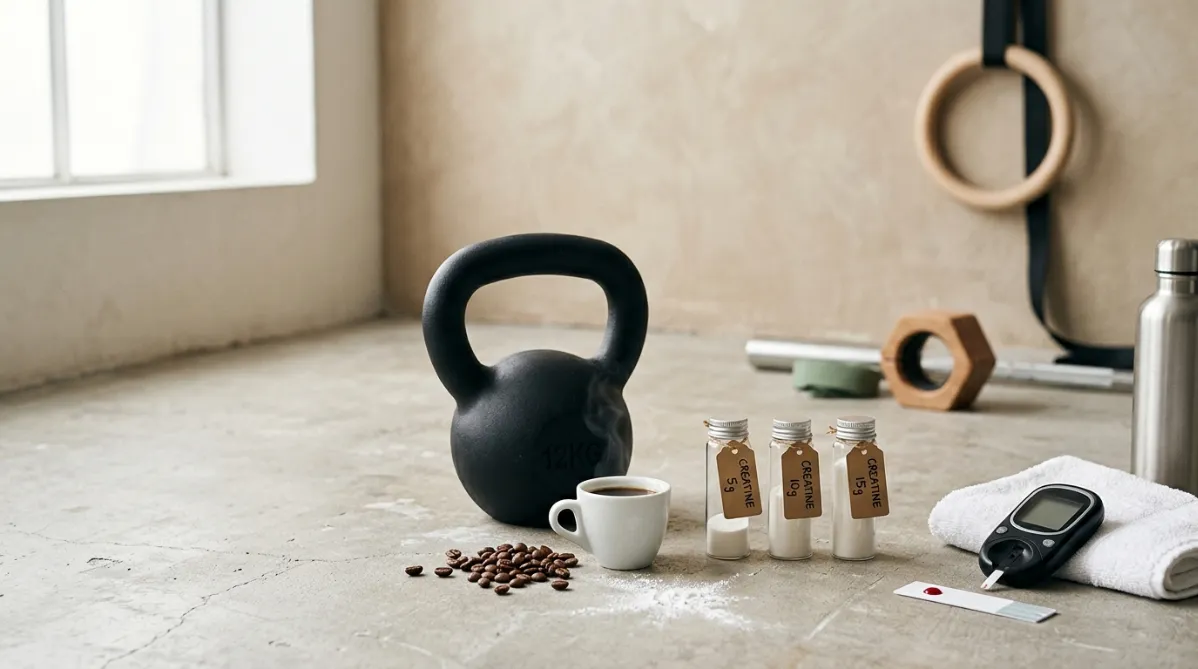
A wide, editorial-style still life photographed in soft natural window light, set on a pale concrete gym floor with a warm oatmeal-toned wall behind it. In the center foreground, a matte black kettlebell sits beside a white ceramic espresso cup filled with dark coffee, a thin wisp of steam rising. Next to the cup, three small glass vials of increasing fill levels stand in a neat row, containing fine white powder, each tied with a small kraft paper tag. Scattered nearby are a few roasted coffee beans and a pinch of chalk dust that catches the light.

On the right side, a minimalist glucose meter with a small blank screen rests next to a folded white towel and a stainless steel water bottle. A single drop of bright crimson blood on a clean test strip adds a subtle focal accent. A wooden barbell collar and a loop of gymnastic rings hang softly out of focus in the background, suggesting a CrossFit box without showing any people.

The palette is warm and restrained: cream, charcoal, terracotta, and muted sage green, with one pop of coral red from the droplet. The composition uses generous negative space on the left third for headline overlay, a shallow depth of field, and gentle long shadows falling across the floor. The mood is calm, clean, and modern, like a premium health and science magazine cover: crisp textures, subtle film grain, natural color grading, and a slightly elevated three-quarter camera angle in landscape 16:9 format.
Nutrition

6 чи 9 мг/кг кофеїну перед CrossFit: що показує рівень глюкози у крові

Dr. Gymbro · · 3 min read

Неочікувані результати аналізів крові

Можна було очікувати, що велика доза передтренувального кофеїну «перемішає» ваші лабораторні показники: кількість клітин, мінерали тощо. Однак нове рандомізоване дослідження показало значно спокійнішу картину. Серед усіх маркерів, які вимірювали під час тренування CrossFit, лише глюкоза в крові явно реагувала на кофеїн, і то лише при вищих дозах.

Дослідження опубліковано у Journal of the International Society of Sports Nutrition (2026) і проведено Główka, Podgórski, Malik, Nowaczyk та Durkalec‑Michalski. Його можна знайти на PubMed або за DOI.

Як було проведено випробування

Дизайн був надмірно строгим: рандомізоване, подвійно сліпе, плацебо‑контрольоване крос‑овер‑дослідження, у якому кожен спортсмен пройшов усі умови. Двадцять шість помірно навчених атлетів CrossFit отримували одну з чотирьох речовин:

  • Плацебо
  • 3 мг/кг кофеїну (низька доза)
  • 6 мг/кг кофеїну (середня доза)
  • 9 мг/кг кофеїну (висока доза)

Кожну порцію приймали за 70 хвилин до 17‑хвилинного тренування CrossFit. Дослідники відстежували гематологічні (кров'яні клітини) та біохімічні маркери у кількох часових точках. Дослідження зареєстровано під номером NCT03822663.

Для орієнтиру: у спортсмена вагою 80 кг це приблизно 240 мг, 480 мг і 720 мг кофеїну відповідно. Це мій розрахунок, а не дані з статті.

Головний висновок: підвищення глюкози при 6 і 9 мг/кг

Автори виявили значну взаємодію «доза × часова точка» лише для глюкози. Середня (6 мг/кг) та висока (9 мг/кг) дози спричиняли помітно вищий підйом глюкози після тренування, ніж плацебо.

Нижча доза 3 мг/кг не відрізнялася від плацебо. У рефераті не вказано, наскільки великі ці різниці в клінічному плані, і не сказано, чи вони впливають на продуктивність чи здоров'я. Тож висновок: глюкоза реагує лише при вищих дозах, а не те, що ці дози шкідливі.

Чого не зробив кофеїн

Нульові результати теж важливі для практичних рішень:

  • Гематологічні індекси (кров'яні клітини): головним драйвером змін був саме спорт. Кофеїн не виявив специфічного впливу.
  • Фосфати: рівень зростав з часом, особливо після вправи. Після виключення базового візиту ефект від лікування зник.
  • Кальцій: зміни слідували за часом, а не за кофеїном.
  • Магній: залишався стабільним.

Автори підсумовують, що гострий кофеїн «вибірково впливає на пост‑тренувальну відповідь глюкози», тоді як гематологічні змінні та більшість біохімічних маркерів залишаються без змін.

Скільки ж кофеїну насправді потрібен CrossFit‑еру?

Стаття не дає однозначної відповіді. У рефераті розглядаються лише біомаркери, а не результати тренувань, тому ми не знаємо, чи 9 мг/кг перевершує 3 мг/кг за продуктивністю. Те, що вона показує, — це підвищення глюкози при вищих дозах, а не зміни інших параметрів.

Обережний підхід до застосування даних

  • Доза: найнижча протестована доза — 3 мг/кг — не викликала чіткого глюкозного сигналу. Якщо саме на цій межі ви вже отримуєте потрібну бадьорість, дослідження не дає підстав підвищувати дозу до 6 або 9 мг/кг.
  • Таймінг: у випробуванні кофеїн давали за 70 хвилин до короткого, 17‑хвилинного тренування. Це логічний шаблон, якщо ви хочете повторити умови дослідження.
  • Кому це підходить: здоровим, помірно навченим атлетам, схожим на учасників, які вже толерують кофеїн і шукають діапазон, підкріплений даними.
  • Кому варто бути обережним або відмовитися від великих доз:
    • Людям, які контролюють рівень цукру в крові (діабет, переддіабет) або яким радять стежити за глюкозою. Спочатку варто проконсультуватися з лікарем – у дослідженні такі групи не тестувалися.
    • Тим, хто чутливий до кофеїну, має проблеми з серцевим ритмом, артеріальним тиском, тривожністю чи сном. Ці питання не вивчали, але це стандартні причини для обережності.
    • Вагітним спортсменкам та підліткам, яким зазвичай рекомендують нижчі межі споживання кофеїну.

Один зовнішній контекст: органи охорони здоров’я, такі як FDA та EFSA, часто вказують приблизно 400 мг кофеїну в день як безпечний ліміт для більшості здорових дорослих. Доза 9 мг/кг перевищує цей ліміт у більшості людей. Це не дані дослідження, а загальна рекомендація, яка підказує ставитися до найвищої дози обережно.

Обмеження, про які варто знати

  • Мала вибірка: 26 помірно навчених атлетів – скромна група, і результати можуть не переноситися на елітних спортсменів або новачків.
  • Тільки гостра доза: випробовували одиничний прийом, а не тривале використання протягом тижнів.
  • Один формат тренування: 17‑хвилинна сесія CrossFit не обов’язково репрезентує довгі або інші типи тренувань.
  • Людське, а не тваринне дослідження: це сила, проте реферат не повідомляє про продуктивність, сприйняте навантаження чи побічні ефекти, тому ці питання залишаються відкритими.
  • Нюанс мінералів: результат щодо фосфатів залежав від підходу до аналізу, тому його не варто переоцінювати.

Підсумок

Більша кількість кофеїну не переписала кров'яний профіль спортсмена, окрім глюкози. При 6 і 9 мг/кг після тренування глюкоза піднялася вище, ніж при плацебо, тоді як показники клітин, кальцій і магній залишилися практично незмінними. Якщо ви вживаєте кофеїн перед CrossFit, це дослідження підтримує старт з низької дози, близько 3 мг/кг, за годину до тренування. Вищі дози слід розглядати лише як індивідуальний тест, а не як стандартну практику.

Джерела: PubMed 42924484 | DOI 10.1080/15502783.2026.2740805
Original study

Read the original research on pubmed.ncbi.nlm.nih.gov →

This article summarizes published research for general information. It is not medical advice.

DG

Written by

Dr. Gymbro

Dr. Gymbro writes for Dr. Gymbro: science-backed fitness, nutrition & performance.

Related Articles

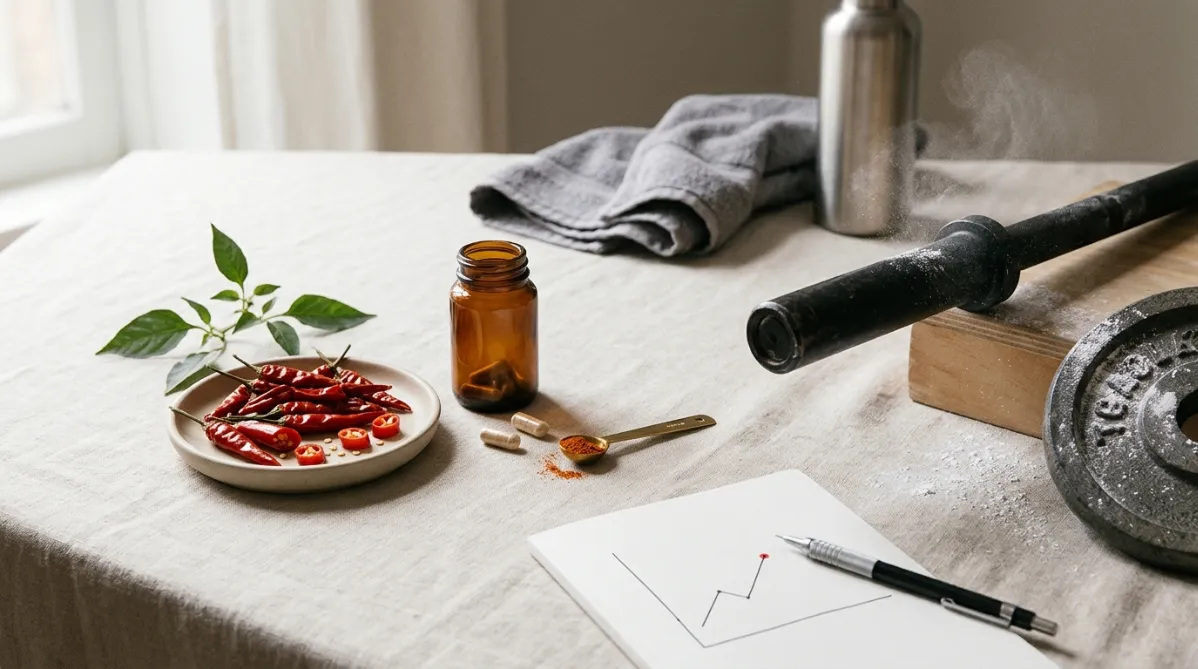
A wide, editorial-style still life photographed in soft natural window light on a pale oatmeal-colored linen surface. In the center-left, a small matte ceramic dish holds a modest pile of vivid red dried chili peppers and a few sliced fresh chilies, their glossy seeds catching the light. Beside it sits a minimalist amber glass capsule bottle without a label, with two translucent capsules spilled onto the linen, along with a tiny brass measuring spoon holding a pinch of fine orange-red powder.

On the right side of the frame, slightly out of focus, a worn black barbell rests across a wooden gym box, with a chalk-dusted steel plate leaning nearby. A small cloud of white chalk dust hangs delicately in the air, backlit by the light. A folded gray cotton gym towel and a simple stainless steel water bottle sit in the soft background.

In the foreground, a minimalist white notebook lies open with a clean hand-drawn line graph in thin black ink, with a small red dot marking one point. A mechanical pencil rests across the page.

The palette is warm and restrained: terracotta red, burnt orange, cream, charcoal, and muted sage green accents from a single leafy chili plant stem. Shallow depth of field, subtle film grain, gentle shadows, generous negative space at the top of the frame for a title overlay. Modern health and science journal aesthetic, calm, clean, tactile, and slightly moody, like a magazine feature on sports nutrition. No people, no text, no logos.
nutrition

Фенілкапісацин: передтренувальний підзаряд для кросфіт‑присідань і зменшення болю

BY DR. GYMBRO ·

Спеціальна сполука, отримана з перцю чилі, під назвою фенілкапісацин, пройшла тройне сліпе кросоверне випробування з 50 кросфіт‑спортсменами. Одна доза 2,5 мг, прийнята за 45 хвилин до тренування, підвищила результат у присіданнях, зберегла висоту стрибка та зменшила м’язовий біль протягом 24–48 годин. При цьому показники самого WOD, рівень лактату, RPE і пульс залишилися без змін. Два автора є радниками бренду Life Pro Nutrition, а дослідження охоплює лише одну гостру дозу.

A wide, editorial-style still life photographed on a pale warm-gray concrete surface in soft morning window light. In the center sits an open, matte white supplement tub with a scoop resting beside it, a small mound of fine white powder spilling onto the surface. Next to it is a clear glass of water with a faint cloudy swirl of dissolved powder. A few loose capsules in muted coral and cream tones are scattered casually in the foreground. Behind them, slightly out of focus, is a clean running track lane in terracotta red with crisp white lines curving across the background. A pair of minimalist off-white sprint spikes rests on the edge of the track, laces loosely undone. A stopwatch with a brushed metal casing lies partially in frame at the right, its face reading a blurred, indistinct time.

The composition uses generous negative space on the left third, leaving a calm area of soft gray and cream for headline text. Shadows are long, gentle, and slightly cool, contrasting with the warm terracotta of the track. The palette is restrained: terracotta, bone white, soft sage green accents from a small leaf sprig tucked near the tub, and charcoal gray details. Shallow depth of field with a crisp focus on the scoop and powder, creamy bokeh behind. The mood is thoughtful, skeptical, and calm, like a modern wellness or science journal cover. Subtle film grain, natural color grading, and a tactile, tangible feel, with no text, no logos, and no futuristic elements.
nutrition

Бета‑аланін майже в кожному предтренуванні: дослідження показують, що він може не працювати

BY DR. GYMBRO ·

Бета‑аланін міститься практично в усіх предтренувальних комплексах, а характерне поколювання змушує думати, що він діє. Проте мульти‑рівневий meta‑аналіз 2026 року, який охопив 17 рандомізованих контрольованих досліджень, не виявив жодного позитивного впливу на повторні спринти – ні на середню, ні на пікову продуктивність, ні на зниження втоми. Доза, тривалість курсу та рівень підготовки спортсменів не змінили результатів. Автори вважають, що обмежувачем повторних спринтів є відновлення фосфокреатину, а не ацидоз, який бета‑аланін має нейтралізувати. Нижче – хто ще може отримати користь, кому можна обійтись без нього та що дослідження не може нам сказати.

A wide, editorial-style still life shot from a slightly elevated angle on a pale oak laboratory-meets-kitchen countertop, bathed in soft, diffused morning window light. In the center, two small matte ceramic bowls sit side by side: one holds fine white creatine powder, the other holds slightly coarser off-white L-arginine crystals. A brushed steel scoop rests beside each. Between and slightly behind them stands a clear glass shaker bottle filled with a cloudy, pale liquid, catching a gentle highlight. In the foreground, a minimalist analog stopwatch lies on the wood surface, its face crisp and legible, next to a folded sheet of off-white paper with a hand-drawn simple bar chart in charcoal pencil, with one tall bar and a few shorter ones, no text or numbers. In the soft-focus background, a blurred gym-style window view shows a pale running track and a muted sage-green hedge, suggesting sprinting and athletic testing without any people. Eighteen small smooth stones or white pills are arranged in a neat loose arc across the lower edge of the frame, a subtle nod to the small sample size, with one stone set slightly apart. The color palette is calm and modern: warm cream, bone white, soft sage, muted terracotta accents from a small clay dish, and thin touches of brushed metal. Shadows are long and gentle, the depth of field shallow, with a fine film-like grain. The composition leaves generous negative space on the left third for a title overlay. The mood is clean, thoughtful, and trustworthy, like a contemporary health and science journal cover, with no futuristic elements, no glowing effects, and no text.
nutrition

Креатин + L‑аргінін підвищив максимум потужності на ≈99 Вт – у чому підступ

BY DR. GYMBRO ·

Новий крос‑овер дослідження показало, що прийом креатину і L‑аргініну за годину до тесту підвищив пік спринтерської потужності приблизно на 99 Вт у порівнянні з плацебо. Комбінація також перевищила окремі добавки за пік‑потужністю та висотою стрибка. Однак дослідники не змогли довести синергію між речовинами, а вибірка складалася лише з 18 чоловіків. Далі – цифри, дози та рекомендації, хто може спробувати, а хто варто утриматися.

A landscape editorial photograph with a modern, clean magazine feel, shot on a pale warm-gray concrete surface in soft natural window light from the left. In the foreground, two matte white ceramic espresso cups sit side by side. The left cup holds a small amount of dark espresso with golden crema. The right cup is filled twice as high. Beside them, two small stainless steel scoops hold fine coffee-colored powder, one half full and one heaped, suggesting a dose comparison without any text or labels. A pair of worn red leather boxing gloves rests slightly out of focus behind the cups, laces loosely draped, with a white hand wrap rolled neatly beside them. A minimalist digital kitchen scale in matte black sits at the edge of the frame, with a few roasted coffee beans scattered across the surface. In the soft-focus background, a boxing gym corner appears: a hanging heavy bag in muted charcoal, pale wood plank flooring, and a tall window with diffused morning light. The palette is warm cream, espresso brown, brick red, and soft slate gray, with gentle shadows and a shallow depth of field. The composition follows the rule of thirds, with the cups and scoops in the lower left third and open negative space on the right for headline overlay. The look is tactile and refined, like a high-end health and performance journal. It has natural grain, subtle contrast, and a calm, confident mood. There are no people, no text, no logos, and no futuristic elements.
nutrition

Подвійна доза кофеїну майже не допомогла боксерам — ось що спрацювало

BY DR. GYMBRO ·

Думаєте, що подвійна порція передтренувального комплексу автоматично подвоїть результативність? Нове дослідження серед конкурентних боксерів показало, що це не так. На 60‑хвилинному етапі як 3 мг/кг, так і 6 мг/кг кофеїну підвищували висоту стрибка, а більша доза не давала стабільно кращих результатів. Переваги 6 мг/кг було виявлено лише у деяких специфічних показниках, зокрема в ballistic push‑up та крутному моменті коліна.

This page is available in