Dr. Gymbro
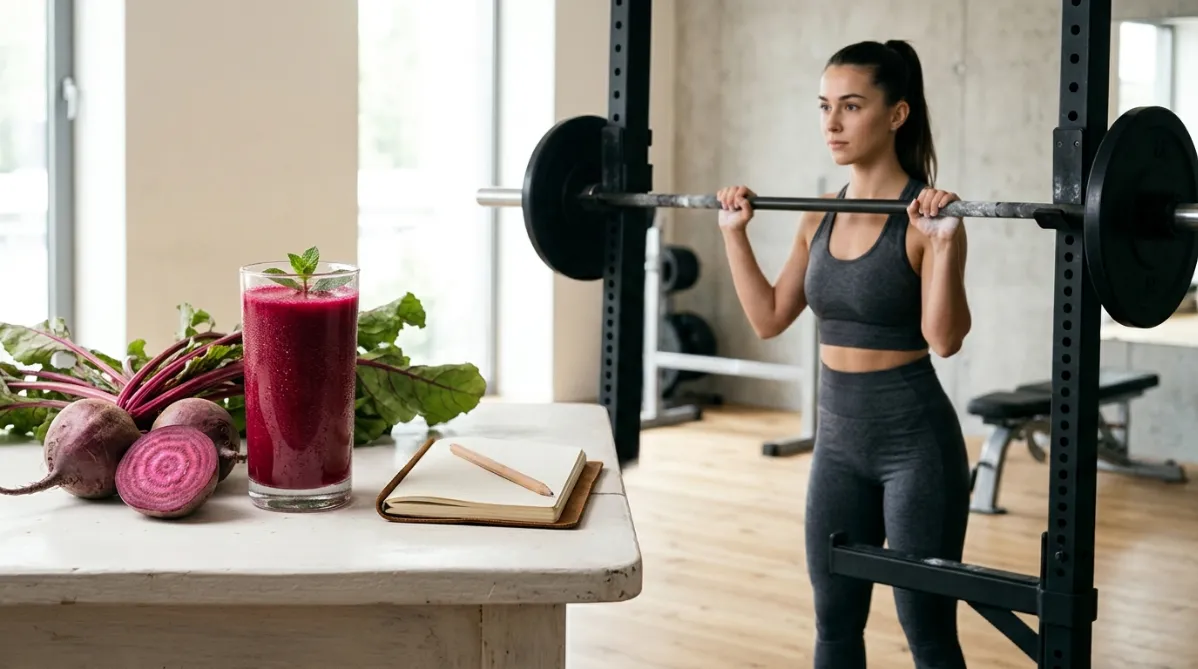
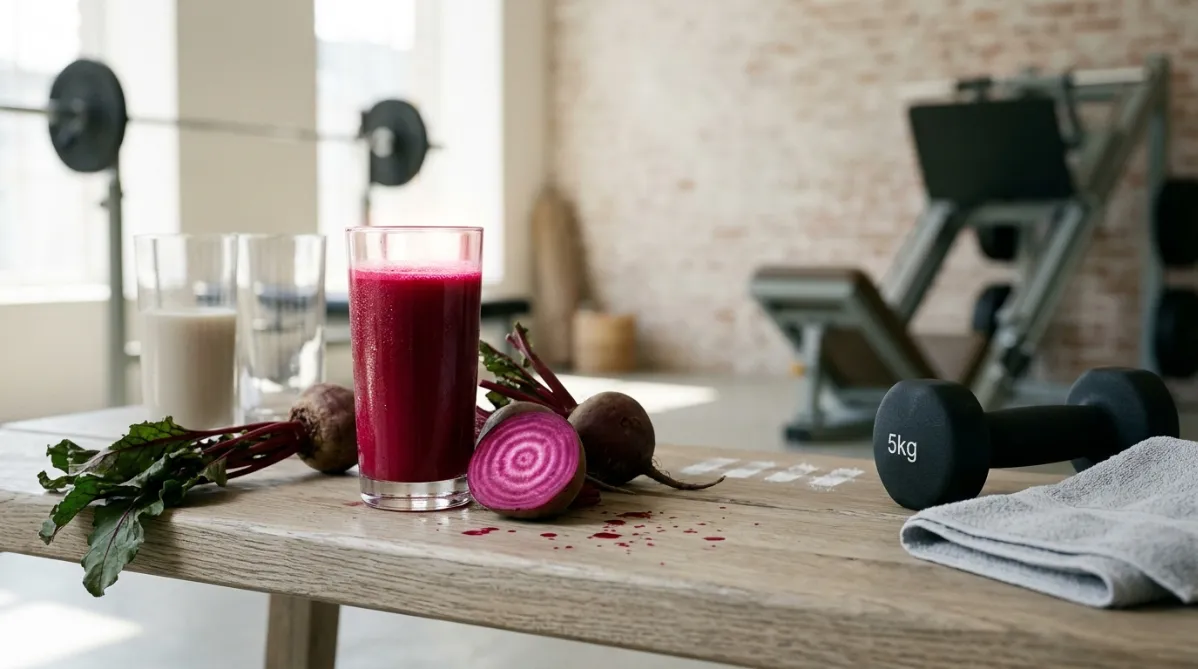
A wide, editorial-style still life photographed in soft natural window light, set on a pale oak gym bench or a light concrete surface. In the center foreground, a tall clear glass of deep magenta-crimson beetroot juice catches the light, with a faint luminous glow along its rim and condensation beading on the outside. Two other glasses sit slightly behind it, one holding a pale, neutral-colored liquid and one empty. They suggest the placebo and no-treatment conditions without any labels. Beside the glasses, a halved raw beetroot shows concentric rings of vivid fuchsia and violet. A few whole beets with their leafy stems and dark green and burgundy leaves are scattered casually nearby.

On the right side of the frame, slightly out of focus, a matte black women's-size dumbbell and a neatly folded light gray towel rest on the bench. Behind them, the soft blur of a minimalist, airy training space includes a barbell rack and a leg press machine in muted tones. The background is bright and neutral, in warm off-white, soft sand, and light gray, so the magenta of the juice is the dominant accent color.

A small, restrained motif of four evenly spaced chalk marks or four small round weight plates arranged in a neat row on the bench hints at the "four sets" of the trial. A few drops of beet juice have splashed onto the surface, forming a tasteful organic pattern.

The composition follows the rule of thirds, with the glass of juice on the left third and open negative space on the right for headline text. Shallow depth of field, crisp focus on the glass and beet, subtle film-like grain, and a calm, modern, trendy magazine aesthetic. The palette is magenta, deep burgundy, sage green, cream, and soft gray. The mood is quiet, skeptical, and scientific without any laboratory imagery, with clean lines and an elegant, minimal feel.
supplements

Nước Củ Cải Đỏ Không Thêm Một Rep Nào Cho Phụ Nữ Tập Tạ

Dr. Gymbro · · 5 min read

Nước ép củ cải đỏ có danh tiếng là chất tăng hiệu suất tự nhiên: các vận động viên sức bền thường uống trước khi thi đấu, còn những người tập tạ tự hỏi liệu nó có thể giúp họ thực hiện thêm rep hay không. Một nghiên cứu ngẫu nhiên, mù đôi, thiết kế giao thảo mới cho thấy, đối với phụ nữ tập tạ, lợi ích có thể bằng không. Kết quả không phải là một hiệu ứng nhỏ hay mơ hồ; đó là một kết quả không có hiệu ứng rõ ràng.

Nghiên cứu: Kiểm tra nitrat ở phụ nữ

Bài báo của Teodoro, Guimarães và Manoel, được đăng trên Nutrition and Health năm 2026, nhằm lấp đầy khoảng trống nghiên cứu. Hầu hết các nghiên cứu về nitrat trong bài tập sức mạnh đã chỉ dùng người nam, vì vậy phản ứng của phụ nữ còn phần lớn là suy đoán.

Mười sáu phụ nữ tập luyện giải trí tham gia (tuổi trung bình 27 ± 4,7 năm). Sức mạnh tối đa một lần (1RM) trung bình của họ là khoảng 31 kg ở bài đẩy ngực và khoảng 199 kg ở máy đẩy chân 45°. Mỗi người thực hiện ba buổi thử nghiệm theo thứ tự ngẫu nhiên:

  • Nước ép củ cải đỏ giàu nitrat: BEET It Sport, cung cấp 12,8 mmol nitrat (NO₃⁻)
  • Giải pháp giả dược: chỉ chứa 0,92 mmol nitrat
  • Kiểm soát: không uống gì

Đồ uống được tiêu thụ 2,5 giờ trước buổi tập, phù hợp với thực tế vì tác dụng của nitrat thường đạt đỉnh sau vài giờ hấp thu.

Bài tập: Bốn hiệp tới khi không thể tiếp tục

Trong mỗi buổi, các cô gái thực hiện bốn hiệp đẩy ngực và bốn hiệp đẩy chân, mỗi hiệp thực hiện tới khi không thể thực hiện lần nữa (concentric failure) với tải trọng 60 % 1RM và thời gian nghỉ hai phút giữa các hiệp. Đây là một bài kiểm tra sức bền cơ đáng gánh, và tổng số rep của tất cả các hiệp là chỉ số hiệu suất chính. Nếu nitrat cải thiện lưu lượng máu, hiệu quả oxy hoặc khả năng co bóp cơ đủ để tạo ra sự khác biệt, giao thức này sẽ phát hiện được.

Kết quả: Không có sự khác biệt nào

Thực tế, không có gì thay đổi. Ở bài đẩy ngực, tổng rep trung bình là 55,6 ± 9,7 (kiểm soát), 58,9 ± 13,0 (giả dược) và 56,0 ± 14,0 (nitrat) (p = 0,785). Ở bài đẩy chân, các con số lần lượt là 82,6 ± 36,0, 80,4 ± 37,0 và 79,3 ± 30,0 (p = 0,945).

Kích thước hiệu ứng thực chất là không đáng kể (ηp² = 0,003 cho đẩy ngực và 0,001 cho đẩy chân). Thậm chí, nhóm giả dược lại cho tổng rep cao nhất ở bài đẩy ngực, nhắc nhở chúng ta về độ “ồn” trong dữ liệu rep‑to‑failure và ảnh hưởng của kỳ vọng.

Các chỉ số phụ cũng kể cùng một câu chuyện. So với giả dược, nitrat không có tác động đáng kể tới:

  • Đánh giá mức độ nỗ lực (RPE)
  • Nhịp tim
  • Huyết áp
  • Nồng độ lactate trong máu

Nói cách khác, nước ép không cải thiện hiệu suất, cũng không làm thay đổi rõ rệt các phản ứng sinh lý cấp tính của cơ thể trong buổi tập.

Tại sao nitrat lại không hiệu quả ở đây?

Nghiên cứu không thể chỉ ra nguyên nhân, nhưng có vài hướng giải thích khả dĩ cho các nghiên cứu tương lai. Nitrat được chuyển thành nitric oxide, có thể cải thiện lưu thông máu và hiệu quả cơ. Một số nghiên cứu cho rằng lợi ích này mạnh nhất ở sợi cơ type II và trong điều kiện oxy thấp. Liệu hiệu ứng này có khác nhau giữa các giới tính, mức độ luyện tập hay loại bài tập vẫn còn là câu hỏi, và thí nghiệm này không được thiết kế để tách riêng các yếu tố đó.

Dữ liệu đẩy chân cũng cho thấy độ biến thiên lớn. Độ lệch chuẩn từ 30 đến 37 rep quanh trung bình khoảng 80 rep cho thấy sự khác biệt cá nhân lớn. Với chỉ 16 người tham gia, một hiệu ứng thực sự nhỏ có thể bị “đè” trong tiếng ồn, mặc dù trung bình nhóm gần như bằng nhau khiến khả năng có hiệu ứng lớn là rất thấp.

Những hạn chế cần lưu ý

Đây không phải là tuyên bố rằng nước ép củ cải đỏ vô dụng cho mọi người. Nghiên cứu chỉ xét một liều duy nhất, trong một nhóm nhỏ phụ nữ tập luyện giải trí, và một giao thức cụ thể: tải trung bình, rep cao, thời gian nghỉ ngắn. Kết quả có thể khác khi:

  • Thực hiện các bài tập sức mạnh tải nặng hơn, ví dụ 1‑5 rep mỗi hiệp
  • Bổ sung nitrat kéo dài trong vài ngày hoặc vài tuần
  • Đối tượng là vận động viên chuyên nghiệp hoặc được đào tạo cao
  • Dùng liều nitrat hoặc thời gian dùng khác

Các nhà nghiên cứu cũng không khẳng định ngược lại. Kết luận của họ là: tiềm năng ergogenic của nitrat có thể bị giới hạn trong nhóm này.

Bài học thực tiễn

Nếu bạn là phụ nữ tập tạ và hy vọng một ly nước ép củ cải đỏ sẽ giúp bạn thực hiện thêm vài rep trong các hiệp rep cao, nghiên cứu này không cung cấp lý do để mong đợi điều đó. Dữ liệu ở mức nhóm không cho thấy lợi ích đo được ở phần trên hay dưới cơ thể, vì vậy tiền bạc và bình shaker bám màu có lẽ nên được dùng cho các yếu tố khác: duy trì lịch tập đều đặn, tăng tải dần, ngủ đủ giấc, cung cấp đủ protein và năng lượng.

Dù vậy, nước ép củ cải đỏ không gây hại trong hoàn cảnh này và vẫn là một nguồn nitrat thực phẩm cho những ai thích nó hoặc có lý do khác để tiêu thụ. Chỉ cần đừng kỳ vọng nó sẽ biến một hiệp “đình trệ” thành thành tích cá nhân mới.

Điều thú vị hơn từ nghiên cứu này có thể là về mặt phương pháp. Bằng cách bao gồm cả nhóm giả dược và nhóm không dùng gì, các nhà nghiên cứu cho thấy độ biến thiên lớn có thể xảy ra ngay khi không có thành phần hoạt tính. Khi có thêm nhiều nghiên cứu về phụ nữ, chúng ta sẽ có cái nhìn rõ ràng hơn về những tuyên bố bổ sung nào thực sự có cơ sở, và những tuyên bố nào chỉ dựa trên dữ liệu của nam giới.

Original study

Read the original research on pubmed.ncbi.nlm.nih.gov →

This article summarizes published research for general information. It is not medical advice.

DG

Written by

Dr. Gymbro

Dr. Gymbro writes for Dr. Gymbro: science-backed fitness, nutrition & performance.

Related Articles

A wide editorial still life on a clean, pale oatmeal-colored linen surface, lit by soft natural window light from the left. In the center-left, a small clear glass shot glass filled with deep magenta-crimson beetroot juice catches a glowing highlight, with a few droplets beaded on the surface beside it. Behind it sit two whole beetroots with their leafy stems, the skins a dusty burgundy and the stems a vivid pink-red, and one beetroot sliced in half to reveal concentric rings of magenta and soft pink. To the right, a vintage-style brass stopwatch rests at an angle on the linen, its white face crisp and its hands frozen, slightly out of focus in the foreground edge. A faint curve of a sprinting track lane, in muted terracotta with thin white lines, sweeps diagonally across the blurred background, hinting at a running track without showing any people. Scattered across the surface are a few small, delicate beet-colored splashes and a light dusting of coarse sea salt. The palette is restrained and modern: warm cream, terracotta, dusty rose, deep magenta, and touches of sage green from the leaves. Shallow depth of field and a gentle film-like grain give it a contemporary lifestyle-magazine feel. The composition leaves generous negative space on the upper right for title overlay. Minimalist, tactile, calm, and sophisticated, in the style of a high-end health and science journal's editorial photography, 16:9 landscape.
nutrition

Nước Củ Dền Tăng Nitrit 35 Lần, Nhưng Các Vận Động Viên Chạy Tốc Độ Không Tăng

BY DR. GYMBRO ·

Nước củ dền làm nồng độ nitrit trong nước bọt tăng khoảng 35 lần ở các vận động viên chạy tốc độ đã được huấn luyện, tạo ảo giác về một phép màu tăng hiệu suất. Tuy nhiên, khi đo thời gian, không có sự cải thiện nào. Trong một thí nghiệm ngẫu nhiên, mù mắt, có dùng giả dược với 12 vận động viên nam, một liều 70 mL nước củ dền không làm giảm thời gian 60 m hay 100 m, không tăng chiều cao nhảy, cũng không cải thiện hầu hết các chỉ số chức năng cơ. Bài viết sẽ tóm tắt những gì đã được thử, những gì nghiên cứu không thể khẳng định, và ai nên cân nhắc chi tiêu cho sản phẩm này.

A wide, editorial-style still life photographed on a pale warm-gray concrete surface in soft, diffused morning window light. On the left side, a tall clear glass filled with deep magenta-crimson beetroot juice sits beside two halved raw beetroots, their concentric rings of vivid fuchsia and purple clearly visible, with a few small green-and-red-veined leaves draped casually nearby. On the right side, a matching clear glass of cloudy white creatine solution rests next to a small matte ceramic bowl heaped with fine white powder and a minimal wooden scoop, a light dusting of powder scattered across the surface. In the center, between the two sides, a simple matte black barbell grip and a single chalk-dusted weight plate edge rise into the frame at a low angle, hinting at lifting without showing a person. The composition is split in a balanced, symmetrical way, with a subtle vertical shadow line dividing the saturated magenta tones on the left from cool, neutral whites and creams on the right. The background is softly blurred with a muted sage-green and oatmeal-toned wall, with plenty of negative space at the top for a headline overlay. Shallow depth of field, crisp focus on the glasses' condensation droplets and the textured beetroot flesh. The color palette is limited and refined: magenta, cream, charcoal, and soft sage. The mood is clean, modern, and health-journal chic, like a contemporary wellness magazine cover, with natural shadows, a tactile matte finish, and subtle film-like grain. No text, no logos, no futuristic elements.
nutrition

Nước Củ Đỏ vs Creatine: Ai thắng trong 72 giờ nâng tạ?

BY DR. GYMBRO ·

Một thử nghiệm ngẫu nhiên chéo mới đã so sánh nước củ đỏ với creatine trong khoảng thời gian 72 giờ trên nhóm người mới tập. Creatine cho thấy tăng số lần lặp bench press ở 80 % 1RM, trong khi nước củ đỏ vượt trội về vận tốc thanh, độ bão hòa oxy trong cơ, nhịp tim tối đa và khả năng phục hồi HRV. Bản tóm tắt không nêu rõ liều lượng và thời gian dùng, vì vậy chúng tôi ghi chú các thiếu sót này. Dưới đây là bảng điểm chi tiết và đề xuất lựa chọn thực phẩm bổ sung phù hợp.

A wide, editorial-style photograph of a bright, modern gym corner softened by morning window light. In the foreground, a rustic matte-white ceramic table holds a tall clear glass of deep magenta beetroot juice, beads of condensation on the glass, a few fresh whole beetroots with leafy crimson-veined stems beside it, and one beetroot sliced in half to reveal its vivid concentric purple-pink rings. Next to the glass sits a small, neat notebook with a pencil, suggesting a research note, with no legible text. Behind the table, slightly out of focus, a young woman lifter with a tidy ponytail and a fitted charcoal training set stands at a barbell resting on a squat rack, chalk-dusted hands gripping the bar, calm and focused expression. A loaded bench with a bar is visible further back, with matte black plates and a light wooden floor. The palette is restrained and trendy: warm off-white, soft concrete gray, muted sage green accents from the beet leaves, and a bold beetroot magenta as the focal color. Shallow depth of field with a creamy bokeh background, natural side lighting casting long gentle shadows, subtle film grain. Composition follows the rule of thirds, with the juice and beets on the left third and the lifter on the right, leaving clean negative space in the upper area for a headline overlay. Mood is thoughtful, clean, and slightly skeptical, like a contemporary health and science journal cover. Realistic photography style, high-end magazine look, no text, no logos, no futuristic elements.
nutrition

Nước ép củ dền không mang lại lợi ích cho phụ nữ tập tạ — thậm chí còn làm giảm hiệu suất bench

BY DR. GYMBRO ·

Nước ép củ dền thường được quảng cáo là chất tăng hiệu suất tự nhiên, nhưng một thí nghiệm ngẫu nhiên mới với 18 phụ nữ luyện sức mạnh cho thấy không có lợi ích nào cho squat và thậm chí công suất bench press ở mức 60 % 1RM còn giảm nhẹ. Bài viết phân tích những gì nghiên cứu đã kiểm tra, những giới hạn và ai có thể vẫn muốn dùng nitrate.

A softly lit, minimalist gym interior photographed in a modern editorial style. In the foreground, a muscular lifter in a fitted charcoal tank top is mid-set at a cable station, forearm and shoulder muscles defined, a light dusting of chalk on their hands. The frame is shot at a slight low angle with shallow depth of field, so the background gym equipment melts into creamy blur. On a matte concrete-textured bench beside them sits a clean, unbranded matte-white scoop container of white powder, a stainless steel shaker bottle, and a small analog stopwatch, arranged with careful, magazine-style composure. A few loose grains of white powder catch the light on the bench surface.

Warm golden late-afternoon sunlight pours through tall industrial windows on the left, creating long diagonal light streaks, gentle lens flare, and a subtle haze of floating chalk dust that glows in the beams. The palette is restrained and sophisticated: warm sand, soft cream, muted terracotta, deep charcoal, and a single accent of sage green from a potted plant on a shelf. Rows of neatly racked dumbbells in dark metal repeat in the mid-ground, adding rhythm and depth.

The composition follows the rule of thirds: the lifter and supplement still life occupy the right two-thirds, while the left third remains calm, with a smooth, softly blurred wall and window light, leaving generous negative space for headline text. Subtle film grain, natural color grading, and a slightly desaturated, high-end lifestyle photography look evoke a contemporary health and science journal. No text, logos, or graphics. Clean, aspirational, grounded, and tactile, with a sense of focused effort and quiet intensity.
nutrition

Beta‑Alanine Cuối Cùng Hiệu Quả Cho Người Tập Cân — Nếu Bạn Tập Như Thế Này

BY DR. GYMBRO ·

Beta‑alanine từ lâu có tiếng tăm mập mờ trong việc nâng tạ, nhưng một thí nghiệm ngẫu nhiên kiểm soát mới có thể giải thích lý do. Khi những người tập có kinh nghiệm uống 6,4 g mỗi ngày trong bốn tuần, tổng số lần lặp tăng 17,3 % trong drop sets và 18,2 % trong bi‑sets, trong khi nhóm dùng giả dược không có cải thiện đáng kể. Cảm nhận mức độ nỗ lực, động lực và cảm xúc không có sự khác biệt giữa các nhóm, vì vậy sự tăng cường là do thể chất chứ không phải tâm lý. Dưới đây là liều dùng, thời gian nạp, đối tượng dữ liệu áp dụng và những người nên hoài nghi.

This page is available in