Dr. Gymbro
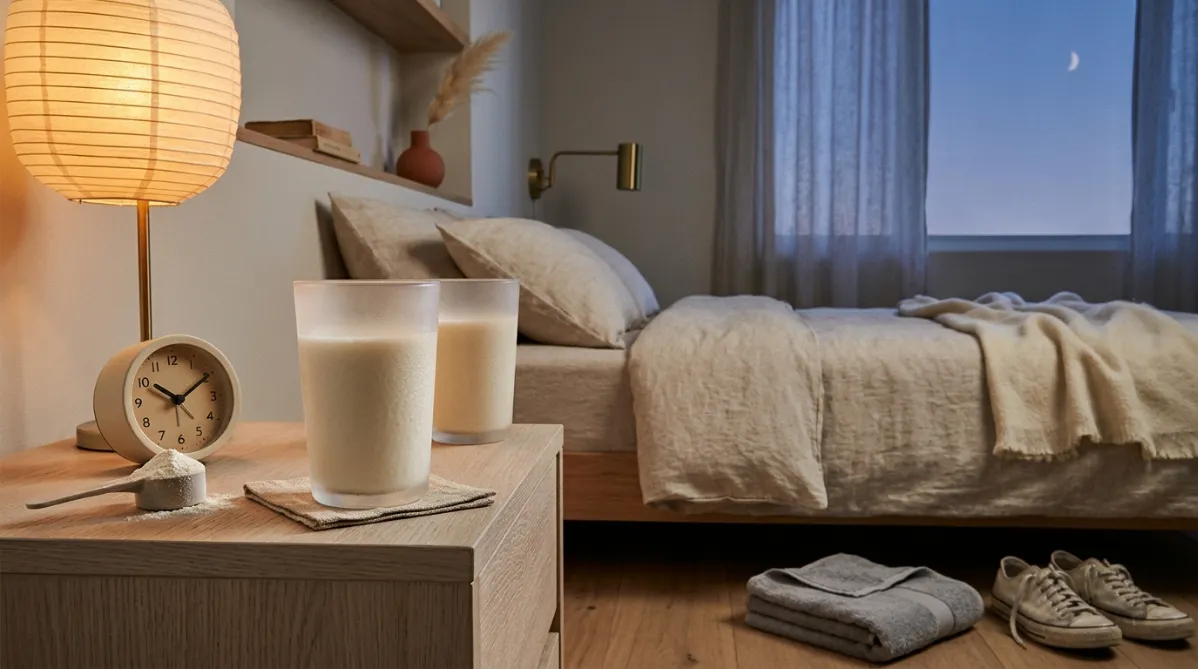
A serene, softly lit bedside scene in a modern minimalist bedroom, photographed in a warm editorial style. On a pale oak nightstand sit two matching frosted glass tumblers of creamy white protein shake, one slightly closer to the camera in sharp focus, the other gently blurred behind it. Beside them rests a small analog alarm clock with a matte cream face, its hands showing a late-evening hour, and a single ceramic scoop dusted with fine white powder on a linen coaster. A folded gray gym towel and a pair of worn sneakers are tucked at the edge of the frame, hinting at an earlier workout.

In the background, a neatly made bed with textured oatmeal linen bedding and a rumpled cream throw blanket glows under the amber light of a small paper-shade lamp. A sheer curtain filters deep indigo twilight from a window, with a faint crescent moon visible. The palette is muted and calming: warm cream, soft sand, dusty blue, and touches of terracotta from a small clay vase holding a dried pampas stem.

Shallow depth of field, gentle film-like grain, soft window light mixing with the warm lamp glow, long soft shadows across the wood grain. Composition follows the rule of thirds with the glasses on the left third and open negative space on the right, suitable for headline overlay. The mood is quiet, thoughtful, and contemporary, like a lifestyle and science feature in a trendy wellness journal. Clean, natural, tactile, with no text, no people, and no futuristic elements.
Nutrition

睡前摄入乳清蛋白可将入睡时间缩短近一半,酪蛋白却未见效果

Dr. Gymbro · · 1 min read

睡前摄入乳清蛋白可将入睡时间缩短近一半,酪蛋白却未见效果

摘要:大家常把酪蛋白视为睡前的首选,但最新的随机、双盲交叉试验却得出了意外的结论。研究表明,阻力训练后在睡前 30 分钟摄入 40 克乳清蛋白,可使入睡潜伏期的中位数从对照组的 19 分钟降至 9 分钟,同时第二天的肌肉酸痛也有所减轻。酪蛋白并未表现出显著优势。需要注意的是,这项研究仅有 9 名受试者,且乳清与酪蛋白之间的直接比较未达到统计显著。下面我们一起看具体数据以及这些数据能说明和不能说明的内容。


多年来,健身房的常识是:想在夜间补充蛋白,就选慢吸收的酪蛋白。最新的这项人体试验让这一结论不再那么笃定。研究中,在阻力训练后睡前 30 分钟摄入 40 克乳清蛋白(热量等同的碳水饮料作对照)能够缩短入睡时间、提升睡眠效率并减轻肌肉酸痛。所谓的“睡前冠军”酪蛋白并未展现同等优势。

在冲动把酪蛋白全扔掉之前,先看看细节。这是一项人体研究,但样本极小(n = 9),且乳清并未在直接对比中显著优于酪蛋白。

研究概览:研究人员到底做了什么

该研究由慕尼黑工业大学团队牵头,合作方遍及德国和荷兰,发表在 International Journal of Sport Nutrition and Exercise Metabolism(2026)。实验设计为随机、双盲、交叉试验,每位受试者都经历了所有干预条件。

  • 受试者:9 名年龄 24±2 岁、健康、经常进行阻力训练的成年人(5 男 4 女),BMI = 24.4±2.9 kg/m²。
  • 实验流程:受试者在三次不同的阻力训练后,于睡前 30 分钟饮用以下三种之一:
    • WHEY:40 克乳清蛋白
    • CASEIN:40 克酪蛋白
    • CON:等热量的麦芽糊精(碳水)对照
  • 睡眠评估采用 actigraphy(手腕运动传感器)、心率变异性(HRV) 以及 主观睡眠问卷,并记录胃肠不适、次日运动表现和延迟性肌肉酸痛(DOMS)。

结果对比:乳清 vs 对照

以下数据均以中位数呈现,括号内为四分位范围。乳清在所有主要睡眠指标上均优于对照(全部 p < 0.05):

指标 WHEY CASEIN CON
入睡潜伏期(分钟) 9.0 16.0 19.0
睡眠效率 96% 96% 93%
总睡眠时长(分钟) 400 390 363
主观睡眠评分(10 分制) 8.0 7.0 6.0

最抢眼的是入睡潜伏期:乳清组的中位数约为 9 分钟,碳水对照组为 19 分钟。总睡眠时长也多了约 37 分钟(中位数)。

乳清在 训练后 12 小时和 24 小时的 DOMS 上同样显著低于对照组(p < 0.05)。

情节反转:酪蛋白未能超越对照

酪蛋白的中位数在多数指标上介于乳清与对照之间(入睡 16 分钟、总睡眠 390 分钟、评分 7)。然而 酪蛋白相较于对照并未表现出显著改善(全部 p > 0.05)。

关键在于:文中指出乳清相对于碳水对照的优势是显著的,但乳清与酪蛋白之间的直接比较并不显著。也就是说,这项研究只能说明乳清相较于碳水饮料有统计学意义的优势,而不能断言乳清优于酪蛋白。样本仅 9 人,这种差异很可能是噪音或统计功效不足导致的。

未见变化的项目

以下指标在三组之间没有显著差异:

  • 心率变异性指标
  • 胃肠不适
  • 次日运动表现

值得注意的是,虽然睡眠更好、酸痛更少,但本实验并未观察到可测量的次日运动表现提升。好消息是,睡前摄入 40 克蛋白并未导致比对照更多的胃部不适。

乳清为何可能帮助入睡?

原文并未探讨机制,以下仅为推测:

  1. 蛋白质分解产生的氨基酸,或其消化吸收过程,可能影响与睡眠相关的神经通路;
  2. 训练后酸痛减轻,使人更容易进入深度睡眠。 这些假设均未在本研究中得到验证,仅供后续研究参考。

研究局限

  • 样本极小:9 人的交叉试验容易漏掉真实差异或放大偶然结果。
  • 乳清 vs 酪蛋白缺乏显著比较:两者直接对比未达统计显著。
  • actigraphy 不是实验室级别的 PSG:只能依据运动估算睡眠,尤其是入睡时点的精确度不如多导睡眠图(PSG)。
  • 主观评分易受期待效应影响,即使采用盲法也难完全排除。
  • 受试人群局限:年轻、健康、进行阻力训练的男女,难以外推到老年人、失眠患者或非训练者。
  • 对照为碳水:未能说明与“完全不补充”时的差异。
  • 单次剂量设计:无法推断长期摄入对睡眠、恢复或肌肉增长的影响。

实际建议

实验剂量与时机:40 克乳清蛋白,训练后 30 分钟、睡前摄入。

可能适合尝试的人群:

  • 晚上进行阻力训练、且每日蛋白摄入尚未达标的健身者;
  • 对睡前补充蛋白感兴趣、想观察是否能改善睡眠与酸痛的人。

不建议或需先咨询的人:

  • 对牛奶过敏或乳糖不耐受者;
  • 有肾病或其他需要限制蛋白摄入的疾病患者,需先咨询医生;
  • 已经睡得很好、且主要在上午训练的人,因为本研究未提供这类人群的证据;
  • 期待次日运动表现明显提升的人——本研究未观察到此类效应。

理性尝试方式:把它当作个人小实验。保持其他晚间习惯不变,记录入睡时间和酸痛感,并与不喝奶昔的夜晚作对比。

结论

“酪蛋白是唯一的睡前蛋白”这一教条在本研究中未被彻底推翻,乳清也未得到决定性验证。该试验提示:阻力训练后在睡前摄入乳清蛋白可能有助于更快入睡、提升睡眠效率并减轻酸痛;而酪蛋白在本实验中未表现出区别于碳水对照的效果。要确认这些发现,还需更大样本、直接的乳清‑酪蛋白对比以及更客观的睡眠测量。
Original study

Read the original research on pubmed.ncbi.nlm.nih.gov →

This article summarizes published research for general information. It is not medical advice.

DG

Written by

Dr. Gymbro

Dr. Gymbro writes for Dr. Gymbro: science-backed fitness, nutrition & performance.

Related Articles

A softly lit bedside table in a calm, modern bedroom at dusk, photographed in wide landscape format with shallow depth of field. In the foreground, a matte white shaker bottle sits beside a tall frosted glass of creamy, pale vanilla-colored protein shake, with a few condensation droplets catching warm light. Next to the glass rests a slim fitness band on a dark charcoal fabric strap, its small LED glowing a gentle green, lying casually on a light oak wooden surface. A small scoop of fine white protein powder rests on a ceramic dish nearby, with a light dusting of powder on the wood.

In the soft-focus background, a neatly made bed with oatmeal-colored linen bedding and a textured knit throw blanket. A sheer curtain filters the last peach and lavender light of evening from a large window. A small potted olive branch in a terracotta vase and a closed paperback book add a quiet editorial touch. A bedside lamp with a warm, cream-colored shade casts a golden glow across the scene and creates gentle highlights on the glass.

The palette is muted and harmonious: warm cream, soft sand, oatmeal beige, faint sage green accents, and touches of dusty lavender in the window light. The mood is peaceful, reassuring, and clean, like a contemporary wellness magazine or a trendy health journal feature. Lighting is natural and cinematic, with soft shadows and a subtle film-like grain. The composition follows the rule of thirds, with the shake and band on the left third and open negative space on the right for headline overlay. Minimalist, Scandinavian-inspired styling, high-end lifestyle photography, crisp details, and a tranquil, premium editorial feel.
recovery

酪蛋白睡前不影响睡眠,WHOOP 数据显示

BY DR. GYMBRO ·

在睡前喝下一杯 40 克酪蛋白奶昔,真的会暗中破坏你的睡眠吗?一项针对 21 名 NCAA 一级女大学运动员的随机、双盲交叉试验使用 WHOOP 4.0 手环监测睡眠,结果显示睡眠时长、效率、静息心率和心率变异性均未受到影响。α‑乳白蛋白和碳水化合物的表现也大体相同。令人意外的是,这几种补剂并没有提升睡眠质量。下面我们将展示数据细节、研究的局限,以及哪些人仍应避免夜宵。

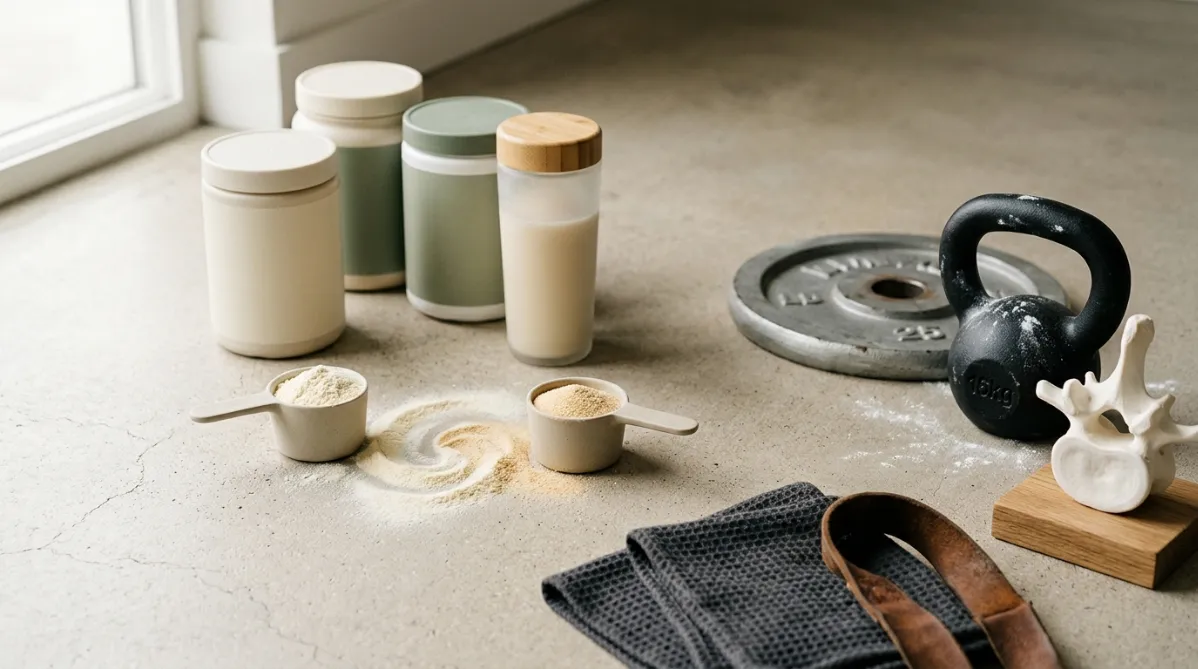
A wide, softly lit editorial still life on a pale warm-gray concrete surface, shot from a slightly elevated three-quarter angle. In the center-left, two matte ceramic scoops sit side by side. One holds fine ivory whey powder, the other holds slightly coarser, pale golden collagen peptide powder. A small, elegant dusting of both powders spills between them and blends into a soft swirl. Behind them, three minimalist cream and sage-green supplement tubs with no legible text stand in a staggered row, with a frosted glass shaker bottle of creamy liquid beside them.

On the right, a brushed-steel barbell plate and a compact chalk-dusted kettlebell rest slightly out of focus, suggesting resistance training. Pale wisps of chalk hang in the air. A folded charcoal gym towel and a pair of worn leather lifting straps lie in the foreground. A single cross-section of a clean white bone model, a stylized vertebra, rests on a small oak block at the far right. It subtly signals the bone-density theme without looking clinical.

Natural window light enters from the left, casting long, gentle shadows and a warm highlight on the powders. The palette is muted and modern: oatmeal, bone white, sage green, soft charcoal, and touches of warm amber. Shallow depth of field keeps the scoops tack-sharp and melts the background into creamy blur. Leave generous negative space in the upper right for headline overlay. The overall feel is a premium health and science journal cover: clean, tactile, minimalist, with fine film-like grain and a calm, editorial mood.
nutrition

乳清+胶原在举重者中优于单独使用——但有一个陷阱

BY DR. GYMBRO ·

一项为期8周、针对阻力训练男性的随机对照试验显示,混合30克乳清蛋白和10克胶原蛋白的组合在所有测量指标上均优于单独使用乳清、胶原或安慰剂。该组合使受试者的肌肉质量(BIA)增加了2.66 kg,腰椎骨密度显著提升,深蹲、卧推成绩以及骨代谢标志物也都有所改善。单独的胶原仅对骨骼有作用,单独的乳清仅对肌肉有帮助。但由于样本仅40人、蛋白质摄入总量不等以及骨密度异常大幅提升等因素,这项研究仍存在不少局限。

A wide, softly lit bedroom scene at dusk, styled like a modern editorial photograph. In the foreground, a rumpled bed with textured oatmeal linen sheets and a single dented pillow sits beside a light oak nightstand. On the nightstand is a tall glass of creamy, milky white protein shake, a small wooden scoop and a matte ceramic tub with no readable label, beside a minimalist analog alarm clock. The clock's hands show a late hour, and it casts a faint shadow on the wall. A pair of clean white running shoes rests on the floor by the bed. A folded gray athletic hoodie lies at the foot of the bed, suggesting an athlete's lifestyle.

Warm amber light from a bedside lamp mixes with cool blue-gray twilight from a tall window with sheer curtains. The glow lands on the glass and gives the milky surface a soft sheen. Through the window, a muted city skyline fades into evening haze.

The palette is calm and sophisticated: warm cream, soft sage green, dusty blue, and a touch of terracotta from a small ceramic vase holding dried pampas grass. The composition follows the rule of thirds, with the glass and clock in the right third and open negative space on the left for headline text. Shallow depth of field keeps the glass and clock crisp while the background blurs gently.

The mood is quiet, slightly restless, and thoughtful, hinting at a night that does not go as planned. A subtle detail, a half-drawn curtain letting in a thin stripe of light across the rumpled sheets, suggests interrupted sleep. The look is clean, contemporary, and magazine-quality, with fine film grain, natural tones, and soft shadows, like a lifestyle wellness journal cover. No people, no text, no futuristic elements.
recovery

让睡眠差的人更频繁醒来的“睡眠蛋白”

BY DR. GYMBRO ·

α-乳清蛋白被包装成“睡眠蛋白”,早期的短期研究曾暗示它能帮助运动员入睡并提升表现。最新的随机交叉试验让24名实际睡眠质量不佳的运动员连续服用一周,每晚在睡前两小时摄入40克。结果显示,睡眠并未改善,夜间醒来的次数略有增加(11.01 次 vs 10.25 次),垂直跳高度也稍有下降(27.68 cm vs 28.58 cm),唯一的好处是晚间的负面情绪有所减轻。

A landscape editorial still life shot from slightly above on a pale oat-colored linen surface, lit by soft morning window light with gentle long shadows. On the left, in warm golden sunlight, sits a small ceramic bowl of dried ashwagandha root pieces and a scatter of fine tan powder. Beside it are a few rough, rosy-gold slices of Rhodiola rosea root and a sprig of tiny succulent-like green leaves with yellow blossoms. A matte sand-colored stoneware mug of steaming tea and a simple glass of water stand nearby. A small amber glass bottle with a minimal unbranded label tips out two capsules.

The right side of the frame is cooler and bluer, as if dusk is arriving. It holds a muted indigo ceramic dish with a few pale capsules, a small bundle of dried chamomile flowers (the source of apigenin), and a few green tea leaves. A slim, unlit beeswax candle and a folded charcoal wool blanket suggest evening. The warm and cool halves meet softly in the center, where a rumpled white cotton napkin sits beneath a small brass spoon.

In the background, out of focus, a wooden shelf holds a worn paperback, a small potted plant, and the edge of a kettlebell in matte black, hinting at an active lifestyle. Subtle film grain, shallow depth of field, and a muted palette of cream, terracotta, sage green, and deep indigo give it a clean, modern wellness-magazine feel. Leave generous negative space in the upper third for a headline overlay. No text, no logos, no people.
recovery

Ashwagandha + Rhodiola 有效,晚间睡眠堆叠无效

BY DR. GYMBRO ·

一项全新的四臂试验出乎意料地让补剂堆叠爱好者大跌眼镜。研究在 103 位健康且活跃的成年人中发现,早晨服用 600 mg Ashwagandha 加 300 mg Rhodiola rosea 能降低主观压力、提升睡眠质量并改善情绪。相反,流行的晚间睡眠堆叠(镁 L‑酒石酸盐、L‑茶氨酸和黄酮)并未带来额外收益,且两者同服时正面情绪甚至下降。本文将介绍研究的主要发现、需审慎解读的原因(干预仅两周、样本量小),并给出健身人群的实际使用建议。

This page is available in