Dr. Gymbro
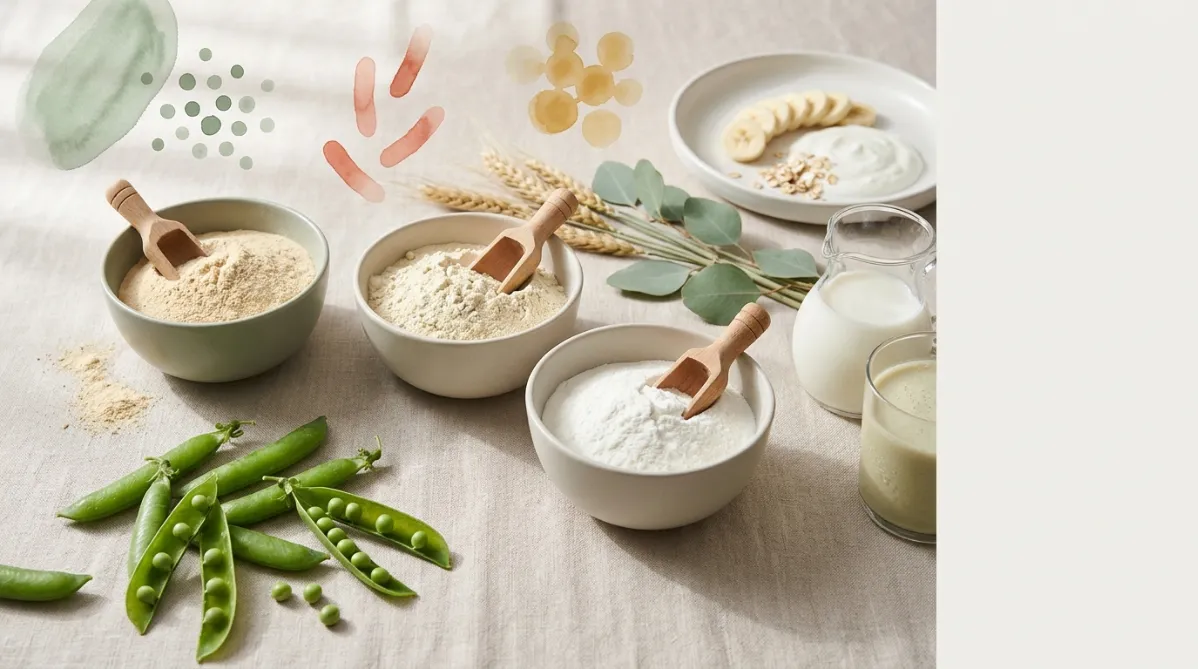
A wide, softly lit editorial flat-lay on a pale oat-colored linen surface, shot from slightly above. Three matte ceramic bowls sit in a loose diagonal across the frame. One holds fine, creamy beige pea protein concentrate, another holds paler, powdery pea protein isolate, and the third holds bright white whey protein isolate. Each bowl has a small wooden scoop resting beside it, with a few fine dustings of powder on the linen. Fresh green pea pods, split open to show round peas, spill naturally in the left foreground. A small glass pitcher of milk sits near the right edge, next to a half-full glass of a smooth, pale green-beige shake with condensation on the surface.

Behind the bowls, a few sprigs of dried wheat and soft eucalyptus leaves add organic texture. In the upper right, a shallow white ceramic plate holds a small arrangement of gut-friendly foods: sliced banana, a spoonful of plain yogurt, and a few oats. Delicate watercolor-style abstract shapes in sage green, warm coral, and soft mustard float subtly in the background. They suggest microscopic organisms, like loose dots, rods, and clustered circles, but stay painterly and minimal, not scientific or futuristic.

Natural window light enters from the left, casting long, gentle shadows and a warm, airy glow. The palette is muted and modern: sage green, cream, warm beige, blush, and touches of terracotta. The composition leaves generous clean negative space on the right third for a headline overlay. The depth of field is shallow, with the nearest pea pods and the front bowl crisp and the background softly blurred. The style is high-end wellness magazine photography with a subtle tactile, handmade feel, calm, fresh, and contemporary, in a 16:9 landscape format.
Science & Research

哪种蛋白粉能改造你的肠道?四周内豌豆蛋白的表现

Dr. Gymbro · · 1 min read

你的蛋白粉可能不只是给肌肉加料。最近一项瑞典的随机、双盲、三臂平行试验表明,选择不同类型的蛋白粉仅在四周内就能改变肠道里的细菌组成。两种豌豆蛋白都有这种效果,而且各自偏好不同的菌株。

研究概述:三种蛋白粉、同等剂量、四周干预

Örebro University(瑞典乌普萨拉大学)在 European Journal of Nutrition(《欧洲营养学杂志》)上发表了这项研究。健康成人随机分为三组,分别每天摄入以下任意一种补剂:

  • 豌豆蛋白浓缩物(PPC)
  • 豌豆蛋白分离物(PPI)
  • 乳清蛋白分离物(WPI)

剂量统一为 每公斤体重 0.5 克蛋白,连续四周。

主要观察指标为肠道微生物组成。研究团队每周收集粪便样本和生活方式问卷,并在基线、干预中期及干预结束时采集空腹血液和 24 小时尿液,以监测代谢标志物。这是一项真实的人体试验,而非小鼠或培养皿实验。试验登记号为 NCT05611138。

研究者做了两组比较:PPC vs PPI 以及 PPI vs WPI,以此既能比较植物蛋白与动物蛋白的差异,又能探讨两种植物蛋白因加工方式不同而产生的效应。

主要发现:豌豆蛋白显著改变多样性

两种豌豆蛋白均导致可测量的微生物变化:

  • α多样性下降(即同一受试者体内的菌种丰富度下降)
  • β多样性上升(不同受试者之间的菌群差异增大)

作者指出,这一效应受受试者 BMI 的调节。α多样性下降往往被视为不利信号,因为高多样性常被关联于肠道健康。但摘要未说明这种下降是好是坏,只是提醒组成变化仍需进一步关联功能才能下结论。

哪些菌种上升了

在物种层面,两种豌豆蛋白的作用出现分化:

  • 豌豆蛋白浓缩物(PPC):Anaerobutyricum hallii 与 Bifidobacterium longum 显著增多。
  • 豌豆蛋白分离物(PPI):Lactobacillus crispatus 与 Limosilactobacillus frumenti 显著增多。

作者将这些菌种描述为“有益”,并得出结论:不同来源的膳食蛋白会选择性调节肠道菌群。摘要未给出乳清组(WPI)具体的菌种变化,因此我们无法从该文直接比较乳清与豌豆在物种层面的差异。虽然设计中包含了 PPI vs WPI 的对比,但摘要未披露相应数据。

本研究未能说明的内容

在把结果直接用于购买决策前,请注意以下几点限制:

  • 仅限健康成年人。本研究不涉及胃肠疾病患者,结果不一定适用于 IBS、IBD 等人群。
  • 只测组成,未测功能。作者强调需要后续研究确认这些组成变化是否转化为微生物代谢功能的改变。
  • 代谢指标未报告。虽收集了血液和尿液,但摘要没有给出任何代谢数据。
  • 个体差异显著。作者提到 BMI 对多样性变化有调节作用,提示不同人可能出现不同响应。
  • 四周时间较短。我们仍不知道这些改变是短暂的、会继续扩大,还是会随时间回落。

实际建议:挑选蛋白粉的参考要点

剂量:本试验使用 0.5 g/kg·day。以 80 kg 的体重为例,相当于每天补充 40 g 蛋白。摘要未说明摄入时间(如训练前、训练后或随餐),因此没有基于本研究的时间安排建议。

豌豆蛋白浓缩物(PPC):与 B. longum、A. hallii 的增长相关。如果你倾向于植物基粉且对肠道影响感兴趣,可将其列为候选。浓缩物相对分离物加工程度更低,但摘要并未检验加工程度本身是否是导致差异的原因。

豌豆蛋白分离物(PPI):与 L. crispatus、L. frumenti 的提升相关。该形态更纯净、蛋白密度更高,常被健身者偏好。

乳清蛋白分离物(WPI):作为动物蛋白对照,摘要未显示任何有害信号,也未报告特定菌种的提升。因此,单凭本研究无法宣称乳清在肠道方面优于或劣于豌豆蛋白。

适合关注的人群

  • 植物基健身者:如果你的日常蛋白主要来源于豌豆蛋白,这项研究提示它并非“肠道中性”,而是会引导特定菌群的变化,形态不同的豌豆蛋白可能产生不同效果。
  • 有胃肠不适的人:由于受试者均为健康人,研究结果不适用于 IBS、IBD 等患者。若你的肠道本就敏感,尝试新粉时请循序渐进,并咨询营养师或医生。

结论

四周的豌豆蛋白补充(无论是浓缩物还是分离物)都会重塑健康成年人的肠道微生物群落;两种形态分别促进不同的有益菌种上升。最大的未解之谜是这些菌群变化对健康的实际意义,这一点仍需后续功能性研究来阐明。现在,选择蛋白粉时可以把它视作对肠道生态的一个额外输入,而不仅仅是宏量营养素的来源。
Original study

Read the original research on pubmed.ncbi.nlm.nih.gov →

This article summarizes published research for general information. It is not medical advice.

DG

Written by

Dr. Gymbro

Dr. Gymbro writes for Dr. Gymbro: science-backed fitness, nutrition & performance.

Related Articles

A bright, airy, minimalist kitchen counter in soft morning light, shot from a slightly elevated three-quarter angle in a wide landscape composition. Two matching ceramic bowls sit side by side on a pale oak butcher-block surface. The left bowl holds fine, creamy-beige pea protein powder with a small wooden scoop resting in it. The right bowl holds smooth, ivory-white whey powder with an identical scoop. Between and slightly behind them sits a third, smaller empty bowl with a plain scoop, hinting at the placebo. Scattered around the bowls are fresh green pea pods, some split open to reveal bright, round peas, and a small glass bottle of milk with delicate condensation. A sage-green linen napkin is folded loosely at the edge of the frame.

In the soft-focus background, a young man in a fitted heather-gray t-shirt is seen from the shoulders down, casually flexing one arm while holding a matte shaker bottle, the biceps subtly defined and the pose relaxed and natural. A minimalist notebook with a pencil and a simple hand-drawn bar chart lies open on the counter, suggesting analysis without legible text. A small potted herb plant and a ceramic mug add warmth.

The color palette is muted and editorial: warm cream, sage green, soft terracotta, pale wood, and touches of charcoal. Light streams in from a window on the left, casting gentle long shadows and a subtle golden glow across the powders so their textures look fine and tactile. Shallow depth of field keeps the bowls crisp while the background melts into a creamy blur. The look is modern lifestyle-magazine photography, clean and uncluttered, with generous negative space on the right third of the frame for headline overlay. It is natural, appetizing, and trustworthy, in the style of a contemporary wellness and nutrition journal.
nutrition

豌豆蛋白 vs 乳清:新手结果出人意料

BY DR. GYMBRO ·

植物蛋白真的能像乳清一样帮助增肌吗?一项为期 12 周、共计 161 名男性的试验让豌豆蛋白、乳清蛋白和安慰剂同台竞技,结果让人眼前一亮:豌豆蛋白组的二头肌厚度提升了 20.2%,而安慰剂组仅为 8.6%。不过整体受试者之间的差异仅呈现出趋势,真正的亮点来自子组分析。下面我们一起看看这项研究的具体发现、未得到证实的方面,以及素食或乳糖不耐受的健身者该如何使用。

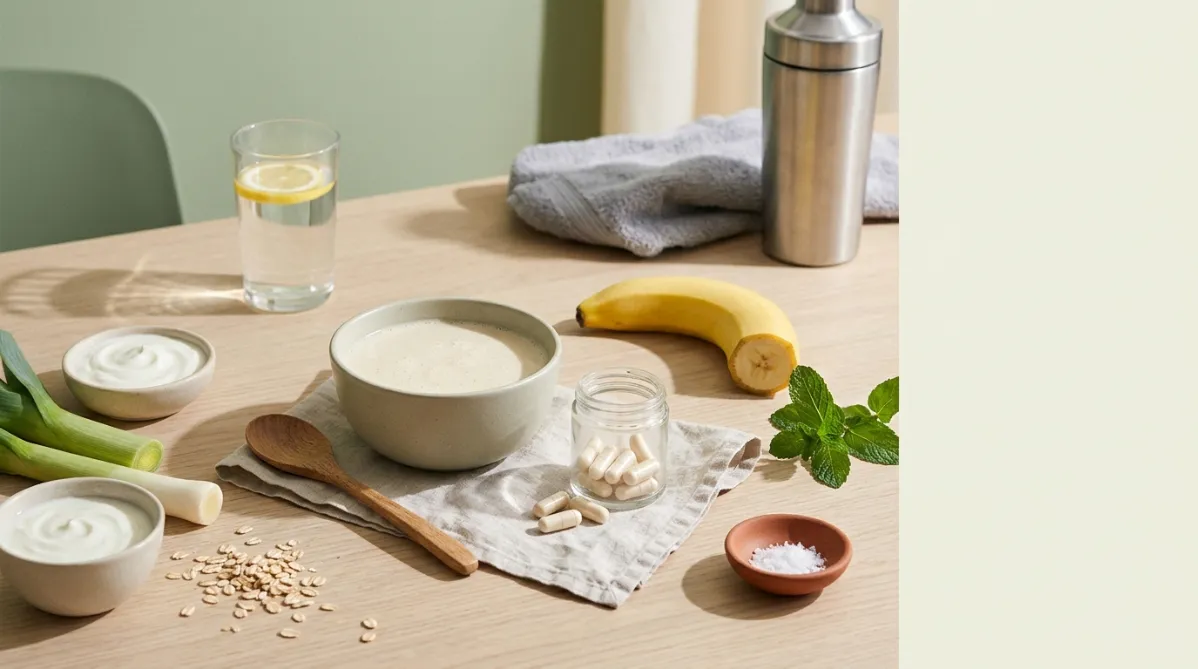
A bright, minimalist still life on a soft sage-green and warm cream backdrop, shot from a slightly elevated angle in natural morning window light. In the center sits a matte ceramic bowl of creamy vanilla protein shake with a wooden spoon resting beside it. Next to it, a small glass jar with a few off-white probiotic capsules spilling onto a pale linen napkin. Around them are fresh, gut-friendly foods arranged with editorial restraint: a halved ripe banana, a small bowl of plain yogurt with a swirl on top, a few stalks of leeks, a handful of oats scattered on the surface, and a sprig of fresh mint. A tall glass of water with a lemon slice catches the light and casts a delicate caustic shadow across the table.

In the background, slightly out of focus, a folded gray gym towel and a sleek stainless steel shaker bottle hint at an athletic lifestyle without dominating the scene. The surface is a pale oak tabletop with subtle grain. A soft diffused shadow falls to the left, giving gentle depth.

The palette is calm and modern: sage green, oatmeal, warm white, soft butter yellow, and touches of terracotta from a small clay dish holding a pinch of sea salt. The composition leaves generous negative space on the right third for headline overlay. The mood is clean, wellness-focused, and quietly editorial, like a feature in a contemporary health and science journal. Shallow depth of field, crisp focus on the capsules and bowl, subtle film grain, and natural color grading. No people, no text, no logos, no futuristic elements.
nutrition

蛋白屁?益生菌 BB536 能降低异味,但仅对部分人群有效

BY DR. GYMBRO ·

如果你在喝乳清蛋白时常感胃胀、放屁,可能是肠道内的含硫和氨类化合物在作祟。最近的一项实验让运动员在高蛋白饮食下服用益生菌 Bifidobacterium longum BB536,发现部分受试者的硫化物和氨气水平下降。但总体来看,实验组与安慰剂组并无显著差异,且这些积极信号来自事后分组分析。研究规模小、探索性强,还由益生菌生产商资助。下面介绍 BB536 的基本情况、个人微生物群为何影响效果,以及更经济的解决方案。

A bright, minimalist editorial still life on a pale oat-colored linen surface, shot from a slightly elevated three-quarter angle in soft natural window light. On the left, a matte ceramic bowl of fine white collagen powder with a wooden scoop resting beside it, a light dusting of powder spilling across the linen. On the right, a matching bowl of creamy off-white whey powder with a brushed-steel scoop. Between them sits a small, neatly balanced stack of simple geometric wooden blocks and a single smooth gray stone, hinting at a scale or comparison without showing a literal scale. Behind them, a lightly blurred row of three clean amber glass supplement jars with plain cream labels, unbranded. A single rolled yoga towel and a pair of small chrome dumbbells sit softly out of focus in the background on a pale plaster shelf. Accents of muted sage green and warm terracotta appear in a ceramic cup and a folded napkin, giving the palette a calm, contemporary wellness-magazine feel. A thin, elegant sprig of dried eucalyptus lies at the edge of the frame. Shadows are long, gentle, and slightly cool, with a creamy shallow depth of field and fine grain. The composition leaves generous negative space across the upper third for title overlay, with a subtle gradient from warm ivory to pale gray-blue in the background wall. The styling is clean and modern like a trendy health journal website, with a refined, tactile, editorial photography look, balanced symmetry, and no text, no people, no futuristic or laboratory elements.
nutrition

胶原蛋白在78项试验分析中击败乳清蛋白增肌?

BY DR. GYMBRO ·

2026 年对 78 项随机对照试验、共 4,755 名受试者的网络荟萃分析显示,胶原蛋白在抗阻训练中对力量和无脂体重的提升排名第一,领先于乳清蛋白。更令人惊讶的是,其他蛋白补剂均未表现出优于安慰剂的效果。可是,胶原蛋白是一种不完整且亮氨酸含量低的蛋白质,而且置信区间相当宽。下面我们来看看数据到底说明了什么、为何仍需正面对比试验验证,以及在此期间该如何安排你的补剂组合。

A wide, softly lit editorial still life on a pale oat-colored linen surface, shot from a slightly elevated three-quarter angle. On the left, a matte ceramic bowl in warm cream holds fine, pale golden-beige yeast protein powder, with a small wooden scoop resting beside it and a few loose dusty swirls on the linen. In the center, two tall frosted glass tumblers stand side by side. One holds a creamy, light tan shake with a delicate froth, and the other holds clear water with a faint ripple, creating a quiet visual contrast. On the right, a loosely folded charcoal gym towel, a brushed-steel shaker bottle, and a single small kettlebell in muted sage green sit slightly out of focus.

A few elements hint at the science without looking clinical. A minimalist matte-white notebook lies open with soft, blurred handwriting and a hand-drawn bar chart in thin pencil. Beside it rests a slim brass pen. A single sprig of dried wheat and a small dish of baker's yeast granules on a wooden board nod to the ingredient's fermentation origin.

Natural morning window light enters from the upper left, casting long, gentle shadows and a warm highlight along the glass rims. The palette is earthy and calm: oat, cream, soft terracotta, sage, and warm gray, with a subtle peachy glow in the background. The backdrop is a smooth plaster wall in muted putty tone, with a faint shadow of a window frame across it.

The composition leaves generous negative space in the upper third for a title overlay. Shallow depth of field keeps the glasses and bowl crisp while the gym props melt softly into the background. The overall mood is modern, wholesome, and trustworthy, with the feel of a contemporary health and nutrition magazine. The photograph has fine film-like grain and natural texture, and no text, logos, or labels appear anywhere.
recovery

酵母蛋白混合物与乳清相媲美,可减轻酸痛并降低肌酸激酶——但有小条件

BY DR. GYMBRO ·

酵母蛋白正逐渐进入蛋白粉市场,常被宣传为可持续、低奶制品的乳清替代品。最近《Nutrients》刊登的一项随机对照试验让受试者在一次高强度离心训练后摄入酵母‑乳清混合物,结果显示它比单纯饮水更能降低血清肌酸激酶(CK)水平,且在男性中还能减轻酸痛感。该混合物的整体表现与纯乳清相近,但对照组仅使用了水,且多数结果在多重比较校正后失去显著性。总体来看,酵母‑乳清混合物是值得尝试的可持续蛋白选项,但不应被视为奇迹般的恢复方案。

This page is available in