Dr. Gymbro
A sunlit outdoor running track in late afternoon, shot from a low angle with shallow depth of field. In the foreground, a matte black bottle with a minimal off-white label sits on the edge of a warm terracotta-colored track lane, beside a folded white towel and a small glass of amber liquid catching golden light. Condensation beads on the bottle. A faint heat shimmer rises from the track surface and softens the background.

In the midground, slightly out of focus, a lean athlete in a sage-green tank top and charcoal shorts runs on a treadmill-like stretch of track, a thin sheen of sweat on their shoulders, their expression focused and calm. Their motion is gently blurred, suggesting endurance and rhythm. Long soft shadows stretch across the lane lines.

The background fades into hazy peach, apricot, and pale yellow tones, with the suggestion of tall trees and a distant stadium wall. Warm sun flare enters from the upper right, creating a subtle glow and a few soft light streaks across the frame.

Subtle editorial touches: a small notebook with a pencil and a stopwatch rest beside the bottle, hinting at data and timing without any text legible. The color palette is warm and muted, with terracotta, cream, sage, and charcoal accents, and a fine film-like grain. The composition leaves open negative space on the left third for a headline overlay. The overall mood is clean, modern, and health-journal inspired, natural and aspirational, with a calm scientific curiosity rather than hype.
Nutrition

热天酮饮料:更持久的耐力和更敏锐的记忆?

Dr. Gymbro · · 1 min read

热天酮饮料:更持久的耐力和更敏锐的记忆?

如果在酷暑中帮助你坚持的不是碳水凝胶,而是一杯酮饮料,会怎样?《国际运动营养学会期刊》最新的一项交叉试验表明,酮单酯可能正是在这种环境下发挥作用。该研究样本量不大,且结果伴随一些需要在使用前了解的前提条件。

研究者的实验设计

一支由南卡罗来纳大学 Lints 与 Arent 小组领衔的团队,对 17 名耐力训练的男性(平均年龄 23.8 岁,最大摄氧量 58.6 ml/kg·min)开展实验。研究采用随机、双盲、平衡交叉设计,使每位受试者都经历了两种处理。

在每次实验中,运动员摄入 4 mg/kg 的咖啡因,配合以下两种方案之一:

  • KET:酮单酯,即 (R)-3‑羟基丁醇‑(R)-3‑羟基丁酸酯。
  • CHO:与能量匹配的碳水对照(Cluster Dextrin)。

随后进行 90 分钟、气温 34 °C、相对湿度 45 % 的跑步机负荷运动,随后进行高强度的至力竭时间(TTE)测试。研究的动机来源于军方:特种作战部队在极端高温下仍需保持思维敏捷和体能发挥,而此时大脑血流、燃料供应和耐热能力都会受限。

重要发现:接近两分钟的耐力提升

耐力极限时间在酮组更长:8.9 ± 4.6 分钟 vs 7.0 ± 2.1 分钟(p = 0.04),相当于多出约 1.9 分钟,提升约 27%。这在高温高强度训练的尾声是一个值得关注的差距。

统计意义较为温和,p 值刚好低于 0.05,且酮组的标准差高达 4.6 分钟,说明个体反应差异较大。可将其视为一种有前景的信号,而非确定的保证。

认知发现:1‑back 提升,但并非全方位

与碳水对照相比,酮组在以下指标上都有提升:

  • 1‑back 总准确率:提升 2.8 %(p = 0.001)。
  • 1‑back 目标准确率:提升 8.9 %(p < 0.001)。
  • 目标辨别指数(d'):提升 0.3(p = 0.001)。

这些效应在所有测量时点均保持一致。然而,优势并未延伸至更难的 2‑back 任务、Dynavision 反应时或“击打规避”任务——这些项目在两种处理间未出现差异。因此酮饮料并未让参与者整体更聪明,只是对工作记忆的某些方面有帮助。

代谢指纹

血液数据显示酮类发挥了其典型作用。β‑羟基丁酸(BHB)在运动中期升高 1.7 mmol/L,运动后升高 3.5 mmol/L(两者均 p < 0.001)。与此同时,酮组的血糖水平下降——运动中期低 14.7 mg/dL,运动后低 27.6 mg/dL。

这意味着尽管血糖更低,酮组仍展现出更好的表现和记忆优势,值得关注,因为碳水通常被视为高强度运动的首选燃料。

未改变的指标:心率与核心体温

作者特别指出酮饮料并未导致这些指标的显著变化。平均心率仅表现出时间效应(前 45 分钟低于后 45 分钟),但两种处理间无显著差异(p = 0.453)。在 TTE 测试中的最高心率也没有差别(p = 0.112)。两组的核心体温随时间升高,但差异不显著(p = 0.065),已逼近显著阈值,若扩大样本量可能会得出不同结论。综上,酮饮料未明显增加心血管或热负荷,性能提升也未伴随可测的热惩罚。

需要了解的局限性

  • 样本量小:仅 17 名受试者。
  • 仅限男性:年轻、耐力训练的男性,结果未必适用于女性、老年人或训练水平较低的人群。
  • 单次实验:每种处理仅一次,无法判断效果的稳定性。
  • 两组均含咖啡因:比较的是“酮+咖啡因”与“碳水+咖啡因”,因此无法分离酮本身或咖啡因的单独作用。
  • 认知结果不一致:仅在 1‑back 上出现优势,2‑back、反应时及击打规避任务未见效。
  • 耐力响应差异大:酮组的 TTE 数据离散度大,说明个体之间的反应并不一致。

作者声明无利益冲突。

实用要点

剂量:摘要中确认两组均摄入 4 mg/kg 的咖啡因,但未给出酮单酯的剂量,建议查阅全文(PMCID: PMC13378723)了解具体方案,并遵循产品标示的使用剂量。

摄入时机:摘要同样未说明具体时间。实验中酮与咖啡因在 90 分钟热负荷前一起摄入,随后进行高强度冲刺。

适用人群:适合在高温环境下进行高强度训练、希望在冲刺阶段保持工作记忆的受过训练的运动员或战术人员。可先在日常训练中尝试,而非比赛日首次使用。

需谨慎或避免使用的人群:

  • 对咖啡因敏感者(4 mg/kg 属于较大剂量)。
  • 有疾病、孕妇或服用影响血糖药物者,请先咨询医师,尤其是酮组血糖下降的情况。
  • 期待全方位认知提升的人群;本研究显示效益仅限于特定记忆任务。
  • 易出现胃肠不适者;酮类产品常报告消化道副作用,尽管本摘要未涉及。

总结

在这项小样本、设计严谨的交叉试验中,酮单酯加咖啡因相较于碳水加咖啡因,在高温长时间运动后的至力竭时间以及一项工作记忆任务上表现更好,且未导致心率或核心体温的明显变化。这是一条有趣的信号,尤其对热应激下的表现可能有帮助,但仍需在更大、更具多样性的群体中复制验证,方能超越“有前景的实验”这一层次。
Original study

Read the original research on pubmed.ncbi.nlm.nih.gov →

This article summarizes published research for general information. It is not medical advice.

DG

Written by

Dr. Gymbro

Dr. Gymbro writes for Dr. Gymbro: science-backed fitness, nutrition & performance.

Related Articles

Wide landscape editorial photograph of a mountain biker mid-ride on a dusty red-orange singletrack trail in the South African Western Cape, golden hour light raking across the scene. The rider is in sharp focus on the right third of the frame, wearing a weathered cycling kit with a race number plate on the handlebars, dust kicking up from the rear tire. Behind them, rolling hills covered in fynbos shrubland and silhouetted protea plants fade into soft, hazy blue mountains. Warm amber sunlight creates long shadows and a soft rim light around the rider and bike.

In the lower left foreground, slightly out of focus, a small minimalist glass vial and a clear water bottle sit on a flat sun-bleached rock, with a few drops of liquid catching the light. Next to them, a simple matte paper notecard and a pencil suggest data collection, with no legible text. The vial and bottle are clean, understated, and modern, with no branding.

The color palette is earthy and refined: terracotta, ochre, sage green, dusty teal sky, and cream highlights. The composition uses shallow depth of field, a generous negative space in the upper left sky for headline overlay, and subtle film grain. The mood is contemplative, skeptical, and quietly sophisticated, like a feature photograph from a high-end outdoor sports and science magazine. Natural, candid, cinematic, shot on a 50mm lens with soft contrast and muted saturation. No futuristic elements, no glowing effects, no molecular graphics, no text.
science research

Ketone IQ 在 Cape Epic 提升血酮水平,却未带来任何恢复效益

BY DR. GYMBRO ·

在为期八天的 Cape Epic 中,骑手每天饮用两次 Ketone IQ,使血酮浓度约达 1 mM,但他们的疲劳感、心率、反应时间和恢复情况与安慰剂组毫无差别。该双盲试验在真实比赛环境下评估了 R‑1,3‑丁二醇,而非实验室条件。作者指出,轻微的酮症并未带来实际效益,并提醒不要把丁二醇与酮酯混为一谈。由于仅有 18 名骑手参与,研究规模有限,但对考虑高价酮饮料用于恢复的任何人都是一次警示。

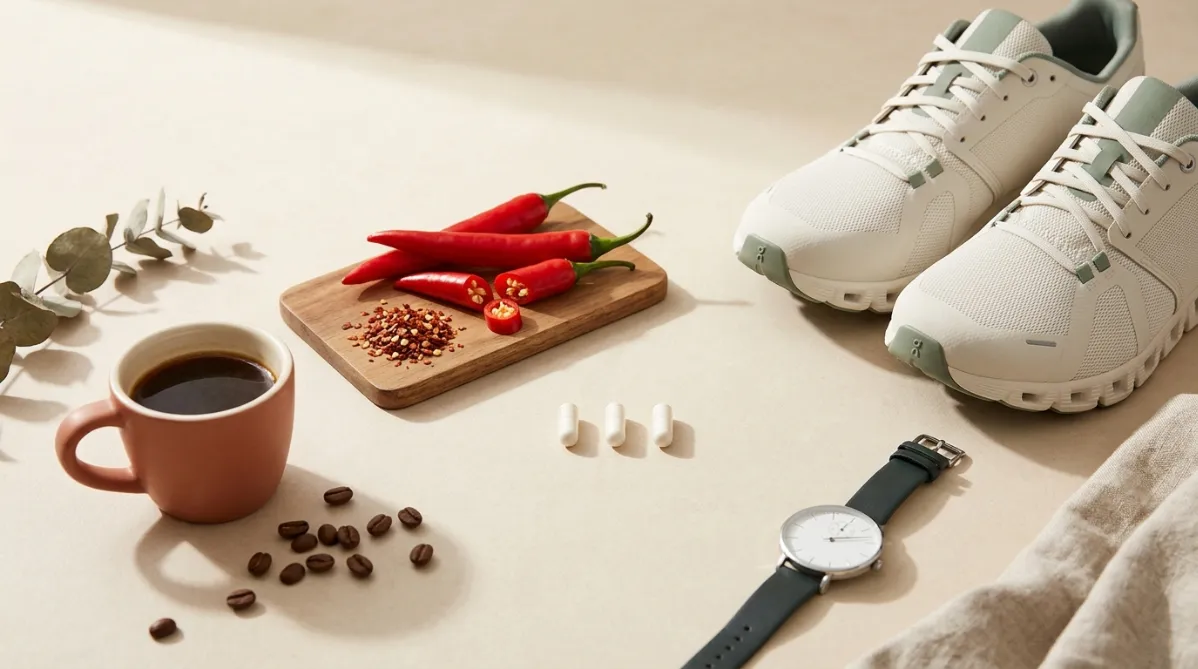
A wide, editorial-style flat lay on a warm, matte cream stone surface, shot from slightly above in soft natural morning light. On the left, a ceramic espresso cup in muted terracotta holds dark coffee, with a few roasted coffee beans scattered beside it. In the center, a small wooden board holds three bright red chili peppers, one sliced open to show pale seeds, next to a small pile of coarse red pepper flakes. On the right, a pair of minimalist off-white running shoes with sage green accents rests at an angle, and a slim stopwatch with a clean white face lies in front of them. Three small matte white capsules sit in a neat row at the center of the composition, a quiet nod to the placebo and the active doses. Soft shadows fall to the lower right. A sprig of dried eucalyptus and a folded linen cloth in oatmeal tones add texture at the edges. The palette is warm and restrained: terracotta, chili red, cream, sage, and charcoal brown, with a gentle pop of red as the focal accent. The depth of field is shallow, so the foreground beans are slightly soft and the chilies and capsules stay crisp. The mood is clean, modern, and magazine-like, in the style of a contemporary health and science journal. There is no text, no people, and no logos, and plenty of negative space on the upper left and right edges leaves room for a headline overlay.
nutrition

咖啡因+辣椒素在10公里赛中优于安慰剂,单独使用辣椒素无效

BY COACH RYAN ·

在一项交叉实验中,只有咖啡因与辣椒素的组合在10公里跑中显著优于安慰剂,而单独服用辣椒素没有任何效益。提升主要来源于咖啡因本身,未见二者的协同作用。对体重75 kg的跑者而言,6 mg/kg的咖啡因相当于约450 mg,约相当于四到五杯咖啡的摄入量。咖啡因组出现失眠、焦虑、头痛和心动过速等不良反应,使用前需慎重。

A wide, editorial-style flat lay photographed from above on a pale warm-gray linen surface in soft natural window light. At the center, a small open amber glass jar tips gently onto its side, spilling a few cream-colored capsules across the fabric. Next to the jar sits a loose arrangement of fresh mushrooms: a cluster of golden-tan reishi with glossy, lacquered caps, a few slender white enoki stems, a halved shiitake showing its pale gills, and a curl of turkey tail with concentric bands of rust, cream, and charcoal. A small wooden scoop holds a pile of fine beige mushroom powder.

On the left third of the frame, a matte black sports watch with a minimal face lies beside a folded sage-green running shirt and a pair of lightweight off-white running shoes, hinting at athletic training without showing a person. A slim white notebook with a single pencil rests nearby, open to a blank page with a faint hand-drawn line graph trending upward, in thin graphite strokes.

On the right side, a pair of clear glass beakers and a single small petri dish with a soft amber-tinted liquid add a subtle laboratory note, kept calm and organic. A single sprig of dried herbs and a few scattered oat-colored grains add texture.

The palette is earthy and refined: oatmeal, soft sage, terracotta, warm amber, and charcoal accents against the muted neutral background. Shadows are soft and diffused, with a gentle highlight on the glass and the glossy reishi cap. The composition leaves generous negative space in the upper right for a headline overlay. Shallow depth of field blurs the edges slightly, while the central mushrooms and capsules stay crisp. The overall feel is modern, clean, and trendy, like a wellness and science magazine cover, with tactile natural textures, minimal styling, and a quiet sense of curiosity and skepticism.
science research

蘑菇胶囊提升 VO2max 14.8%——但其中有个大问题

BY DR. GYMBRO ·

一颗蘑菇胶囊、40 天、VO2max 提升了 14.8%,听起来几乎像是天方夜谭。最新发表在《Antioxidants》上的研究称,50 名年轻男性运动员每天摄入 320 mg 含 β‑葡聚糖的多菌种提取物,最大摄氧量从 46.26 mL/kg/min 上升至 53.12 mL/kg/min。值得注意的是,这项研究没有安慰剂组、也未采用随机化和双盲设计,受试者在实验期间仍保持常规训练。细胞实验虽在大鼠心肌细胞上展示了低氧相关的作用机制,但仅是单一成分的试验,并未直接对应胶囊的整体效果。下面我们来看看这项研究到底说明了什么、不能说明什么,以及哪些人应当持谨慎态度。

A wide, editorial-style still life shot from a slightly elevated angle on a pale oatmeal-colored linen surface in soft, diffused morning light. At the center, a shallow matte ceramic bowl in warm terracotta holds a small mound of fine, golden-tan ashwagandha root powder. Beside it lie a few gnarled, dried ashwagandha roots and a sprig of green leaves with tiny orange-red berries in their papery husks. To the left, a minimalist amber glass supplement bottle sits with a few capsules spilled beside it, label blank and clean. A wooden scoop rests on the surface, dusted with powder.

On the right side of the frame, a pair of sleek, muted sage-green running shoes sits slightly off-center. A folded cream towel and a stainless steel water bottle sit just behind them, with a single brushed-steel kettlebell partly out of focus in the background to hint at strength training without dominating the scene. The running shoes and the botanical elements share equal visual weight, suggesting the endurance theme.

A thin, curved line of scattered powder sweeps across the linen from the bowl toward the shoes, like a gentle path or track. Soft shadows fall to the left, and a warm sunbeam crosses the surface and picks out the texture of the powder and the roots.

The palette is restrained and modern: warm terracotta, sage green, cream, soft gold, and touches of charcoal. The background is a blurred pale plaster wall with a hint of a window shadow. Shallow depth of field, crisp focus on the bowl and roots, and generous negative space in the upper left for a headline. Contemporary wellness magazine aesthetic, calm, natural, tactile, high-end lifestyle photography, no text, no people, no futuristic elements.
science research

印度人参的惊喜:对耐力的帮助超过对力量

BY DR. GYMBRO ·

印度人参常被宣传为提升力量和肌肉的补剂,但最新的系统综述指出它的最佳功效可能在别处。汇总13项随机对照试验(共599名受试者)后,研究者发现它对有氧耐力的提升最为稳固,合并效应量为g = 0.54。力量增长虽呈正向,但不确定,且关于爆发力的数据极其有限。每日摄入500‑600 mg提取物似乎是最合适的剂量区间,但仍存在诸多警示,例如预测区间跨越零点。

This page is available in