Dr. Gymbro
A wide, editorial-style still life shot from a slightly elevated three-quarter angle on a pale oak gym bench, lit by soft morning window light. In the foreground sits a minimalist matte-white glass beaker of clear, faintly amber liquid, with a few condensation droplets on its surface. Beside it rests a small ceramic dish of white crystalline powder and a stainless steel scoop. In the middle ground, a chalk-dusted steel barbell with black bumper plates rests on the bench's edge. A pair of worn leather lifting straps and a small notebook with a pencil lie nearby, suggesting data logging. Behind them, softly blurred, is a bright, airy studio with concrete walls, a wooden plyo box, and a tall leafy plant catching the light.

The palette is warm and muted: cream, sand, soft sage green, and charcoal, with one small accent of burnt orange in the amber liquid and a terracotta towel draped over the bench. Fine chalk dust floats in sunbeams that cut diagonally across the frame. The shallow depth of field keeps the beaker and barbell sharp while the background melts into creamy bokeh. Composition follows the rule of thirds, with the beaker on the left third and generous negative space on the right for headline text. The mood is calm, premium, and contemporary, like a high-end wellness and sports-science magazine photograph with subtle film grain, natural shadows, and realistic textures.
Nutrition

酮类提升力量输出8%,但对跳跃无影响

Dr. Gymbro · · 1 min read

你可以服用一种补剂,等待约一小时后,它会提升你在某项爆发力测试中的表现,却对另一项毫无帮助。俄亥俄州立大学的这项新研究正是如此,研究对象为外源性酮。

关键发现

杰夫·沃莱克实验室的研究人员测试了 50 g 酮前体——双辛酰(R)-1,3-丁二醇(BO‑BD),并使用口味匹配、等热量的安慰剂作为对照。他们想探究该物质是否能提升最大力量和爆发力。此前对酮在无氧、神经肌肉表现方面的研究甚少,因而属于相对新颖的领域。

关键结果是:BO‑BD 在等长中大腿拉力(IMTP)测试中表现出更高的力量发展速率(RFD)。在摄入后 60 分钟时,RFD 比安慰剂高出约 8%(p = 0.022)。RFD 代表产生力量的速度,这在任何需要快速发力的动作中都至关重要。

作者将其称为一种“保留”效应。酮并没有让受试者的表现超出基线,而是帮助他们在多组高强度重复中避免 RFD 下降。这暗示酮可能延缓疲劳的出现,而不是提升峰值输出。

意外发现:跳跃毫无影响

同一批受试者还完成了下蹲跳(CMJ)测试,结果在两种条件下的 CMJ 表现均没有变化。摘要中写道,酮对跳跃指标(包括功率和跳高)没有显著影响。

作者并未解释为何两项测试出现分歧,只能进行推测。两者确实不同:IMTP 是一次最大等长用力,而 CMJ 是快速的动态动作,涉及伸缩‑收缩循环。酮可能对一种需求更敏感,但本研究并不能给出答案。

研究方法

  • 受试者: 20 名大学生年龄的活跃成年人(男女各10名)。
  • 设计: 随机、平衡交叉。每位受试者在两种条件下各进行一次测试,间隔 3‑7 天的洗脱期。
  • 剂量: 50 g BO‑BD 或安慰剂。
  • 测试: 在基线、60 分钟和 120 分钟时,各完成 3 组、每组 3 次的 CMJ 与 IMTP 测试。
  • 监测: 每 30 分钟采集毛细血管 R‑BHB、血糖和心率。

交叉设计是本研究的优势,因为每个人都充当自己的对照。但样本量偏小,且仅评估单次急性剂量的效应。

何时出现酮效应?

血液 R‑BHB 在摄入后稳步上升,120 分钟时达到峰值,平均 2.2 ± 0.7 mM(BO‑BD 组) vs 0.3 ± 0.1 mM(安慰剂,p < 0.001),属于典型的营养性酮症范围。

有趣的是,力量效应出现在 60 分钟时,早于酮浓度峰值。也就是说,血酮并不需要达到最高浓度就能带来收益。摘要未解释原因,研究也无法将时间因素与其他机制区分开来。若想利用这一点,合理的做法是摄入后约一小时进行测试,但这仅是基于单一研究的推断,并非标准方案。

需要了解的附加信息

  • 血糖: BO‑BD 组下降 24%,安慰剂组仅下降 3%(p < 0.001),跌幅与 R‑BHB 峰值同步。
  • 心率: BO‑BD 组上升 13.3 bpm,安慰剂组上升 3.6 bpm(p < 0.001)。

血糖下降、心率升高并非小事。一些人可能会感到不适、紧张或其他不舒服的感觉。摘要未报告胃肠道不适或主观感受,故无法判断耐受性如何。

适合人群

该发现对那些需要多次最大力量输出、并关注每组之间保持力量产生速度的运动员最有吸引力,例如:

  • 进行单、双、三次重举的举重者;
  • 需要多次尝试的力量测试环节;
  • 任何在训练后期仍依赖快速力产生的项目。

作者推测,营养性酮症可能在重复高强度力量训练中延缓疲劳。这是值得进一步验证的合理假设,但尚未被证实。

谁应慎用或等待

如果你的运动主要依赖跳跃,这项研究并未提供正面预期,因为 CMJ 完全未受影响。对刺激剂或心率变化敏感、或有血糖相关健康问题的人应谨慎,并在使用前咨询医生。血糖下降与心率上升正是这些人群需要关注的指标。任何接受药检的运动员还需检查产品配方是否符合所在组织的规定。

实际评估

这是一项仅包含 20 名年轻活跃成人的“小样本”急性研究,仅评估一次剂量的即时效果。它未揭示长期使用、在专业力量运动员、老年人或数周训练中的表现。摘要只突出 RFD 这一个结果,而单次 60 分钟的效应不足以将酮声明为已证实的性能助剂。

结论

50 g BO‑BD 能将血酮提升至约 2.2 mM,并在中大腿拉力测试的 RFD 上比安慰剂高出约 8%,效应在 60 分钟出现。但它对下蹲跳毫无帮助,同时伴随血糖下降 24% 和心率上升约 13 bpm。该结果对需要多次最大力量输出的训练者具有潜在价值,但仍需在更大、更具体的人群中重复验证,方能从“实验”转为“策略”。
Original study

Read the original research on pubmed.ncbi.nlm.nih.gov →

This article summarizes published research for general information. It is not medical advice.

DG

Written by

Dr. Gymbro

Dr. Gymbro writes for Dr. Gymbro: science-backed fitness, nutrition & performance.

Related Articles

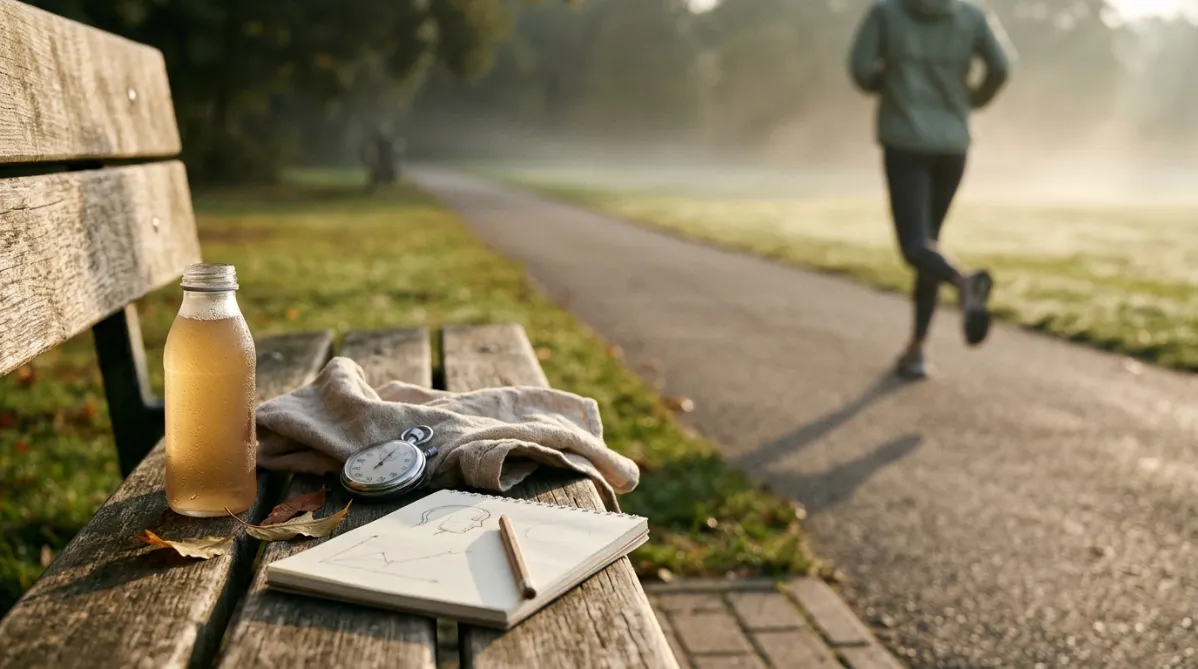
A wide, editorial-style photograph of a runner's morning ritual on a quiet paved path at the edge of a park, shot in soft golden-hour light with a shallow depth of field. In the foreground, a small frosted glass bottle of pale amber liquid sits on a weathered wooden bench, beside a sleek analog stopwatch and a folded linen towel. Condensation beads on the glass and catches warm sunlight. The background melts into a creamy blur of a lone runner in a muted sage-green jacket and charcoal tights, mid-stride, heading away along a tree-lined track, with soft mist hovering above the grass.

The color palette is calm and modern: warm honey and amber tones, soft sage green, off-white, and touches of deep navy in the shadows. Subtle film grain and gentle natural contrast give it a contemporary lifestyle-magazine feel. Long, delicate shadows stretch across the path.

On the bench, a small open notebook with a loose hand-drawn sketch of a head profile and a simple line graph sits next to a pencil, hinting at cognition and measurement without any text legible. A few fallen autumn leaves add texture. The composition follows the rule of thirds, with the bottle and stopwatch on the left third, negative space on the right for headline overlay, and the runner small in the distance to suggest that speed is not the story.

The mood is thoughtful, clean, and quietly intelligent, evoking wellness science journalism: minimal, airy, organic, and refined. No futuristic elements, no neon, no digital effects, just natural light, tactile materials, and a considered, understated aesthetic.
supplements

酮酯并没有让跑者跑得更快——却提升了他们的思维

BY DR. GYMBRO ·

酮酯饮料常被宣传为提升跑步成绩的捷径,但为期31天的试验并未发现5公里成绩的提升。值得注意的是,受试者在Stroop冲突任务和任务切换测试中的反应速度加快,血糖下降约15%,且在停用后进行的递增负荷测试中氧耗(VO2)仍保持较高水平。该研究样本仅有18名业余跑者,采用单盲设计。下面将解析数据揭示了什么、未揭示什么,以及哪些人应避免每日摄入90克的剂量。

A modern editorial still life photographed from a slightly elevated angle on a pale, matte stone surface in soft natural window light. On the left, a heaping mound of fine white creatine monohydrate powder spills from a matte ceramic scoop, with a few crisp grains scattered across the surface. In the center, a small, minimalist amber glass capsule bottle sits tipped on its side, with a handful of off-white capsules spilling out. The label is blank and clean. On the right, a neat row of three clear glass lab-style vials rests on a slim oak tray. The vials hold different amounts of white powder: the first nearly empty, the second slightly fuller, the third filled almost to the brim. This quietly suggests the difference in dose and result. Beside the tray lies a simple stainless steel measuring spoon and a folded sheet of cream paper with soft, abstract bar-chart lines in muted sage green and terracotta. The lines are hand-drawn and unlabeled.

Behind the objects, slightly out of focus, a lean athletic forearm in a gray linen sleeve rests on the edge of the surface, one hand loosely holding a matte shaker bottle. This hints at a training context without showing a face. A single sprig of eucalyptus in the corner adds a soft organic touch.

The palette is warm neutral: bone white, oatmeal, soft sage, muted terracotta, and touches of amber. Shadows are gentle and long, with a shallow depth of field that gives creamy bokeh in the background. The mood is calm, clean, and trustworthy, like a premium health and science journal's feature spread, with generous negative space at the top and right for headline overlay. The composition is wide, balanced, and uncluttered, with subtle film-like grain and a natural, true-to-life color grade. No text, no logos, no futuristic elements.
nutrition

Kre‑Alkalyn 按标签剂量未能提升肌肉肌酸——活检结果

BY DR. GYMBRO ·

缓冲型肌酸(如 Kre‑Alkalyn)宣称吸收更好、用量更低且不易引起胀气。德州 A&M 的一项双盲试验在 36 名接受力量训练的受试者中进行,持续 28 天,并通过实际的肌肉活检检验这些说法。结果显示,按照标签推荐的每日 1.5 克剂量,Kre‑Alkalyn 并未明显提升肌肉肌酸含量,而普通肌酸单体的提升则更为显著。力量、体成分以及副作用方面也未出现缓冲型产品的优势。以下为具体数据以及合理补充肌酸的建议。

训练前后服用肌酸?小规模研究显示训练后略有优势
nutrition

训练前后服用肌酸?小规模研究显示训练后略有优势

BY DR. GYMBRO ·

应该在举重前还是后服用肌酸?2013 年对 19 名男性健美爱好者的研究发现,训练后服用在瘦体重、脂肪量和卧推力量上略占优势。但统计检验未显示两组差异显著,作者只能保守地提出“可能更有益”。本文解读原始数据、阐明样本量的影响,并给出每日 5 克的简易使用方案。

A landscape, editorial-style flat lay photographed from above on a pale oak gym bench or a matte light-gray concrete surface. On the left side, a clear glass of water sits next to a small matte white ceramic bowl of fine white creatine powder, with a wooden scoop resting beside it and a few loose grains scattered naturally on the surface. In the center, a modern analog wall-style clock face is replaced by a simple minimalist stopwatch in brushed steel, its hands paused, subtly suggesting timing without any text or numbers emphasized. On the right, a neatly folded charcoal gym towel and a single chalk-dusted dumbbell handle enter the frame at the edge, with a faint dusting of white chalk on the wood. A small linen notebook with a pencil rests slightly off-center, its pages blank, hinting at data and study without any readable writing.

The color palette is soft and restrained: warm cream, oatmeal, sage green, and muted slate, with one accent of terracotta orange in the pencil or a small ceramic dish. Light comes from a large window at the upper left, casting long, gentle diagonal shadows and a soft highlight across the glass of water, creating delicate caustic reflections on the surface. The depth of field is shallow, with the creatine bowl and scoop in crisp focus and the edges softly blurred. The composition leaves generous negative space on the upper right for a headline overlay. The overall feel is calm, clean, and contemporary, like a wellness and science journal's cover image, with natural textures, subtle film grain, and a refined, premium magazine look. No people, no logos, no text, and no futuristic elements.
nutrition

健身前后服用肌酸?小样本研究显示训练后更有优势

BY DR. GYMBRO ·

应该在举重前还是举重后服用肌酸?一项针对 19 名男性健美爱好者的 2013 年研究发现,训练后服用在瘦体重、脂肪量和卧推上稍微领先于训练前。不过正式的统计检验并未显示两组之间有显著差异,作者只能给出“可能更有益”的谨慎推断。下面我们来看看数据到底怎么说、样本量为何重要,以及如何用每天 5 克的简易方案来应用这些发现。

This page is available in