Dr. Gymbro
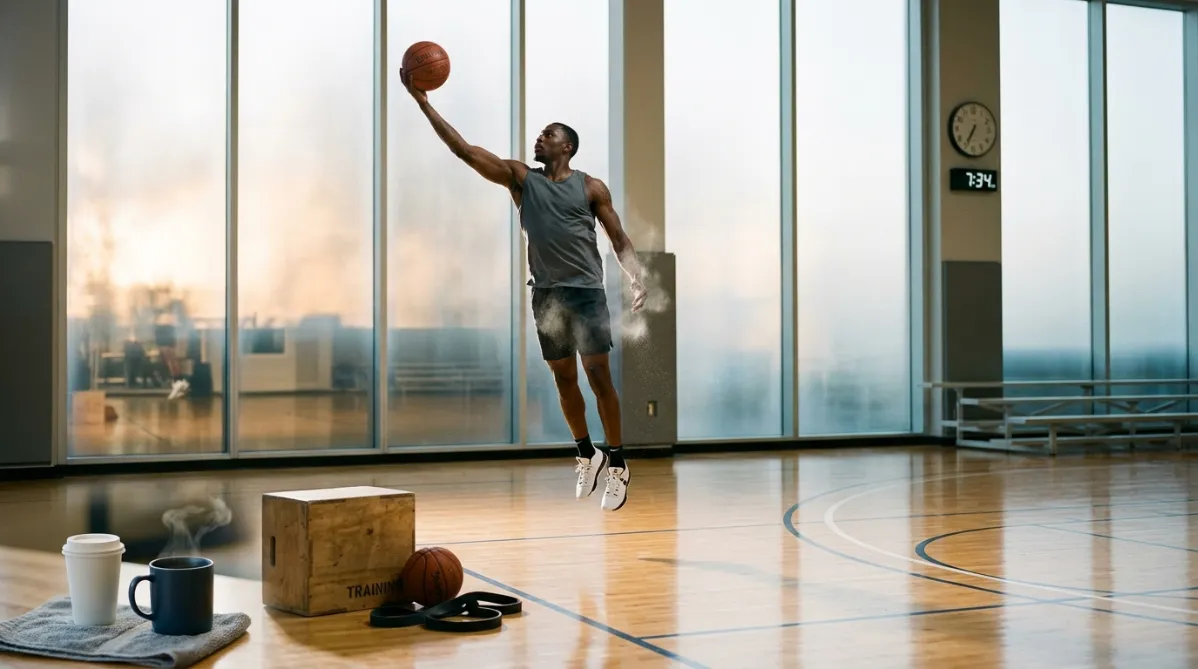
A wide, editorial-style photograph of a basketball player mid-air at the top of a vertical jump inside a sunlit indoor court, shot from a low angle so the athlete's silhouette rises against tall frosted windows glowing with soft morning light. The player wears a plain charcoal tank and white sneakers, with chalk dust drifting off their hands and catching the light. The polished honey-toned hardwood floor reflects the figure faintly, with crisp painted court lines leading the eye across the frame.

In the foreground at the lower left, slightly out of focus, a small wooden plyometric box sits on the floor beside a matte ceramic cup of black coffee and a plain white paper cup, placed neatly on a folded gray towel. Thin steam curls from the ceramic cup. They stand for the question of caffeine versus warm-up without any text or labels.

The color palette is calm and modern: warm amber wood, soft cream, muted slate blue shadows, and a touch of burnt orange from a basketball resting near the box. Light is natural and diffused, with gentle rim lighting on the athlete's shoulders and a shallow depth of field that blurs the background bleachers into creamy shapes. The composition has generous negative space on the right third, suited to a headline overlay, in a clean, contemporary magazine style with fine film grain, subtle contrast, and a quiet, focused mood. No text, no logos, no futuristic elements.
Science & Research

跳前摄入咖啡因无额外帮助,热身才是关键

Dr. Gymbro · · 1 min read

跳前摄入咖啡因无额外帮助,热身才是关键

摘要:咖啡因加上下蹲跳热身听起来像是提升弹跳的配方,但在针对精英篮球运动员的实验中,咖啡因并未带来额外收益。个性化的下蹲跳热身本身就能在短时间内显著提升跳高。3 mg/kg 的咖啡因剂量对最高跳高、时机或整体 PAPE 与安慰剂相比无显著差异。个体间反应差异较大,说明部分运动员仍可能对咖啡因有不同的反应。

研究概述:咖啡因 vs. 安慰剂在高水平弹跳者中的比较

发表在 Frontiers in Physiology(Li 等,2026)的研究采用随机、双盲、安慰剂对照的交叉设计。受试者为 21 名国家一级男子篮球运动员,均处于高度训练或国家队水平。每位受试者完成两次实验:一次摄入 3 mg/kg 体重的咖啡因,另一次摄入安慰剂。

在两次实验中,所有受试者均完成相同的个性化下蹲跳(drop‑jump)调节方案。使用 CMJ(计数性向上跳) 的跳高在热身后以及调节后 15 秒、3、6、9、12 分钟进行测量。PAPE(激活后表现提升)定义为 CMJ 高度相对于热身后基线的变化。交叉设计的优势在于每位受试者都充当自己的对照,使比较更为纯粹。

下蹲跳热身到底做了什么

PAPE 是指在一次高强度“启动剂”之后出现的短暂爆发力提升。本研究的启动剂是一套基于每位运动员 反应力量指数(RSI) 的下蹲跳方案。RSI 将跳跃输出与着地接触时间关联,能够反映运动员吸收并快速重新发力的能力。将调节量与 RSI 结合,即为所谓的“个性化”。

结果显示,调节后 CMJ 表现随时间显著变化(时间效应,p < 0.001),这正是短暂 PAPE 反应的特征。提升是真实的,但仅在 12 分钟窗口内出现,并呈波动而非平稳。也就是说,针对性强的弹性训练能够在已经非常优秀的运动员身上产生可测量的跳高提升。

为什么咖啡因没有额外提升

咖啡因组在所有主要指标上均未表现出显著差异。条件×时间交互作用不显著(p > 0.05),说明咖啡因并未改变 PAPE 曲线的形状。最高 CMJ 高度、峰值提升幅度、达峰时间以及累计 PAPE 均无显著差异(全部 p > 0.05)。

作者推测,个性化的调节已经将 PAPE 效应优化至接近上限,咖啡因的提升空间十分有限。这仅是一个假设,实验本身并不能证明。其他可能的解释包括:高水平跳跃者的天花板效应、咖啡因剂量相对适中,或是样本量仅为 21 人导致的测量噪声。这些仍需进一步探讨。

需要强调的是,结果的适用范围很窄。它不意味着咖啡因在所有情况下都不起效,只是说在本研究的人群和方案下,咖啡因没有带来平均额外的跳高收益。

个体差异的玄机

“平均无效”可能掩盖了大量个体差异。个体响应分析显示,咖啡因对不同运动员的影响差异很大:有的人在咖啡因下稍微跳高,有的人则无变化甚至略有下降。这些正负效应在整体统计中相互抵消。

交叉设计无法确定这些差异是来源于真实的个体反应,还是仅仅是日常跳跃表现的波动。敏感性分析确认,整体的 PAPE 时间模式是稳定的——热身效应可靠;而咖啡因效应则不可预测。信奉咖啡因的运动员可能真的属于响应者,但本研究并不能给出确定答案。

对跳跃和冲刺类运动员的实用建议

适用人群:所有依赖跳跃或冲刺的项目运动员,如篮球、排球、田径等,尤其是已经处于高水平训练阶段的运动员。

  • 先把热身做好。本研究的证据表明,结构化、个性化的下蹲跳启动剂比咖啡因等刺激剂更可靠地提供短时跳高提升。
  • 个性化下落高度。研究依据 RSI 来指导调节,这意味着需要测试多个下落高度,挑选出在跳高与接触时间之间取得最佳平衡的那一档。文献未给出具体的跳量,建议在教练指导下保守使用,避免过度疲劳。
  • 抓住提升窗口。研究记录了调节后 15 秒至 12 分钟的 CMJ 变化,提升是短暂的。建议自行在训练中测试最佳恢复间隔,因为不同人最佳时点不同。多数运动员发现,收益在前几分钟的恢复后出现,而非立刻出现,务必进行个体化验证。
  • 咖啡因的剂量与时机。本实验使用 3 mg/kg(约 70 kg 运动员为 210 mg),常见做法是提前约 60 分钟摄入,以匹配血浓度峰值。不要盲目认为剂量越大效果越好。
  • 自行实验。由于响应差异大,建议在正式比赛前的训练中进行盲法或至少重复对照的试验,确认自身对咖啡因的真实反应。

结论

结论并不是咖啡因毫无用处。咖啡因在其他情境下仍有大量正面证据。此次实验的核心发现是:个性化的下蹲跳热身完成了提升任务,而 3 mg/kg 的咖啡因在整体上未带来可测量的额外收益。对教练和运动员来说,这提醒我们:在寻求补剂之前,先把热身流程打磨到位。研究局限仍然存在:仅 21 名男性篮球运动员、单一剂量、单一跳测以及单一调节方案。女性、其他项目以及不同剂量的效果仍需进一步探索。

Original study

Read the original research on pubmed.ncbi.nlm.nih.gov →

This article summarizes published research for general information. It is not medical advice.

DG

Written by

Dr. Gymbro

Dr. Gymbro writes for Dr. Gymbro: science-backed fitness, nutrition & performance.

Related Articles

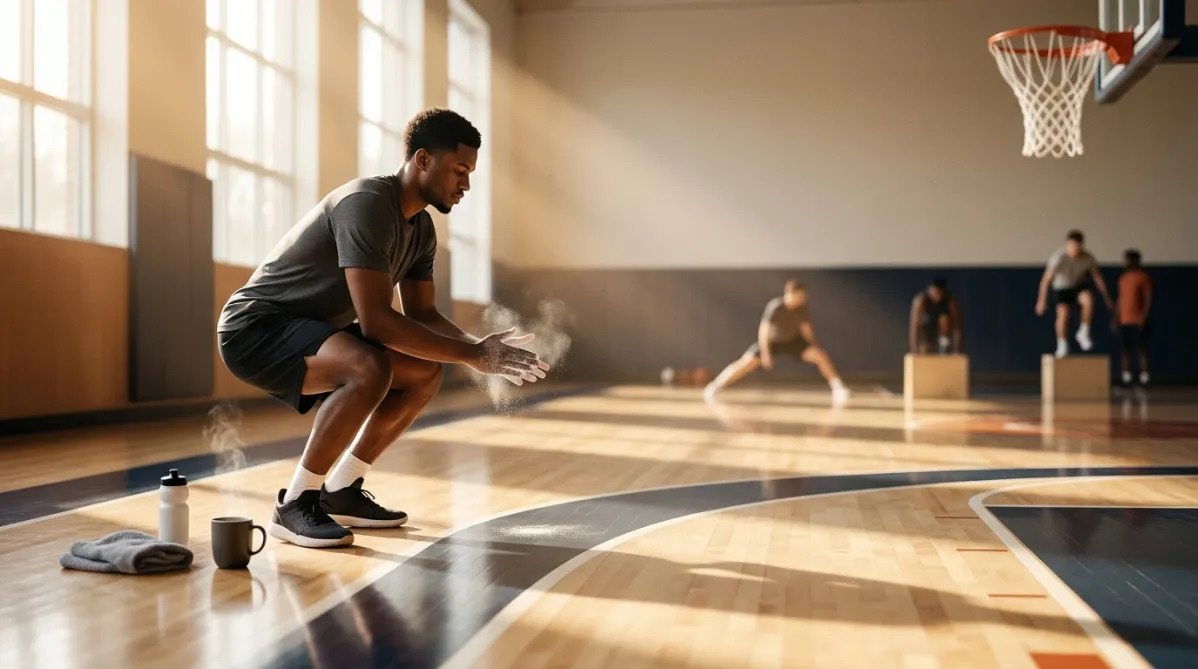
A wide, editorial-style photograph of an indoor basketball court at early morning, shot from a low angle near the baseline. In the foreground, a male collegiate basketball player in a charcoal athletic tee and black shorts is captured mid-crouch, just before a plyometric jump, with chalk dust lifting off his hands and fingers. His expression is focused and calm. Beside him on the polished maple floor sits a matte ceramic cup of black coffee with a thin curl of steam, next to a small white water bottle and a folded gray towel, placed slightly out of focus as a quiet visual hint at the caffeine theme.

Soft golden sunlight pours through tall high windows on the left, casting long, warm diagonal beams across the hardwood and creating subtle reflections on the glossy surface. The painted court lines in deep navy and cream curve gracefully through the frame, leading the eye toward the background, where a few teammates blur softly, stretching and doing box jumps over low plyometric boxes. A basketball hoop with a clean white net is visible in the upper right, gently out of focus.

The color palette is warm and refined: honey-toned wood, espresso brown, cream, muted navy, and touches of terracotta orange. Use shallow depth of field with a creamy bokeh, fine film-like grain, and gentle contrast, giving the image the feel of a modern lifestyle and science journal cover, like a contemporary wellness or sports magazine. Composition follows the rule of thirds, with the athlete on the left third and generous negative space on the right, filled with soft light and blurred court, which is ideal for overlaid headline text. No text, logos, or graphics appear in the image. The mood is energized, intentional, and quietly scientific, evoking preparation, rhythm, and peak performance, with natural realism and no futuristic elements.
science research

咖啡因+这项热身技巧提升篮球运动员的Wingate功率

BY DR. GYMBRO ·

如果热身与咖啡因配合得当,能否进一步提升表现?一项针对24名大学男篮球运动员的随机交叉试验显示,加入5 mg/kg咖啡因的后激活性能提升(PAPE)热身,比单独的传统热身或仅做PAPE的热身更能提高峰值功率、平均功率和总功,同时降低主观用力感(RPE),但对疲劳指数并未产生显著影响。文中给出了剂量、具体方案、适用人群及需注意的局限性。

A landscape editorial photograph in a bright, modern gym studio with soft natural light pouring through tall windows. In the foreground, a matte ceramic cup and a small glass jar of plain white powder sit on a light oak bench, with a wooden scoop resting beside them and a few loose grains dusted across the wood. The jar has no label, which hints at mystery without being heavy-handed. Slightly out of focus behind them, a female athlete in a sage green athletic set stands at a barbell, chalked hands gripping the bar, her expression calm and focused. A male cyclist on a stationary bike is blurred in the far background. The palette is warm neutrals: cream, soft sand, pale oak, muted sage, and a touch of terracotta, with gentle golden-hour highlights and soft shadows. The composition follows the rule of thirds, with the cup and jar in the lower left, the athlete on the right, and open negative space in the upper area for headline text. The depth of field is shallow, with a creamy bokeh background. The mood is contemplative, curious, and trendy, like a contemporary health and science magazine cover. Fine film grain, subtle matte finish, clean minimalist styling, and no text or logos.
science research

安慰剂咖啡因仍能让运动员更强更快

BY DR. GYMBRO ·

如果训练前的动力来源于大脑而非咖啡因本身,会怎样?2026 年对 17 项研究的荟萃分析显示,运动员即使只服用了标称为咖啡因的安慰剂,也能提升表现(d=0.49),涉及卧推、骑行计时赛和反复冲刺。盲法设计和女性比例较高的研究中效应更大,但证据可信度低且偏倚风险高。本文解读了具体数据并提示哪些人需格外谨慎。

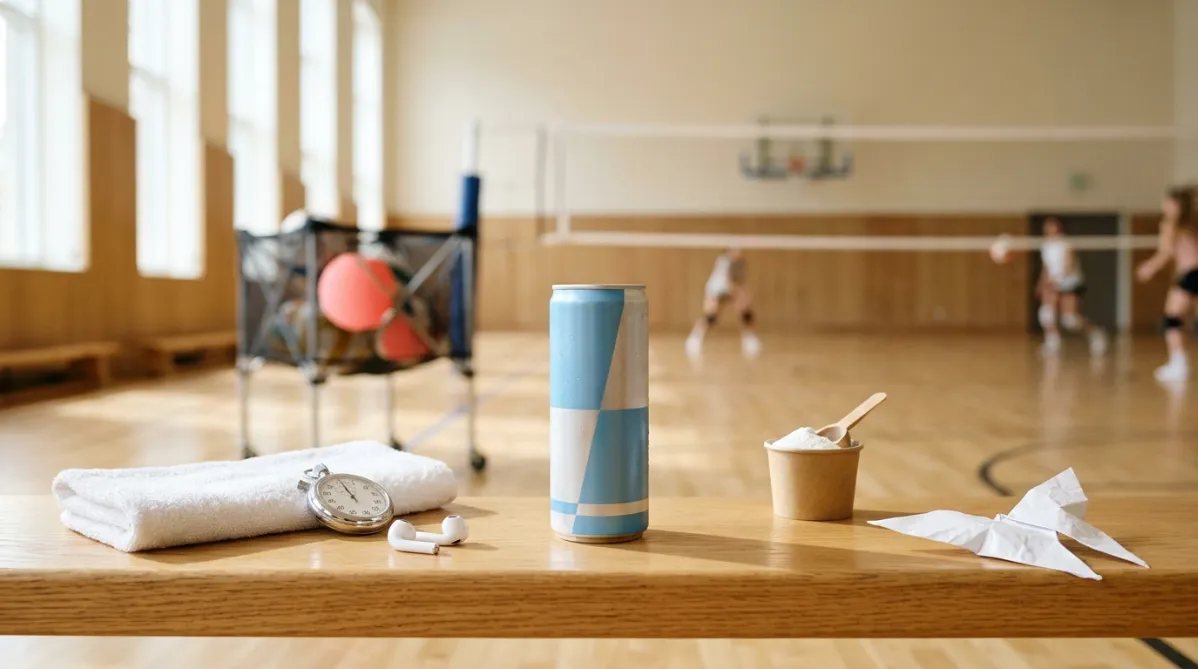
A wide, editorial-style photograph of a single slim silver and blue energy drink can standing upright at center on a polished light-oak gym bench, shot in soft natural window light. The can is unbranded, with a clean, minimal design and a few beads of condensation. Behind it, the softly blurred interior of a bright modern indoor volleyball court stretches into the background, with a pale hardwood floor, a net, and a few volleyballs resting in a mesh cart. Warm morning sunlight enters through tall windows on the left and casts long, gentle shadows across the bench. Beside the can sit a small white towel folded neatly, a simple stopwatch, and a pair of white wireless earbuds. On the right, a small paper cup of white powder and a wooden scoop hint at measured dosing. They are placed deliberately, like a styled still life.

At the very edge of the frame, a pair of delicate white paper wings, origami-like and slightly crumpled, lie flat and unused on the bench, a subtle visual joke about the "wings" slogan. The wings are understated and tactile, not magical or glowing.

The color palette is muted and fresh: warm honey wood, soft cream, pale sky blue, and touches of silver, with a single accent of coral red from a volleyball panel in the background. The depth of field is shallow, with crisp focus on the can and the paper wings and a creamy bokeh background. The composition follows the rule of thirds, with the can slightly left of center and generous negative space on the right for a headline overlay. The mood is calm, clean, and contemporary, like a lifestyle and science magazine cover, with fine film grain and natural contrast. The camera angle is slightly low, at bench level, with a 50mm lens look.
nutrition

红牛真的给你翅膀吗?13项体能测试未见效应

BY DR. GYMBRO ·

红牛宣传口号“给你翅膀”,但在一次针对女性排球运动员的交叉实验中并未发现任何体能提升。标准罐装的咖啡因剂量约为1.1 mg/kg,远低于文献常引用的3‑6 mg/kg有效剂量。13项包括Wingate、垂直跳和握力的测试显示,红牛与安慰剂之间没有显著差异,且超过半数受试者出现轻度恶心。研究提示,剂量不足是导致无效的主要原因。

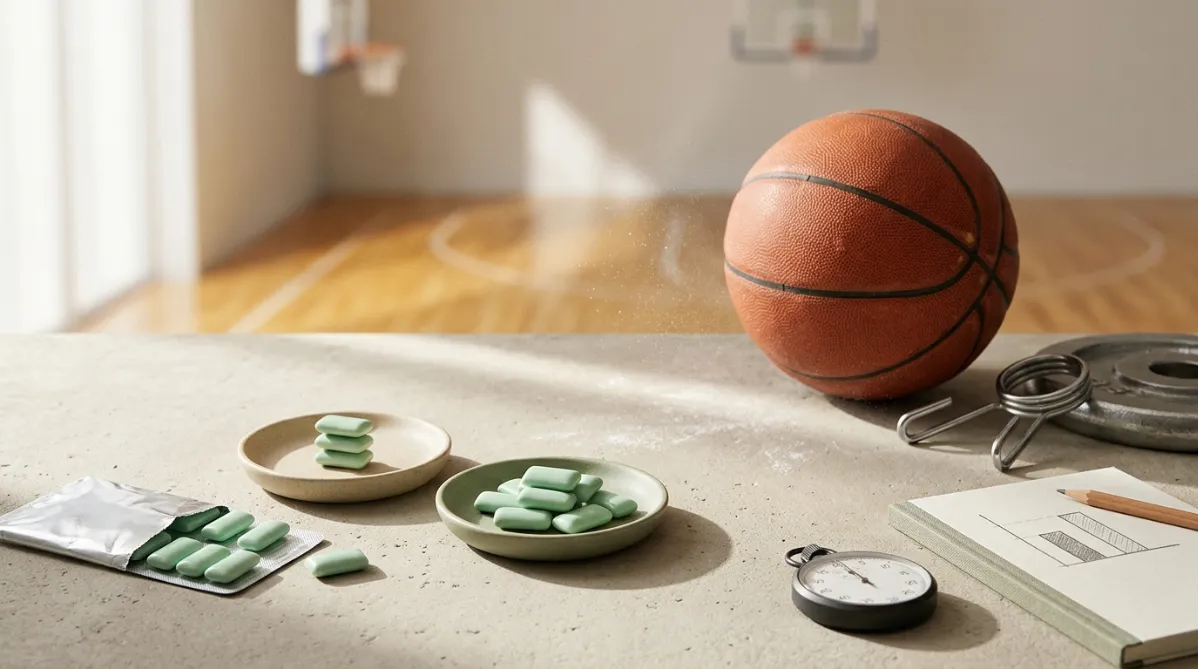
A landscape editorial still life on a pale warm-gray concrete surface, shot from a slightly elevated three-quarter angle in soft diffused morning window light. In the foreground left, a small open foil blister pack of mint-green caffeine gum sits beside two neatly arranged piles of gum pieces, one with three pieces and one with six, each on a small matte ceramic dish in oat and sage tones. The pieces are slightly glossy, rounded rectangles with crisp shadows. In the center-right, a worn leather basketball rests on the surface with deep amber-orange tones and visible pebbled texture. Next to it is a loosely chalked barbell collar and a single steel weight plate edge, partly out of focus. A minimalist analog stopwatch with a matte white face and a thin black hand lies at the lower right, and a slim notebook with a pencil rests nearby. The page shows a simple hand-drawn bar graph of two equal bars, with no legible text. In the soft-focus background, a blurred indoor basketball court with warm honey-colored hardwood and distant hoop lines fades into creamy bokeh. A narrow band of sunlight crosses the scene diagonally and picks out chalk dust particles in the air. The palette is muted and modern: sage green, warm oat, terracotta orange, charcoal, and cream. The composition leaves open negative space on the upper left for title overlay. Shallow depth of field, fine film grain, and a calm, clean magazine aesthetic like a contemporary health and science journal. No people, no text, no futuristic elements.
science research

咖啡因口香糖对当天表现的影响:为何3 mg/kg 与6 mg/kg 效果相当

BY DR. GYMBRO ·

一项针对篮球运动员的交叉试验发现,3 mg/kg 的咖啡因口香糖在当天可提升力量、爆发力、冲刺速度和反应灵敏度,效果几乎与 6 mg/kg 相当。两种剂量同样加快了深蹲预热时的杠铃速度,但这种优势在 24–48 小时后消失。研究缺乏基线测试,也没有仅含咖啡因的对照组,解读时需格外谨慎。下面说明这对剂量、时机以及潜在受益人群的意义。

This page is available in