Dr. Gymbro
←

#peak power

2 articles
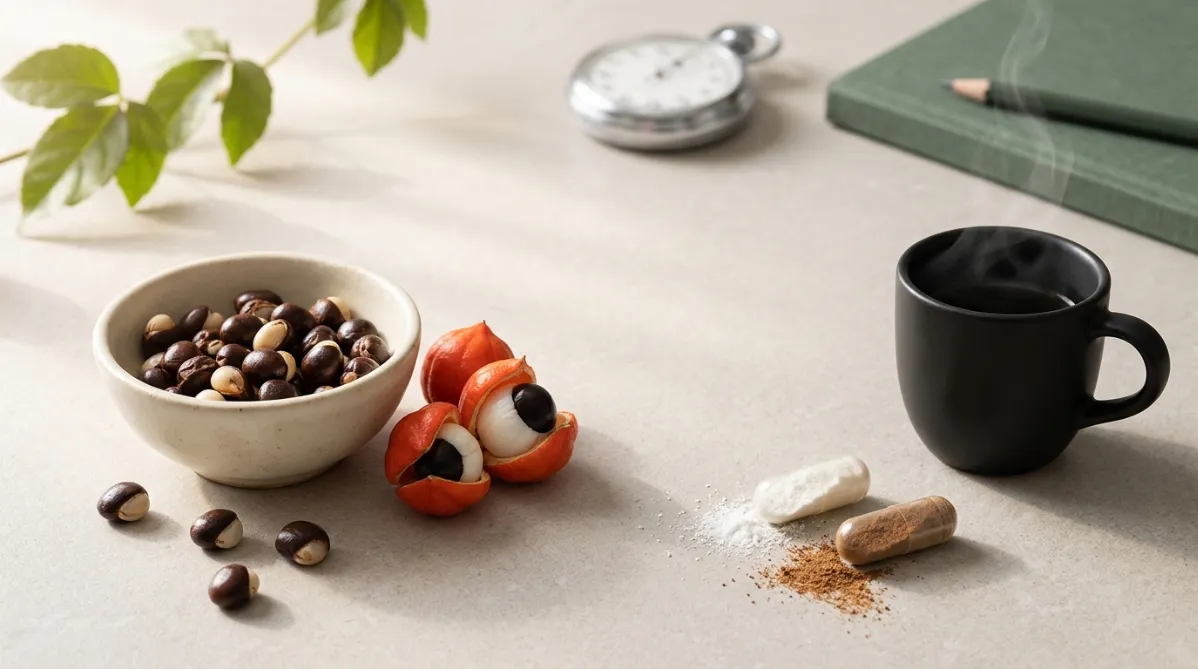
A wide, softly lit editorial flat-lay on a pale warm-gray stone countertop, shot from slightly above. On the left, a small rustic ceramic bowl in matte cream holds a handful of dried guarana seeds, dark glossy brown with pale cream arils, a few spilling onto the surface. Beside it sits a halved fresh guarana fruit in vivid red-orange, split open to show the white flesh and black seed inside, looking like a tiny eye. On the right, two open clear capsules rest side by side. One is filled with fine white caffeine powder, the other with a fine earthy brown guarana powder, and a little of each dusts the stone in delicate, deliberate lines. Between them, a minimalist matte-black espresso cup with a thin ribbon of steam rises on the right edge of the frame. A brushed-steel stopwatch and a slim dark-green linen notebook with a pencil sit in the upper background, slightly out of focus, to hint at performance testing without clutter. A few green leaves of a guarana vine curve in from the top-left corner, catching soft light.

The lighting is natural window light from the left, with gentle long shadows and a subtle warm highlight on the seeds. The palette is muted and modern: warm creams, terracotta red, deep espresso brown, sage green, and charcoal accents. The background is clean with generous negative space on the upper right for headline text. Shallow depth of field, crisp focus on the seeds and capsules, fine grain, and a calm premium magazine look like a contemporary wellness and sports-science journal. No people, no text, no logos, no futuristic elements.
science research

Guarana vs. Koffein: gleiche Dosis – nur Guarana steigerte die Spitzenleistung

BY DR. GYMBRO ·

Gleiche Koffein‑Dosis, unterschiedliche Kapseln, und nur Guarana erzeugte einen statistisch signifikanten Anstieg der Spitzenleistung. In einer randomisierten Crossover‑Studie mit 18 aktiven Männern erhöhte Guarana die maximale Leistungsabgabe um 4 % gegenüber Placebo, während anhydroes Koffein nicht signifikant war. Das Fazit: Guarana schlug Koffein im direkten Vergleich nicht signifikant; die Unterschiede zwischen beiden sind lediglich beschreibend. Wir zeigen, was die Zahlen aussagen, wo die Studie Schwächen hat und wie man Guarana nach Koffeingehalt dosiert, falls man es ausprobieren möchte.
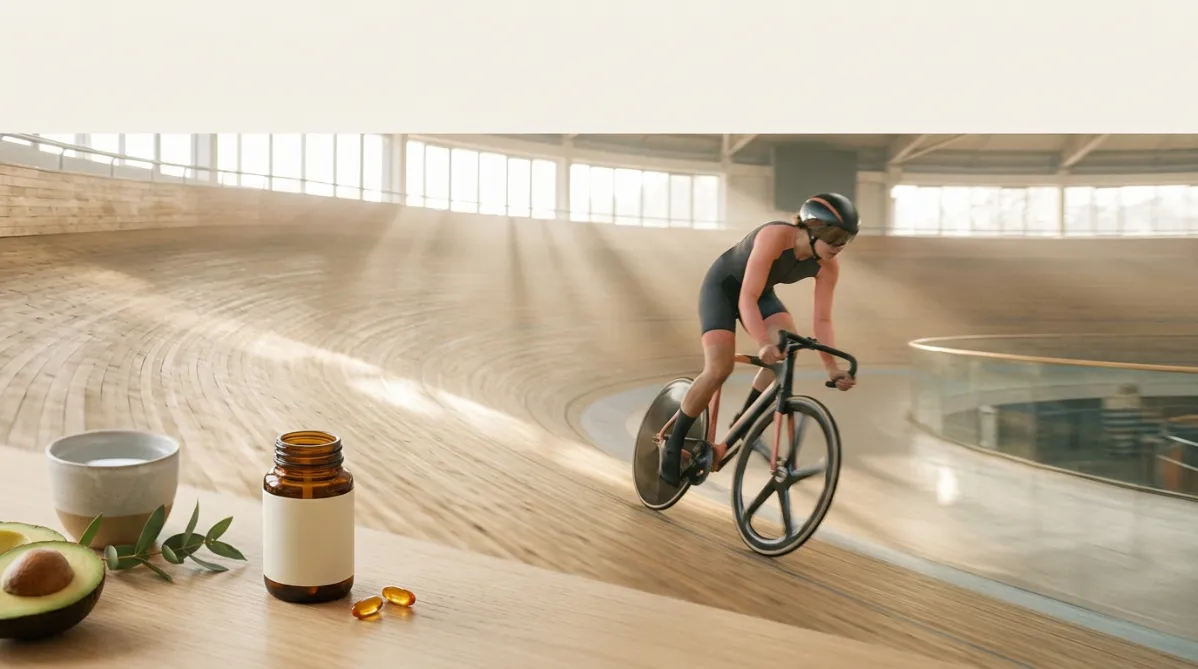
A wide, editorial-style photograph of a professional track cyclist mid-stride on a velodrome's sloping wooden boards, captured from a low side angle with a shallow depth of field. The cyclist is in a sleek matte charcoal and soft coral skinsuit with an aerodynamic helmet, slightly motion-blurred, while the wood grain of the track glows in warm honey tones. Soft morning light streams through high arena windows, creating long, gentle beams and a subtle haze.

In the foreground, slightly out of focus, a minimalist still-life is arranged on a pale oak surface: a small amber glass supplement bottle with a clean cream label, two golden-orange softgel capsules resting beside it, and a ceramic cup of water. A small sprig of green leaves and a halved avocado add a fresh, natural touch, hinting at taking the supplement with fat. The composition places the still-life in the lower left third, with the cyclist blurring into the background on the right, creating a layered sense of depth.

The color palette is warm and refined: creamy off-white, honey wood, muted coral, soft amber, and touches of sage green. A thin, elegant overlay of subtle graph-like lines, such as two delicate rising curves in white, one slightly higher than the other, floats faintly over the upper right negative space, suggesting the small performance gap without any text or numbers. The overall look is clean, modern, and magazine-quality, like a wellness and sports science journal feature, with natural film-like grain, soft contrast, and generous negative space at the top for headline placement. Landscape 16:9 composition, calm and sophisticated mood, no text, no logos.
nutrition

Olympische Anwärter nahmen 300 mg Ubiquinol: Der 2,5‑Prozent‑Vorteil

BY DR. GYMBRO ·

In einer doppelblinden Studie mit 100 Athlet*innen, die für die Olympischen Spiele 2012 in London trainierten, steigerte sich bei allen die Fahrradleistung. Die Gruppe, die 300 mg Ubiquinol einnahm, verbesserte sich stärker: +11 % gegenüber +8,5 % beim Placebo. Der etwa 2,5‑%‑ige Vorsprung war statistisch signifikant, jedoch gibt es Einschränkungen wie unkontrolliertes Training und Branchenbindung. Wir erklären den Unterschied zwischen Ubiquinol und Ubiquinon, was die Zahlen bedeuten und warum diese Lücke für Elite‑Radsportler relevant sein kann, aber nicht für Freizeitsportler. Außerdem: Dosierung, Einnahme mit Fett, Arzt‑Rücksprache und Kosten‑Nutzen‑Abwägung.

This page is available in