Dr. Gymbro
←

#protein dose

1 article
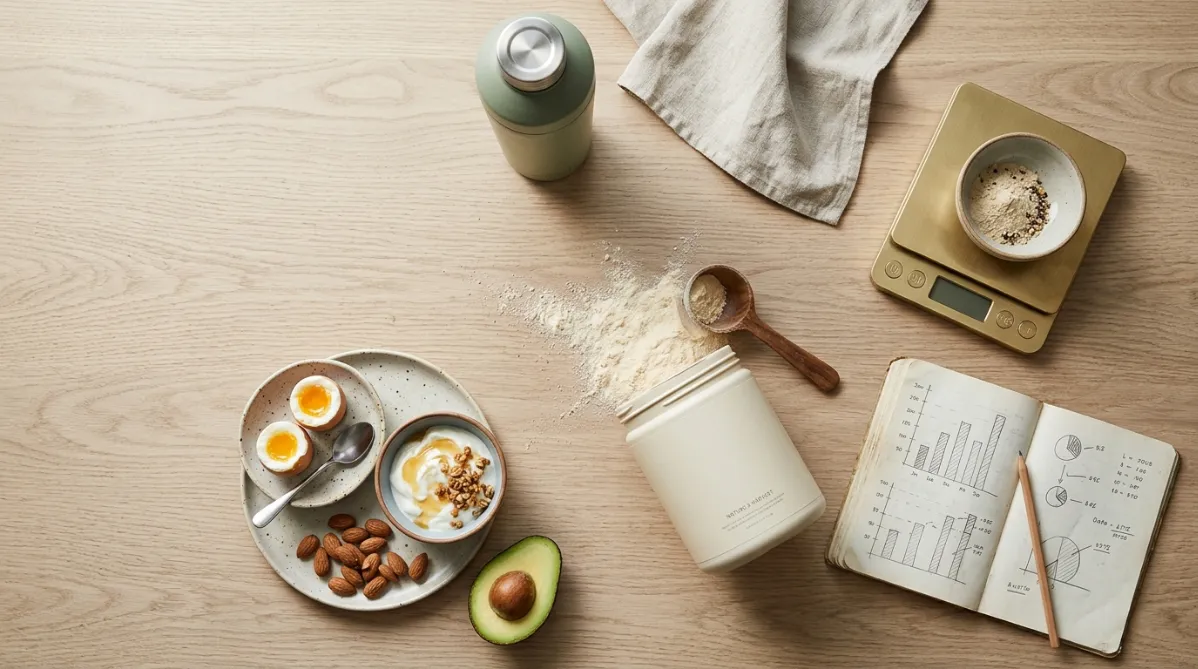
A wide, editorial-style flat lay shot from directly above on a pale oak table in soft morning window light. At the center, an open matte cream-colored protein powder tub sits tipped slightly, with a wooden scoop resting beside it and a small, elegant dusting of fine powder spilling across the wood grain. To the left, a neat balanced arrangement of whole foods: two soft-boiled eggs in a ceramic dish, a small bowl of Greek yogurt with a drizzle of honey, a handful of almonds, and a halved avocado. To the right, a minimalist brass kitchen scale holding a small ceramic bowl, with a handwritten notebook page beside it showing simple pencil-drawn bar charts and a few scribbled numbers, no legible text. A matte shaker bottle in muted sage green stands near the top edge, along with a folded linen napkin in warm oatmeal tone. The color palette is restrained and modern: warm creams, soft sage, terracotta accents, and natural wood, with gentle diffused shadows and subtle film-like grain. Composition leaves generous negative space on the left third of the frame for headline overlay. The mood is calm, thoughtful, and quietly skeptical, like a contemporary health and science magazine cover. Shallow depth of field, crisp textures on powder and ceramic, high-end lifestyle photography, clean and uncluttered.
nutrition

Das schmutzige Geheimnis von Proteinpulver: Erfolge schwinden, wenn die Kalorien ausgeglichen sind

BY DR. GYMBRO ·

Verbessert Proteinpulver wirklich deine sportliche Leistung und Regeneration oder liefert es nur zusätzliche Kalorien? Eine bayessche Metaanalyse von 75 randomisierten, kontrollierten Studien mit 1.206 Athlet:innen zeigt reale, aber begrenzte Vorteile. Der Knackpunkt: Jeder signifikante Befund stammt aus Studien, in denen die Energiezufuhr zwischen den Gruppen nicht abgeglichen war. Die praktischste Empfehlung lautet: etwa 1 g Protein / kg Körpergewicht / Tag zusätzlich durch Supplemente – also rund 2 g / kg / Tag insgesamt.

This page is available in