Dr. Gymbro
←

#protein dose

1 article
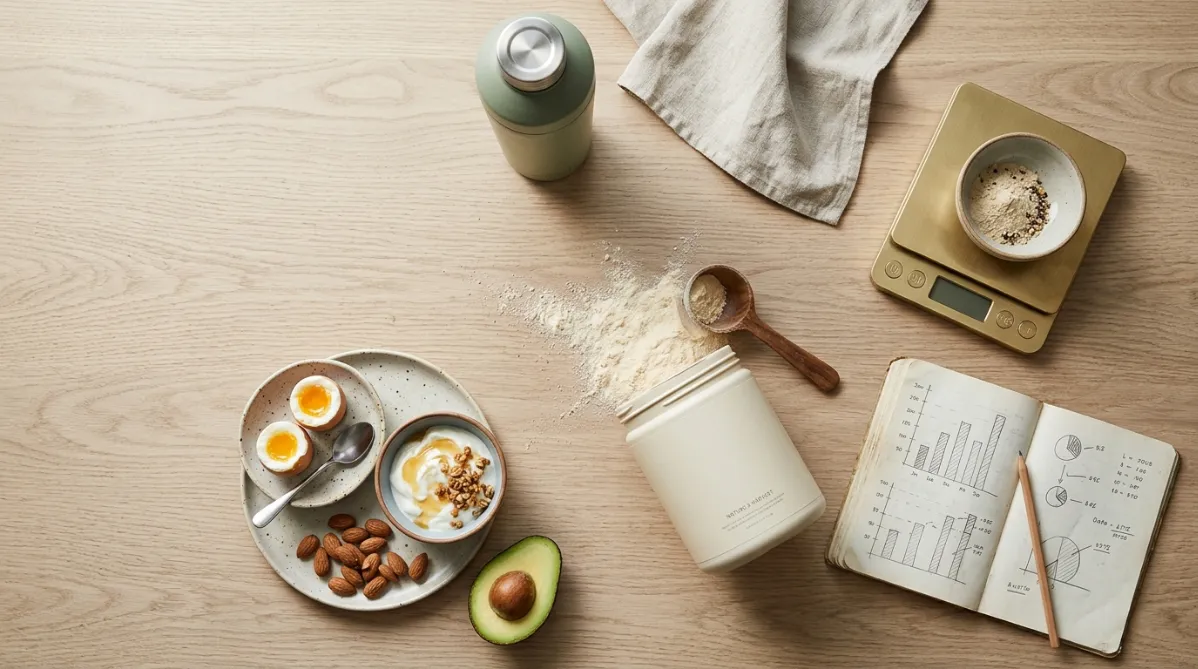
A wide, editorial-style flat lay shot from directly above on a pale oak table in soft morning window light. At the center, an open matte cream-colored protein powder tub sits tipped slightly, with a wooden scoop resting beside it and a small, elegant dusting of fine powder spilling across the wood grain. To the left, a neat balanced arrangement of whole foods: two soft-boiled eggs in a ceramic dish, a small bowl of Greek yogurt with a drizzle of honey, a handful of almonds, and a halved avocado. To the right, a minimalist brass kitchen scale holding a small ceramic bowl, with a handwritten notebook page beside it showing simple pencil-drawn bar charts and a few scribbled numbers, no legible text. A matte shaker bottle in muted sage green stands near the top edge, along with a folded linen napkin in warm oatmeal tone. The color palette is restrained and modern: warm creams, soft sage, terracotta accents, and natural wood, with gentle diffused shadows and subtle film-like grain. Composition leaves generous negative space on the left third of the frame for headline overlay. The mood is calm, thoughtful, and quietly skeptical, like a contemporary health and science magazine cover. Shallow depth of field, crisp textures on powder and ceramic, high-end lifestyle photography, clean and uncluttered.
nutrition

Le secret sale de la poudre de protéines : les gains disparaissent quand les calories sont équilibrées

BY DR. GYMBRO ·

La poudre de protéines améliore‑t‑elle réellement vos performances et votre récupération, ou consommez‑vous simplement plus de calories ? Une méta‑analyse bayésienne de 75 essais randomisés portant sur 1 206 athlètes a mis en évidence des bénéfices réels mais modestes. Le point crucial : chaque résultat statistiquement significatif provenait d’études où l’apport énergétique n’était pas équilibré entre les groupes. Le conseil le plus concret de l’article porte sur le dosage : environ 1 g / kg / jour supplémentaire grâce aux compléments, pour un total d’environ 2 g / kg / jour. Voici ce que les données soutiennent, ce qu’elles ne disent pas sur le timing et la source de protéine, et qui peut se passer de la boîte.

This page is available in