Dr. Gymbro
←

#sleep deprivation

1 article
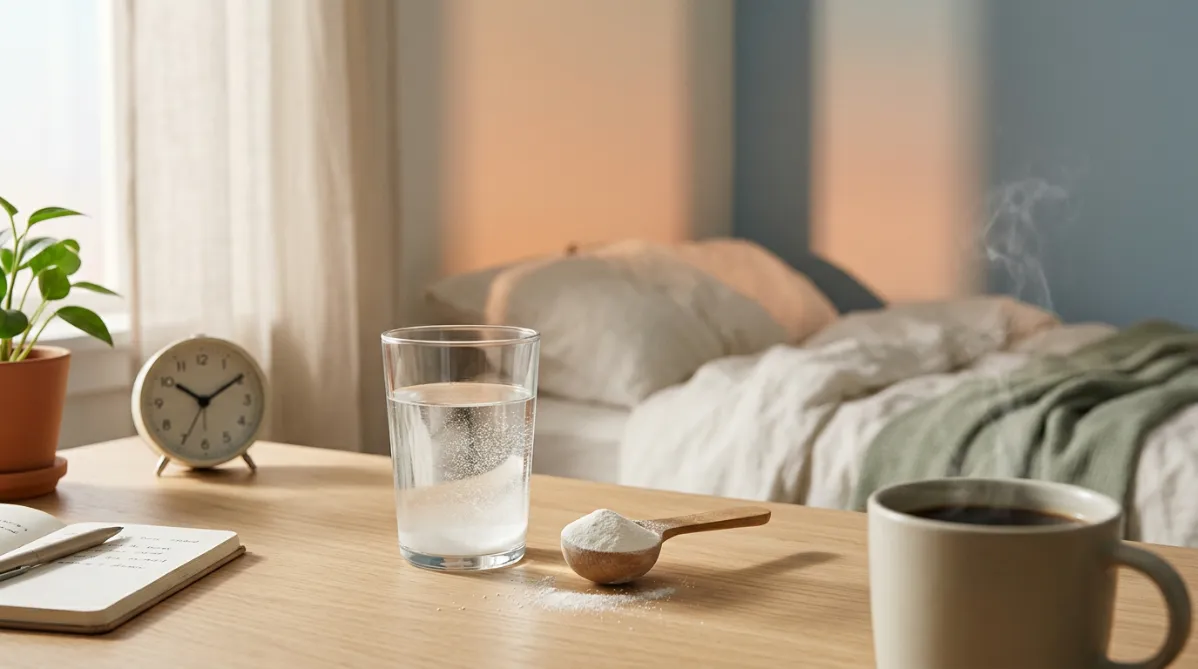
A wide, softly lit morning scene on a pale oak desk beside a window, shot from a slightly elevated three-quarter angle. In the foreground, a clear glass of water is half-filled with dissolved white creatine powder, tiny suspended particles catching the light. A wooden scoop heaped with fine white powder rests beside it, with a few grains scattered across the wood. A matte ceramic mug of black coffee sits slightly out of focus to the right, with a thin curl of steam. Behind them, a rumpled linen-white bed with a muted sage-green throw blanket suggests a sleepless night. Early dawn light spills through sheer curtains and creates long, gentle shadows and a warm peach-and-pale-blue gradient on the wall. On the desk, a minimalist analog alarm clock reads close to 6 a.m., and a small open notebook with a pen lies beside it, its handwriting blurred. A single green plant in a terracotta pot adds a fresh organic touch at the left edge. The color palette is calm and editorial: cream, soft sage, warm oak, dusty peach and muted slate blue. The depth of field is shallow, with crisp focus on the glass and scoop and a creamy bokeh background. The mood is quiet, restorative and contemplative, like a modern wellness magazine or a trendy health journal cover. The composition leaves open negative space in the upper left for title overlay. The image has a natural film-like texture, soft contrast and a clean, minimalist, lifestyle-photography look, with no text, logos or futuristic elements.
nutrition

Eine Einzeldosis von 0,35 g/kg Kreatin reduziert den durch Schlafmangel verursachten Gehirnnebel innerhalb von Stunden

BY DR. GYMBRO ·

Kreatin ist das am besten untersuchte Nahrungsergänzungsmittel im Fitness‑Umfeld. Eine Studie aus dem Jahr 2024 zeigt, dass bereits eine einzelne Dosis von 0,35 g/kg – etwa 25‑28 g für die meisten Erwachsenen – den durch Schlafentzug entstehenden Gehirnnebel innerhalb von Stunden mildern kann. Die Forschung dokumentierte Veränderungen der Energie‑Marker im Gehirn, verhinderte einen pH‑Abfall und verbesserte die kognitive Leistung sowie die Verarbeitungsgeschwindigkeit während 21 Stunden ohne Schlaf. Da die Dosis das Fünffache der üblichen Tagesdosis von 3‑5 g beträgt, ist die Studie klein und im Labor durchgeführt worden. Magenbeschwerden sind ein realistisches Risiko, und ein wiederholtes „Mega‑Dosing“ wurde nicht getestet. Hier erklären wir, was die Daten wirklich aussagen und warum Sie Ihre tägliche Routine noch nicht umstellen sollten.

This page is available in