Dr. Gymbro
A bright, minimalist editorial still life shot from a slightly elevated three-quarter angle on a pale oat-colored stone countertop, bathed in soft natural window light with gentle long shadows. In the center sit two matching matte white supplement scoops, side by side. One is heaped with fine white crystalline powder, the other holds an almost identical pile, so the viewer is invited to compare them. Beside them are two simple frosted glass tumblers of cloudy water, each with a small whisper of powder swirling at the bottom. A third glass of clear water sits slightly apart, as a quiet nod to the placebo.

Scattered around the scene are fresh, sliced watermelon wedges with vivid coral-pink flesh and pale green rinds, and a few sliced green apples with crisp white interiors, hinting at the natural sources of citrulline and malic acid. A small brushed-brass measuring spoon and a minimalist matte sage-green shaker bottle rest at the edge of the frame. Off to one side, a clean ceramic dish holds a few loose grains of powder, and a slim linen notebook with a pencil lies open to a blank page, suggesting data and study notes without any legible text.

The color palette is soft and modern: warm cream, blush coral, sage green, and touches of brass, with a faintly blurred background of a sunlit kitchen or studio with a pale plaster wall. Shallow depth of field keeps the scoops tack sharp while the background melts into a creamy bokeh. The composition leaves generous negative space on the left third of the frame for a title overlay. The overall mood is calm, trustworthy, and trendy, like a contemporary wellness and science journal cover, with crisp detail, subtle film-like grain, and a clean, airy, balanced feel.
Science & Research

Citrulina malato vs L‑citrulina: ¿realmente importa el malato?

Dr. Gymbro · · 4 min read

La respuesta rápida (antes de que compres otro tarro)

Si llegaste hasta aquí preguntándote si necesitas citrulina malato o si la L‑citrulina pura basta, esta es la respuesta honesta: en un ensayo aleatorizado, doble ciego, controlado con placebo y de diseño cruzado, ninguna de las dos superó al placebo en el desempeño neuromuscular agudo de adultos jóvenes y entrenados. Además, el malato no aportó nada a la citrulina.

Esto no quiere decir que la citrulina sea inútil; simplemente indica que, bajo el protocolo concreto del estudio, una sola dosis pre‑entrenamiento no generó cambios medibles en fuerza, potencia o número de repeticiones. A continuación, lo que se hizo y lo que razonablemente puedes extraer del estudio.

Qué probaron realmente los investigadores

El estudio, publicado en el International Journal of Sport Nutrition and Exercise Metabolism (2025) por Martín‑Olmedo y colaboradores, incluyó a 43 participantes entrenados (21 mujeres, edad media ≈ 24 años). Cada persona completó tres sesiones en orden contrabalanceado, de modo que todos sirvieron como su propio control:

  • Placebo
  • L‑citrulina (CIT): 5,3 g de citrulina
  • Citrulina malato (CMA): 5,3 g de citrulina + 2,7 g de malato

La clave del diseño es que la cantidad de citrulina estuvo igualada en ambas condiciones activas. Si el CMA hubiera rendido mejor que el CIT, el malato sería la explicación evidente. Así se consigue una prueba limpia de la cuestión "malato o no".

Los suplementos se tomaron 45 min antes de las pruebas. Los investigadores midieron:

  • Rendimiento neuromuscular máximo de miembros superiores e inferiores (método de dos puntos)
  • Rendimiento balístico (salto vertical con countermovement)
  • Fuerza‑resistencia: tres series de 10 repeticiones en sentadilla y press de banca, con registro de velocidad
  • Percepción de esfuerzo y respuestas emocionales

Los resultados: una pared de hallazgos nulos

En todos los parámetros, nada se movió de forma significativa.

  • Rendimiento neuromuscular máximo: sin mejoras para CIT ni CMA (todos p ≥ 0,061)
  • Fuerza balística: sin cambios (todos p ≥ 0,348)
  • Repeticiones totales: sin diferencia (todos p ≥ 0,590)
  • Reps antes del umbral de pérdida de velocidad: sin diferencia (todos p ≥ 0,623)
  • Velocidad media y decaimiento o mantenimiento de velocidad: sin diferencia
  • Percepción de esfuerzo y estado emocional: sin diferencia (ambos p ≥ 0,306)

Los tamaños del efecto fueron diminutos, con valores de eta parcial ≤ 0,066 y, en la mayoría, mucho menores. Esto sugiere que la falta de significancia no se debió solo a una señal débil bajo el umbral; los datos fueron prácticamente planos.

Entonces, ¿vale la pena pagar por el malato?

Según este ensayo, no. Cuando la citrulina estuvo igualada, el CMA no superó a la L‑citrulina sola en ningún resultado. Si existiera un beneficio aditivo del malato, no apareció con una dosis aguda durante entrenamientos de bajo a moderado volumen.

La teoría detrás del malato es que, como intermediario del ciclo de Krebs, podría favorecer la producción aeróbica de energía y ayudar a amortiguar la fatiga. Es una idea razonable, pero este estudio no encontró que se tradujera en mejor rendimiento en una sola sesión.

Hay también un aspecto práctico: los productos etiquetados como citrulina malato suelen usar ratios como 2:1, y la etiqueta puede indicar el peso total del compuesto. Verifica si el número se refiere a la citrulina o al compuesto completo. En este ensayo, 8 g de CMA a razón 2:1 equivaldrían aproximadamente a la dosis de citrulina igualada. No asumas que 6 g de "CMA" te dan 6 g de citrulina.

Conclusiones prácticas sobre la dosificación

  • Si ya usas citrulina: no necesitas cambiar a malato basándote en esta evidencia. La L‑citrulina pura es una opción adecuada y, a menudo, más económica.
  • Si compras CMA de todas formas: haz los cálculos del contenido real de citrulina por scoop.
  • Contexto de la dosis: el ensayo utilizó ≈ 5,3 g de citrulina 45 min antes del ejercicio. Muchos estudios emplean entre 6 y 8 g, de modo que una dosis mayor o un protocolo distinto podrían dar resultados diferentes. Este estudio no puede afirmar lo contrario.
  • No esperes un golpe agudo dramático: la citrulina no es un estimulante y este ensayo no detectó cambios en la dureza percibida de las sesiones.

Lo que este estudio no puede decirte

Es crucial no exagerar en ninguna dirección. Algunas limitaciones son:

  • Fue un estudio agudo. Se probó una única dosis. La suplementación crónica durante semanas podría producir efectos distintos, y este ensayo no lo aborda.
  • El volumen de entrenamiento fue bajo a moderado. Tres series de 10 repeticiones no constituyen trabajo de alto volumen. Los supuestos beneficios de la citrulina, como mayor flujo sanguíneo y eliminación de amoníaco, podrían ser más relevantes en sesiones de alto volumen o con descansos cortos. Los autores limitan sus conclusiones a contextos de bajo a moderado volumen.
  • La muestra era joven y entrenada. Los resultados pueden no extrapolarse a adultos mayores, principiantes o atletas de élite.
  • No se midieron otros resultados. El "pump" muscular, el dolor post‑entrenamiento o el rendimiento de resistencia no fueron evaluados en este trabajo.

En resumen

El mensaje clave para los compradores de suplementos es sencillo: el malato no potenció la citrulina, y ninguna de las dos formas mejoró el rendimiento neuromuscular en este estudio cruzado. Si ya te gusta la citrulina y se ajusta a tu presupuesto, no hay razón fuerte para cambiar, pero tampoco hay evidencia de que necesites la versión con malato. Considéralo como un suplemento opcional de baja prioridad. La constancia en el entrenamiento, la sobrecarga progresiva, el sueño y la ingesta de proteína seguirán teniendo mucho mayor impacto en tu fuerza que cualquier scoop pre‑entrenamiento.
Original study

Read the original research on pubmed.ncbi.nlm.nih.gov →

This article summarizes published research for general information. It is not medical advice.

DG

Written by

Dr. Gymbro

Dr. Gymbro writes for Dr. Gymbro: science-backed fitness, nutrition & performance.

Related Articles

A wide, editorial-style flat lay photographed from above on a pale warm-gray concrete surface, lit by soft natural window light with gentle long shadows. On the left, two matte ceramic bowls in muted sage green and cream sit side by side. One holds fine white crystalline powder, the other holds slightly coarser off-white powder. Between them, a small brass measuring scoop rests on the surface, dusted with powder. Behind the bowls, two simple amber glass jars with minimal cream labels and no legible text stand slightly out of focus.

On the right side, a pair of chalk-dusted black hex dumbbells and a worn leather lifting strap curve across the frame. A folded charcoal gym towel sits beneath them. A rumpled matte-black shaker bottle lies on its side near the top edge. A slice of watermelon, the natural source of citrulline, sits on a small white ceramic plate in the lower center. Its vivid coral-pink flesh and dark seeds add a saturated pop of color against the neutral palette. A few loose watermelon seeds and a scattering of white powder dust trail across the surface toward the dumbbells, tying the composition together.

In the lower left corner, an open notebook with blank cream pages holds a slim silver pen and a minimalist analog stopwatch. A thin line of hand-drawn tally marks suggests counted reps, with no readable words or numbers.

The palette is restrained and contemporary: warm grays, sage, cream, charcoal, and amber, with the watermelon's coral-pink as the single bright accent. The mood is calm, clean, and precise, like a modern wellness or science-journal feature. Shallow depth of field keeps the powder bowls and watermelon crisp while the background items soften slightly. Generous negative space across the upper center leaves room for a headline overlay. The photograph looks high-end and tactile, with a subtle film-grain finish.
nutrition

L‑citrulina vs citrulina malato: el giro de la resistencia de la parte superior

BY DR. GYMBRO ·

Todos discuten si conviene más la L‑citrulina pura o la citrulina malato, pero un estudio de seis semanas reveló algo más interesante. Ambas formas superaron al placebo en repeticiones hasta el fallo de la parte superior del cuerpo y aumentaron los metabolitos de óxido nítrico. Sin embargo, ninguna mejoró la fuerza máxima (1RM) y los resultados en piernas fueron solo una tendencia. Con sólo 33 hombres entrenados, este hallazgo es una señal prometedora, no una conclusión definitiva. Veamos qué implican las dosis, el momento de toma y los detalles para tu entrenamiento.

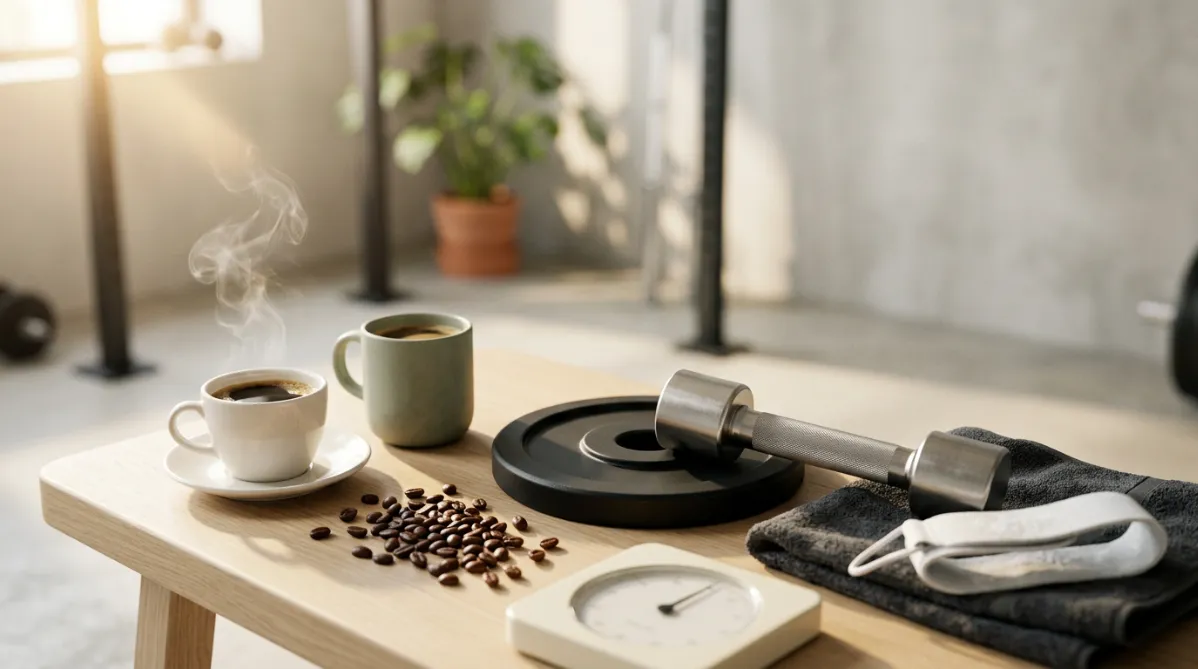
A wide, editorial-style flat lay photographed from slightly above on a pale oak gym bench with a soft matte finish. On the left, a small white ceramic cup of black coffee sits on a matching saucer, with a thin curl of steam rising and catching warm window light. Beside it is a second, slightly larger handleless stoneware mug in muted sage green, also filled with coffee, so the pair suggests one to two cups. In the center-right foreground rests a sleek matte-black steel barbell plate, partly overlapping a brushed-steel dumbbell with fine knurling. A folded charcoal gym towel and a clean white chalk-dusted wrist strap lie casually to one side. A small scatter of whole roasted coffee beans spills across the bench in front of the cups, glossy and deep brown. Near the bottom edge, a minimalist analog kitchen scale in soft cream with a thin black needle hints at precise dosing, without any readable numbers or text.

Soft morning sunlight streams in from the upper left, creating long, gentle shadows and a warm golden glow against cool neutral tones. The background is a softly blurred, airy home gym or boutique training studio with out-of-focus squat rack uprights, pale concrete walls, and a leafy green plant in a terracotta pot adding a touch of organic color. The palette is restrained and modern: warm cream, espresso brown, charcoal, sage green, and hints of brushed silver. Shallow depth of field keeps the cups and beans tack sharp while the background melts into creamy bokeh. The composition leaves generous negative space on the right third for a title overlay, with a balanced, calm, premium magazine feel, like a contemporary wellness and sports science journal. High-resolution, natural color grading, subtle film grain, realistic textures on ceramic, steel, and coffee crema.
nutrition

¿Cuánta cafeína tomar antes de entrenar? Un meta‑análisis muestra que 1‑2 mg/kg siguen siendo eficaces

BY DR. GYMBRO ·

El consejo habitual es consumir entre 3 y 6 mg/kg de café antes de entrenar, lo que equivale a varias tazas o a una generosa cucharada de pre‑entrenamiento. Un meta‑análisis publicado en 2022, que revisó 12 ensayos, encontró que dosis tan bajas como 0,9‑2 mg/kg también mejoran la fuerza muscular (d ≈ 0,17), la resistencia (d ≈ 0,21) y la velocidad media de la barra (d ≈ 0,56). Para muchos levantadores, eso representa de una a dos tazas de café. Los efectos son modestos y provienen de estudios agudos de una sola sesión, pero los resultados sugieren que se puede obtener un beneficio similar con menos cafeína.

A wide, editorial-style still life photographed on a pale limestone countertop in soft morning window light. At the center sits a matte white scoop of fine white powder resting beside a frosted glass tumbler of cloudy, pale pink-orange water, with a few watermelon slices and a halved wedge showing glossy coral flesh and thin green rind, a nod to citrulline's natural source. To the left, a neatly folded charcoal gym towel and a brushed steel dumbbell rest at the edge of the frame, slightly out of focus. To the right, a minimalist open notebook with a few hand-drawn tally marks and a simple line graph sketched in black ink rises toward the right edge, next to a slim mechanical pencil and a small analog stopwatch with a clean white face. A few loose grains of powder are scattered across the stone, catching the light. Soft diagonal shadows fall across the surface from a nearby window, and a gentle sage-green wall in the background adds calm contrast. The palette is warm cream, watermelon coral, sage green, and soft graphite gray, with plenty of negative space on the upper left for headline overlay. Shallow depth of field, crisp focus on the powder scoop and watermelon, subtle film grain, natural tones, and a clean, modern wellness-journal aesthetic. Shot at eye level with a slight downward angle, like a contemporary health and science magazine cover. No text, no logos, no people.
nutrition

8 g de Citrulline Malate = ¿53 % más repeticiones y 40 % menos dolor? Lo que muestra el estudio

BY DR. GYMBRO ·

Un ensayo cruzado de 2010 encontró que una dosis de 8 g de citrulina malato se asoció con alrededor de un 53 % más de repeticiones en la última serie evaluada y aproximadamente un 40 % menos de dolor muscular a las 24 y 48 h. El mayor aumento de repeticiones apareció al final de la sesión, cuando la fatiga ya estaba acumulada. Aquí mostramos qué se probó, cómo aplicar la dosis y el momento de forma sensata, quién puede beneficiarse y por qué el 14,63 % de molestias estomacales y las limitaciones del estudio merecen atención.

A landscape editorial photograph with a modern, clean magazine feel, shot on a pale warm-gray concrete surface in soft natural window light from the left. In the foreground, two matte white ceramic espresso cups sit side by side. The left cup holds a small amount of dark espresso with golden crema. The right cup is filled twice as high. Beside them, two small stainless steel scoops hold fine coffee-colored powder, one half full and one heaped, suggesting a dose comparison without any text or labels. A pair of worn red leather boxing gloves rests slightly out of focus behind the cups, laces loosely draped, with a white hand wrap rolled neatly beside them. A minimalist digital kitchen scale in matte black sits at the edge of the frame, with a few roasted coffee beans scattered across the surface. In the soft-focus background, a boxing gym corner appears: a hanging heavy bag in muted charcoal, pale wood plank flooring, and a tall window with diffused morning light. The palette is warm cream, espresso brown, brick red, and soft slate gray, with gentle shadows and a shallow depth of field. The composition follows the rule of thirds, with the cups and scoops in the lower left third and open negative space on the right for headline overlay. The look is tactile and refined, like a high-end health and performance journal. It has natural grain, subtle contrast, and a calm, confident mood. There are no people, no text, no logos, and no futuristic elements.
nutrition

Duplicar la dosis de cafeína apenas ayudó a los boxeadores: esto es lo que ocurrió

BY DR. GYMBRO ·

¿Crees que una doble porción de pre‑entrenamiento duplica el rendimiento? Un nuevo estudio cruzado con 15 boxeadores competitivos comparó 3 mg/kg y 6 mg/kg de cafeína, y la dosis mayor no resultó ser consistentemente mejor. Ambas dosis aumentaron la altura del salto y la potencia a los 60 minutos, mientras que 6 mg/kg sólo se adelantó en algunos parámetros, como la potencia del push‑up balístico y el torque de la rodilla. Aquí tienes la tabla de conversión mg‑por‑kg para pesos corporales habituales, el momento en que se observaron los efectos y las advertencias, incluida la ausencia de pruebas de puñetazos.

This page is available in