
Dr. Gymbro
←

#strength

9 articles
A wide, editorial-style still life photographed in soft natural window light on a pale oak gym bench. In the foreground, a small rustic ceramic bowl in warm sand tones holds a mound of fine golden-beige ashwagandha root powder, with a few dried gnarled ashwagandha roots and a sprig of green leaves with tiny orange-red berries resting beside it. A wooden scoop dusted with powder lies at an angle. Just behind, a matte black barbell with a single chalk-dusted steel plate sits slightly out of focus, a light haze of white chalk hanging in the air and catching the sunlight.

On the left side, a neat stack of printed research papers with a sharp black pen and a few muted sage-green sticky tabs. One page shows a simple, abstract forest-plot-style line graph with small squares and horizontal lines, subtly out of focus, hinting at statistics without legible text. A pair of minimal round reading glasses rests on the pages. A small linen gym towel is folded near the edge of the bench.

The palette is restrained and modern: warm cream, soft sage green, muted terracotta, charcoal black, and brushed steel highlights. The background is a softly blurred minimalist studio space with a pale plaster wall and a long soft shadow cast by a window frame, giving a calm, contemplative mood. Shallow depth of field, crisp detail on the powder and roots, gentle film-like grain, and generous negative space on the right third of the frame for a headline overlay. The overall look is a clean, trendy health-and-science journal cover, thoughtful and skeptical rather than promotional, balancing the natural herbal element against the discipline of strength training.
nutrition

Ashwagandha para levantadores: ¿Impulso de fuerza o espejismo estadístico?

BY DR. GYMBRO ·

Ashwagandha se vende a los levantadores como potenciador de fuerza y masa, y un nuevo metaanálisis de ensayos controlados de entrenamiento de resistencia mostró aumentos en press de banca y sentadilla que parecen impresionantes en papel. Sin embargo, sólo se pudieron agrupar tres estudios con 161 participantes. Los resultados de fuerza perdieron significación bajo pruebas HKSJ más rigurosas y dependían de un único ensayo influyente. La evidencia fue calificada por GRADE como baja a muy baja, y no se observó un efecto fiable sobre la grasa corporal. Aquí se resume lo que realmente muestra la revisión y quién podría aún querer probarla.
A wide, editorial-style flat lay photographed from above on a pale warm-gray stone countertop, bathed in soft natural window light with gentle long shadows. On the left half, a minimalist keto plate: sliced avocado fanned out in creamy green, two soft-boiled eggs halved to reveal golden yolks, a small pile of dark leafy greens, a few walnuts, and a glossy drizzle of olive oil in a small ceramic dish. On the right half, a contrasting arrangement of carbohydrates: a rustic bowl of oats, a ripe banana, and a few slices of sourdough, arranged with equal visual weight. Between the two sides, a matte black kettlebell sits at the center, and a slim brushed-steel barbell collar rests nearby, suggesting resistance training without a gym setting. A simple, elegant glass of water with a lemon slice catches the light and casts a delicate refracted glow, hinting at water weight and glycogen. A linen napkin and a small, neutral-toned notebook with a pen add a journal-like touch. The palette is muted and modern: sage green, cream, terracotta, charcoal, and soft butter yellow. The composition is clean and balanced with generous negative space across the top and bottom edges, suitable for headline overlay. The mood is calm, thoughtful, and science-informed, like a contemporary health and wellness magazine cover. Shallow depth of field, crisp textures on the food, subtle film-like grain, and high-end, trendy food photography styling.
nutrition

Keto para levantadores: la grasa disminuye, pero la masa magra retrocede 1,4 kg

BY DR. GYMBRO ·

Una revisión de 50 estudios muestra que las dietas cetogénicas reducen la grasa y, en general, mantienen la fuerza. Sin embargo, en adultos entrenados en resistencia, la masa magra resultó aproximadamente 1,37 kg menor que con dietas no cetogénicas. Los autores califican ese hallazgo como de baja certeza y advierten que no prueba pérdida muscular, pues el glucógeno y el agua pueden explicar gran parte de la diferencia. El rendimiento de alta intensidad también fue más a menudo inalterado o deteriorado. Aquí tienes quiénes pueden beneficiarse del keto al cortar, quiénes deberían evitarlo y cómo proteger la masa magra.
A landscape editorial photograph of a rustic kitchen table in soft morning window light. On a weathered light oak surface, a loose arrangement of fresh red onions, a few halved to show their purple-white rings, and crisp red and green apples, one sliced open to reveal pale flesh. A small ceramic bowl holds a pinch of golden-yellow quercetin powder, with a wooden spoon resting beside it. In the softly blurred background, an older woman in a cream linen shirt lifts a modest dumbbell near a sunlit window, her posture strong and relaxed. Her silhouette is out of focus, which keeps the produce as the main subject.

The palette is warm and natural: deep magenta onion skins, glossy apple reds, buttery yellow accents, and creamy neutrals. A gentle shallow depth of field gives creamy bokeh in the background. The light is diffused and golden, with delicate shadows and a few dried onion skin flakes scattered across the wood for texture. A folded linen napkin and a small sprig of thyme add a curated, modern lifestyle-magazine feel.

The composition follows the rule of thirds, with the produce at lower left and negative space on the right, where the blurred lifter and window glow provide balance. The overall look is clean, calm, and contemporary, like a premium health and wellness journal cover: natural, tactile, and optimistic, with fine film-like grain and true-to-life color.
nutrition

La quercetina triplicó las ganancias de fuerza en levantadores mayores, sin más músculo

BY DR. GYMBRO ·

Una flavonoide barato presente en cebolla y manzana podría haber aumentado las ganancias de fuerza en adultos mayores mucho más allá de lo que el entrenamiento solo logra. En un ensayo aleatorizado, doble ciego, los participantes que tomaron 200 mg/día de glicósidos de quercetina incrementaron su fuerza de rodilla alrededor de un 15 % en seis semanas, frente a un 5 % con placebo. Curiosamente, la masa muscular no cambió en ninguno de los grupos. La ventaja parece provenir del sistema nervioso, con unidades motoras de umbral alto disparando más rápido. Aquí lo que mostró el estudio, cómo aplicarlo y por qué la muestra pequeña exige cautela.
A bright, minimalist editorial still life on a pale oat-colored linen surface, shot from a slightly elevated three-quarter angle in soft natural window light. On the left, a matte ceramic bowl of fine white collagen powder with a wooden scoop resting beside it, a light dusting of powder spilling across the linen. On the right, a matching bowl of creamy off-white whey powder with a brushed-steel scoop. Between them sits a small, neatly balanced stack of simple geometric wooden blocks and a single smooth gray stone, hinting at a scale or comparison without showing a literal scale. Behind them, a lightly blurred row of three clean amber glass supplement jars with plain cream labels, unbranded. A single rolled yoga towel and a pair of small chrome dumbbells sit softly out of focus in the background on a pale plaster shelf. Accents of muted sage green and warm terracotta appear in a ceramic cup and a folded napkin, giving the palette a calm, contemporary wellness-magazine feel. A thin, elegant sprig of dried eucalyptus lies at the edge of the frame. Shadows are long, gentle, and slightly cool, with a creamy shallow depth of field and fine grain. The composition leaves generous negative space across the upper third for title overlay, with a subtle gradient from warm ivory to pale gray-blue in the background wall. The styling is clean and modern like a trendy health journal website, with a refined, tactile, editorial photography look, balanced symmetry, and no text, no people, no futuristic or laboratory elements.
nutrition

¿Colágeno supera al suero en el músculo según un análisis de 78 ensayos?

BY DR. GYMBRO ·

Un meta‑análisis de red de 2026 que incluyó 78 ensayos aleatorizados y 4 755 personas clasificó al colágeno como el primero en ganancias de fuerza y masa libre de grasa con entrenamiento de resistencia, por delante del suero. Más sorprendente aún, ningún otro suplemento proteico superó al placebo. Sin embargo, el colágeno es una proteína incompleta, baja en leucina, y los intervalos de confianza son amplios. Aquí mostramos qué revelan realmente los números, por qué el resultado necesita confirmación directa y qué hacer con tu stack de suplementos mientras tanto.
A sunlit, minimalist home gym corner photographed in soft golden morning light, with a young athletic man seated on a wooden bench, leaning forward with his elbows resting on his knees, catching his breath after a hard leg session. He wears a muted sage-green t-shirt and charcoal shorts, his face turned slightly away from the camera, calm and focused. A matte ceramic dish in the foreground holds a few small, translucent golden softgel capsules, with a glass of water beside it catching the light and casting a soft caustic shadow across a pale oak floor. Behind him, a loaded barbell rests on a squat rack, slightly out of focus, and a tall window pours warm sunlight diagonally across the scene, creating long gentle shadows and a hazy glow. A small potted green plant sits on a shelf at the edge of the frame. The color palette is warm and editorial: cream, soft gold, sage green, pale wood, and charcoal accents. Shallow depth of field, with crisp focus on the capsules and glass in the lower third and a creamy bokeh background. The composition leaves generous negative space on the right side for a headline overlay. The mood is clean, modern, and aspirational, like a high-end wellness magazine or a trendy health journal feature. Shot on a 50mm lens, natural light, fine film grain, subtle matte finish, landscape 16:9 framing.
recovery

Vitamina D acelera la recuperación de la fuerza en hombres con niveles suficientes

BY DR. GYMBRO ·

Hombres con niveles de vitamina D perfectamente normales recuperaron la fuerza más rápido tras una sesión intensa de piernas al tomar 4 000 UI diarias. En este ensayo aleatorizado, controlado con placebo, con 28 hombres activos, la fuerza isométrica máxima se recuperó aproximadamente un 8 % más a las 24 horas. Los marcadores de daño muscular ALT y AST también aumentaron menos. La sorpresa es que la sensación de dolor muscular no mejoró en absoluto. A continuación se detallan los hallazgos del estudio, sus limitaciones y a quién podría interesar.
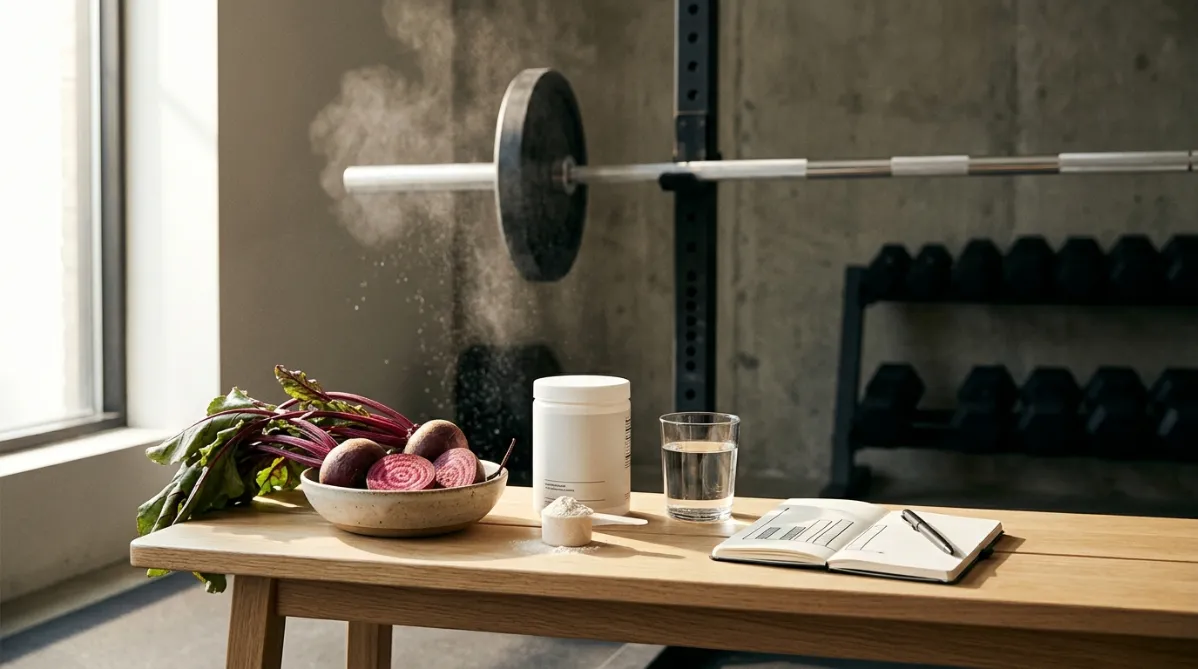
A sun-lit editorial still life on a pale oak gym bench: a loaded barbell rests on a rack just above it, chalk dust drifting in the air. In the foreground sits a small ceramic bowl of roasted beets, some sliced to show their deep magenta rings, with a few whole beets still wearing their leafy burgundy stems. Next to the bowl is a matte white supplement tub with a minimal label, a wooden scoop of fine white powder, and a clear glass of water catching soft highlights. A slim notebook lies open beside them with a simple hand-drawn bar graph and a pen, suggesting data and analysis without any readable text. Behind the bench, a softly blurred minimalist training space: raw concrete wall, tall window with warm morning light, a rack of black dumbbells fading into bokeh. The palette is earthy and modern: beet magenta, warm cream, charcoal, brushed steel, and touches of sage green from the beet leaves. Soft directional light from the left creates long gentle shadows and a slight film-grain texture. Shallow depth of field keeps the beets and powder tack sharp. The composition is wide and balanced, with negative space on the right for headline overlay. The overall feel is a clean, contemporary health and fitness journal photograph, warm and tactile, with an understated scientific tone.
nutrition

La betaina aumentó la potencia del bench throw ~16 % en 14 días

BY DR. GYMBRO ·

Dos semanas de betaina, un compuesto presente en la remolacha y comercializado como TMG, se asociaron a un aumento de aproximadamente un 16 % en la potencia del bench throw en el primer día de una serie de pruebas intensas en hombres entrenados en resistencia. Un ensayo cruzado, aleatorizado y doble ciego también mostró mayor fuerza isométrica en el press de banca, con mejoras menores en la potencia del salto vertical y la fuerza isométrica en sentadilla. Sin embargo, ni el número de repeticiones ni la potencia del salto en cuclillas cambiaron, y el estudio solo incluyó a 12 hombres. Aquí se presentan los datos, la dosis utilizada y qué deben y qué no deben interpretar los levantadores.
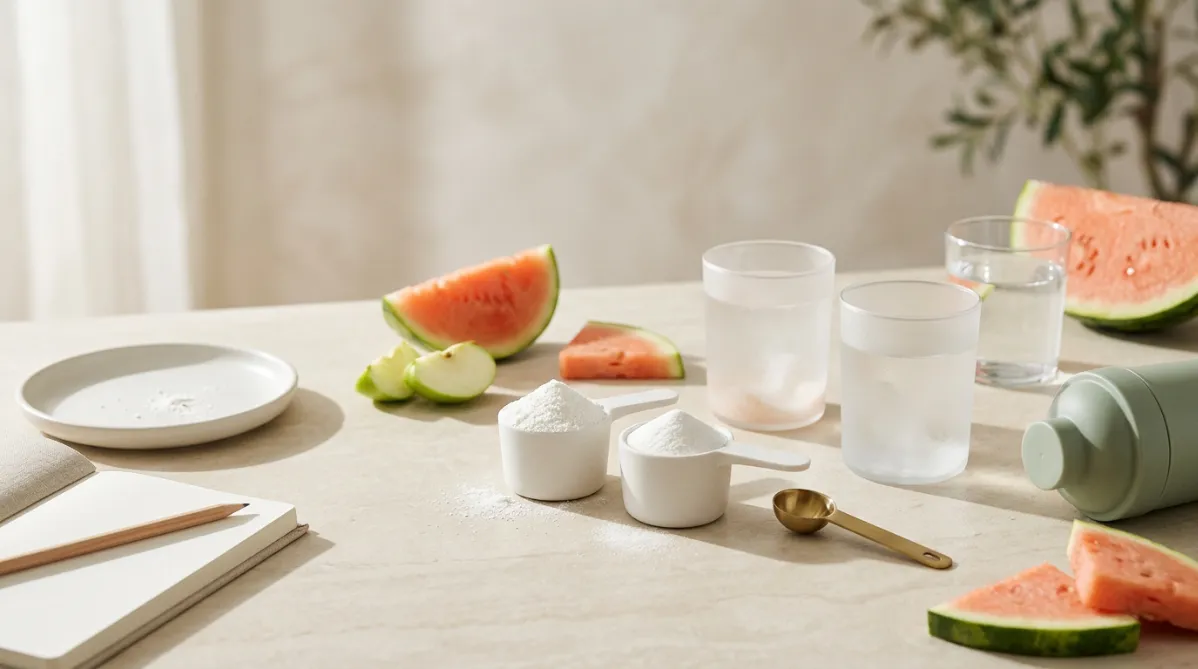
A bright, minimalist editorial still life shot from a slightly elevated three-quarter angle on a pale oat-colored stone countertop, bathed in soft natural window light with gentle long shadows. In the center sit two matching matte white supplement scoops, side by side. One is heaped with fine white crystalline powder, the other holds an almost identical pile, so the viewer is invited to compare them. Beside them are two simple frosted glass tumblers of cloudy water, each with a small whisper of powder swirling at the bottom. A third glass of clear water sits slightly apart, as a quiet nod to the placebo.

Scattered around the scene are fresh, sliced watermelon wedges with vivid coral-pink flesh and pale green rinds, and a few sliced green apples with crisp white interiors, hinting at the natural sources of citrulline and malic acid. A small brushed-brass measuring spoon and a minimalist matte sage-green shaker bottle rest at the edge of the frame. Off to one side, a clean ceramic dish holds a few loose grains of powder, and a slim linen notebook with a pencil lies open to a blank page, suggesting data and study notes without any legible text.

The color palette is soft and modern: warm cream, blush coral, sage green, and touches of brass, with a faintly blurred background of a sunlit kitchen or studio with a pale plaster wall. Shallow depth of field keeps the scoops tack sharp while the background melts into a creamy bokeh. The composition leaves generous negative space on the left third of the frame for a title overlay. The overall mood is calm, trustworthy, and trendy, like a contemporary wellness and science journal cover, with crisp detail, subtle film-like grain, and a clean, airy, balanced feel.
science research

Citrulina malato vs L‑citrulina: ¿realmente importa el malato?

BY DR. GYMBRO ·

¿Citrulina malato o L‑citrulina pura? Un ensayo aleatorizado, doble ciego y cruzado en 43 adultos entrenados comparó ambas formas contra placebo, y la respuesta podría ahorrarte dinero. Ninguna de las dos mejoró la fuerza, la potencia, el salto, el número de repeticiones ni la percepción de esfuerzo, y el malato no aportó nada extra a la citrulina. Aquí describimos qué se midió, qué dosis se usaron y los matices que impiden considerarlo la palabra final. Si estás decidiendo qué poner en tu shaker, empieza por aquí.
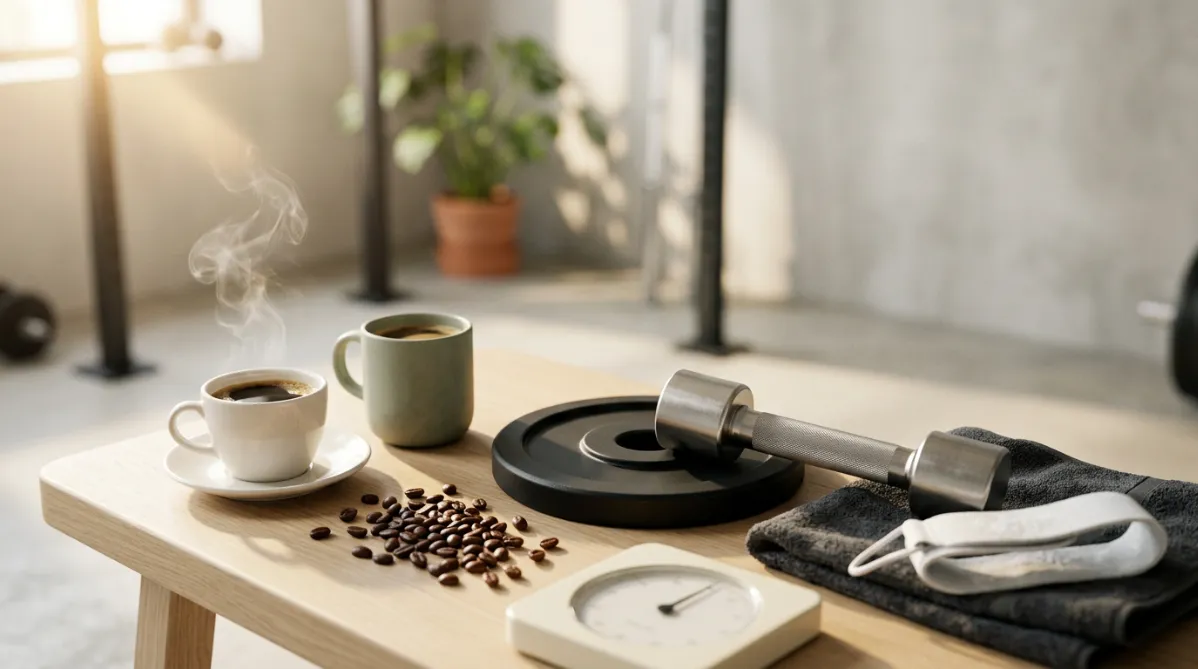
A wide, editorial-style flat lay photographed from slightly above on a pale oak gym bench with a soft matte finish. On the left, a small white ceramic cup of black coffee sits on a matching saucer, with a thin curl of steam rising and catching warm window light. Beside it is a second, slightly larger handleless stoneware mug in muted sage green, also filled with coffee, so the pair suggests one to two cups. In the center-right foreground rests a sleek matte-black steel barbell plate, partly overlapping a brushed-steel dumbbell with fine knurling. A folded charcoal gym towel and a clean white chalk-dusted wrist strap lie casually to one side. A small scatter of whole roasted coffee beans spills across the bench in front of the cups, glossy and deep brown. Near the bottom edge, a minimalist analog kitchen scale in soft cream with a thin black needle hints at precise dosing, without any readable numbers or text.

Soft morning sunlight streams in from the upper left, creating long, gentle shadows and a warm golden glow against cool neutral tones. The background is a softly blurred, airy home gym or boutique training studio with out-of-focus squat rack uprights, pale concrete walls, and a leafy green plant in a terracotta pot adding a touch of organic color. The palette is restrained and modern: warm cream, espresso brown, charcoal, sage green, and hints of brushed silver. Shallow depth of field keeps the cups and beans tack sharp while the background melts into creamy bokeh. The composition leaves generous negative space on the right third for a title overlay, with a balanced, calm, premium magazine feel, like a contemporary wellness and sports science journal. High-resolution, natural color grading, subtle film grain, realistic textures on ceramic, steel, and coffee crema.
nutrition

¿Cuánta cafeína tomar antes de entrenar? Un meta‑análisis muestra que 1‑2 mg/kg siguen siendo eficaces

BY DR. GYMBRO ·

El consejo habitual es consumir entre 3 y 6 mg/kg de café antes de entrenar, lo que equivale a varias tazas o a una generosa cucharada de pre‑entrenamiento. Un meta‑análisis publicado en 2022, que revisó 12 ensayos, encontró que dosis tan bajas como 0,9‑2 mg/kg también mejoran la fuerza muscular (d ≈ 0,17), la resistencia (d ≈ 0,21) y la velocidad media de la barra (d ≈ 0,56). Para muchos levantadores, eso representa de una a dos tazas de café. Los efectos son modestos y provienen de estudios agudos de una sola sesión, pero los resultados sugieren que se puede obtener un beneficio similar con menos cafeína.
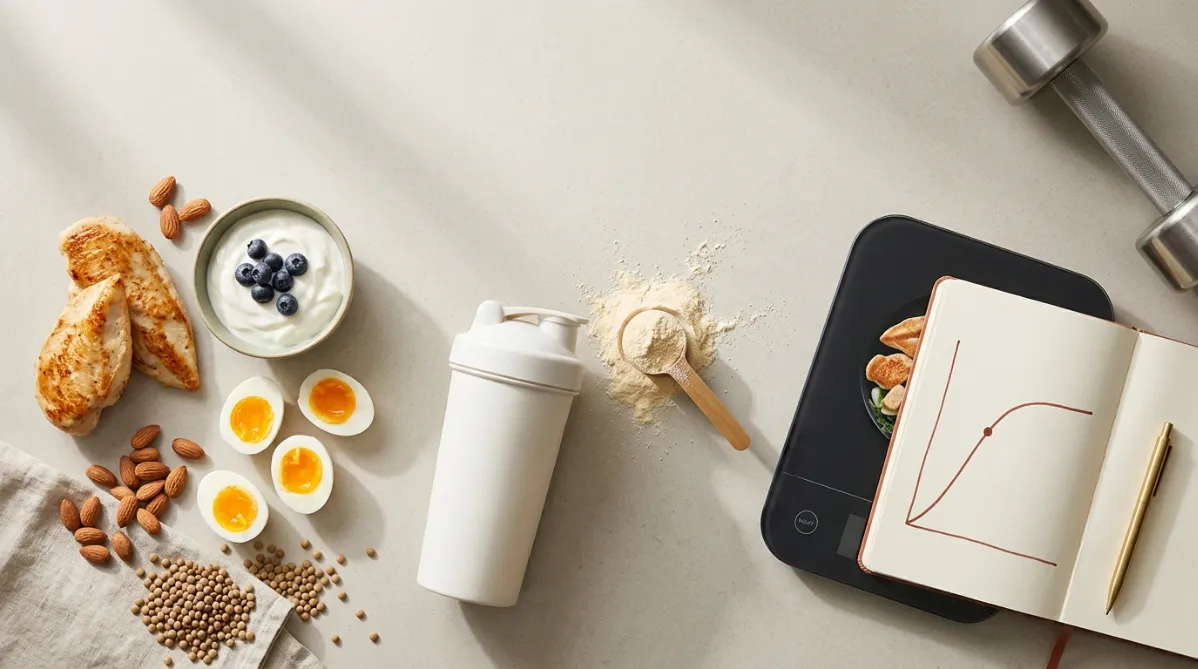
A wide, editorial flat-lay photograph shot from directly above on a pale warm-gray stone countertop, lit by soft natural morning window light with gentle diagonal shadows. On the left, a neatly arranged cluster of whole-food protein sources: two seared chicken breast slices with a golden crust, a small ceramic bowl of creamy Greek yogurt topped with blueberries, three halved soft-boiled eggs with jammy orange yolks, a handful of raw almonds, and a small pile of dried lentils scattered on a linen napkin. At the center, a matte white shaker bottle and a wooden scoop resting in a pile of fine vanilla-colored protein powder, a few grains dusted artfully across the surface. On the right, a minimalist kitchen scale in matte black displaying a portion of food, next to an open notebook with a hand-drawn curve that rises steeply and then flattens into a plateau, drawn in a deep terracotta ink pen, with a small dot marking the bend. A brass pen lies beside the notebook. A single dumbbell with a brushed steel finish sits partially in frame at the upper right corner, grounding the fitness theme without feeling gym-like. Color palette: warm cream, sage green, terracotta, soft charcoal, and butter yellow accents, with generous negative space along the top edge for title overlay. Shallow depth of field, crisp textures, subtle film grain, modern lifestyle magazine aesthetic, clean and calm composition, 16:9 landscape.
nutrition

¿Cuánta proteína realmente maximiza el músculo? La meseta de 1,6 g/kg explicada

BY DR. GYMBRO ·

¿Crees que necesitas más de 2 g de proteína por kilo para crecer? Un meta‑análisis con 49 ensayos y 1 863 adultos demostró que los beneficios se estabilizan alrededor de 1,6 g/kg al día. El límite superior del intervalo de confianza llega a unos 2,2 g/kg, lo que brinda a los levantadores un rango práctico en lugar de una dosis arbitraria. Los deportistas entrenados obtuvieron el mayor beneficio de la suplementación, mientras que la ventaja disminuye con la edad. Aquí te explicamos qué significa todo eso para tu plato, tu batido y tu bolsillo.

This page is available in